Heritage reuse calls for adapted sanitary facilities
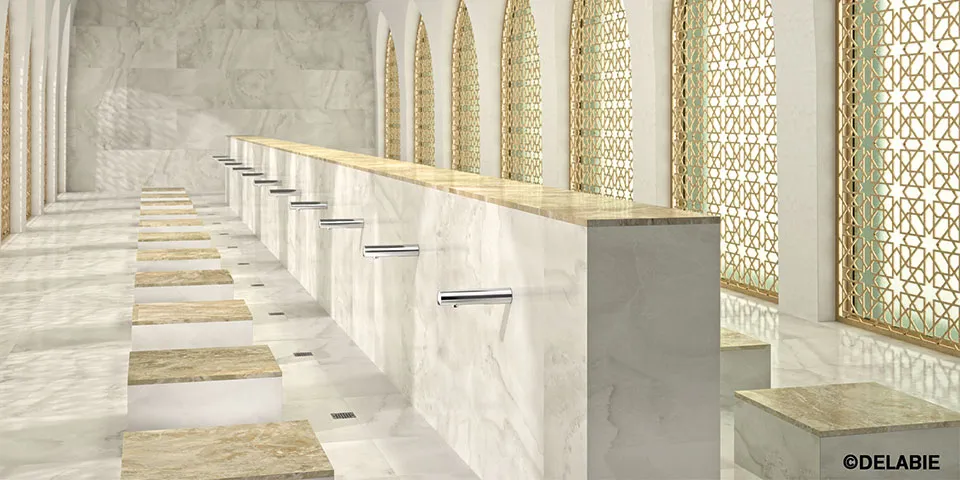
The Rijksdienst voor Cultureel Erfgoed is seeking to encourage the reuse of vacant listed buildings. From 1 October 2020, it will be possible to apply for a grant…
Unfortunately, it is a common global trend that recent social and economic developments have led to more properties standing vacant in recent years, including listed buildings. Religious buildings, such as churches and monasteries, and industrial heritage are particularly affected. The Rijksdienst voor het Cultureel Erfgoed (RCE) is seeking in various ways to encourage the reuse of vacant listed buildings. On 15 July, it announced changes to the “subsidieregeling stimulering herbestemming monumenten” (grant scheme to encourage the reuse of listed buildings). From 1 October to 30 November 2020, it will be possible to apply for a grant for research into improving the sustainability of listed buildings that are not residential properties*.
Whether it is a village church that provides a communal meeting space or is converted into a public library, or a historic factory building that is turned into a restaurant, the buildings must comply with building regulations and provide for the comfort and accessibility of their users. The provision of sanitary facilities is an important consideration. Specifying sanitary facilities in these listed buildings is no different from doing so in other public buildings. The checklist is familiar: occupancy levels; energy and water consumption; hygiene; user safety; accessibility; maintenance and cleaning regimes.
Occupancy levels and frequency of use
The usage pattern and occupancy levels of the sanitary facilities are comparable to those in theatres, with periods of intense activity followed by relative quiet. Public toilets must be suitable for all ages and a range of mobility levels. It is therefore strongly advisable to install taps, toilets and sanitary fittings designed to withstand repetitive and intensive use. Products should also be easy to use, to minimise accidental damage.
Managing energy and water consumption
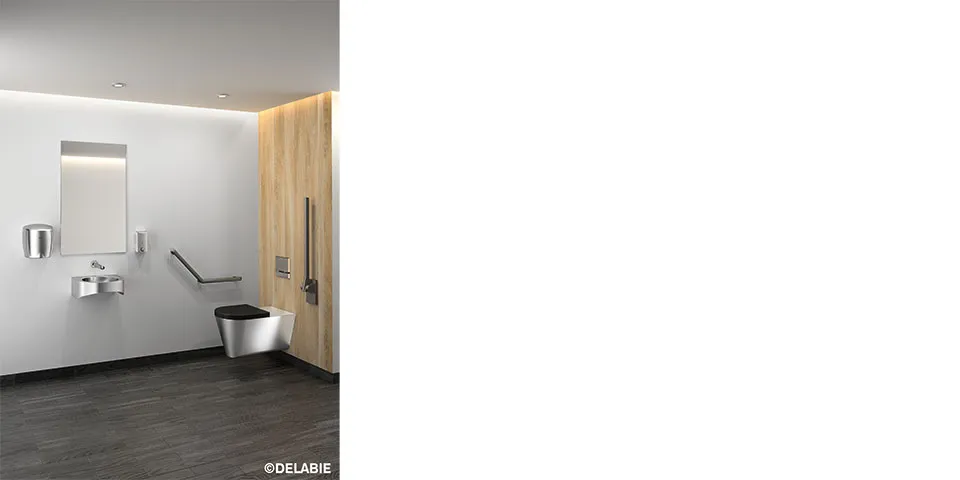
In these times of pandemics and climate change, we are reminded to wash our hands frequently while also being urged to avoid excessive water use to combat drought. Domestic taps with mechanical operation rely on users to manage their own water consumption. DELABIE’s self-closing taps, however, deliver a preset flow rate for a set period, giving building owners control over consumption once again. What is more, they use no energy during operation. These self-closing taps are designed to meet BREEAM’s highest environmental standards.
Public health and safety
All public buildings must comply with health and safety regulations, particularly those relating to legionella control. Risk assessments, sampling and flushing routines are often outsourced, but building managers can minimise the risk of contamination by specifying electronic taps with automatic flushing. TEMPOMATIC 4 taps, for example, activate 24 hours after their last use to prevent water from stagnating in the system.
The Drinking Water Act also recommends producing and maintaining hot water above 55˚C to prevent legionella contamination. However, this creates a scalding risk for users. Mechanical mixer taps with built-in temperature limiters or thermostatic mixer taps will reduce the risk. DELABIE’s SECURITHERM mixer tap regulates variations in temperature and pressure in the system, and shuts off automatically if the cold or hot water supply fails.
Accessibility and user comfort
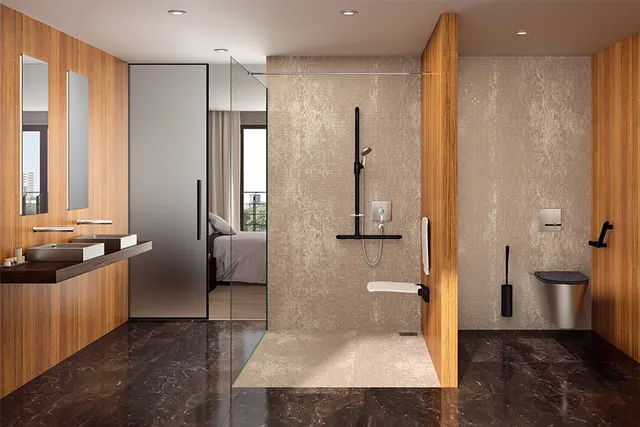
Visitors and users of public buildings span generations. Specifying taps and toilets with soft-touch technology, long lever controls or electronic operation, for example, means that sanitary facilities can be used by everyone from very young children to people with limited mobility. User comfort is another consideration: noise is undesirable. Specifications should therefore take account of the noise levels of flushing mechanisms and hand dryers.
Maintenance
Complex installations are time-consuming and costly, particularly where large numbers of toilets and washbasins are installed. Simplicity is vital, so mechanisms should be easy to access and use standardised spare parts.
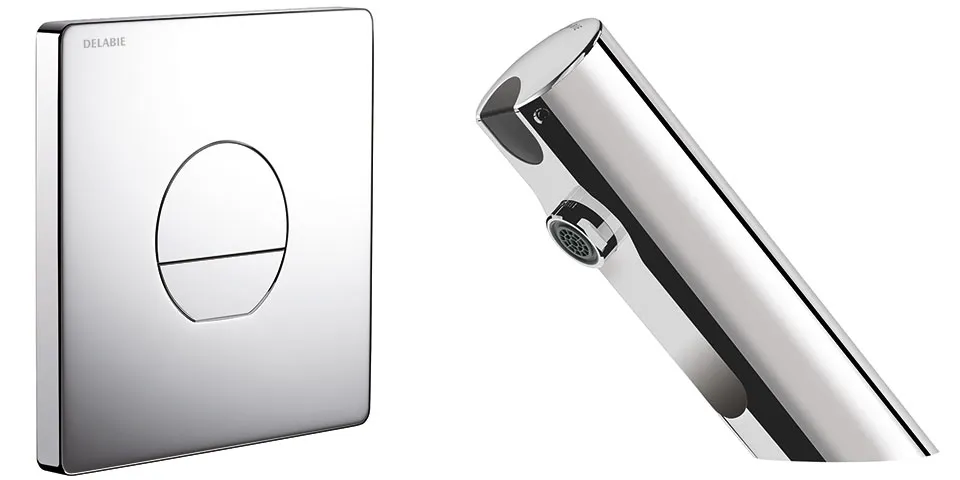
Battery-powered TEMPOMATIC electronic basin and toilet taps are easy to install and require no electrical connections. They operate independently for up to 6 years, depending on usage intensity, and a flashing LED indicates when the batteries need replacing.
Cleaning regimes
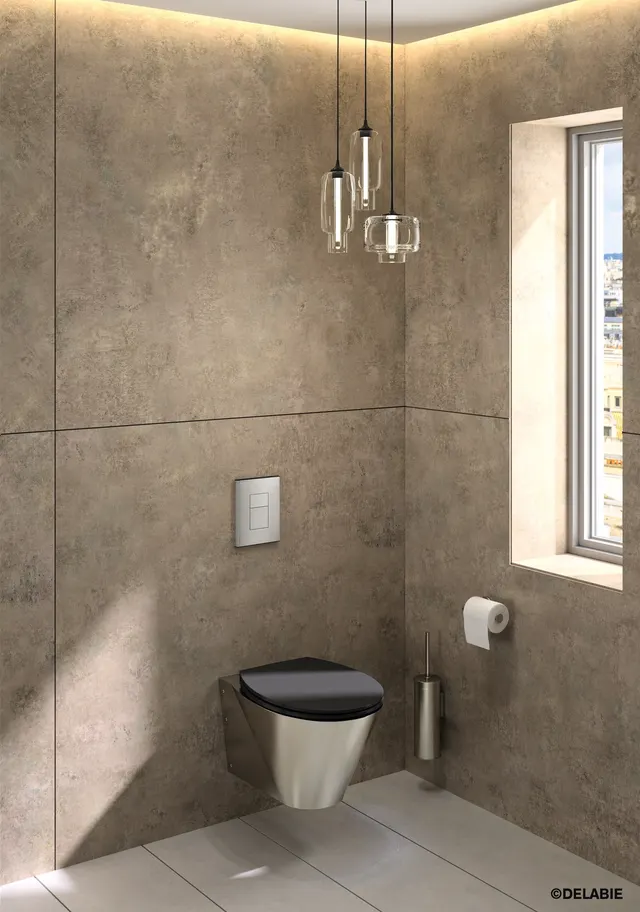
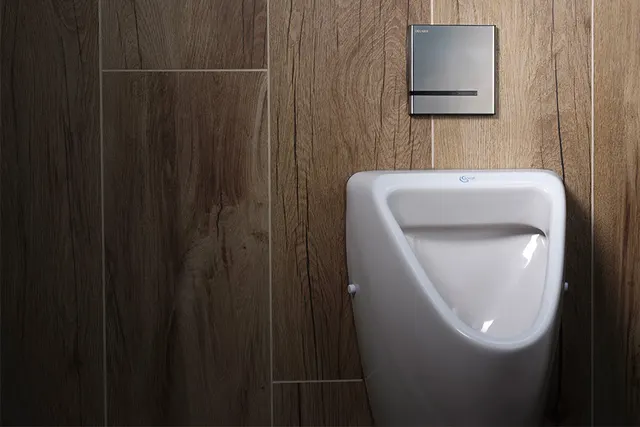
Building maintenance and cleaning are rarely taken into account during the specification process. However, easy-to-clean toilets can save a considerable amount of time over a period of 12 months. Design is essential. Taps, toilets, grab rails and handles, and even soap dispensers should have a hard-wearing finish with as few joints as possible, to prevent dirt and bacteria from accumulating. Sanitaryware and accessories made in one piece have a clear hygiene advantage over complex designs.
*Source: Rijksdienst voor het Cultureel Erfgoed, publication dated 15 July 2020
A business enquiry for Delabie? Get in touch
Companies in this story

Keep following this
Get an email when a new story is published. No account needed.
- ThemeFuture-proof water and sanitary systems
- SubjectSanitaryware
- CompanyDelabie