Optimum learning in a healthy environment: from opening windows to Fresh Schools Class B
Text Lieke BousemaImage Ned Air
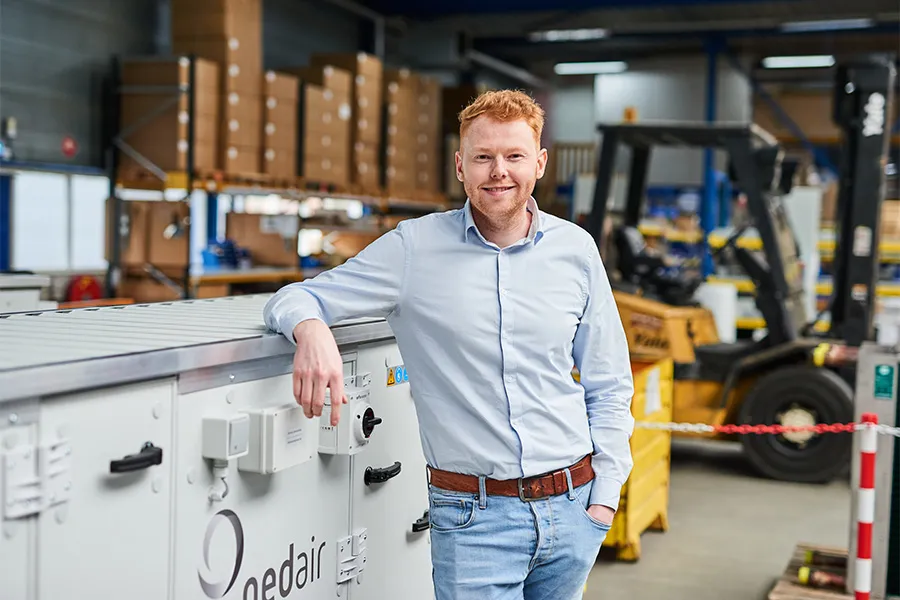
Supplying fresh outdoor air and extracting polluted indoor air is one of the most important measures for creating a healthy indoor climate and promoting pupils’ wellbeing and learning performance. We are now well aware of this. Even so, most of the 7,000 primary schools and 650 secondary schools in the Netherlands still suffer from excessive CO2 concentrations, temperatures that are too low or too high, draught complaints and unpleasant odours. To improve the indoor climate in these schools with minimal intervention, support pupils’ ability to concentrate and reduce sickness absence, Ned Air has developed a modern, fully demand-controlled decentralised ventilation unit with heat recovery: the Ned Air EduComfort.
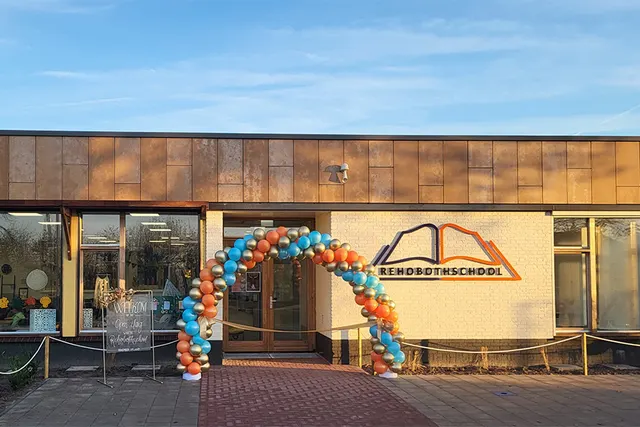
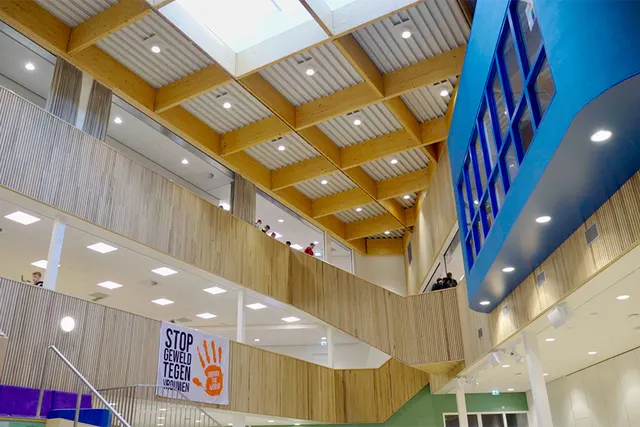
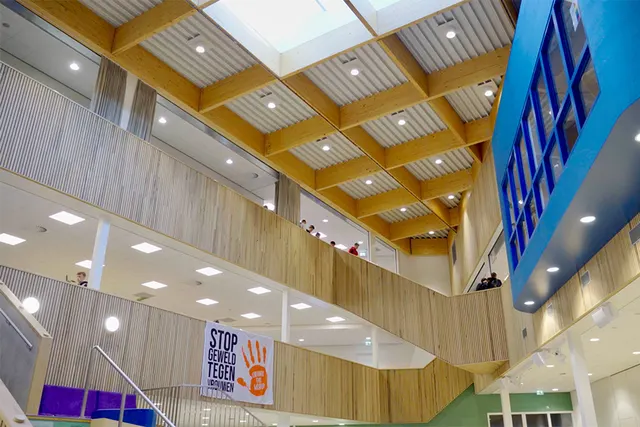
In recent years, Ned Air has sold more than 2,500 EduComfort school ventilation units. A recent project was at a medium-sized secondary school in South Holland, which provides practical education for pupils aged 12 to 18. Its curriculum focuses on living, working, leisure and citizenship, with pupils learning to function independently in society over five years through work placements and lessons. “For a long time, the school was ventilated by opening the windows,” says Dennis Osinga, Area Manager at Ned Air. “That changed last summer. We visited the school building together with the installer and drew up a proposal for improvements, which has now also been implemented.”
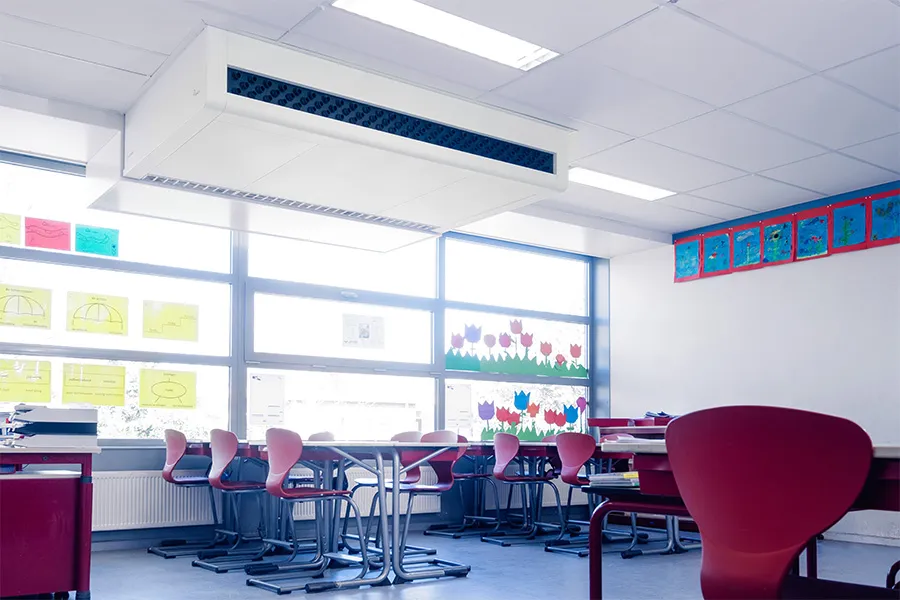
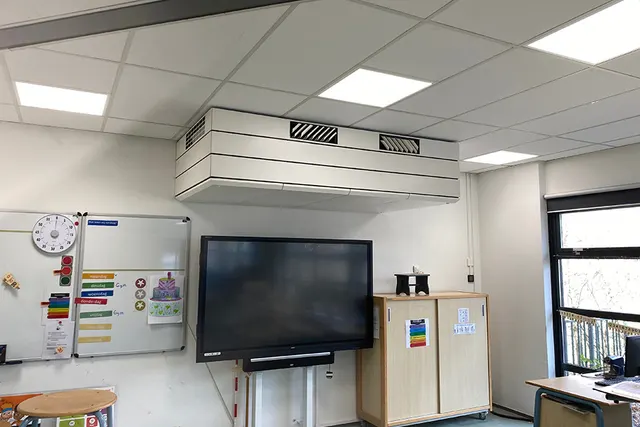
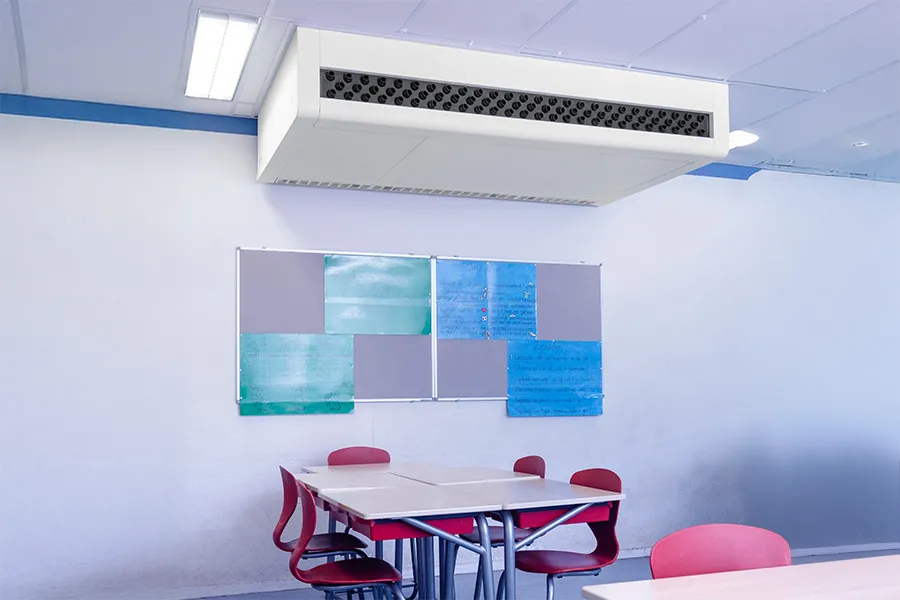
EduComfort 1000 units with DX coil
The school wanted to provide ventilation and cooling in its theory and practical classrooms. “The building’s specific design, and the lack of a flat roof and/or other suitable spaces for central air handling units, made it challenging to provide effective ventilation in every classroom,” says Osinga. “Cooling was also needed because temperatures in the classrooms rise due to the building’s orientation, pupil numbers and activities. Our EduComfort school ventilation units provide a solution to both challenges. Together with the installer, we developed an installation design using 27 EduComfort 1000 school ventilation units, including a DX coil.”
Fresh Schools Class B
The decentralised EduComfort units were developed in accordance with the Fresh Schools Class B Brief of Requirements. “The units maintain the correct CO2 level in the classroom using 100% fresh outdoor air, and operate at a sound level of no more than 32 dB(A) at 950 m3/h. Counterflow heat recovery also achieves an optimal efficiency of 90%, keeping energy consumption for the end user to a minimum. In addition, the heat exchanger has a bypass for night-time summer ventilation, allowing classrooms to be cooled efficiently when outdoor temperatures are lower.” All 27 school ventilation units were installed during the school holidays and connected to an outdoor unit, which provides the required cooling. “Thanks to the plug-and-play configuration, the installer was able to install two units per day. We then commissioned the system together. Since then, pupils at the school have been able to learn to their full potential in a healthy environment.”
Comprehensive insight, even remotely
All ventilation units in this project are equipped with a touchscreen control display, where users can set the desired supply air temperature. “This is particularly useful in summer, as it allows the cooling function to be used to its full potential,” says Osinga. The display also shows CO2 values. “As users do not always know what these values mean, the figures are accompanied by a traffic-light LED indicator, in green, amber or red. Green means that the CO2 level in the room is acceptable, amber indicates that improvement, through additional ventilation, is advisable, and red means that immediate action is required.”
The units at the school are also connected to the internet, allowing the installer to monitor them easily from a distance. Settings and timer schedules can also be adjusted easily. If necessary, Ned Air’s service department can also remotely access the installations.
Recyclable and hypoallergenic
The EduComfort school ventilation units are among the quietest on the market and can be fitted with cooling and heating as required. The units are also unique in that they are largely circular in design. “Recycled compressed paper is used for thermal insulation instead of mineral wool, while polyester wool is used for acoustic insulation instead of glass wool,” says Osinga. “Polyester wool is recyclable and hypoallergenic, and poses no health risks.” In addition, most of the Sendzimir galvanised steel has been replaced with aluminium, making the units even lighter.
Optimum air distribution
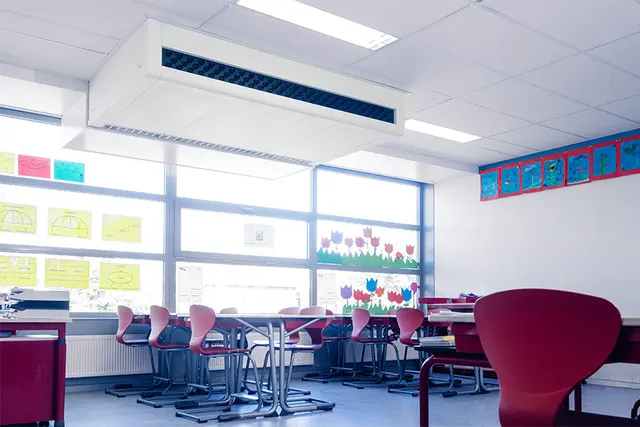
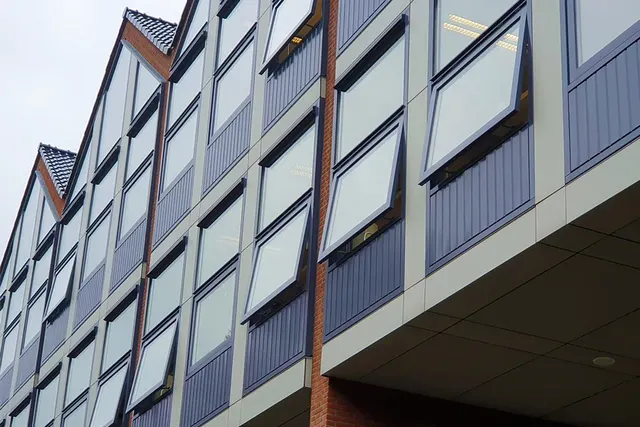
At the secondary school in South Holland, the EduComfort school ventilation units have mostly been suspended at the rear of the classrooms, from the ceiling. Openings have been made in the façades to draw in fresh outdoor air and extract polluted indoor air, Osinga explains. “The outdoor units have also been mounted on the façades as close as possible to our ventilation units, so no internal ductwork was needed. All EduComfort units are fitted with adjustable jet nozzles, which supply fresh air without creating draughts. Installers can adjust these nozzles to ensure optimum air distribution throughout the classroom, in accordance with the Coanda effect.”
A business enquiry for Ned Air? Get in touch
Companies in this story

Keep following this
Get an email when a new story is published. No account needed.
- ThemeHealthy indoor air
- SubjectFrisse Scholen
- CompanyNed Air