Heat pumps prepare municipal buildings for a gas-free future
Text Lieke BousemaImage Alklima
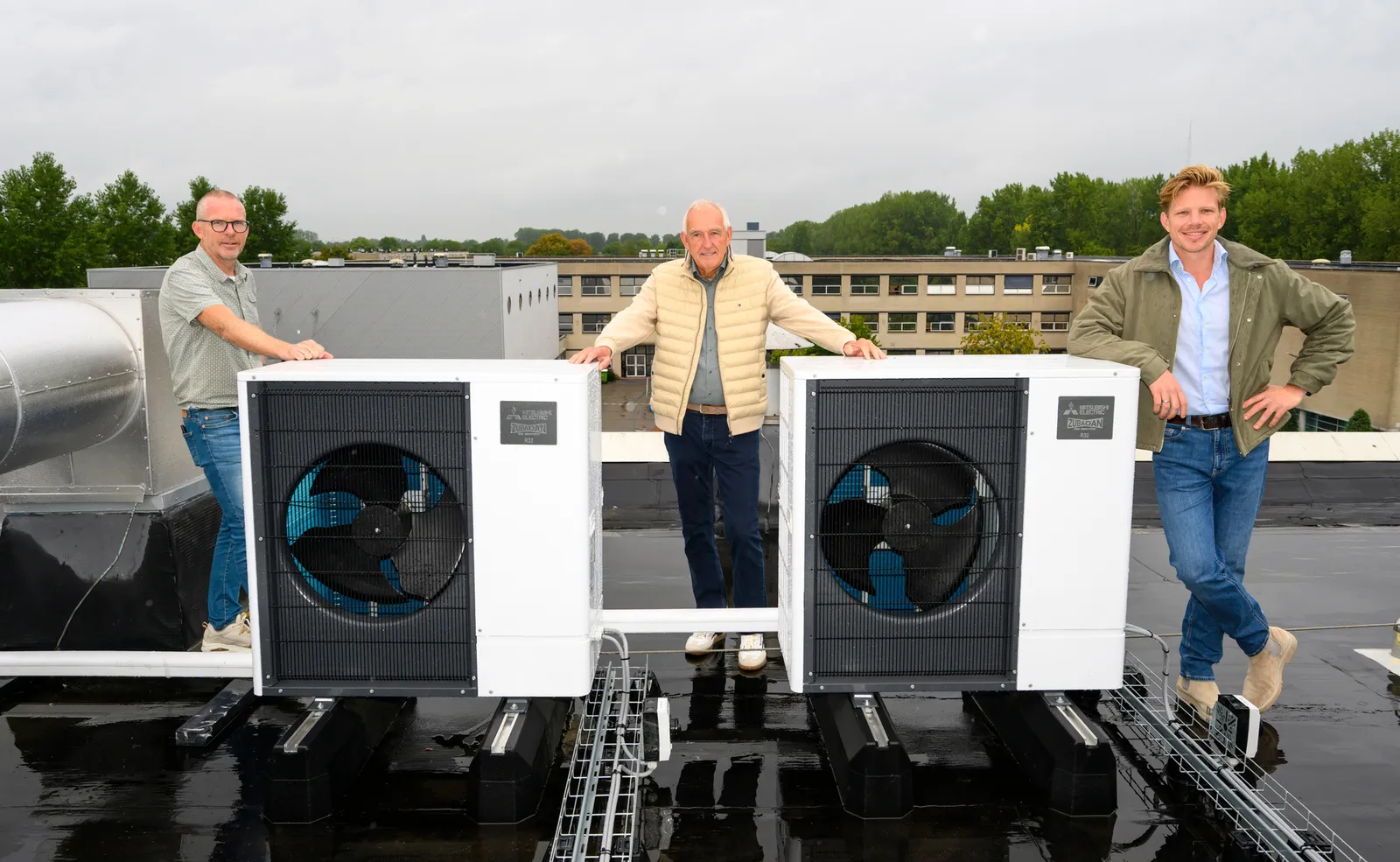
Smart decarbonisation within the constraints of grid congestion
Municipalities face a major challenge in making their buildings more sustainable. Under European targets, they must reduce CO2 emissions from their property portfolios. For sports halls, this means upgrading them to meet high energy-efficiency standards. The Municipality of Almere is following the renovation standard: a voluntary government guideline recommending an energy label of A++ or A+++ and a gas-free system. This puts the municipality on course to meet the climate target of reducing CO2 emissions by 55% in 2030 compared with 1990.
The Municipality of Almere is taking a targeted approach to making its property portfolio more sustainable. Built in the 1980s, Sporthal Almere-Buiten was a natural choice for a project under this programme. Renewing the heating and domestic hot water system is an important step towards a gas-free future for the building. At the same time, the project shows how decarbonisation requires tailored solutions in practice, particularly when grid congestion is a limiting factor.
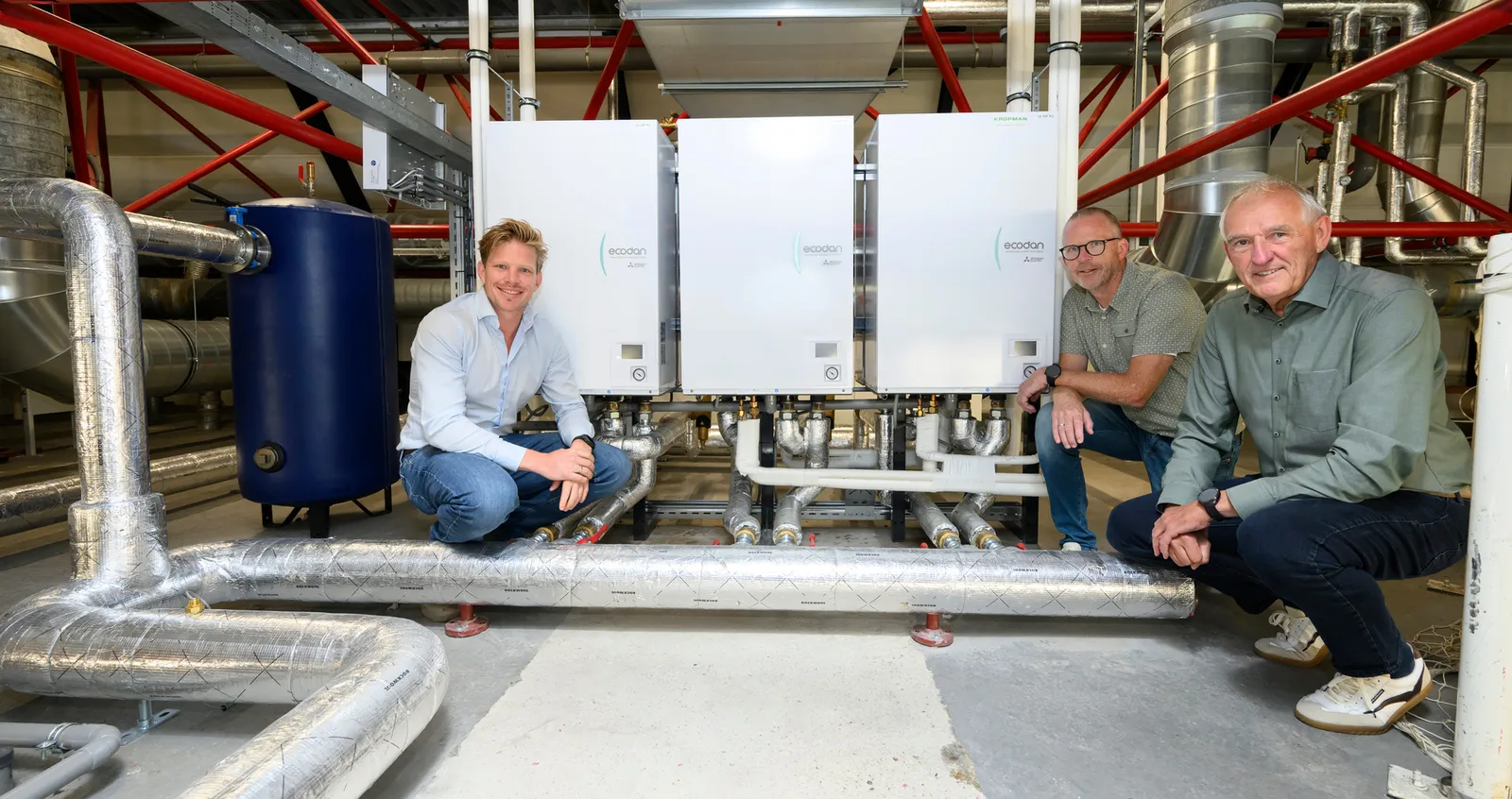
Energy label A++
“Sporthal Almere-Buiten was due for major maintenance,” says Anko Kuyt, Sustainability Project Manager at Vastgoedbedrijf Gemeente Almere. “The central heating system, among other things, needed replacing. It was an ideal opportunity to renew and make the entire heating and domestic hot water system more sustainable.”
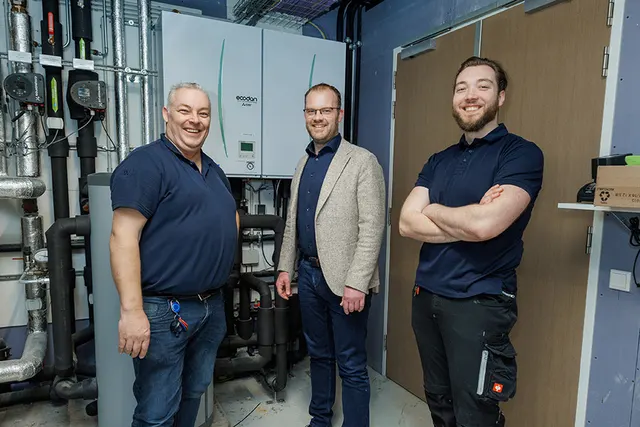
TDS Engineering was brought in to advise on decarbonisation. “The sports hall’s building envelope had already been improved,” says director Bart Ruijs. “The next step was to install a future-proof, all-electric system.” Replacing the existing ventilation system with one featuring heat recovery significantly reduced the heat demand. “This meant we could keep the existing heat emitters, making a heat pump system technically viable,” Ruijs explains. “Our preference was for Mitsubishi Electric heat pumps supplied by Alklima, which we have extensive experience with. The heat pumps stand out for their high quality. Alklima also provides excellent support, from product selection through to support during installation and commissioning. It’s no coincidence that we chose to work together again in Almere: never change a winning team.”
Domestic hot water without unnecessary losses
Kropman Installatietechniek delivered the complete heating and domestic hot water system, carefully translating the design by TDS Engineering and Alklima into a practical solution. “Sports halls often present complex decarbonisation challenges because of variable use and short periods of peak demand,” says Daan Bakker, Consultant at Alklima/Mitsubishi Electric. “Relatively few people tend to shower, but the hot water system must still meet the applicable requirements for drinking water quality and legionella prevention. The sports hall in Almere still had a conventional central heating boiler with a circulation pipe. The brief was to replace this with a sustainable, future-proof solution using a heat pump and storage cylinders that complies with current legislation and regulations.”
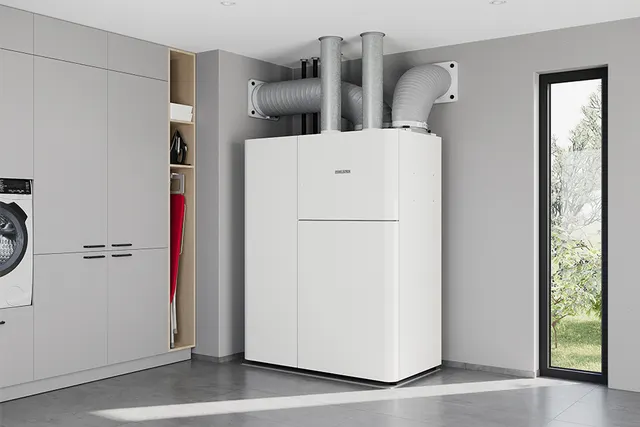
For domestic hot water production, Alklima supplied two 300-litre cylinder storage tanks, each connected to a 14 kW Mitsubishi Electric Zubadan heat pump. “The cylinder units are located less than ten metres from the changing rooms, so a circulation pipe was no longer needed,” Bakker explains. “Placing the hot water source close to the point of use means there is no need to keep a circulation pipe hot. This prevents unnecessary distribution and heat losses and reduces energy consumption. The new system significantly cuts both CO2 emissions and energy use. The result is a solution that limits consumption while enabling renewable heat generation. It’s a win on both fronts.”
Cascade system offers greater flexibility
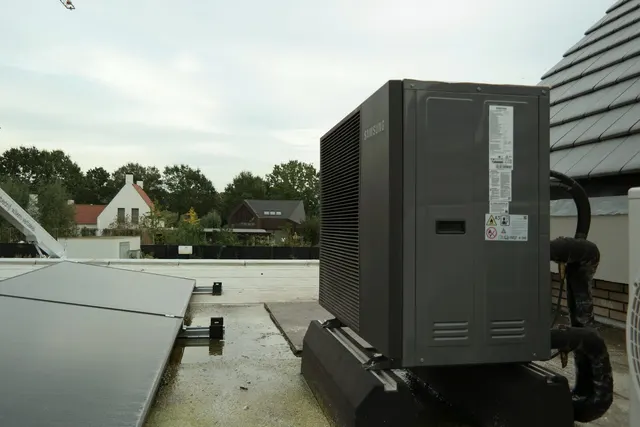
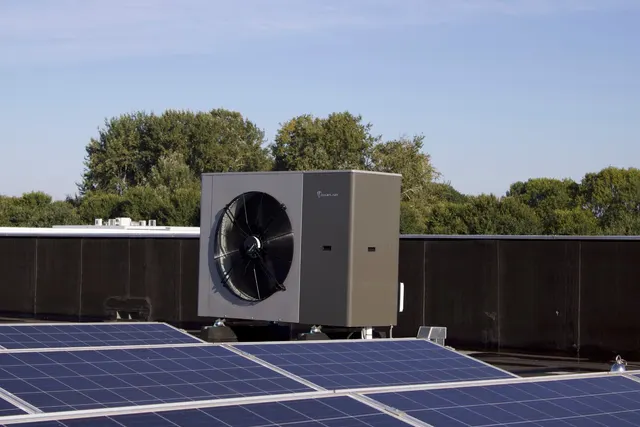
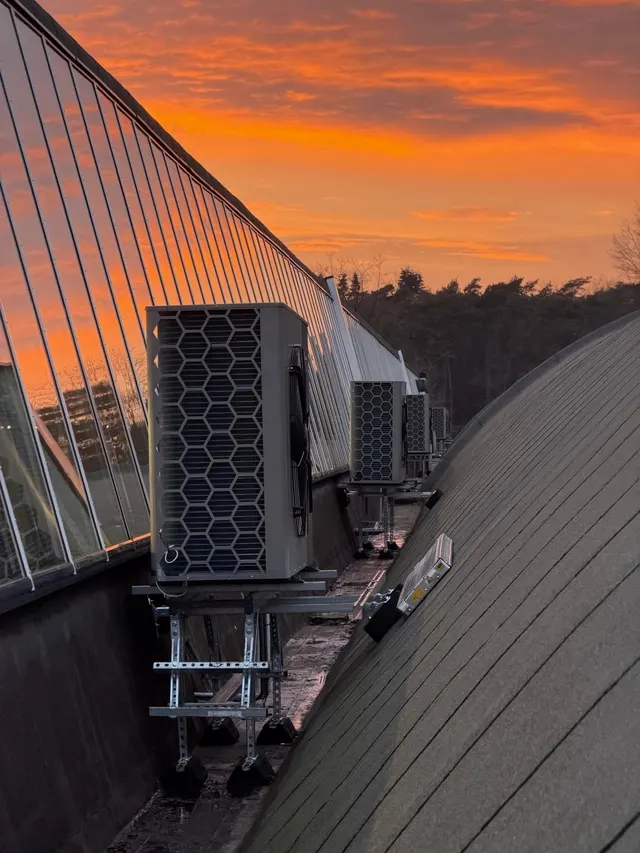
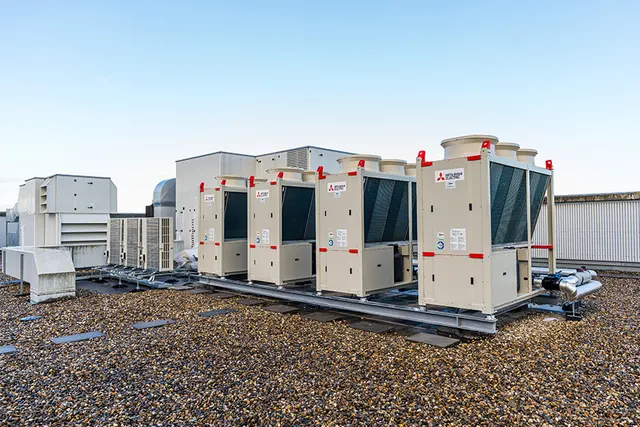
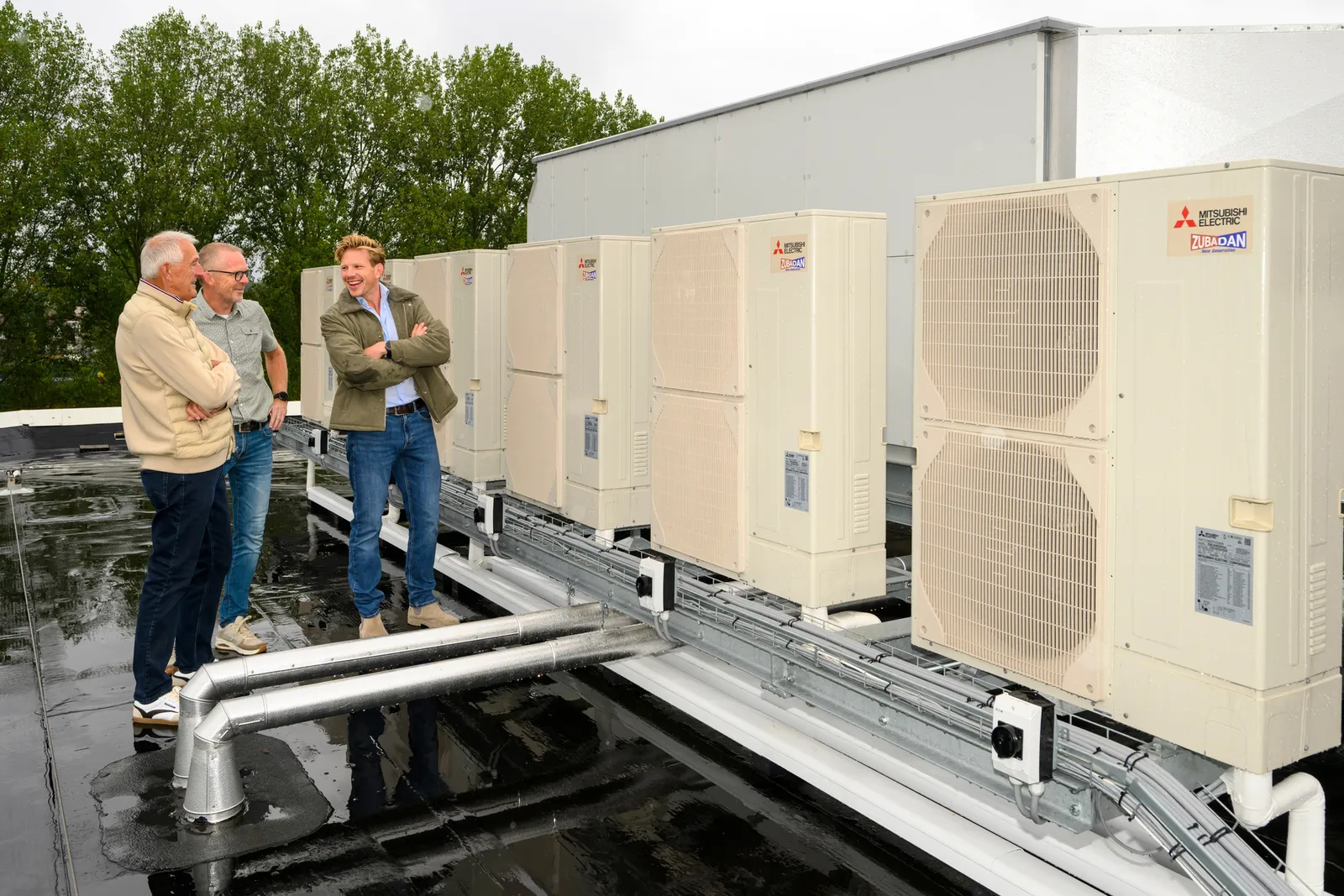
Following the introduction of the domestic hot water system, a heat pump solution was also required to heat the sports hall. A cascade system of six 25 kW Mitsubishi Electric Zubadan heat pumps has recently taken over heating the sports hall. “By combining several smaller units, we can respond more efficiently to heat demand and keep the heat pumps operating more often within their optimum efficiency range,” says Ruijs. “The system also increases reliability. If one unit fails, sufficient capacity remains available.”
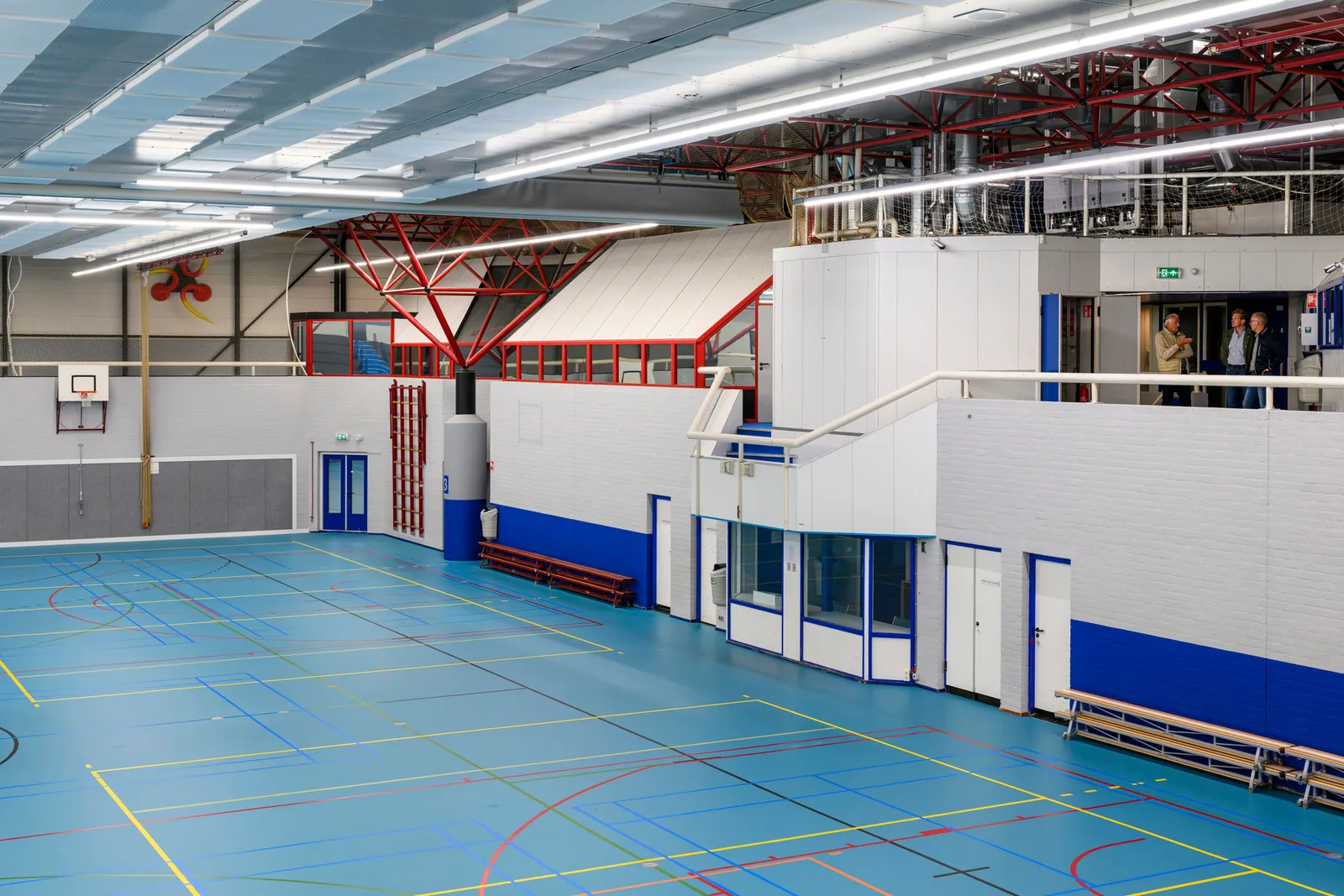
Ready for all-electric operation
The heating system is currently a hybrid installation because of constraints on the electricity grid. “Grid congestion in the area means the heat pumps cannot always operate optimally during peak periods or when outdoor temperatures fall below zero,” says Kuyt. “In those situations, the existing central heating boiler supports the system, ensuring reliability and comfort.” The grid capacity has since been increased. “The contracted capacity still needs to be raised,” says Ruijs. “Once that is complete, the system can operate fully on electricity.”
Question about this story? Ask your question
Who worked on it
Sporthal Almere-Buiten in Almere
- sustainability adviceTDS Engineering
- constructionKropman Installatietechniek
- heat pumpsMitsubishi Electric
Keep following this
Get an email when a new story is published. No account needed.
- ProjectSporthal Almere-Buiten
- ThemeGas-free heating and cooling
- SubjectHeat pumps
- CompanyTDS Engineering
- CompanyKropman Installatietechniek
- CompanyMitsubishi Electric