Halogen-free cables under scrutiny: what do the labels really tell us?
Text Mariëtte Govers - Smeets en Lieke BousemaImage HELU Nederland
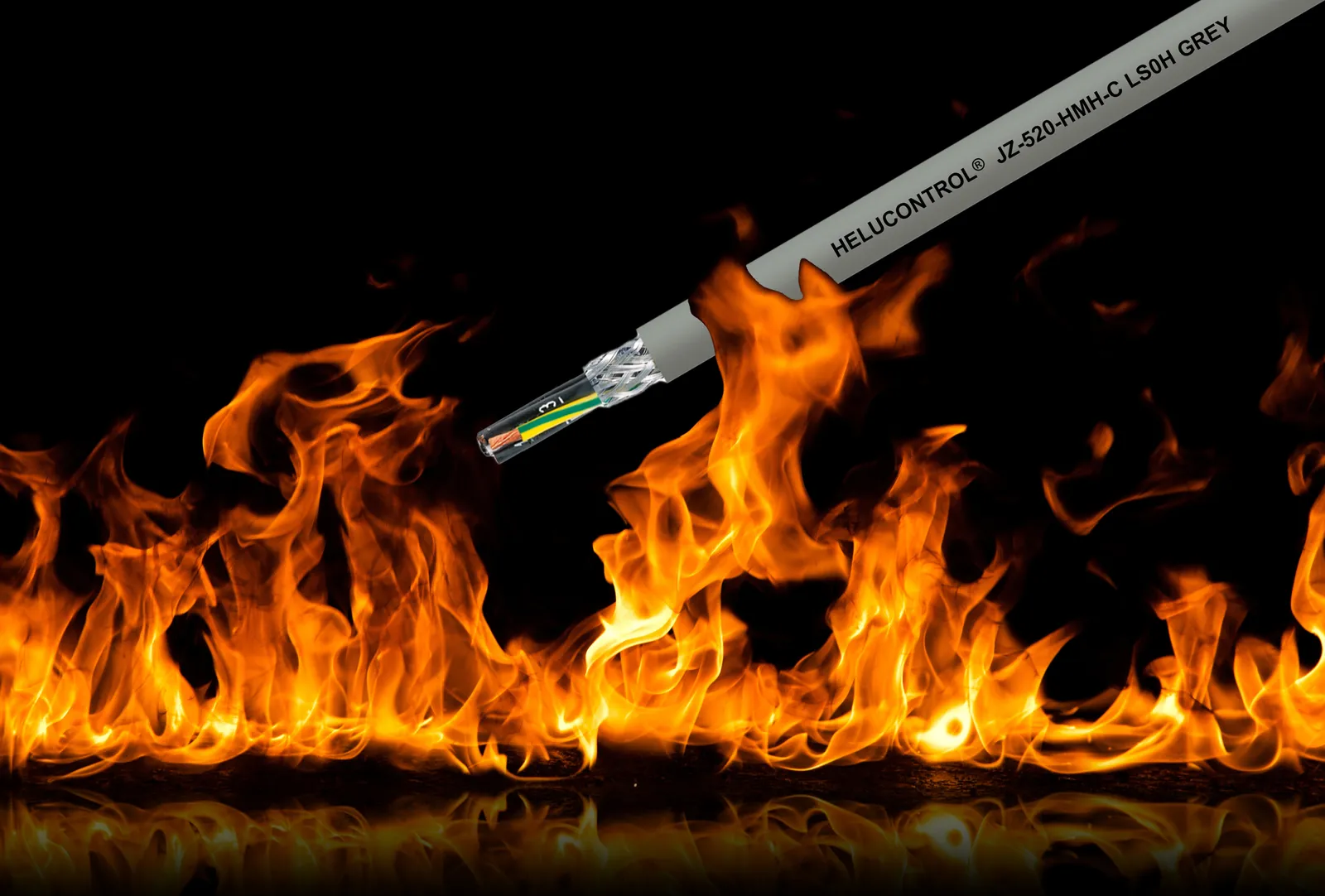
Halogen-free cables are a required standard in many industrial and infrastructure applications. Over time, various terms have emerged for these cables, including FRNC, HFFR, LS0H and LSZH. But how meaningful are these abbreviations? And what are the advantages of halogen-free cables compared with products containing halogens? Mariëtte Govers, Smeets of HELU Nederland explains.
Less smoke, less risk, greater peace of mind
Halogens (salt formers) include chlorine (Cl), bromine (Br), fluorine (F) and iodine (I). “These elements are used in cable manufacturing to make insulation and sheath materials flame-retardant,” says Govers, Smeets. “Chlorine (in PVC), fluorine (in FEP, PTFE and ETFE) and bromine play a key role.” The drawback is that halogens react aggressively in a fire and can even release toxic fumes. “They produce halides which, when they come into contact with moisture, form acids that can cause acid burns to the respiratory tract.” These acids can also attack metals and damage machinery and concrete structures.
A key criterion for fire prevention
The flame-retardant properties of cables and wires are crucial to effective fire prevention. “Some applications also explicitly require halogen-free cables and wires, meaning they must be free of chlorine, bromine, fluorine and iodine. If these cables catch fire, they produce far less acid and smoke. They are also less toxic, significantly reducing the resulting damage to people, buildings and machinery. However, even halogen-free cables still release toxic gases such as carbon monoxide when they burn.”
Halogen-free cables and wires are required, for example, in buildings where people gather and property needs to be protected:
• Building services: strict fire safety and health regulations apply in public buildings such as offices, shopping centres, schools, hospitals and airports. Most cables and wires in these buildings are permanently installed and do not need to meet special chemical or mechanical requirements. Plastics blends based on PE or PP are often used here. They are halogen-free and flame-retardant, produce little smoke or toxic gas, and often also need to pass cable-bunch fire tests. • Industrial automation: machinery and installations often require cables and wires with high chemical and mechanical resistance. These stresses are particularly high in flexible applications such as cable carriers and robotics. TPE-O- or TPE-U-based sheath materials (PUR or Santoprene) are typically used here. These are also available in halogen-free versions, but are generally less flame-retardant and low-smoke than cables for building services.
Common labels for halogen-free cables
Over the years, various manufacturers, markets, regions and standards have developed labels for halogen-free and flame-retardant cables, such as FRNC (Flame Retardant Non Corrosive), HFFR (Halogen Free Flame Retardant), LS0H/LSOH (Low Smoke 0Halogen) and LSZH (Low Smoke Zero Halogen). “However, none of these labels provides specific information about flame retardancy, corrosivity, toxicity or light transmittance. Users should therefore pay close attention to the standards listed in each supplier’s data sheets.”
Standards for halogen-free cables
• DIN EN 60754-1 VDE 0482-754-1:2021-02 defines the test equipment and procedures required to determine total acidity. To be certified as halogen-free, the test result must be below 5 mg/g.
• DIN EN 60754-2 VDE 0482-754-2:2021-02 defines the measurement of pH value and conductivity. To be certified as halogen-free, the pH value must be below 4.3 and conductivity below 10 µS/mm.
• DIN EN 61034-2 VDE 0482-1034-2:2021-02 defines the measurement of smoke density from burning cables. To be considered low-smoke, the test result must show light transmittance of no more than 40%. Depending on the application, customer and region, stricter requirements may apply to light transmittance. The aim is to ensure that people can still identify the source of the fire and possible escape routes.
Conclusion
Halogen-free cables offer important safety benefits because less toxic gas and smoke are released in a fire. At the same time, they must meet stringent flame-retardancy standards, says Govers, Smeets. “It is not enough to rely on labels such as FRNC, HFFR, LS0H or LSZH. Only the standards listed in data sheets show whether a cable has low, medium or high flame retardancy or smoke emission, and/or whether it has been tested for light transmittance.” As an expert in electrical connection technology with more than 45 years of experience, HELU is happy to help identify the most suitable cables and wires for every application. All cables and wires are also thoroughly tested at its own test laboratory in Germany to ensure they meet all required safety standards.
A business enquiry for HELU? Get in touch
Companies in this story

Keep following this
Get an email when a new story is published. No account needed.
- SubjectFire safety
- CompanyHELU