The next step in emergency lighting management
Text Lieke BousemaImage HBI Bisscheroux

Emergency lighting is a legal requirement, but managing and maintaining it can often be time-consuming in practice. Periodic checks, reports and inspections demand considerable attention from installers and building owners. HBI Bisscheroux offers an efficient alternative with wireless emergency lighting management. “Our solution simplifies inspection and maintenance, reduces the labour required and at the same time provides greater visibility, reliability and continuity in buildings,” says Margo Leinders, Sales Support Development at HBI Bisscheroux.
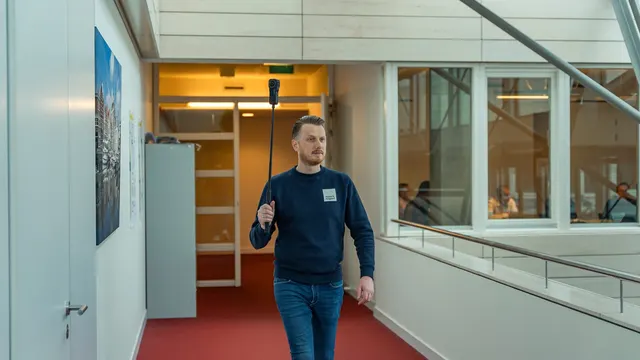
Most building owners in the Netherlands have a maintenance contract for their emergency lighting. “In most cases, the maintenance provider visits the building once a year, with one or more technicians manually checking all the emergency lighting luminaires,” says Leinders. “They climb a ladder, press the test button and assess each individual luminaire. All findings are recorded in a logbook, and any faults are repaired or the affected luminaires are replaced. If parts are not available, or there are not enough in the service van, they have to be ordered and fitted during a return visit. It is an inefficient and labour-intensive approach, particularly now that installations are becoming more complex and the availability of technical staff is under pressure.”
Continuous visibility
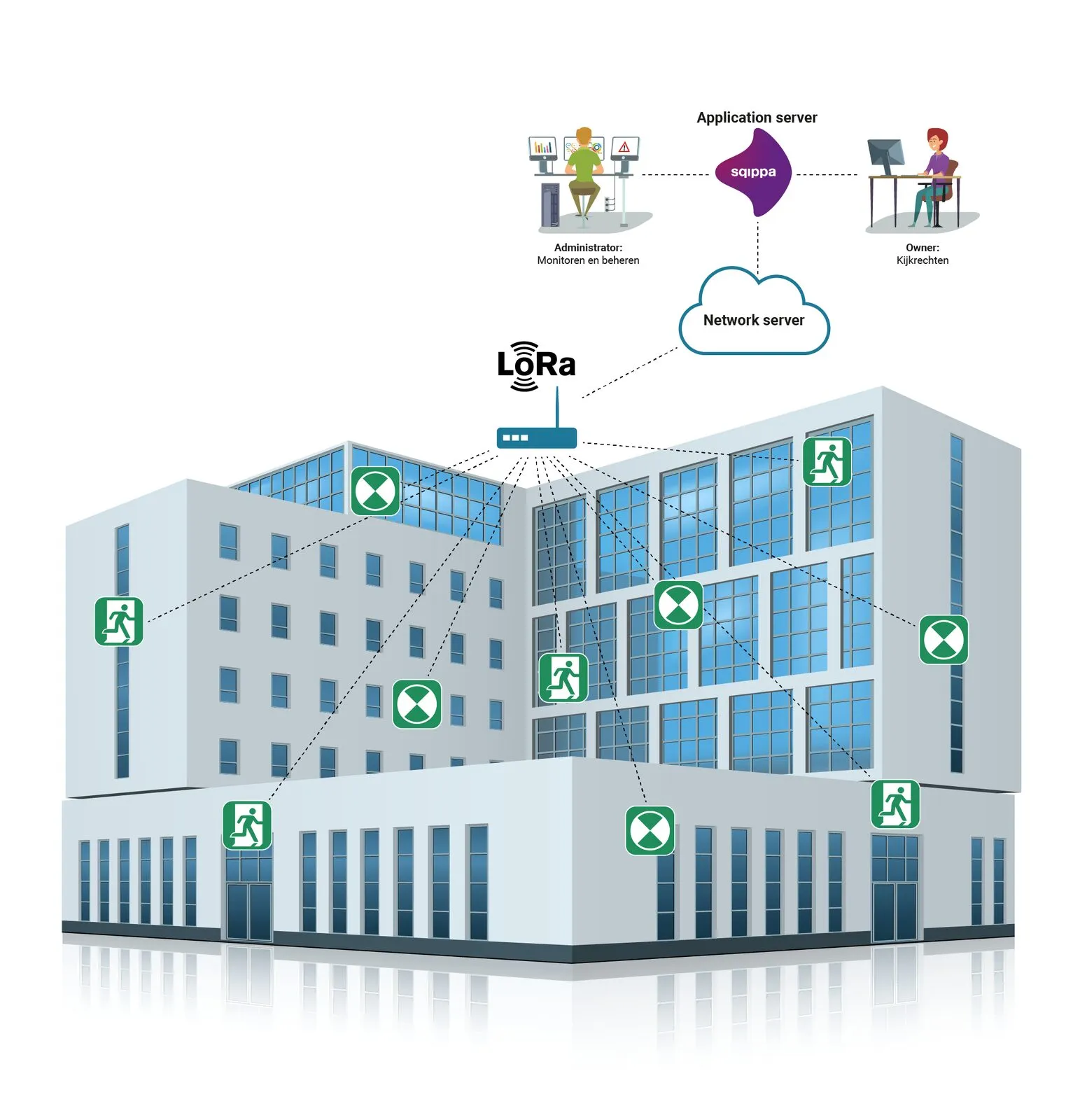
Remote monitoring of all emergency lighting luminaires offers an efficient solution and is attracting growing interest, Leinders observes. “Digital monitoring of luminaire status provides continuous visibility of their operation and any faults. This makes it possible to carry out inspections, repairs and replacements in a more targeted way. It also enables businesses to move from periodic maintenance to data-driven management.”
Ready for the future
“Our built environment is rapidly going digital,” says Leinders. “It makes sense to include wireless emergency lighting management in this transition. Emergency lighting has an average service life of 10 to 15 years. By investing in wireless emergency lighting management today, building owners can prepare their buildings for a future in which staff shortages, the sustainable deployment of employees, energy saving and CO₂ reduction are increasingly important issues.”
Greater assurance
“More and more is expected of maintenance providers and building owners,” Leinders emphasises. “In addition to the issues already mentioned, we are seeing increasingly stringent and complex legislation and regulations governing emergency lighting and its maintenance. Wireless emergency lighting management offers an important solution, providing greater visibility, simplifying management and easing the burden on building owners.”
New features
HBI Bisscheroux continually develops its products to support building owners and maintenance providers in the future. Leinders cites a new calendar-based scheduling feature for theatres and cinemas, which allows mandatory tests to be carried out fully automatically after opening hours. This removes the need to deploy maintenance staff at night, improving efficiency, cutting costs and reducing the burden on employees. “It also means that unannounced self-tests during performances are a thing of the past.”
The automatic logbook is another useful feature, recording information updates and luminaire test results automatically. “We are also exploring the potential of predictive maintenance, using AI to analyse historical luminaire data. In the future, this will enable us to predict when maintenance or replacement is needed, so we can act even more precisely and efficiently.”
New business models
Building owners can easily switch to wireless emergency lighting management by simply replacing their emergency lighting luminaires, or having them replaced. “The biggest change concerns the role of the installer or maintenance provider, who will need to adapt their business model,” says Leinders. “This calls for some creativity and entrepreneurial spirit, but the results are highly rewarding. The data generated by wireless devices provides valuable new insights and creates opportunities for new business models. It also makes it easier to comply with legislation and regulations, including the Environment and Planning Act, ISSO79 and NEN EN 50172. Safety can be assured to an even higher standard. Emergency lighting management is no longer just a snapshot in time.”
Comprehensive support
HBI Bisscheroux provides extensive documentation on preparing for, implementing and benefiting from wireless emergency lighting management. “As all the required materials can be purchased from us, extra coordination and unnecessary delays are avoided,” says Leinders. “We also provide support with system design: which luminaires are needed at which locations? We also supply stickers that can be easily placed on the floor plan. This allows the luminaires to be configured digitally quickly and efficiently after installation.”
After installation, maintenance providers can turn to HBI Bisscheroux for practical training in digital emergency lighting management. HBI Bisscheroux also offers a ten-year warranty on wirelessly managed luminaires. The warranty covers the entire luminaire, including the battery, meaning maintenance providers do not need to visit the site for ten years.
A business enquiry for HBI Bisscheroux? Get in touch
Companies in this story

Keep following this
Get an email when a new story is published. No account needed.
- ThemeBuilding electrical systems
- SubjectElectrical engineering
- CompanyHBI Bisscheroux