Solve the drinking water shortage with rainwater
Text Lieke BousemaImage Wildkamp
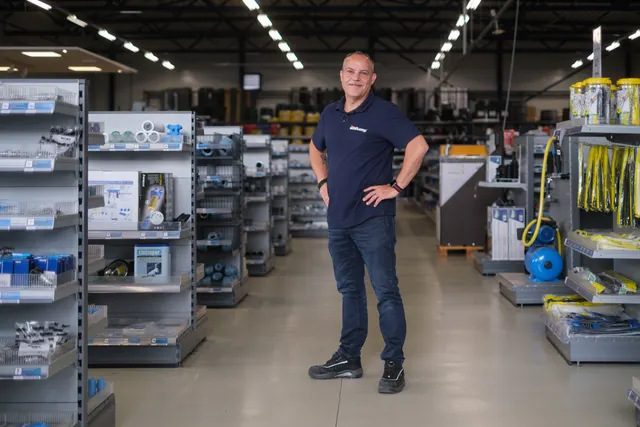
In a world where water is scarce, it seems unthinkable that we flush our toilets with precious drinking water. Yet, unfortunately, that is exactly what we do. Did you know that in the Netherlands we use 128 litres of drinking water per person per day? And that, on average, 46% of this is flushed down the toilet or used for the washing machine and/or garden? These are uses that do not require expensive drinking-water quality at all! “Wasting drinking water is incredibly wasteful and entirely unnecessary,” says Sander Schonewille, product specialist at Wildkamp. “Rainwater is perfectly reusable. This is not only better for the environment, but also delivers significant water savings. Thanks to Wildkamp’s expertise and extensive product range, systems like these are also easy to install.
Many parts of the country are facing grid congestion as a result of the accelerated energy transition and rising energy demand. Less well known is that we are also facing drinking water supply constraints. “The drinking water shortage is still unfolding somewhat under the radar,” acknowledges Rudolf van de Velde, product specialist at Wildkamp. “Even so, the security of our drinking water supply is at risk. Research by the RIVM shows that major drinking water shortages will arise as early as 2030. Current forecasts even predict a shortfall of 102 million cubic metres of water. As it will be impossible to make up this shortfall, we will have to save as much as 28 litres (!) of drinking water per person per day. One way is to reuse rainwater intelligently.”
Problems on the horizon
The water shortage is already a regional issue, Schonewille says. “Our drinking water network simply cannot cope with rising demand. Without action, this will lead to problems. For example, businesses such as holiday parks and campsites are already unable to expand, or expand further, because the water company cannot guarantee sufficient capacity at peak times. Drinking water is also forecast to become 30% more expensive in the coming years. Water companies pass these costs on to major users. For businesses, for example, this is reason enough to switch to rainwater reuse. More and more households are also taking action, following the National Plan for Drinking Water Conservation, which various municipalities are already preparing for.”
Rainwater reuse
“We use around 35 litres of drinking water per day to flush the toilet and 17 litres to wash our clothes,” says Van de Velde. “We also use an average of around 1,100 litres of treated drinking water each year to water the plants in our gardens. That is wasteful and unnecessary, as rainwater is ideal for these purposes! Given the drinking water shortages, we expect rainwater systems to increasingly become the norm, for example in sustainable building projects.”
Practical and sustainable
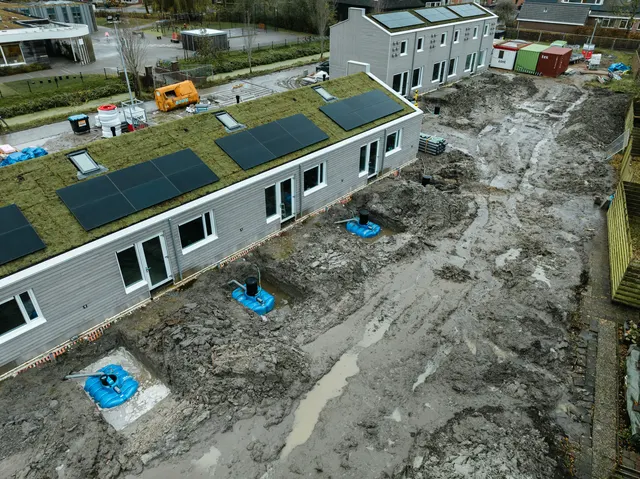
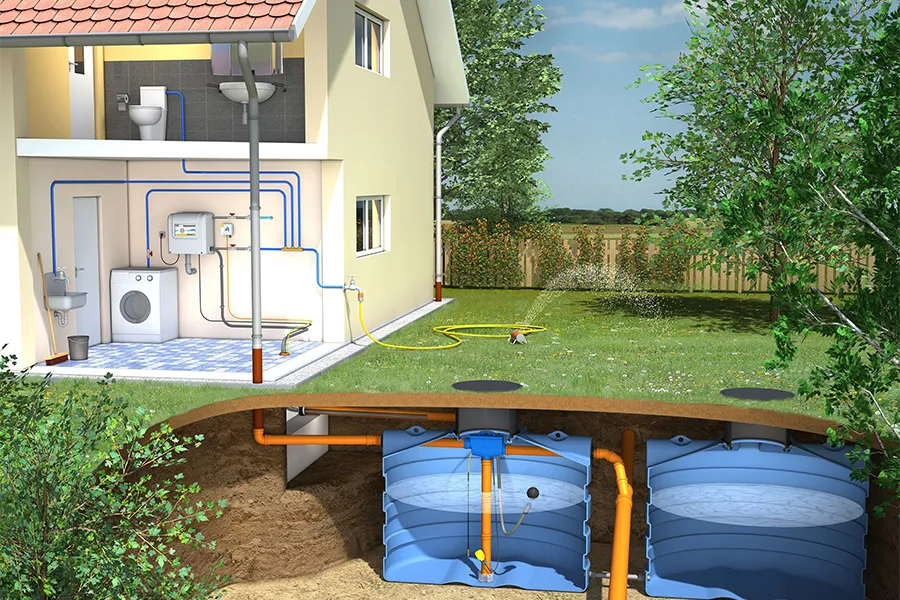
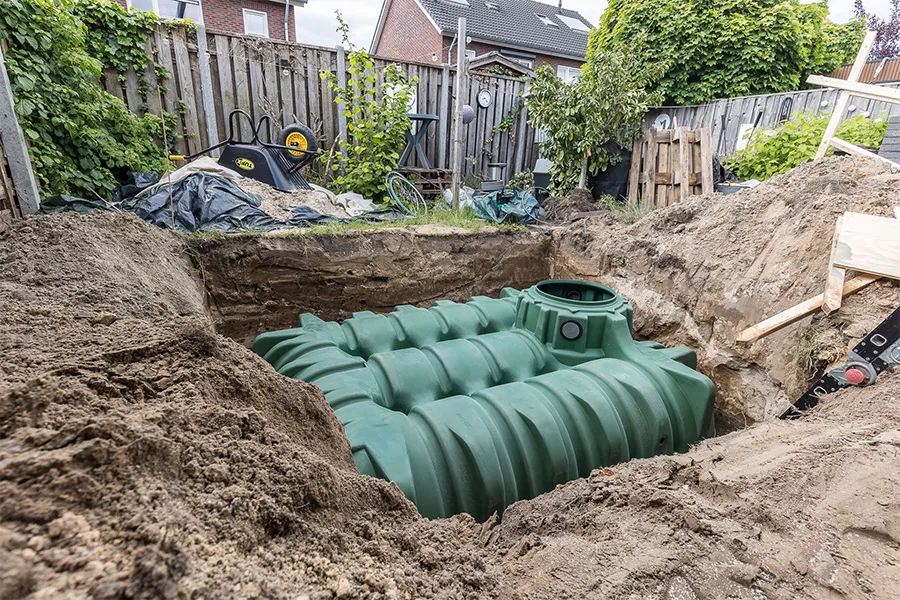
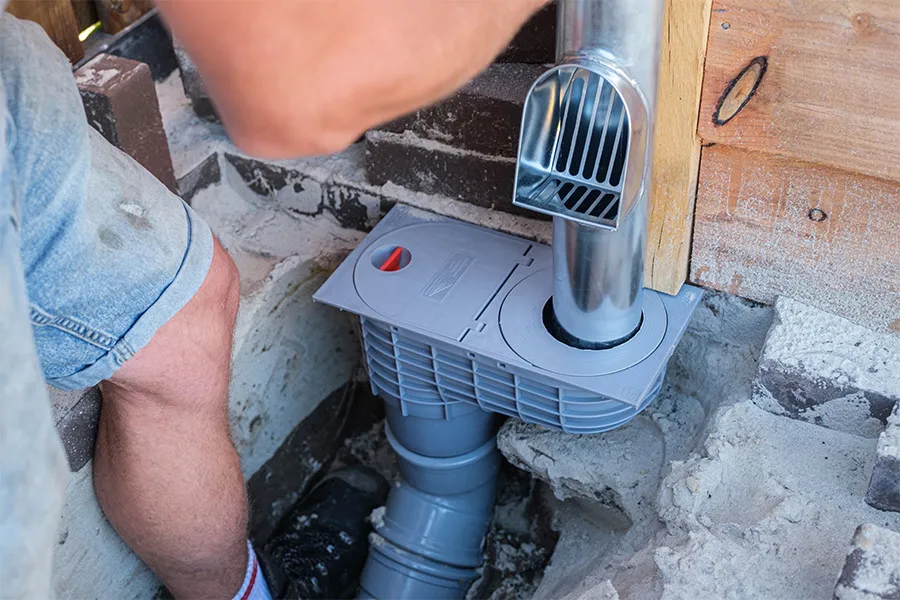
A rainwater system is a practical and sustainable solution for collecting and using rainwater, Van de Velde explains. “The system collects water from the roof and channels it through gutters and filters into a storage tank. The water is then pumped out and filtered again before being used for everyday applications such as toilet flushing and washing machines.”
For households and businesses
As well as private homes, rainwater systems are particularly suitable for larger buildings such as apartment blocks, schools, campsites and sports centres, Schonewille says. “Using rainwater to flush toilets, for example, can also lead to significant drinking water savings here. Businesses can also use rainwater, for example for cleaning or as process water. We are happy to advise on the right solutions.”
Bespoke solutions
“Designing a rainwater system involves more than simply installing a storage tank, pumps and pipes,” Van de Velde emphasises. “A good design is bespoke and must take into account factors such as roof area, rainfall and the water consumption of the home or business. There are also various types of storage tank (plastic or concrete), filters (leaf traps, silt traps, sediment filters and activated carbon filters) and pumps (inside or outside the tank, with a variable speed drive or pump controller) to choose from. Making the right selection is therefore essential, and we are very happy to help.”
Rainwater infiltration
An important complement to rainwater harvesting is rainwater infiltration when the rainwater storage tank is full. “Rainwater infiltration ensures that excess rainwater is not discharged straight into the sewer, but instead infiltrates the ground on the site,” says Schonewille. “This allows rainwater to replenish groundwater, reduces pressure on the sewer system and prevents the soil from drying out.”
A business enquiry for Wildkamp? Get in touch
Companies in this story

Keep following this
Get an email when a new story is published. No account needed.
- ThemeFuture-proof water and sanitary systems
- SubjectWater treatment
- CompanyWildkamp