Your flue gas duct renovated in one day
Text Lieke BousemaImage F.F. Kanaalrenovatie B.V.
Flue renovation specialist wins Benelux Enterprise Awards 2025
The flue gas renovation sector is undergoing a far-reaching transformation, driven by European climate policy and national renovation strategies. Demand is growing rapidly for high-quality renovation solutions that can be delivered with minimal disruption. One company is at the heart of this transformation: F.F. Kanaalrenovatie B.V. specialises in renovating flue gas systems in existing residential buildings and won an award for ‘Best Flue Gas Exhaust Renovation Specialists 2025’ at the annual Benelux Enterprise Awards.
“Many detached homes, apartment blocks and commercial buildings in the Netherlands have flue gas ducts that are fifteen to twenty years old and do not (yet) meet the new, stricter requirements,” says Rudie Balink of F.F. Kanaalrenovatie B.V. “These ducts need to be renovated to ensure the flue gas system continues to operate properly and safely in the future. With FuranFlex, we offer a high-quality solution that can be installed very quickly, for both individual ducts and shared systems.”
Keeping ‘what is still in good condition’
“When a new boiler is installed, it must be guaranteed that the flue gas duct will last for the lifetime of the boiler,” says Balink. “However, very few inspectors can assess this objectively. As a result, in practice the flue gas duct is almost always renovated or replaced when a new boiler is installed. This not only causes considerable disruption, but is also at odds with today’s focus on sustainability, limiting disruption and keeping ‘what is still in good condition’.”
The importance of positive pressure
“Flue gas ducts are often made of aluminium, which is subject to pitting corrosion,” says Balink. “In addition, the silicone seals at the joints dry out, meaning they no longer seal properly over time. Shared ducts also face the problem of negative pressure.” Most older shared flue gas ducts in the Netherlands are designed to operate under negative pressure, he explains. “This is hardly surprising, as warm air rises and creates a natural draught in the duct. However, the flue gas temperatures of newer types of central heating boiler are much lower, so this thermal draught disappears. As a result, flue gases remain in the duct or even sink downwards, where they enter the air supply section of the system. The boiler then draws in the flue gases and goes into fault mode. A positive-pressure duct addresses this problem.”
Sustainable, fast and with minimal disruption
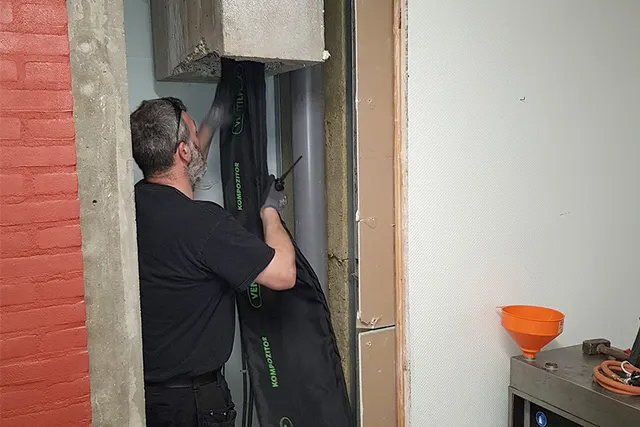
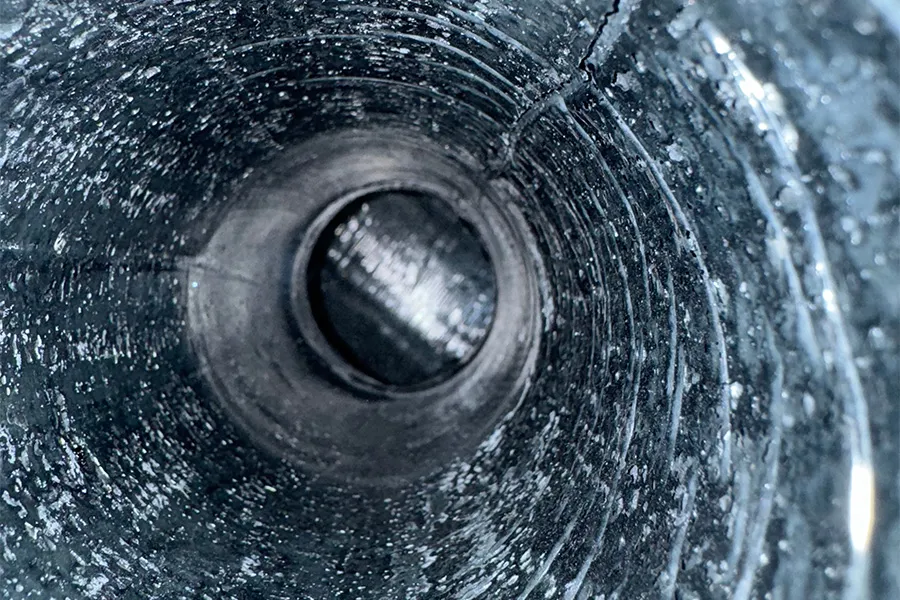
For the renovation of shared and individual flue gas ducts, F.F. Kanaalrenovatie B.V. uses FuranFlex, which can be installed quickly with only minimal building work. It also makes full use of the capacity of the existing duct. “FuranFlex is suitable for both conventional and high-efficiency boilers and is available for ducts from 80 to 800 mm. The solution is an innovative, flexible chimney liner, supplied to size from the factory and made up of three layers: an outer layer of Kevlar-reinforced glass fibre, an intermediate layer of composite and glass fibre, and an inner film that is removed from the pipe once it has cured. As we spend only a few hours on each home, disruption is kept to a minimum.”
For both low-rise and high-rise buildings
FuranFlex has CE marking and a favourable KIWA Gastec assessment. “The FuranFlex system is suitable not only for low-rise buildings, but also for high-rise projects,” Balink emphasises. “A feasibility study is always carried out on site before installation. Is renovation technically and financially viable, or is complete replacement advisable? We then get started straight away.” Branch connections have recently also been renovated using a liner, he says. “By relining the branch connection, we reduce building work and disruption while maintaining the same quality. This method of renovating branch connections has also received a positive assessment from KIWA Gastec.”
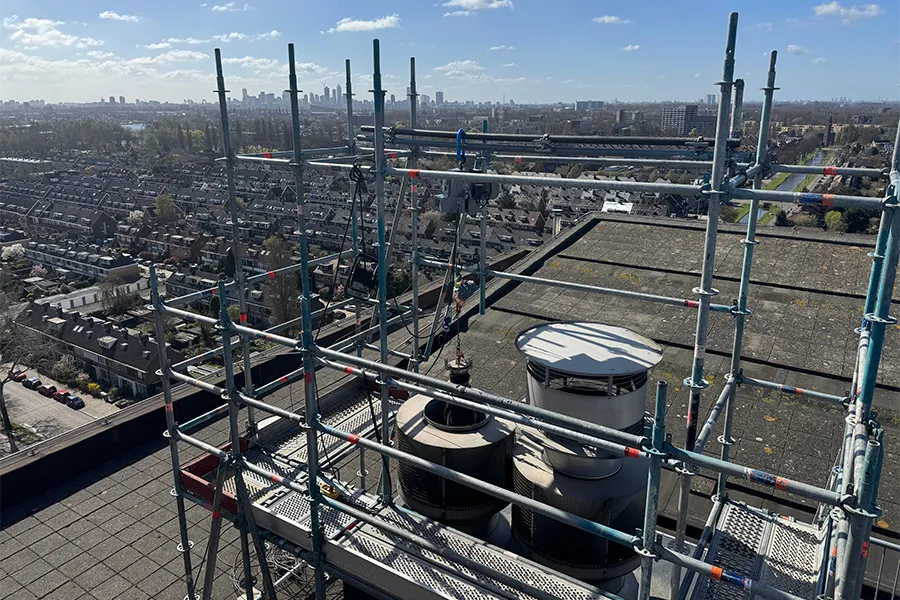
Once the branch connections are ready, FuranFlex is installed in the duct. “We then fit special adapters to both ends. These adapters are connected to a steam generator, which is positioned outside or on the gallery. The steam pressure expands the liner, and after just two hours the duct has a joint-free, seamless and airtight lining that is resistant to heat, corrosion and moisture. We can renovate up to four individual ducts a day; a shared duct with six connections takes one day.”
Question about this story? Ask your question
Keep following this
Get an email when a new story is published. No account needed.
- ThemeSustainable refurbishment of existing buildings
- SubjectDuctwork