Digital building scan lays the foundations for sustainable lighting projects
Text Lieke BousemaImage Maas & Hagoort
For installers and end users, a complete understanding of the existing lighting situation is essential to successfully carry out renovations, sustainability initiatives and optimisation projects. A comprehensive overview of the location, condition and characteristics of the current lighting products provides the information needed to determine the desired improvements. “Traditionally, this survey involved counting, measuring and recording luminaires by hand,” says Ben Dorst, operations director at Maas & Hagoort. “The process is labour-intensive, prone to error and very time-consuming, both during the on-site survey and when processing the data collected.” To make the process more efficient and reliable, Maas & Hagoort uses a digital lighting scan as a survey tool.
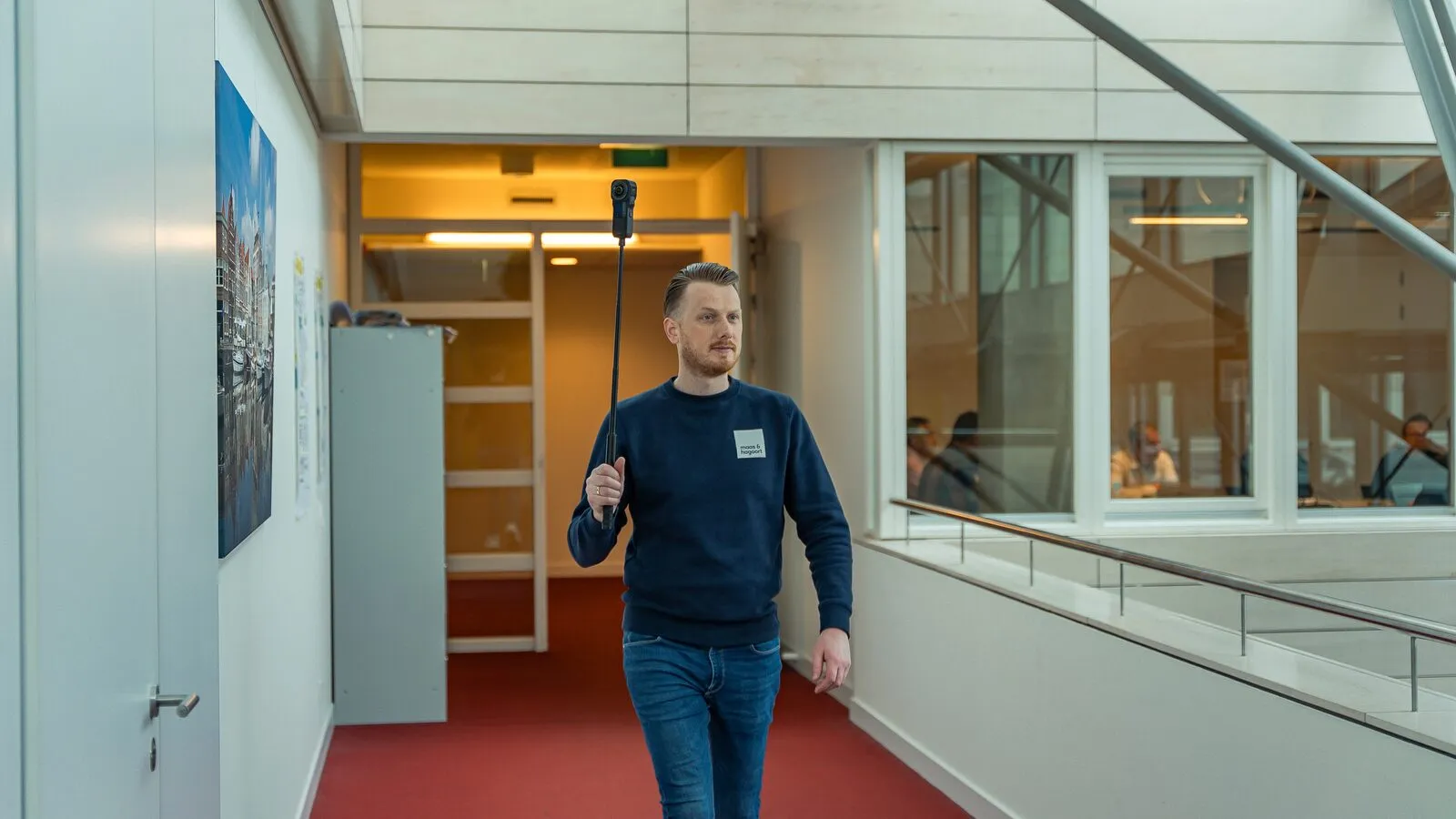
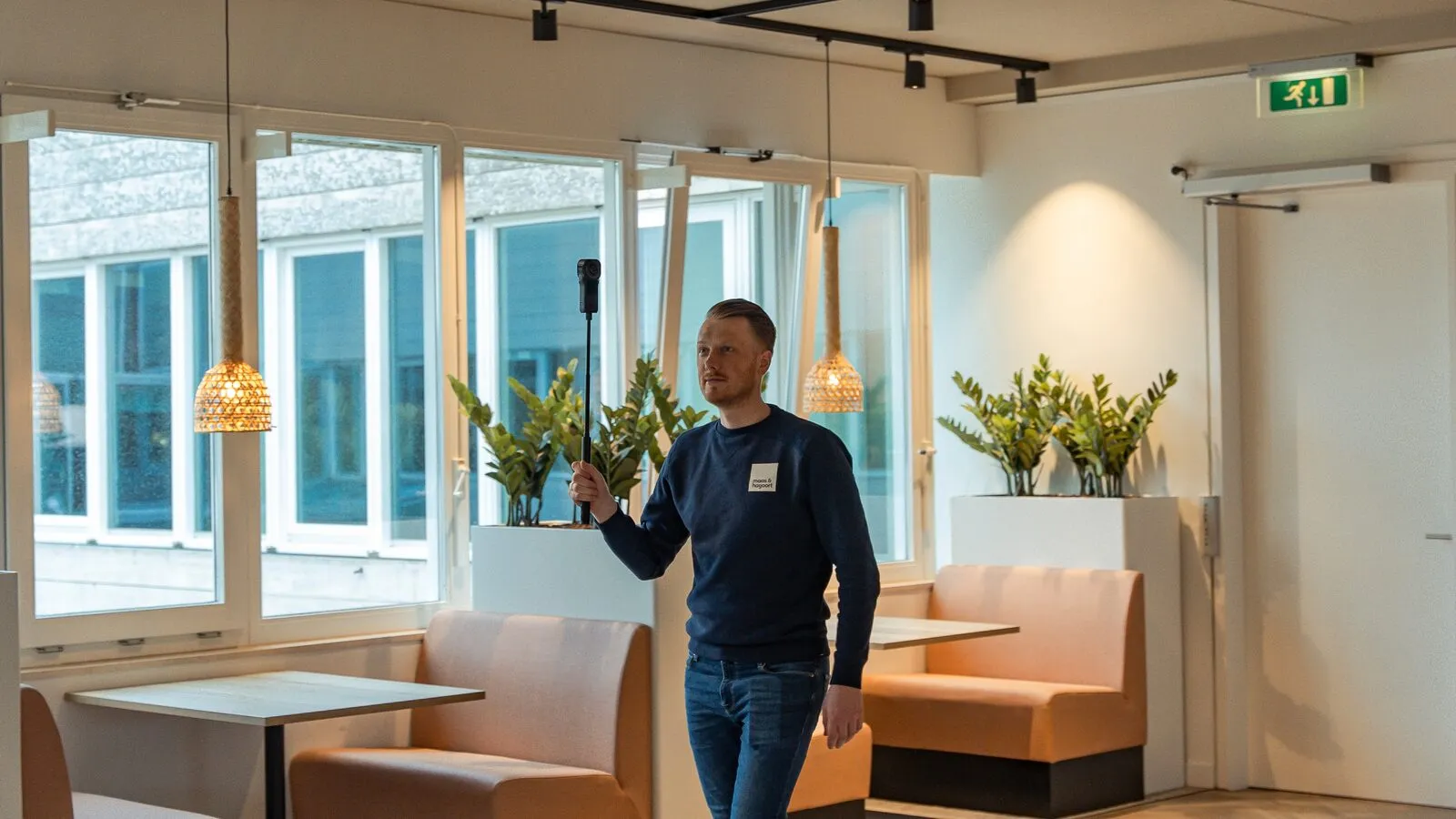
“The lighting scan provides insight into the location, condition and characteristics of the lighting products in place, and has been developed specifically for complex projects, including those in healthcare, education, commercial buildings and government property,” says work planner Kees Dorst, who carries out lighting surveys on behalf of Maas & Hagoort. He uses a 360° camera to help make lighting projects more efficient, reliable and transparent. “As we walk through the building, images are captured automatically and then linked to the floor plans in the cloud,” he explains. “The result is an interactive 360° lighting scan that allows users to navigate through the building online, zoom in on details and consult information about the lighting.”

Focus on sustainability
“For a long time, our organisation focused on new-build projects,” says Ben Dorst, who turns the building scan into practical recommendations. “That changed in 2023, when the European phase-out of conventional fluorescent tubes and PL lamps shifted market demand. Previously, the emphasis was on designing new lighting schemes and supplying new luminaires. Increasingly, the focus turned to making existing lighting installations more sustainable with LED. As an organisation, we adapted to this shift.”
Fully documented digitally
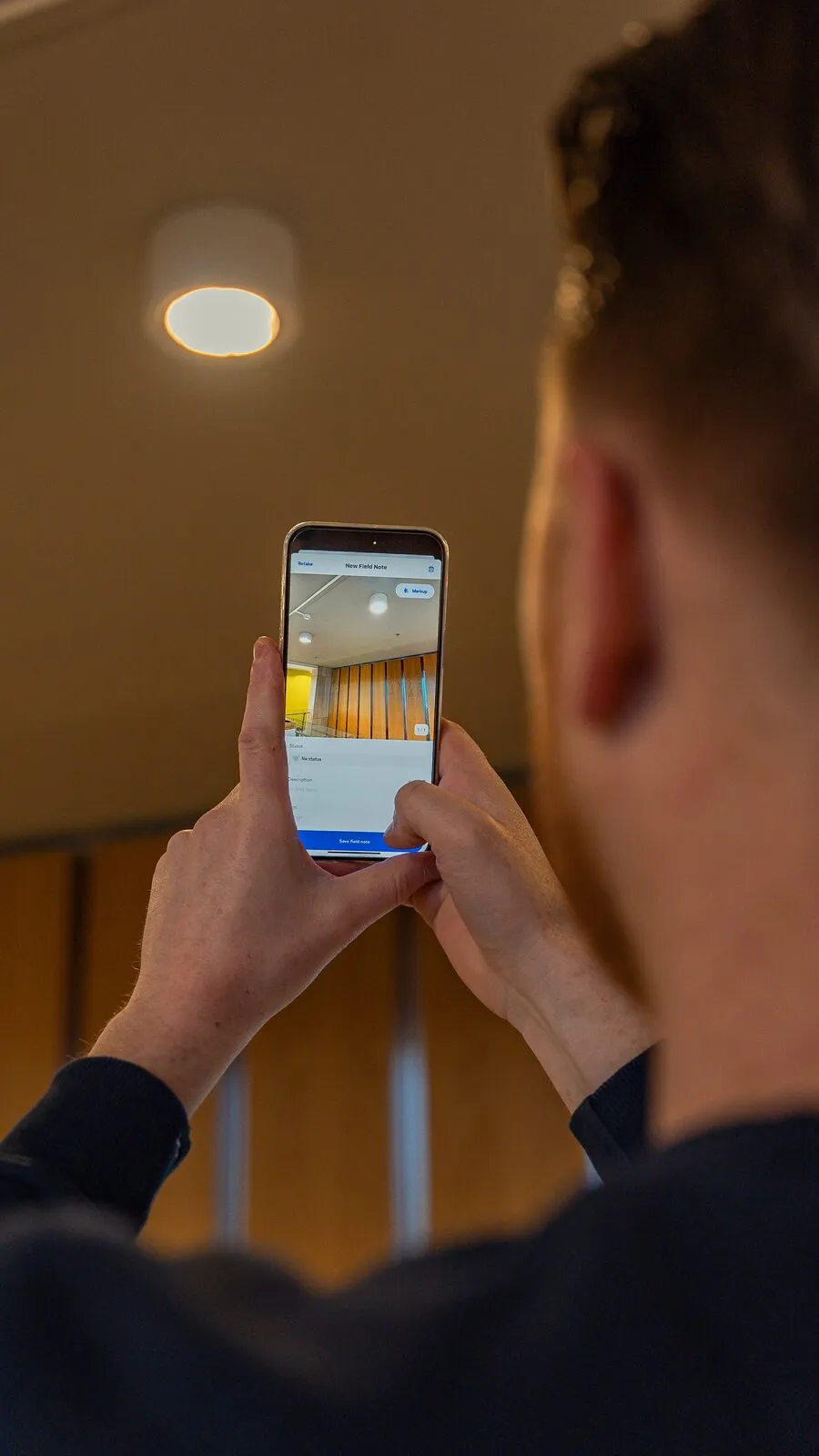
“Since detailed lighting information is missing in many buildings, replacement projects usually start with a thorough lighting survey,” says Ben Dorst. “At first, this meant carrying a notepad and a separate camera or phone. It was not only time-consuming, but also meant we regularly had to return to collect missing information. There was also a risk of transcription errors.” Maas & Hagoort found a solution in the property sector, where it is common to document buildings in full using a Matterport system and present them in an interactive 3D environment. “Our ambition was to create something like Google Street View for lighting installations. Our digital lighting scan is based on an OpenSpace platform and a 360° camera, which are used to document buildings in full. From classrooms and offices to utility cupboards and toilets. This means we can walk through the building virtually at any time and retrieve the information we need, from the number of luminaires to their condition and energy-saving potential.”
Three levels
Maas & Hagoort offers three levels of lighting survey. A baseline survey maps the existing situation, while a gap analysis identifies the differences between the current and desired situations. A comprehensive plan goes a step further, providing a complete lighting solution that includes a lighting scheme, energy-saving recommendations, a lighting control plan and the information needed for the specification.
Plan, carry out
and evaluate more effectively
The digital lighting scan offers significant benefits, Ben Dorst emphasises. “Filling in paper forms and taking photographs on site are a thing of the past. Instead, all information is recorded and stored digitally, reducing the risk of errors. It also creates a reliable dataset that informs decisions about the maintenance, replacement and extension of lighting installations. The interactive nature of the scan gives all parties involved a clearer understanding of the situation, enabling them to plan, carry out and evaluate lighting projects more effectively.” Faces are automatically blurred by the software, ensuring that building users’ privacy is protected in accordance with GDPR legislation.
The value of the digital lighting scan is evident in Maas & Hagoort’s successful projects, which have brought lighting into line with current standards, improved working comfort and achieved energy savings of 50 to as much as 80 per cent.
A business enquiry for Maas & Hagoort? Get in touch
Companies in this story
Keep following this
Get an email when a new story is published. No account needed.
- ThemeSmart buildings and controls
- SubjectElectrical engineering
- CompanyMaas & Hagoort