Protect your drinking water installations against contamination and abnormal water pressure
Text Lieke BousemaImage Caleffi
The drinking water flowing from Dutch taps is clean and safe to drink. However, its quality is coming under increasing pressure as a result of climate change and contaminants such as fertilisers, pesticides, medicines, microplastics and PFAS. The levels of heavy metals such as lead, nickel, chromium, arsenic and cadmium are also rising. Although water companies monitor water quality daily and take action where necessary, we still need to take measures ourselves, for example to protect our installations.
Water companies only measure the quality of the drinking water supplied to our buildings. Users themselves are responsible for its quality downstream of the water meter, explains Michael Valk, Regional Manager Sustainable Solutions at Caleffi. And that responsibility is growing. “We use and distribute our drinking water through a pipe network that is becoming increasingly complex,” he says. “A wide variety of users are connected to it, from homes to commercial buildings, healthcare facilities and industry, bringing significant risks of contamination. Combined with the declining quality of drinking water, this makes now the right time to take action.” Caleffi supports this with innovative, watertight drinking water protection devices that meet all current requirements.
Prevent water from flowing back
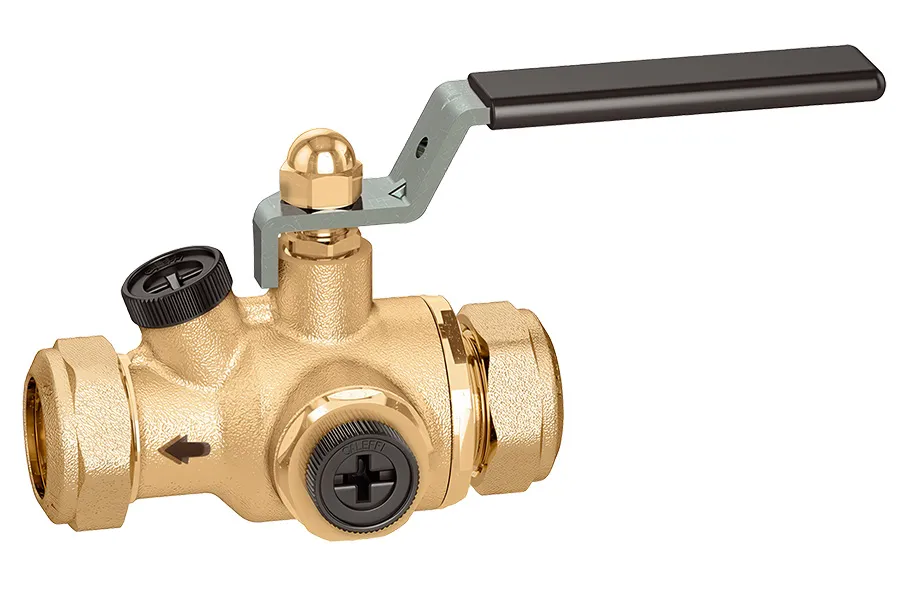
Caleffi International has been an expert in hydraulic components and systems for heating systems, and in the protection of drinking water installations, for many years. Its range includes check valves and backflow preventers for different risk categories, which prevent contaminated water from flowing back from the drinking water installation into the public water network. “This can happen, for example, if there are breaks or pressure fluctuations in the distribution network, causing the flow to reverse,” says Valk. “Our check valves and backflow preventers are installed between the public water network and the user’s pipework. They prevent water from the two networks coming into contact by closing automatically when water flows back.” As an example, he cites the check valves in the 324 series, the only ones on the market that can be inspected and refurbished (replaced) under pressure.
The use of backflow preventers is compulsory in the Netherlands. “Most households also have a device at the water meter and washing machine,” says Valk. “But less well known is that one is also required, for example, at a coffee machine. There is still plenty of scope for improvement in this area. For businesses, check valves and backflow preventers are even a legal requirement in the appropriate locations, and failure to comply can lead to heavy fines or even closure.”
Reduce the inlet pressure
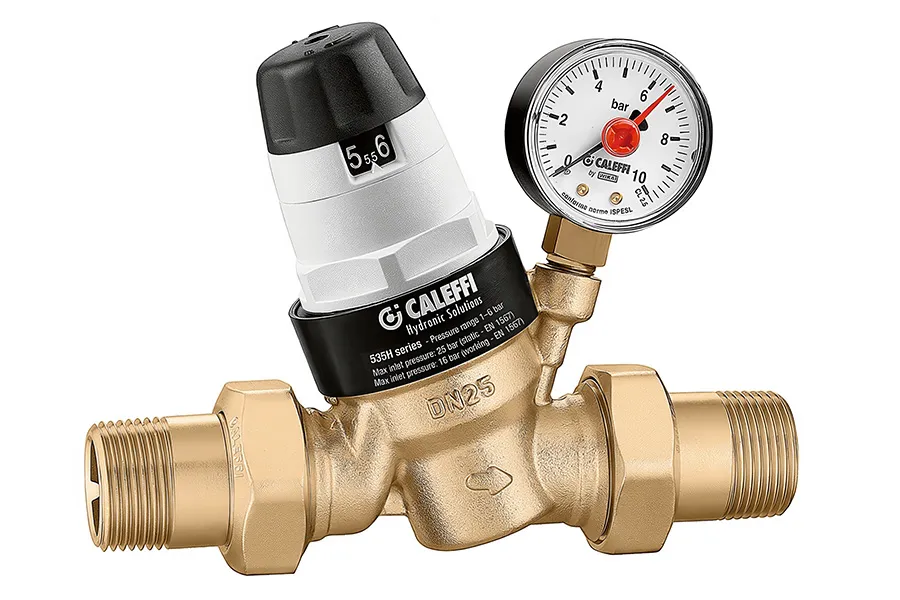
Caleffi’s pressure reducing valves are also worth considering. They are installed to reduce and regulate the inlet pressure from the public water network. “Our pressure reducing valves are particularly suitable for high-rise projects, for example, where they can be installed on a riser or in the drinking water pipes serving individual apartments,” says Valk. “This prevents excessive water pressure from literally bursting installations such as kitchen and shower taps.”
Prevent the pressure in the water heater from rising too high
Caleffi has developed a safety group for water heaters (528 series) that prevents the pressure inside the heater from rising too high, which could cause hot water to flow back dangerously into the drinking water installation or even cause the heater to split open. Because the individual components of the safety group can be replaced separately, the impact of servicing and maintenance is limited, says Valk. “It is also a sustainable choice, as all components that are still in good condition can be retained for future use.”
Prevent the storage vessel from imploding
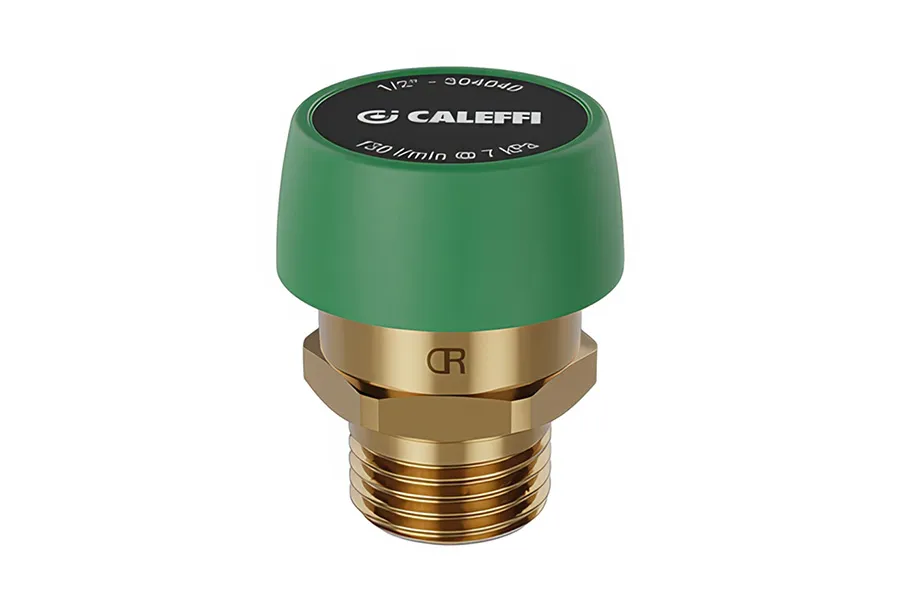
Until the 1990s, many people had a gas-fired water heater in the loft to provide domestic hot water. “These were fitted with an air vent as standard,” says Valk. “When combination boilers came onto the market, however, an air vent of this kind was no longer needed. As a result, its safety function has been somewhat forgotten. But with the introduction of our heat pumps with hot water storage vessels, this technology is highly recommended. It prevents implosion caused by negative pressure.” Valk recommends the 3040 series vacuum breakers for drinking water installations. They are available in half-inch and three-quarter-inch sizes. “The air vents are installed on top of the water heater or at the highest point of the cold water pipe leading to it. As soon as negative pressure relative to atmospheric pressure is detected, they draw in air immediately, providing durable protection for the vessel.”
Absorb pressure surges in the pipes
The final product group Valk is keen to highlight is water hammer arrestors for fast-closing taps and valves, such as those on washing machines and dishwashers, or single-lever taps. They absorb pressure waves in the water pipe, eliminating the banging caused by water hammer. This also helps protect the installation, preventing faults in fittings and supports. “What makes Caleffi’s water hammer arrestor unique is its spring loading, which greatly reduces the risk of Legionella infection because no stagnant water remains inside the device.”
Most of the drinking water protection range carries Kiwa certification.
Een zakelijke vraag aan Caleffi International N.V.? Get in touch
Companies in this story

Keep following this
Get an email when a new story is published. No account needed.
- ThemeFuture-proof water and sanitary systems
- SubjectWater treatment
- CompanyCaleffi International N.V.