Out with the old boiler, in with a new CLV system
Text Lieke BousemaImage Schiedel
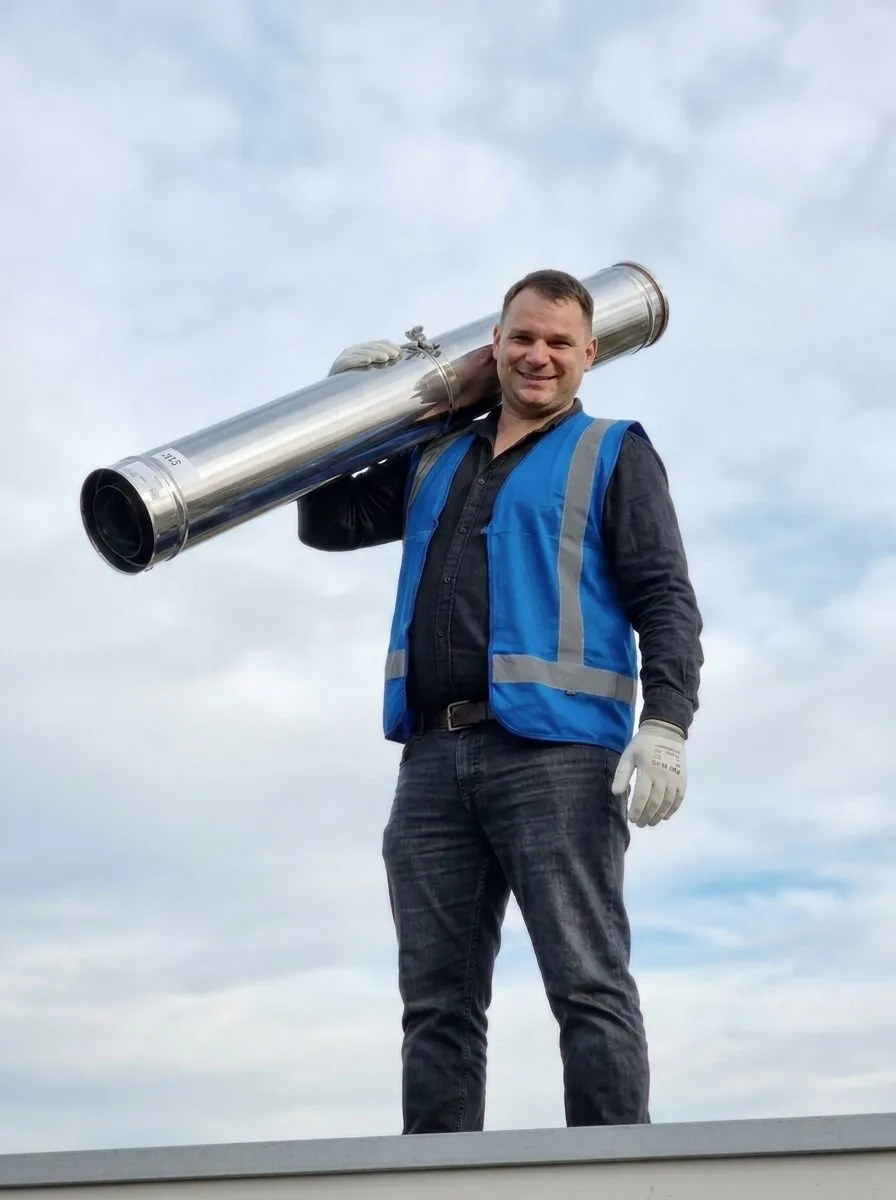
Replacing a central heating boiler in an apartment building is not simply a matter of removing the old appliance and connecting a new one. Renovation of collective flue gas and air supply systems (CLV) in particular requires an integrated assessment and a systems approach. After all, the boiler, flue gas duct and air supply must function together as a single system. Schiedel therefore supports installers and VVE management companies with complete CLV solutions, including comprehensive advice, training and project-specific engineering.
Boiler renovation in high-rise buildings: complex and high-risk
According to regulators and Techniek Nederland, the number of reported CO near-misses and incidents rose from 99 in 2024 to 106 in 2025. Defective flue systems still cause hundreds of incidents every year, around 150 hospital admissions and dozens of deaths. Combined with stricter enforcement of the Gasketelwet, this presents the installation sector with major challenges.
Renovations in apartment buildings bring significant changes: better building insulation calls for smaller, lower-output boilers, requiring the CLV system to be recalculated in full. The high concentration of high-rise buildings across the Benelux is accelerating the renovation challenge. In the Netherlands, ageing high-rise shafts and the Gasketelwet are putting VVE managers and installers under considerable pressure. In Belgium, masonry shunt flues are creating an impasse: a new condensing boiler cannot be connected to a flue serving atmospheric appliances, while VME decision-making often stalls because a two-thirds majority is required. Together with stricter inspections and higher VAT rates, this is also putting Belgian syndics and VME’s under considerable pressure to upgrade flues quickly, in compliance with the law and with the future in mind.
“The real challenges in the replacement market therefore lie mainly with the installer,” says Elzo Kerstjens of Schiedel. “Unfortunately, we are also increasingly hearing that smaller installers are stopping work on heating boilers. They have to design the new boilers and CLV system as a single functioning whole, and they also bear the heavy responsibility and legal liability of surveying and redesigning ageing, complex multi-appliance installations and handing them over safely under strict certification requirements.” This means looking not only at the appliance, but also at the installation and, importantly, residents’ preferences. Some residents of apartment buildings want to retain ownership of their boiler, leading to lengthy preliminary processes and discussions within VVE’s during this wave of renovations.
The CLV system as the cornerstone
of safe renovation
Because multiple homes are connected to one system in collective flue gas installations, any modification or individual requirement has an immediate impact on the entire installation. “One common problem we now have to put right is when several boilers have been routed separately through a single shaft using flexible pipes. The notorious ‘spaghetti shaft’ is a recipe for trouble: one leaking or damaged flexible pipe and all the boilers develop air supply faults,” Kerstjens explains. Since the strict enforcement of the Gasketelwet and the tightened NPR 3378 guidelines, certified installers are no longer allowed to approve these confusing, high-risk shaft configurations during inspections. “An integrated CLV system is a future-proof choice that ensures every appliance operates optimally. The impact of this kind of remedial work on the MJOP is ultimately limited compared with the cost of ongoing faults.”
Calculating and physically installing a new CLV system in an existing building remains a complex, bespoke process, in which any change to boiler type or output requires an assessment of the entire system. Schiedel’s stainless steel CLV and Half-CLV systems offer a service life far exceeding that of central heating boilers, thanks to their high corrosion resistance and secure, pull-resistant joints. To meet the changed requirements of new generations of boilers, such as sizing and air supply, Schiedel offers a wide range of connection components and configurations, including concentric and parallel designs, allowing the stainless steel system to be matched seamlessly to every boiler choice and building layout.
Engineering tailored to the building layout
As careful design of a new CLV system is crucial in large-scale renovations, Schiedel’s in-house Center of Engineering (CoE) provides installers with full support. Its engineers produce detailed, project-specific 2D and 3D CAD drawings and chimney calculations, and design bespoke solutions where needed. This thorough project support and preparation from the CoE minimises uncertainties, prevents unforeseen issues on site and allows the installer to focus entirely on a smooth installation.
Safety as a shared responsibility
In renovations of collective systems, residents’ safety is paramount, as a design error directly affects multiple homes. In line with the recommendations of the Ministry of the Interior and Kingdom Relations (BZK), this requires close coordination between the installer, boiler supplier and CLV manufacturer. Schiedel safeguards safety by bringing together system expertise, engineering and project support in one substantiated design that ensures reliable, safe operation over the long term.
A business enquiry for Schiedel B.V.? Get in touch
Companies in this story

Keep following this
Get an email when a new story is published. No account needed.
- ThemeSustainable refurbishment of existing buildings
- SubjectHVAC
- CompanySchiedel B.V.
- CompanyTechniek Nederland