Daikin: A healthy school indoor climate requires an integrated approach
Text Jerry HelmersImage Daikin
A healthy indoor climate in schools is not a luxury, but a basic requirement for effective learning and working. We all know this, yet many Dutch school buildings still fail to meet current requirements for ventilation, comfort and energy use. According to Daikin, this is where the building services sector has an important role to play. With its Frisse Scholen concept, the manufacturer aims to give installers the tools to engage more effectively with schools, school boards and property owners, and ultimately create a healthier indoor climate in schools across the Netherlands.
The principle is clear: anyone working on school buildings is shaping the environment in which children spend a large part of every day. Health must therefore be a priority. Not only because legislation and regulations are increasingly driving this agenda, but above all because the wellbeing of pupils and teachers should come first. It really is that simple.
From standards to a practical proposition
Daikin’s Frisse Scholen concept aligns with the national ‘Frisse Scholen’ Programme of Requirements, which brings together five themes: air quality, temperature, energy, noise and light. The framework sets ambition levels A, B and C, each with its own performance requirements for factors including CO2, ventilation and noise levels. For installers, the challenge is often not just the technical work, but also translating those requirements into a clear and compelling proposition for the client. According to Simon Klijnstra, Sales Engineer Consulting at Daikin, this is a key part of the approach. “The concept is designed to help installers in their business development with schools and other stakehol

ders, making the case for a healthy and comfortable school building concrete and easy to follow. We take an integrated approach, treating heating, cooling, ventilation, control and monitoring as one coordinated system. This should not only provide a healthy indoor climate, but also deliver measurable performance during operation.” The material provided also highlights benefits such as continuous ventilation, room-by-room CO2-based control, thermal comfort, energy efficiency, and standardisation in design and installation.
Why it matters to installers
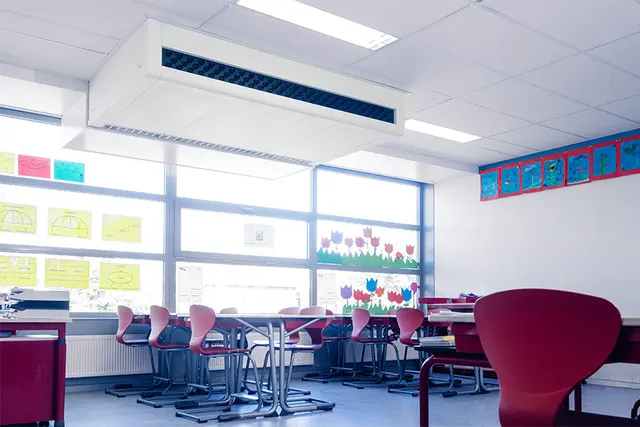
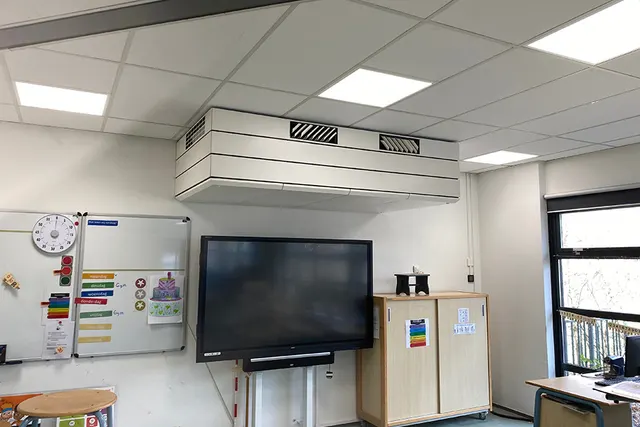
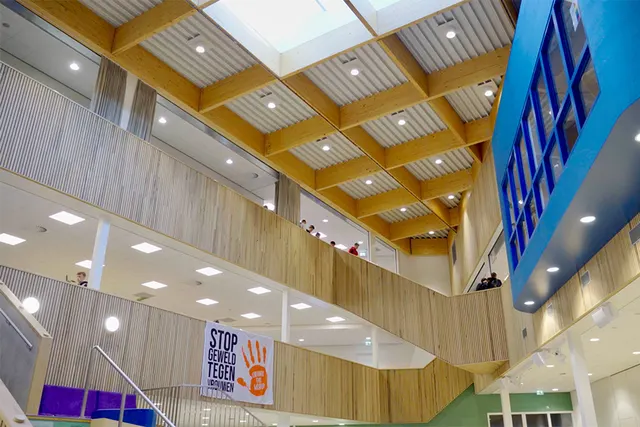
This matters to installers because schools often have to contend with ageing buildings, limited investment budgets and complex renovation or new-build projects. They need solutions that are not only technically sound, but also manageable to install and maintain. Daikin aims to establish Frisse Scholen in this very context. As a practical example, Simon de Herderschee School in Almelo is cited, where an integrated solution was chosen to improve air quality and thermal comfort in the long term. “The teaching spaces there demonstrably meet the applicable Frisse Scholen guidelines.”
A school building is not simply a collection of building services systems. It is a place where children need to be able to concentrate, develop and feel comfortable. That is precisely why the conversation around Frisse Scholen is becoming increasingly important. Installers will understand: this is also an opportunity, not just to supply systems, but to help build a healthier learning environment.

A business enquiry for Daikin Nederland? Get in touch
Companies in this story

Keep following this
Get an email when a new story is published. No account needed.
- ThemeHealthy indoor air
- SubjectFrisse Scholen
- CompanyDaikin Nederland