Fire-safe car parks in compliance with CCV standards
Text Lieke BousemaImage Systemair
There are many existing car parks in the Netherlands with existing smoke and heat extraction (SHE) systems, whose owners are unfortunately still unaware that a Fire Protection Inspection Certificate (CCV certificate) is mandatory. This can have significant consequences for fire safety, insurability and legal liability, says Niels de Harder, Industrial Account Manager, Car Park Ventilation at Systemair. “That is why CCV certification is always a priority for us when upgrading or replacing ventilation components.”
In 2015, legislation on fire safety in car parks changed. Since then, car park owners have also been responsible for the fire safety system. In many cases, this affects the ventilation system, which is used not only to remove carbon monoxide but also for smoke and heat extraction (SHE) in the event of a fire.
Independent inspection
Until 2015, suppliers of car park ventilation and SHE systems were allowed to inspect and certify their own installations, but the legislation changed ten years ago. “Since then, installations have had to be covered by a CCV inspection certificate, which must clearly set out, among other things, the purpose of the system, the datasheets for all system components and the applicable standards and legislation,” says De Harder. “Subse
quently, an independent inspector (notified body) assesses whether the fire protection system is still suitable for the current situation. Has the supplier done the job properly? Does the system meet the requirements set out in the fire safety design basis (UPD)? Like new installations, existing SHE systems must also comply with CCV requirements.”
Working with the competent authority
There are many car parks in the Netherlands built before 2015 that do not yet meet CCV requirements. This is largely due to a lack of awareness among building owners, building managers and the competent authorities, says De Harder. “Specialist expertise is essential, particularly when the permitted situation and current regulations differ.” Good examples can be found in Oldenzaal and Apeldoorn, where Systemair was initially approached to replace a faulty fan. “It soon became clear that the car parks did not yet have a CCV certificate,” says De Harder. “We took on the challenge of helping to define the system’s purpose.”
The CCV inspection scheme sets out four derived objectives: (1) safe evacuation, (2) fire service intervention, (3) enhanced protection of the building and (4) post-incident care. The applicable derived objective is determined in consultation with the competent authority. “Fortunately, the competent authority often also takes existing rights and the overall fire safety concept into account,” says De Harder. “The car park ventilation system can often be replaced on a like-for-like basis, or only a limited upgrade is needed. If you consult the competent authority at an early stage, it is often constructive. This was also the case in Oldenzaal and Apeldoorn.”
Ventilating with the wind
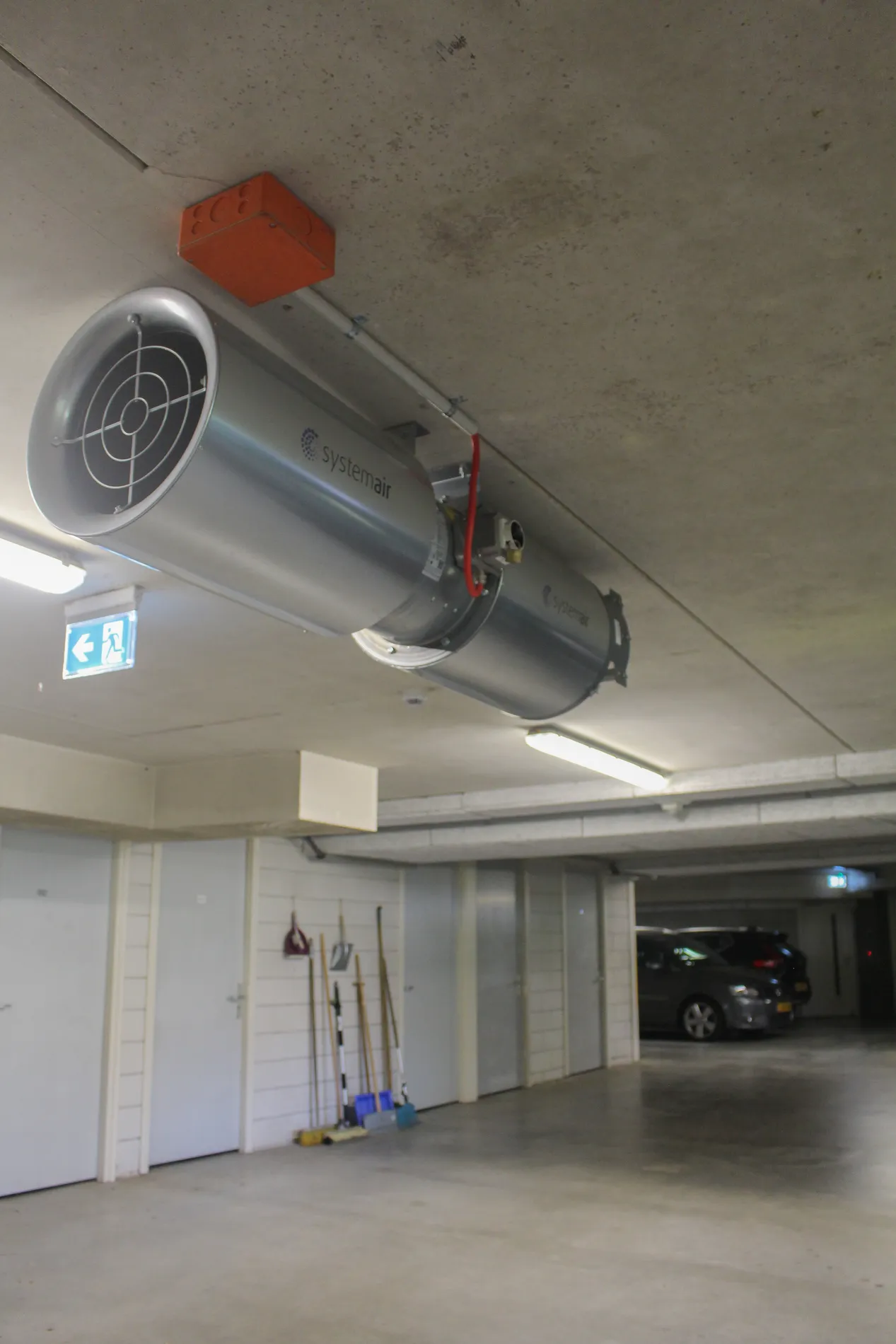
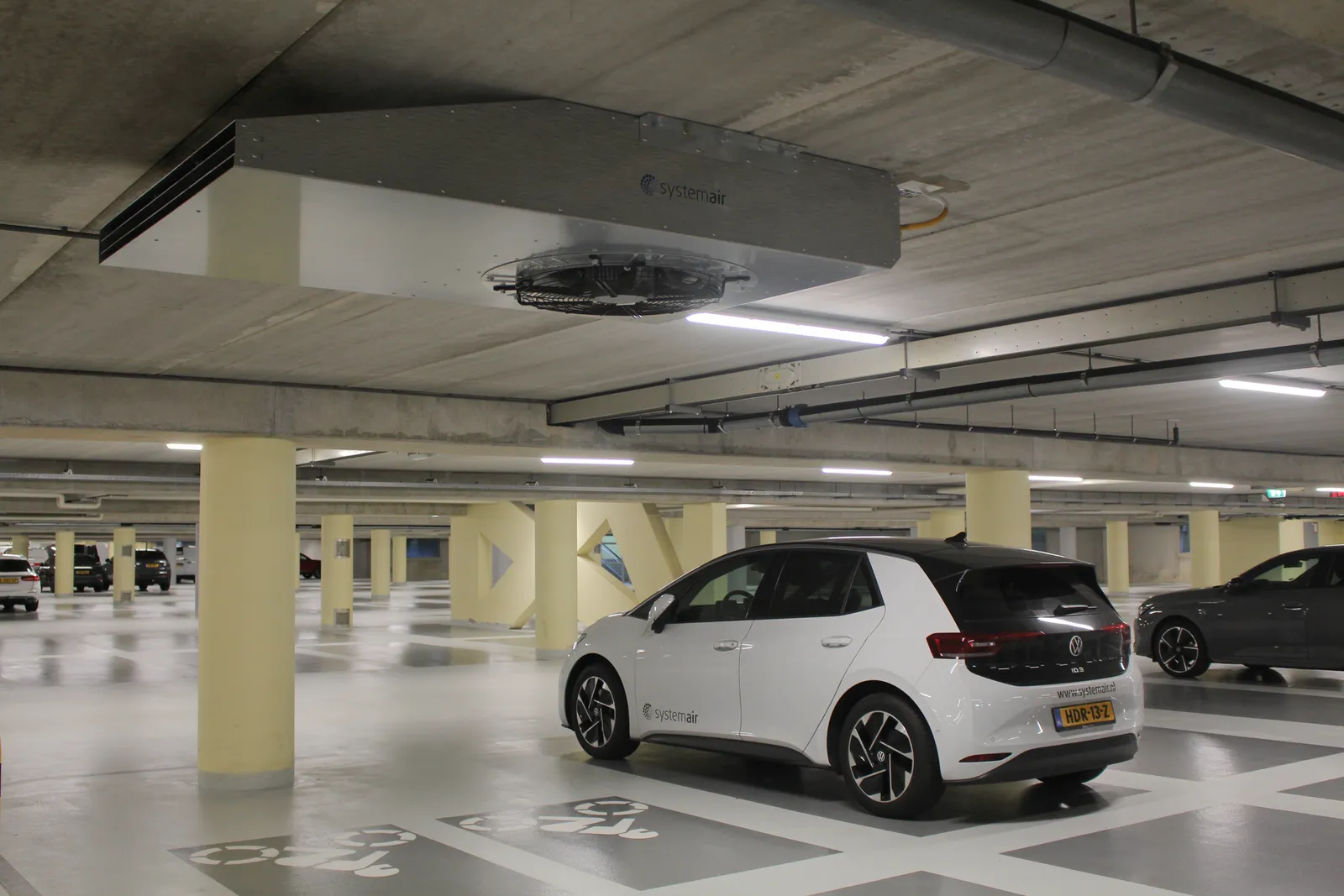
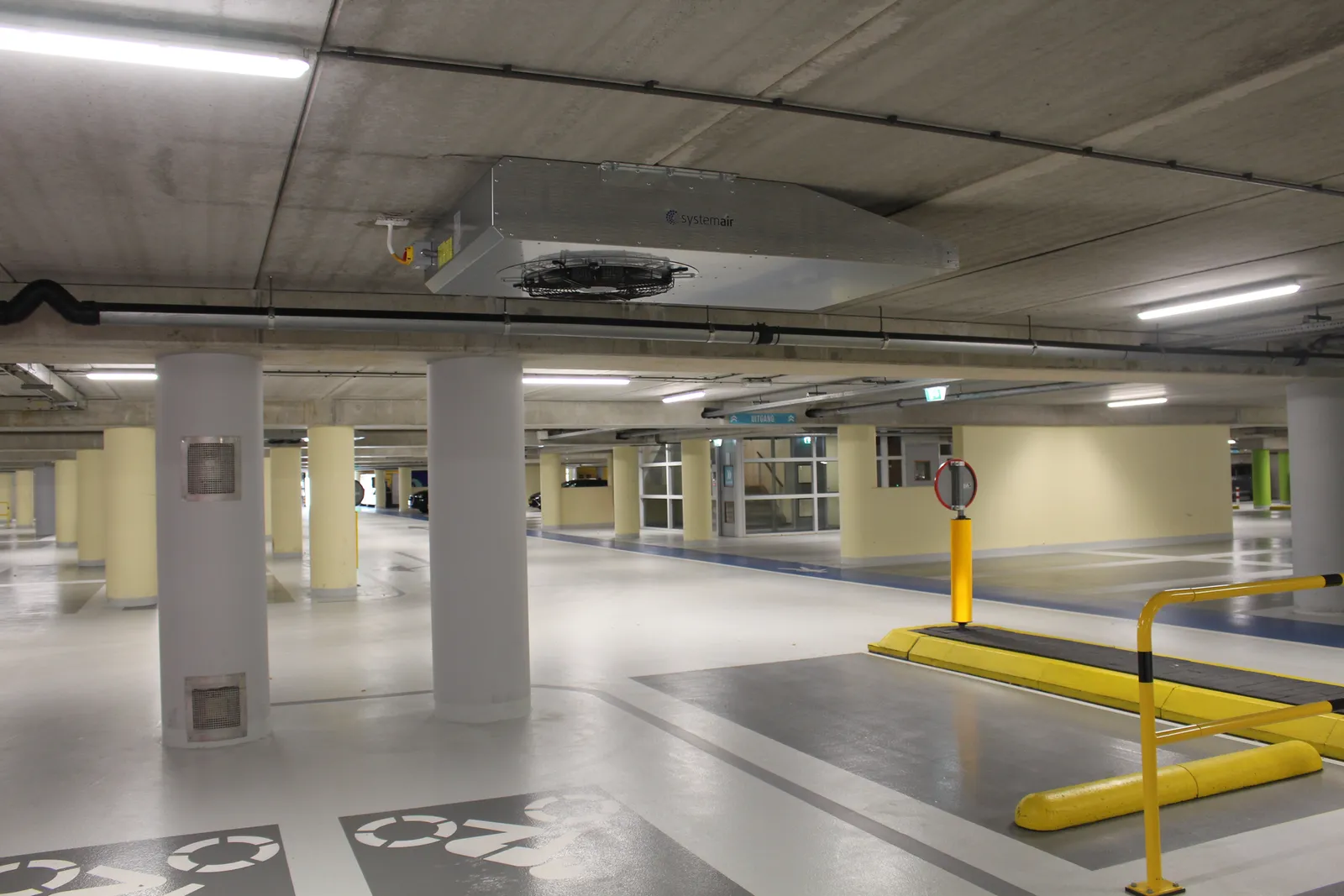
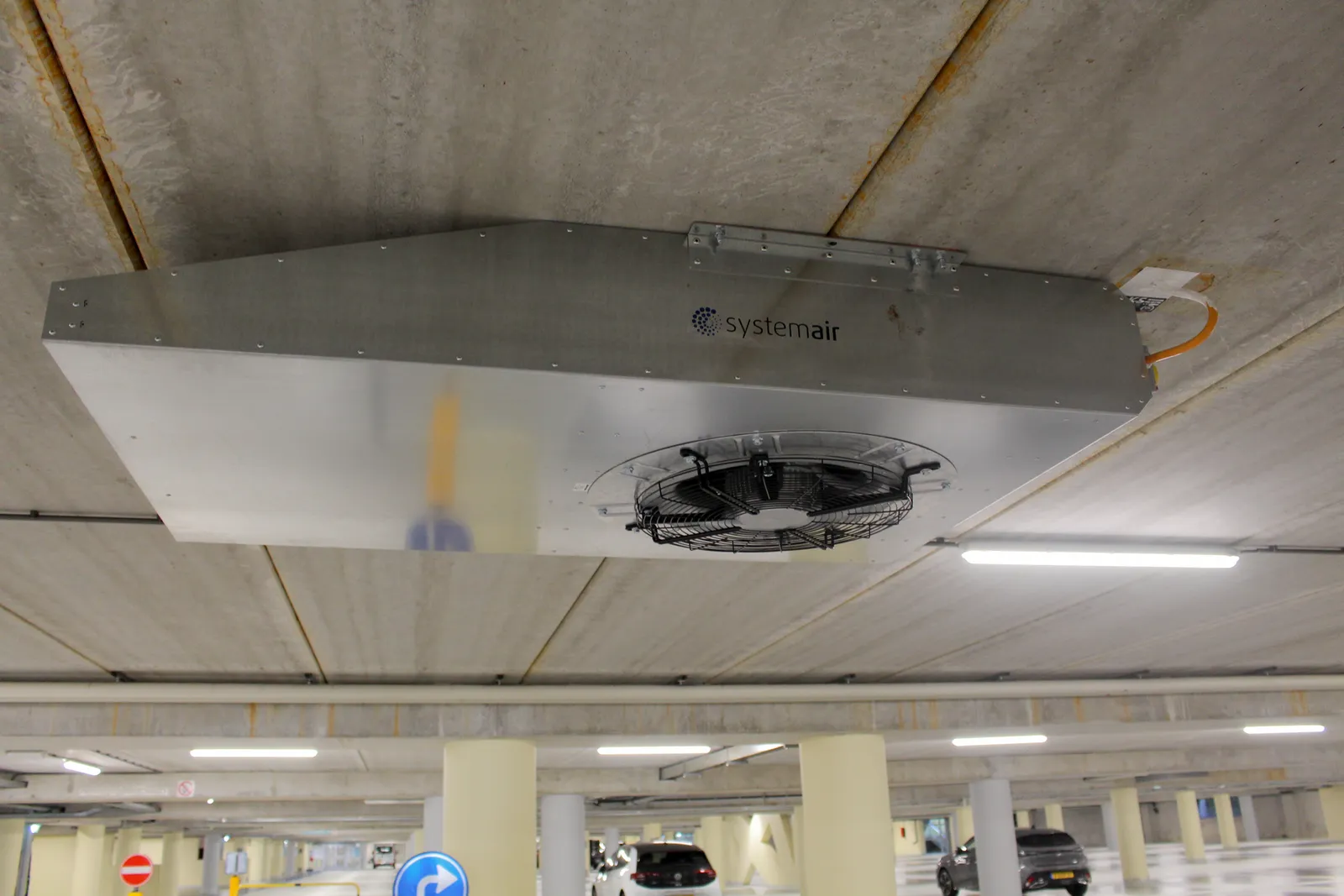
“In Oldenzaal, for example, we worked with a professional owners’ association, which immediately contacted the fire service and a consultancy to establish the requirements for the new situation,” says De Harder. “The conclusion was that the existing system could be replaced on a like-for-like basis. We supplied eight new impulse fans and a new control panel specifically for this car park. Combined with a wind vane for wind detection, the system can now ventilate in the direction of the wind, a crucial tactic in fire-fighting. All the new fans are demonstrably suitable for smoke extraction in the event of a fire and are certified for high temperatures of up to 300°C for two hours in continuous operation.” The datasheet for every component has been included in the UPD, which forms the basis for the CCV inspection certificate.
Modern gas detection system
As in Oldenzaal, like-for-like replacement proved possible in the car park of an ROC in Apeldoorn. “Here too, we were initially asked to replace a faulty impulse fan,” says De Harder. “As soon as I saw in the photos that the existing fan was fire-resistant, however, I arranged a site visit straight away to assess the current situation and certifications. It soon became clear that there was no UPD available. To put this right, the existing fans were replaced with seventeen impulse fans with fire-resistance certificates. We also replaced the existing control panels with two new, custom-made panels, partly because of the large number of existing extract fans in the car park, which together can move as much as 360,000 m3/h of air.” The system is combined with a new gas detection system that automatically activates the ventilation system when carbon monoxide and LPG concentrations become too high, to remove exhaust fumes.
A business enquiry for Systemair? Get in touch
Companies in this story

Keep following this
Get an email when a new story is published. No account needed.
- ThemeHealthy indoor air
- SubjectAir handling
- CompanySystemair