Can a ban on joints in screeds still be justified?
Text Lieke BousemaImage Klimaatvloeren Nederland BV
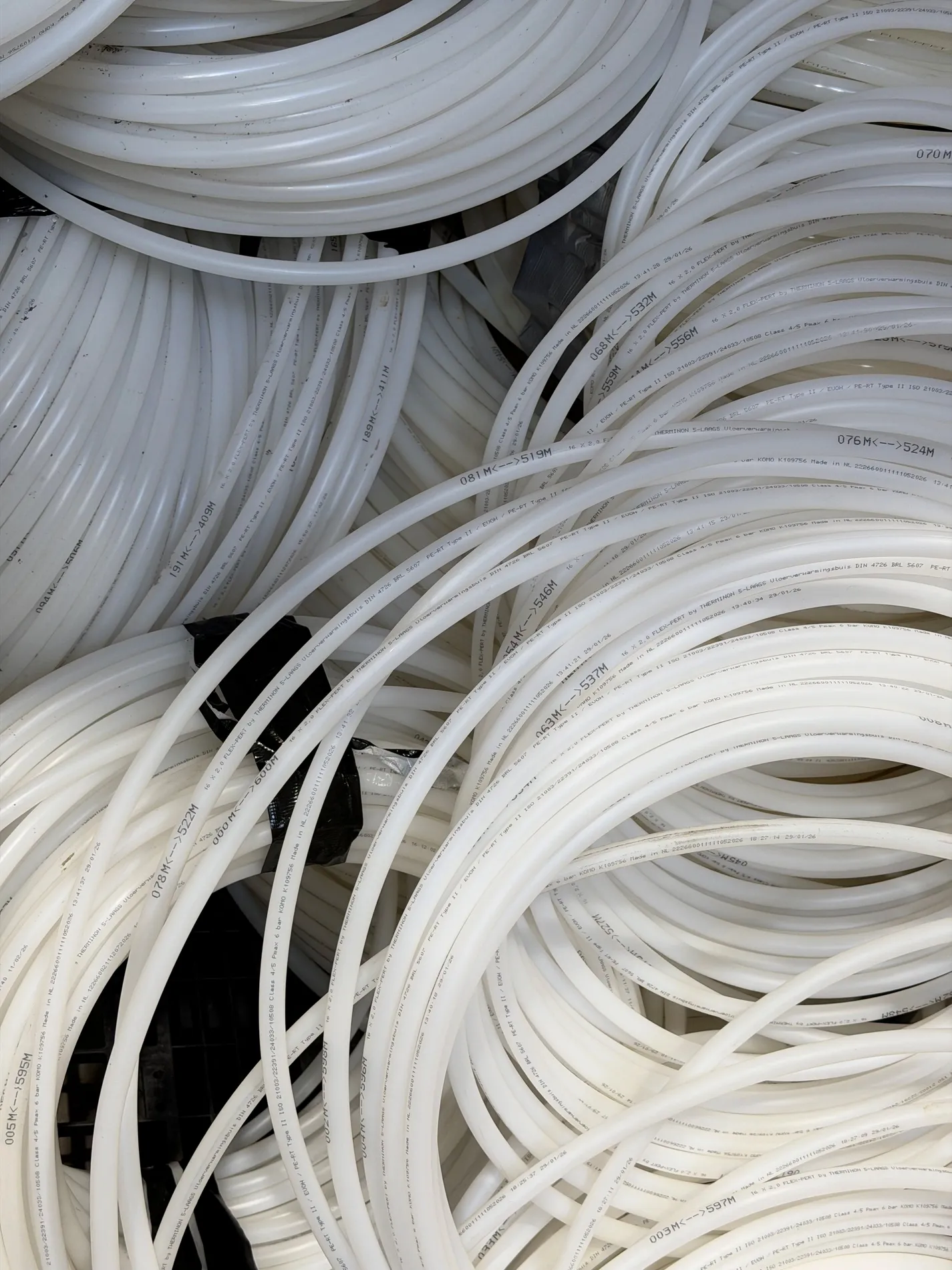
In the world of building services, there is an unwritten rule: underfloor heating pipes in screeds must be laid in a single length. “The result is mountains of unused offcuts ending up as construction waste,” says Ido van Maldegem, director of Klimaatvloeren Nederland BV. “Although the technology behind press-fit joints now seems foolproof, fear of leaks has the sector in a stranglehold.” Klimaatvloeren Nederland BV says it is time to take a critical look at this practice. Is it time to rethink our approach in the name of circularity?

Fear of the unseen
The market’s current position is clear: every joint is a potential point of failure, says Van Maldegem. “Because joints cannot be accessed once the screed has been poured, consultants and installers often take the path of least resistance. The cost of failure from a leak in a finished floor is enormous.” But how justified is that fear today? “Modern joints, when fitted correctly with the right tools,
are often technically stronger than the pipe itself. So there is no need for this fear of the unknown, but it does hold back innovation in sustainability.” Van Maldegem says installation methods need to be revised, starting at the specification stage. “Many specifications are copied, in whole or in part, which means the ban on joints in screeds remains unnecessarily embedded in the requirements and installation rules.”
The environmental cost of ‘safety’
“While the construction sector talks about the Environmental Performance of Buildings (MPG) and circularity, we throw away kilometres of high-quality plastic pipe on every job,” Van Maldegem explains. “Offcuts of twenty or thirty metres are not unusual, but they are just too short for a new circuit. By treating joints as taboo, we force ourselves into linear wastefulness that has long ceased to be the norm in other areas of building services, such as cast-in pipes for plumbing or central heating.”
The hidden cost of the ‘single-length requirement’
Van Maldegem supports his conclusion with a calculation. “If we lay around 100,000 metres of underfloor heating pipe a year, the requirement for circuits to be made from a single length leaves an average of around 10% as offcuts. Based on the weight of 16x2mm PE-RT, that amounts to around 1,200 kg of plastic waste, whose production generated around 2,400 kg of CO2.” Extrapolated nationwide, millions of kilograms of high-quality material are needlessly thrown away each year, he says. “One properly installed and secured joint would reduce this waste to almost zero.”
Trust in professional workmanship
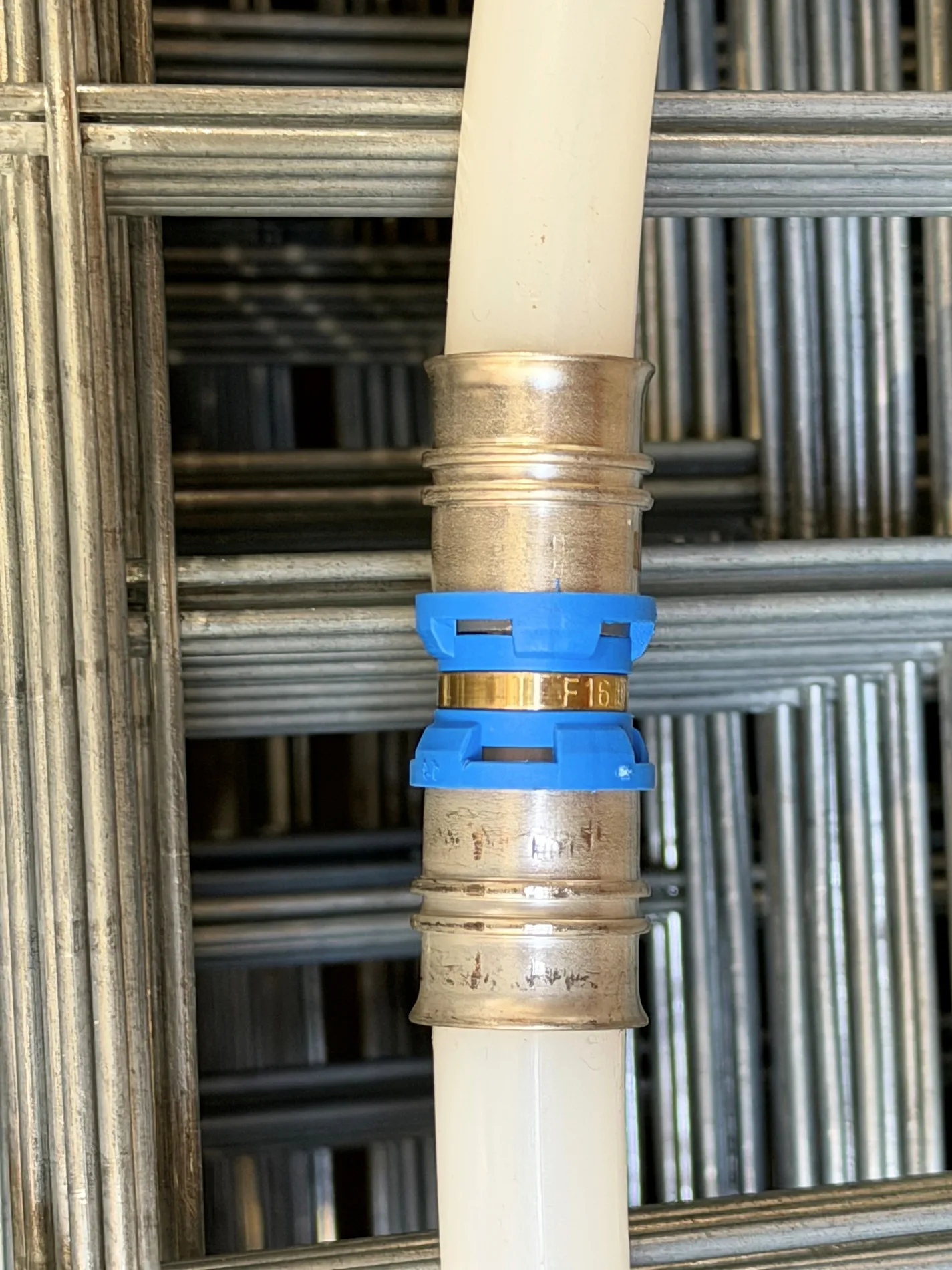
According to Van Maldegem, banning joints in screeds is no longer a technical necessity, but an expensive habit that directly undermines our sustainability goals. “Anyone still throwing away kilometres of pipe in 2026 for fear of a certified press-fit connection clearly does not trust their own workmanship. Why would a joint that passes a 6 bar (or higher) pressure test with flying colours suddenly fail once the screed has been poured? In my view, the sector faces a choice: do we continue to cling to a conservative ‘zero risk’ approach that generates enormous amounts of waste, or do we embrace technological progress?” For Klimaatvloeren Nederland BV, the answer is clear: responsibly allowing joints in screeds is not an attack on quality, but a necessary step towards more sustainable installation practices, requiring changes to the process in the following areas:
• Quality assurance: use certified joints and pressing tools with force monitoring.
• Documentation: accurately measure the joint’s position or photograph it before pouring.
• Pressing and testing: a stricter protocol for the pressure-testing stage.
Why press-fit joints last ‘for ever’
“In today’s building services sector, joints in screeds are often viewed with suspicion,” says Van Maldegem. Yet the technology behind modern axial or radial press-fit joints is designed to outlast the pipe itself, thanks to:
• Material compatibility: many modern systems use joints whose coefficient of thermal expansion closely matches that of PE-RT or PEX pipes.
• O-ring technology: high-quality EPDM seals have been tested for a service life of at least 50 years.
• Mechanical strength: a correctly made press-fit connection often has a tensile strength greater than that of the pipe itself.
• Leak indication: ‘leak before pressed’ features ensure that human error is detected during the initial pressure test. This makes press-fit joints ideally suited to screeds and to a future in which circularity is no longer a choice, but a necessity.
The hidden costs of the ‘single-length pipe’
THE FIGURES (per 100,000 metres of pipe laid)
• Waste mountain: 10,000 metres of unusable offcuts.
• Plastic waste: 1,200 kg of high-quality PE-RT/PEX.
• CO2 impact: 2,400 kg of emissions (equivalent to
driving 15,000 km in a petrol car).
THE ALTERNATIVE: THE SECURED JOINT
• Reliability: tested for a service life of 50+ years.
• Savings: up to 95% less cutting waste and a lower MPG score for the project.
CHECKLIST FOR SAFE JOINTING
1) System compatibility: always use joints from the pipe manufacturer.
2) Pressing checks: use calibrated tools with digital recording.
3) Pressure test: routinely pressure-test at 1.5x the operating pressure before pouring.
4) Digital Twin: include a photo and the joint’s location in the as-built documentation.
Een zakelijke vraag aan Klimaatvloeren Nederland? Get in touch
Companies in this story

Keep following this
Get an email when a new story is published. No account needed.
- ThemeSustainable refurbishment of existing buildings
- SubjectBuilding services engineering
- CompanyKlimaatvloeren Nederland