A speck of dust in the air? The smart CO2 monitor will tell you!
Do you know how healthy the indoor air is in your classroom, at home or in the office? It’s hard to say, isn’t it?
CO2 levels in the air tell you a lot, but the problem is that you can’t smell CO2 when you’ve been in the same room for a long time, let alone see it. That’s why Renson is launching the Sense, a smart CO2 monitor that lets you know when indoor air quality is deteriorating and it’s time to ventilate.
Exhaled air, moisture and harmful substances
CO2 is present in the air we exhale. And although moisture and harmful substances also affect indoor air quality, CO2 is a good indicator of it, especially when there are lots of people in the same room. If CO2 levels rise to an alarming level, it means that the air exhaled by those present is not being refreshed sufficiently. In airtight, well-insulated spaces with little or no ventilation, CO2 levels can quickly rise above 1,200 ppm (parts per million). At that point, the indoor air can no longer be considered healthy. For comparison, outdoor air typically contains 400 ppm of CO2. Indoors, a maximum of 800 ppm is ideal, 1,000 ppm is acceptable and 1,200 ppm is the upper limit for healthy indoor air.

What gets measured gets managed
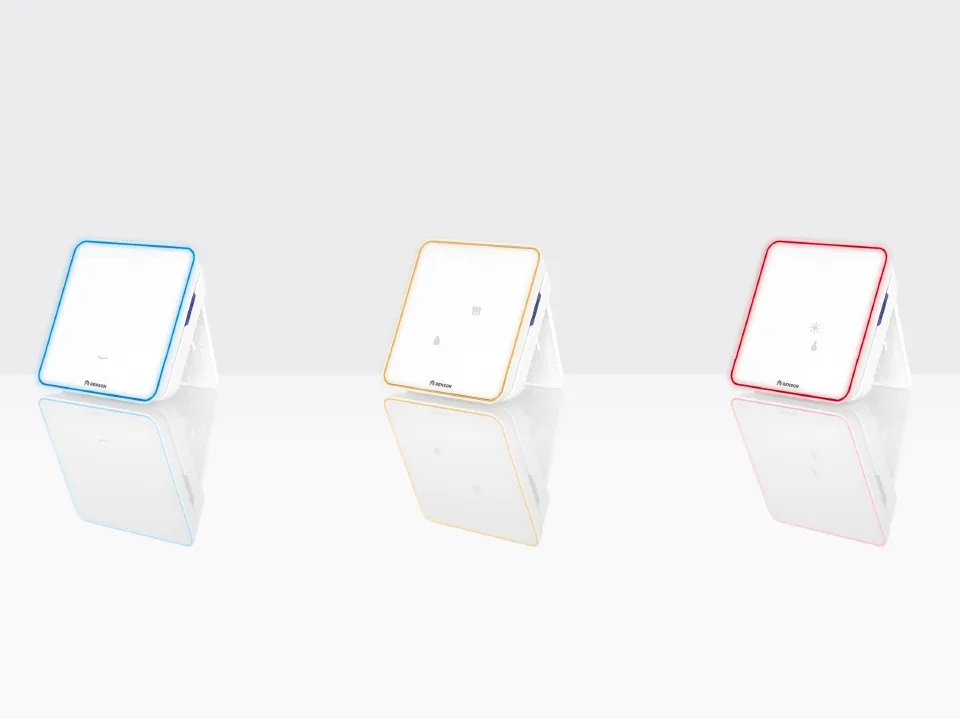
So how do you know when it’s high time to open a window and refresh the indoor air, if a ventilation system doesn’t do it for you automatically? Unfortunately, you don’t have a ‘sixth sense’ for CO2. Fortunately, Renson’s new Sense does. This smart sensor keeps a constant (digital) eye on indoor CO2 levels and alerts you when they rise too high. When the air is healthy, the sensor lights up blue. At CO2 levels between 800 and 1,200 ppm, it turns orange to warn you that air quality is deteriorating. Red means that the amount of CO2 in the air has exceeded the 1,200 ppm limit for healthy indoor air. In that case, you need to ventilate the space intensively as soon as possible by opening windows and doors. Alternatively, you need to find a suitable, energy-efficient ventilation system so you can breathe healthy indoor air throughout the winter without heating bills going through the roof.
Back to the start of September…
It was ‘breaking news’ at the start of the school year: ventilation is a priority for minimising the risk of airborne transmission of COVID-19 in classrooms. So windows and doors were flung wide open to ensure a constant supply of fresh air and prevent the virus from gaining a foothold in healthy indoor air. And it’s paying off. At the end of August, Renson equipped around 10 Belgian schools with the Sense as part of a pilot project. The measurement results show that, with windows and doors open, CO2 levels in classrooms without a ventilation system rise above 1,200 ppm for just 7.7% of the time. Earlier, before schools reopened on 1 September, windows and doors in those same classrooms were mostly kept closed, and CO2 levels exceeded that threshold for 29.9% of the time.
But what about winter and spring?
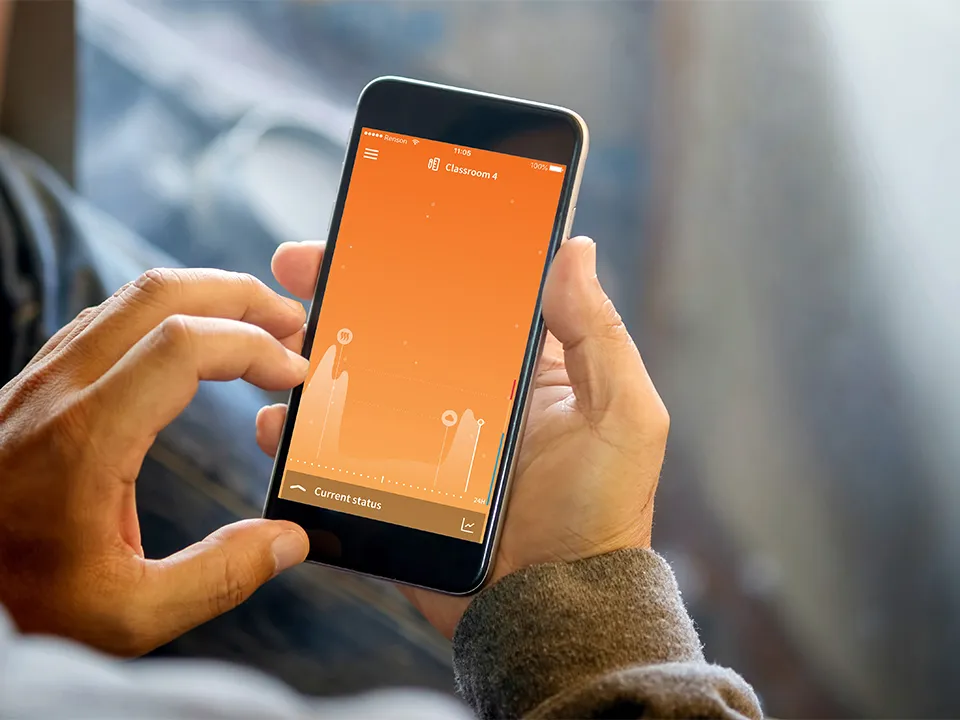
Ventilating by leaving windows and doors open all the time does have a positive effect on indoor air quality. But this is much less practical in winter and early spring. That’s when the Sense really comes into its own as an extra pair of feelers in the classroom. The smart CO2 monitor warns you when air quality is deteriorating and it’s time to bring in fresh air. You can then open a window for a while, until the Sense gives you the ‘blue light’ again.
Continuous, controlled ventilation
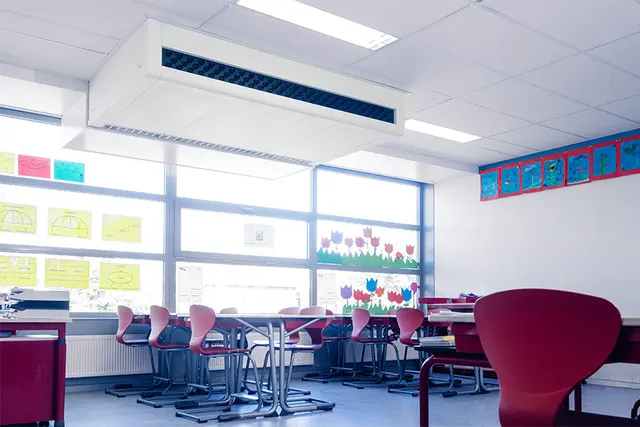
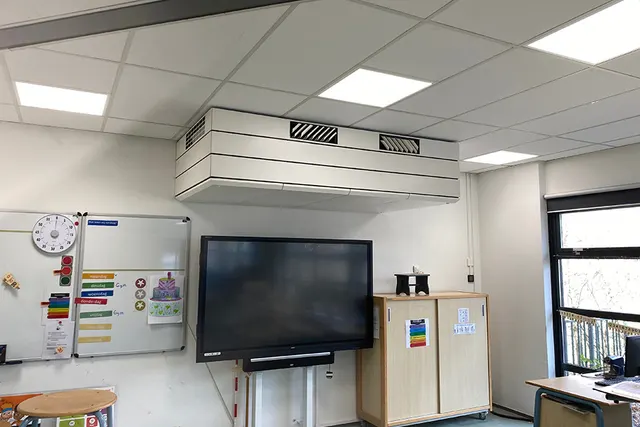
OK, the Sense alerts you when indoor air quality is less than ideal, but it’s still up to you to respond to its signal manually. If you want to live, study or work in genuine comfort, you need a solution that takes care of everything for you. That’s where Renson’s Smartzone ventilation comes in. With a smart ventilation unit that monitors CO2, as well as moisture and harmful substances, just like the Sense, you’ll never have to worry about healthy indoor air again. What’s more, this type of ventilation system automatically adjusts to your needs. The figures from the classrooms equipped with a ventilation system in the pilot project speak for themselves. With CO2 levels below 1,200 ppm for 99.8% of the time, the system automatically delivers the best possible indoor air quality almost all the time.
Question about this story? Ask your question
Keep following this
Get an email when a new story is published. No account needed.
- ThemeHealthy indoor air
- SubjectFrisse Scholen