A system for tackling (fine) particulate matter and viruses: clean, safe air in an instant
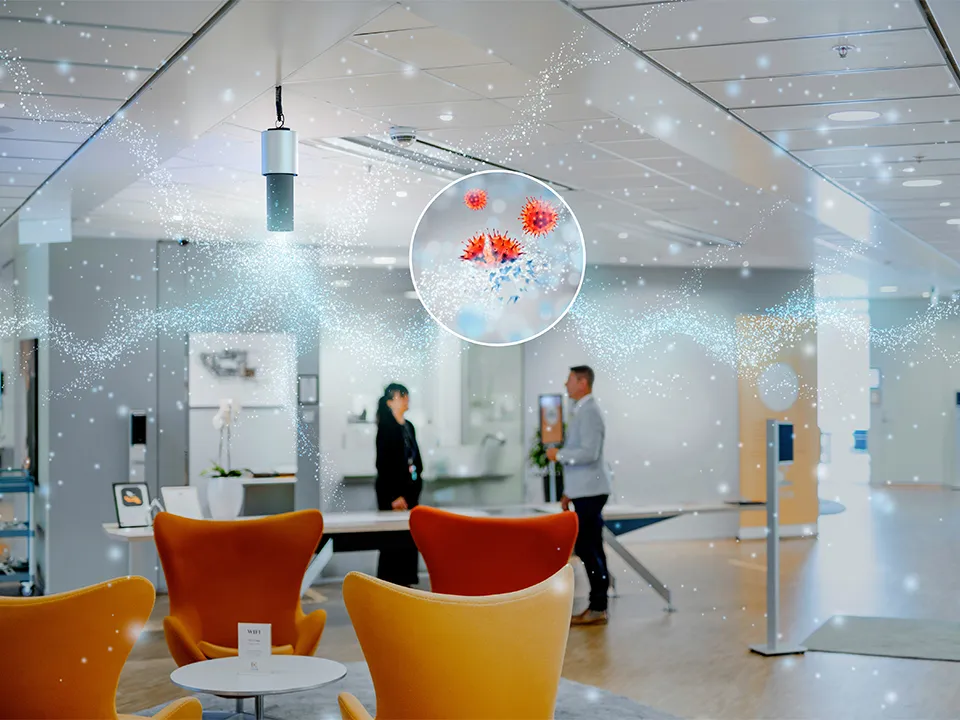
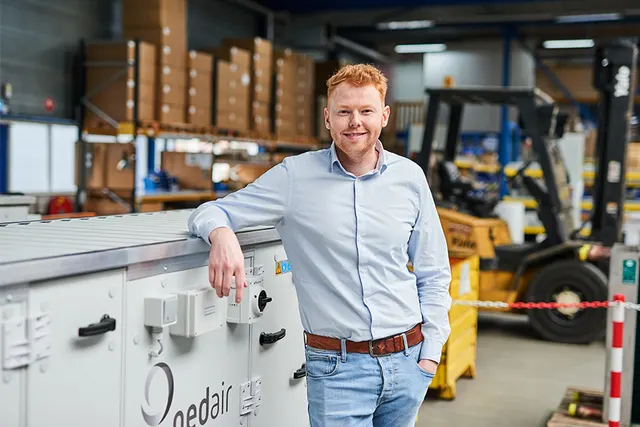
“With our patented products from Sweden, you can provide classrooms with clean, safe air without major investment in climate control technology,” says Rob Jansen, owner of Habitat Solutions in Ridderkerk.
“Even if a school does not have mechanical ventilation. Our patented LightAir Health+ system cleans the air down to ultra-fine particulate levels and kills viruses immediately after they are released by an infected person, before they can reach someone else’s nose while still alive. An invisible face mask! We did not come up with this ourselves, by the way. It is the finding of independent scientific research at the Karolinska Institute in Stockholm, published in Nature Scientific Reports.”
For Jansen, there is no doubt that ventilation is not the way to create a healthy indoor climate in places such as schools. “We ventilate to keep CO2 levels and humidity under control. Many schools are in urban areas or near busy roads. Particulate levels there are so high that ventilation actually brings polluted air indoors, unless an expensive filtration system has been installed. Classrooms also generate all kinds of pollutants, such as airborne viruses and bacteria. It is important to clean the classroom continuously, so children’s lungs stay clear and diseases cannot be transmitted through the air. Our technologies make this easy, at the lowest running costs.”
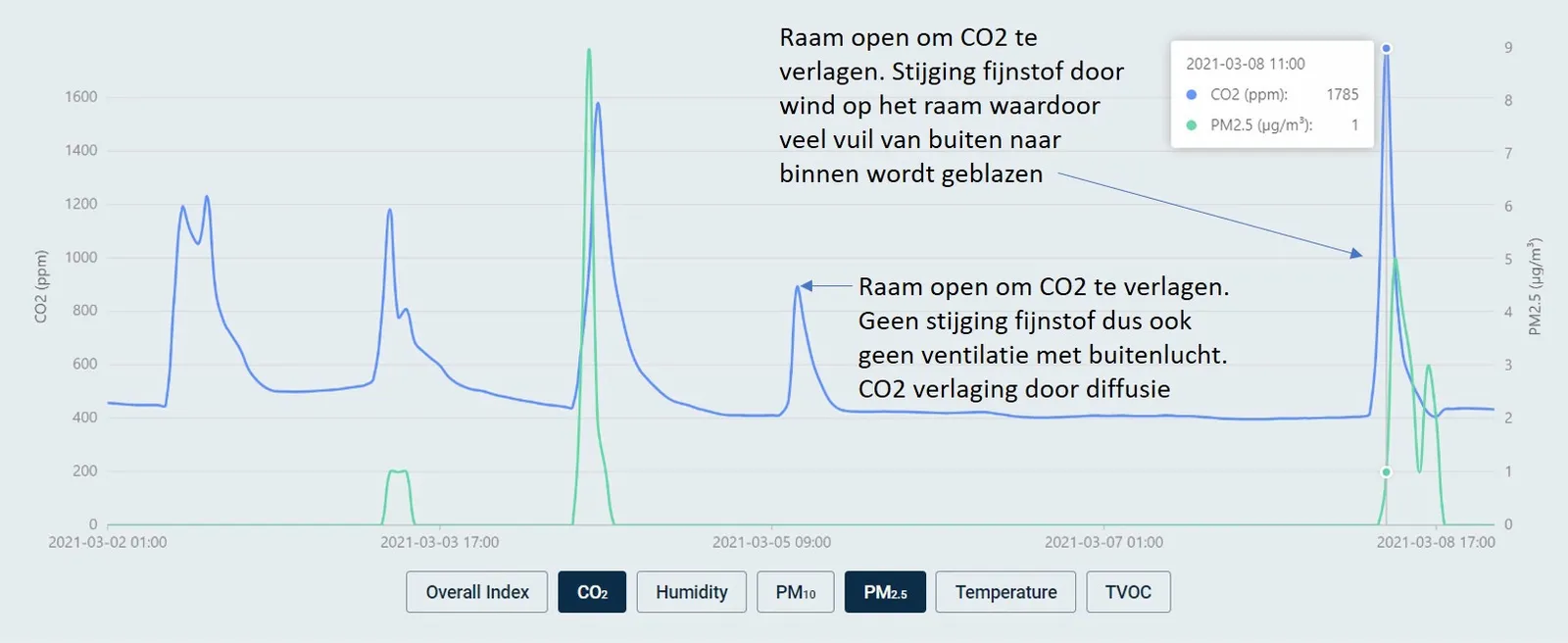
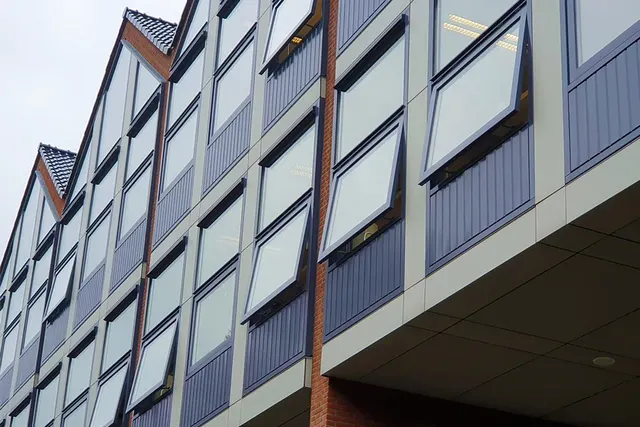
Opening the windows lets polluted air in
“The debate around Frisse Scholen focuses rather heavily on CO2 levels in classrooms and not enough on particulate pollution, which often exceeds the limits in the Netherlands,” says Jansen. “You can lower CO2 levels by ventilating or by opening the windows or the door to the corridor. In every case, unless the ventilation system has a high-grade HEPA filter on the roof, ultra-fine and fine particulate matter will enter the classroom. This causes problems and even sickness absence, particularly for children and teachers with a pollen allergy or, for example, asthma. Opening the windows on cold winter days is also not an option. If a school is equipped with our Health+ systems, children and teachers continuously breathe clean, healthy and safe air, regardless of the air quality outside. This reduces the risk of airborne virus transmission to virtually zero. The ventilation system then only needs to be sized to keep CO2 levels and humidity under control. There is no need to increase its capacity, which is extremely costly and, from an energy perspective, runs counter to making our environment greener.”
Ultra-high-density ionisation
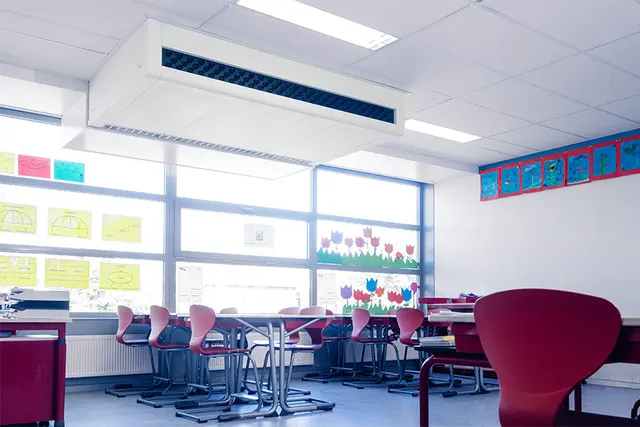
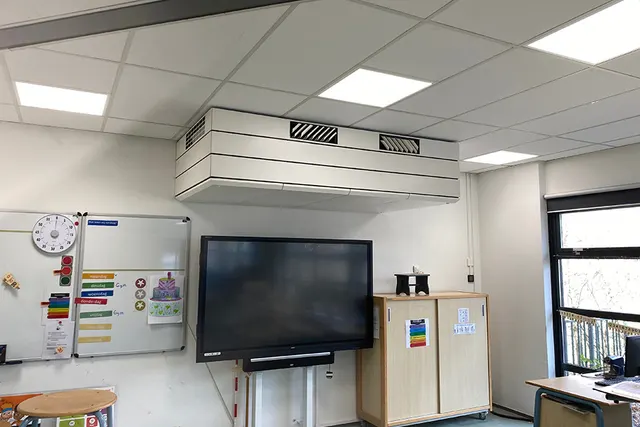
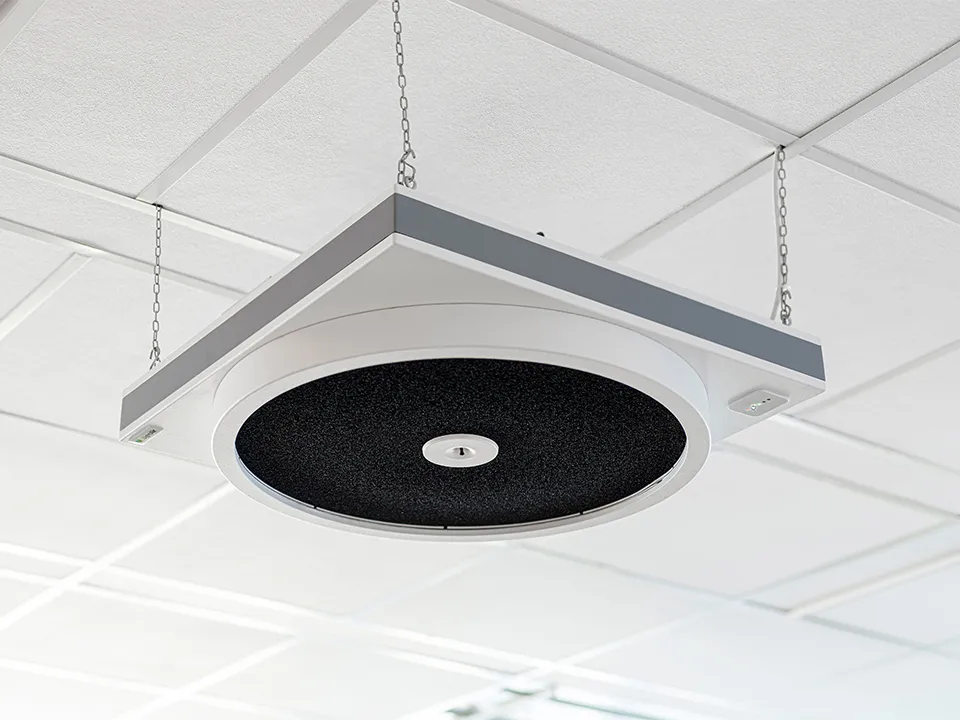
The LightAir Health+ system consists of two patented technologies, which can also be used independently of each other. The LightAir CellFlow PRO is a HEPA+ air purifier that removes PM0.1 particles with 99.99% efficiency. These compact units have extremely low air resistance, operate quietly and are easy to clean with a vacuum cleaner. The second component of the Health+ system is the ozone-free, ultra-high-density LightAir IonFlow ioniser. “This high-quality piece of technology disperses huge quantities of ions throughout the space. These cause pollutants to cluster and settle, and render pathogens harmless. A virus does not first have to reach a UV-C lamp or air purifier to be dealt with. It is taken care of before it can infect anyone. The IonFlow technology alone reduces the risk of virus transmission by 97% and makes the air exceptionally clean. The IonFlow technology even removes the very smallest particles, down to PM0.007. A breath of fresh air for people with lung problems, I would say.”
What gets measured gets managed
“Measurement is essential in this area,” Jansen continues. “We install monitoring equipment that continuously displays indoor and outdoor air quality to users and also makes it possible to track air quality over time. Since it is a fact that particle levels fall across the entire spectrum, we know that when the
PM 2.5 level is extremely low, levels of all other particles are also extremely low. We have just completed a pilot at a school in Papendrecht. As well as outdoor air quality and temperature, PM 2.5 and CO2 levels were monitored in two classrooms, one using our technology and one without. The results clearly show how clean the treated classroom (205, blue line) is and remains when our technology is used.”
In use, the treated classroom (205) is up to eleven times cleaner than the untreated one. Since these classrooms are not ventilated, we see CO2 levels fall when the windows are opened, through diffusion and, depending on the situation, draughts. However, opening the windows does not necessarily mean that the classroom is flushed through properly. With the wrong wind direction, we even see particulate levels rise. Jansen says: “The conclusion is that children, teachers and parents are first and foremost helped by clean, safe air. The windows do not need to be open for that. In polluted urban areas in particular, opening them actually brings the problem indoors. The best approach is to tackle the danger before it can cause harm. Our technologies make this child’s play and affordable.”
Question about this story? Ask your question
Keep following this
Get an email when a new story is published. No account needed.
- SubjectFrisse Scholen