Adapting flexibly to changing occupancy
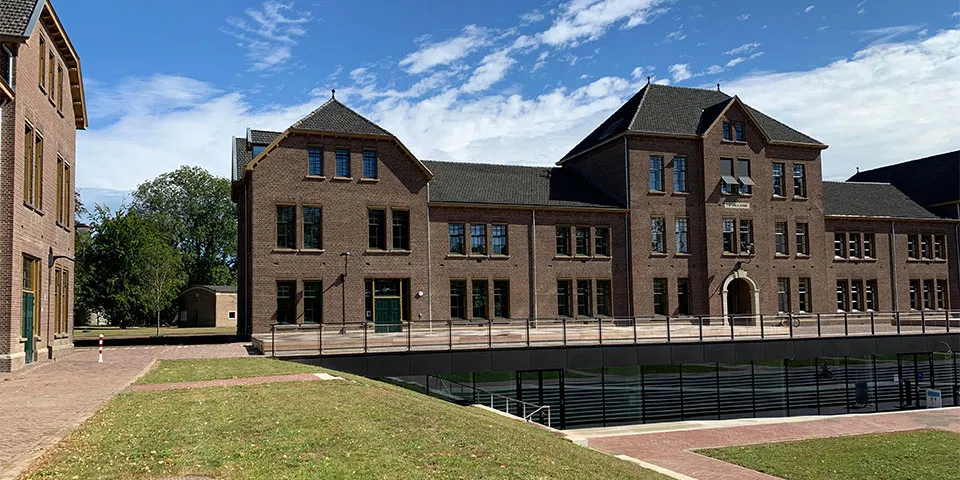
The former Tapijnkazerne in Maastricht has been given a new lease of life and now provides space for research and teaching, including for Maastricht University. In line with the university’s sustainability ambitions (WELL and BREEAM), all HVAC systems have been newly installed. Kemtec completely transformed the adviser’s original plan into an all-air system. This makes it possible to respond with exceptional flexibility to changing occupancy levels, says operations manager Paul Laurensse.
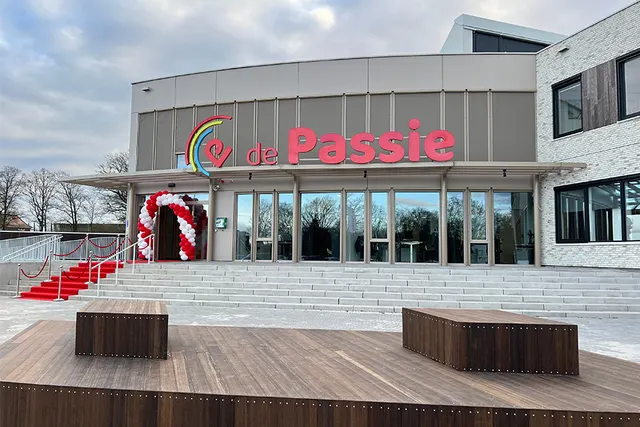
The Tapijnkazerne is a former military barracks on a 6.3-hectare site on the edge of Maastricht city centre. With education as the driving force, Maastricht University (UM), Gemeente Maastricht and Provincie Limburg have transformed the site into a public park with buildings (a total of 8,300 m²) intended for education, research and catering for a wide audience. It is a place where students, businesses and local residents can meet. Kemtec was brought in at an early stage to advise on the HVAC system. “We are increasingly opting for an ‘all-air’ concept in which the level of ventilation exceeds the requirements of the Frisse Scholen standard,” says Laurensse.
100% air
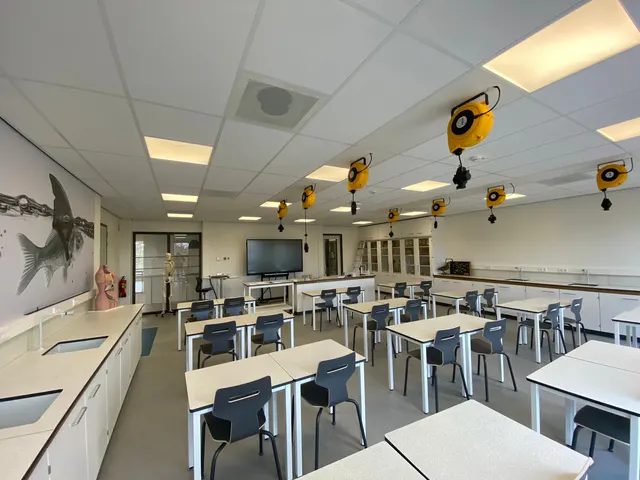
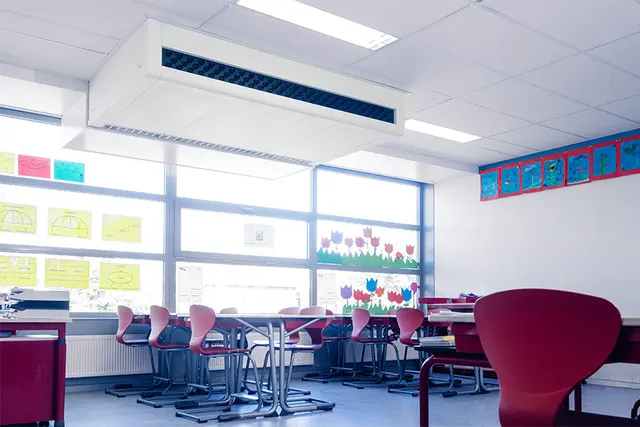
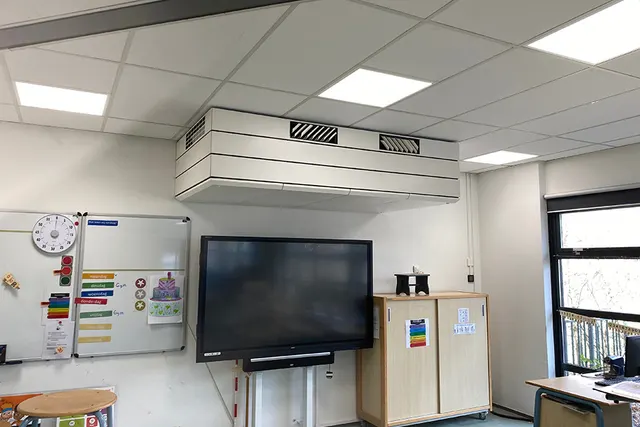
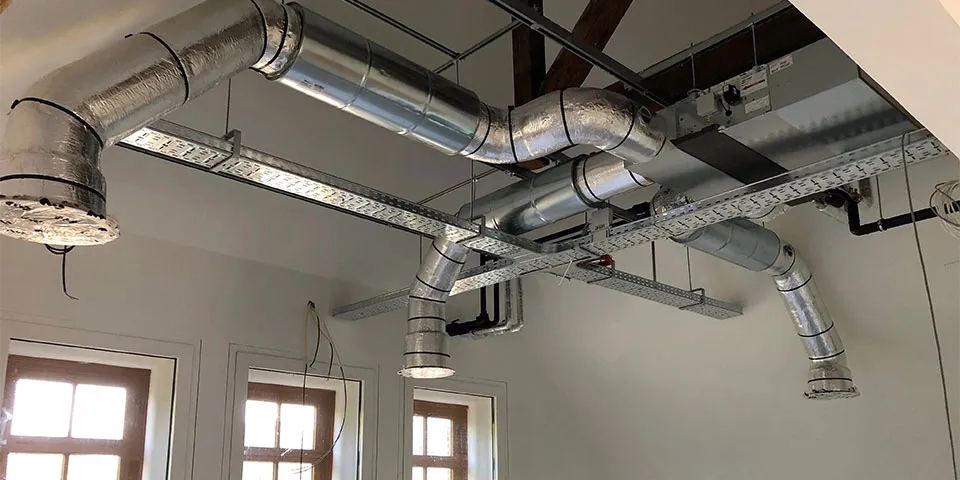
Kemtec succeeded in convincing the adviser of the economic benefits of an all-air system as an alternative to underfloor heating and cooling combined with a ventilation system. “The advantage of an all-air system is that you only have one medium and one heat source: air,” Laurensse explains. “If a classroom or space is not in use, there is no need to ventilate it, so no energy is wasted. An all-air system can bring a space up to temperature very quickly, allowing you to respond flexibly to changing occupancy and levels of contamination by controlling the system based on CO2. If the readings rise, the system will ramp up. The downside of an all-air system is that it requires more space for the building services, as the air ducts and components are considerably larger. That was the biggest challenge here at the historic Tapijnkazerne. All the building services had to be shoehorned into the various buildings, with many systems left exposed. However, the air handling units are located in the basement of the main building (three units) and in the attics of the three separate buildings. The 100% air system is powered by two heat pumps for cooling and heating the air (245 kW cooling capacity and 241 kW heating capacity), in combination with two peak-load boilers, each rated at 157 kW.”
As a family business, Kemtec has all the disciplines in-house to design, engineer and install (design & build) projects from A to Z, as well as service and maintain them with its own team of multi-skilled technicians. “We like to get involved in a project at an early stage so we can optimise the system design, as we did here at the Tapijnkazerne,” Laurensse concludes.
Question about this story? Ask your question
Keep following this
Get an email when a new story is published. No account needed.
- ProjectTapijnkazerne
- SubjectFrisse Scholen