Advice for schools with practical improvement plans: ‘Money alone is no guarantee of a Fresh School’

On 1 October last year, the final report of the National Coordination Team for Ventilation in Schools was published. In response, the government made an initial tranche of € 100 million available to help schools improve their indoor climate.
It is now six months on, so in this Frisse Scholen special we asked Froukje van Dijken (bba binnenmilieu) how schools are doing when it comes to the health of their learning environments.
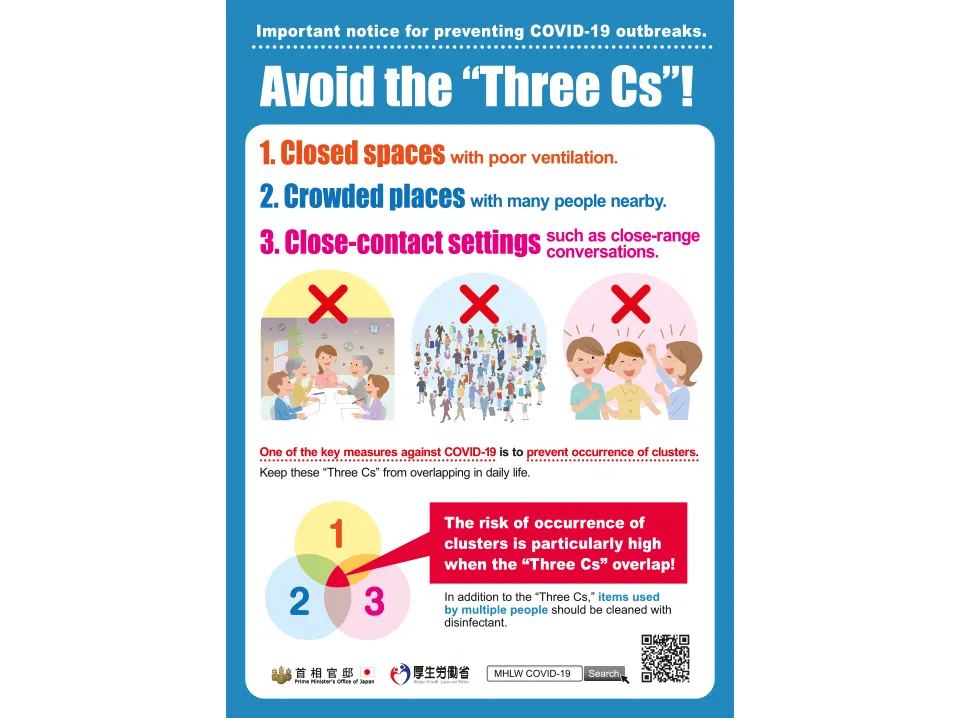
“Corona is still dominating, including when it comes to ventilation in schools,” she says. “It is now more than a year since the first measures came into force, and at the time nobody knew what to expect. What I do know now is that corona has made schools much more aware of the importance of ventilation, despite the RIVM focusing mainly on keeping 1.5 metres apart and initially considering the importance of ventilation unproven. The World Health Organization (WHO) summed it up well, in my view, with the 3 C’s describing situations to avoid: Crowded places (with many people together), Close-contact settings (particularly where people talk to each other at close range) and Confined and enclosed spaces (with poor ventilation). In any case, € 360 million has been made available to improve schools. The first tranche of € 100 million was allocated through the Special Grant for Ventilation in Schools (SUVIS) and had been exhausted by 11 March. It has not yet been announced how the remaining budget will be spent.”
Pulling the plug
The scheme sets out conditions, but that does not guarantee that a school will get a good ventilation system. “You really need to agree clear terms with advisers and installers,” says Van Dijken. “We know of cases where schools got a new ventilation system, but teachers simply unplugged it because it was too noisy. For new builds, this is covered by the statutory requirements of the Building Decree, but not for existing buildings. So money alone is not enough: you need to specify in advance that the systems must be quiet.”
To help schools set the right requirements, bba binnenmilieu has drawn up SUVIS advice: a guidance document with recommendations for ensuring a good end result when building services are upgraded. “We wrote it on our own initiative, and Ruimte-OK immediately published it on its website. I don’t expect a professionally run, large education organisation to have problems, but smaller schools and standalone schools have a harder time.”
Four recommendations
“The first recommendation is to set clear requirements. Not only for the amount of air supplied by the new system, but also for noise levels, draughts and clean supply air. You could call it a lightweight Fresh Schools Schedule of Requirements,” says Van Dijken. “Our second recommendation is to check at handover that what was agreed has actually been done, preferably through an independent consultancy. The third is maintenance. Make sure there is a contract that sets this out clearly, so maintenance costs do not come as a surprise later. The fourth recommendation concerns performance monitoring. Among other things, the SUVIS scheme requires CO2 meters to be installed in every teaching space, with the data stored for at least one year. You can agree with the installer that they will report on this periodically, so performance and any deviations can be tracked.”
A substantial sum
“We mainly wrote this advice to make sure schools get value for money,” stresses Van Dijken. “They still have to cover 70% of the costs themselves, which is a substantial sum. So make sure the work is done properly, and don’t just take the installer’s word for it. Schools should also be aware that operating costs and energy bills will rise if ventilation is increased. That, too, can be clearly explained in advance.”
Ventilation comes first
“In any case, we are pleased that schools are becoming increasingly aware of ventilation, partly thanks to corona and the final report mentioned earlier. Unfortunately, we cannot yet assess the impact of the measures because we do not have a representative situation. For us, corona still means keeping 1.5 metres apart and ventilating, ventilating, ventilating. At the moment, we are only monitoring CO2 as an indicator of air quality. Particulate matter, for example, is less relevant right now. However, particulate matter remains an important consideration and will have its own section in the next version of Frisse Scholen FS, but ventilation is much more urgent at present. We even advise schools next to a busy road to open the windows. In any case, I believe that schools which get their ventilation in good order, whether with SUVIS funding or not, will find it a literal breath of fresh air.”
More information is available at www.binnenmilieu.nl and www.ruimte-ok.nl.
Question about this story? Ask your question
Keep following this
Get an email when a new story is published. No account needed.
- ThemeHealthy indoor air
- SubjectFrisse Scholen