Back to school with confidence

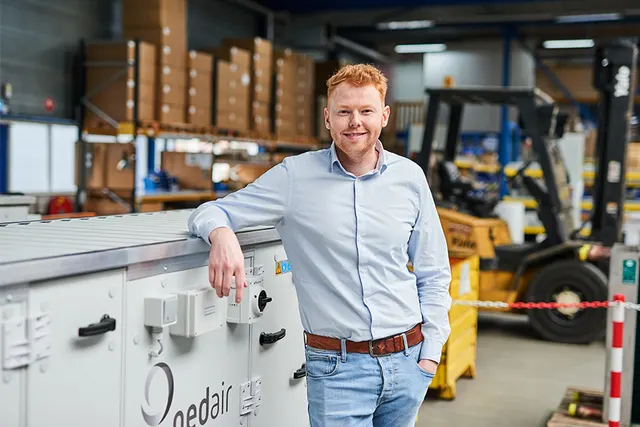
Roy Titulaer, Managing Director of Auerhaan Klimaattechniek, says school boards currently have a lot of questions. Are all the ventilation requirements being met? And how can the costs of improving indoor air quality be kept within budget? “COVID-19 has changed the world. The government is tightening the rules, and both parents and teachers are increasingly alert to the need for a healthy environment in classrooms and nurseries. School boards therefore consider it important to create a healthy working and learning environment for their pupils and teachers,” he says.
The right way to ventilate
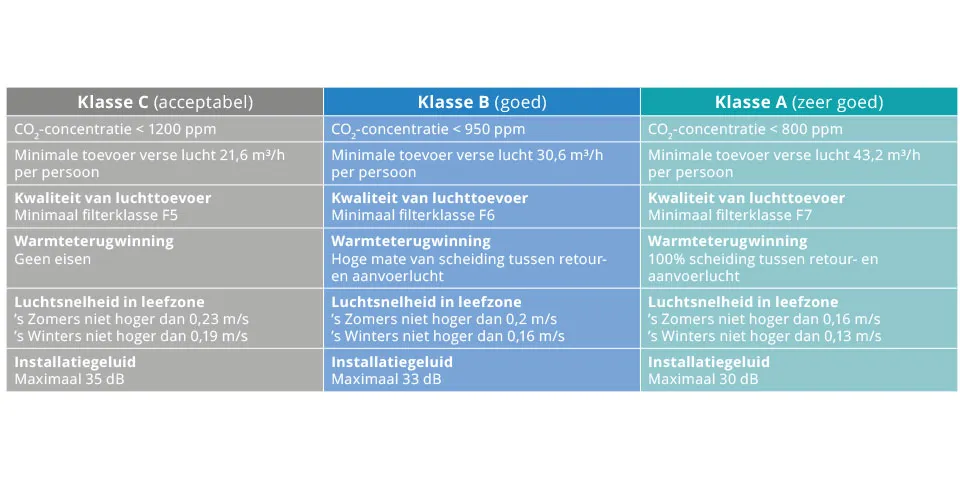
Ventilating with an existing system and opening windows and doors in between can be one way to meet the minimum air-change rate. However, this does not mean that ventilation complies with the health guidelines of the GGD and RIVM. Natural ventilation also brings problems such as draughts, noise and high energy consumption. “The Frisse Scholen Programme of Requirements is an excellent guide to determining whether a school complies with the regulations. In terms of ventilation, Frisse Scholen Class C corresponds to the requirement for existing buildings under the Building Decree 2012. This is therefore a good indication of the minimum standard,” Titulaer explains. By way of illustration, he shows an overview of the requirements for the different classes. “We represent the manufacturers Swegon and Lemmens. These European companies have been developing and manufacturing high-quality, reliable ventilation systems for educational institutions, among others, for many years. School ventilation systems are broadly divided into two categories: central and decentralised. The most suitable system depends on the specific situation and requirements.”
Central system
“With a central ventilation system, one or more large air-handling units provide ventilation for several classrooms or sometimes the whole school,” says Titulaer. “In most cases, the unit is installed on the roof. Ducts carry fresh outdoor air to the different rooms, where grilles distribute it quietly. A separate duct system extracts stale air from the rooms and carries it outside, recovering heat in the process. This provides a continuous supply of fresh, conditioned outdoor air.”
Decentralised system
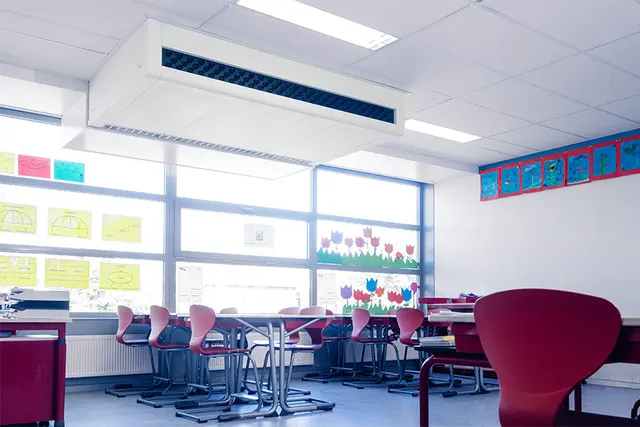
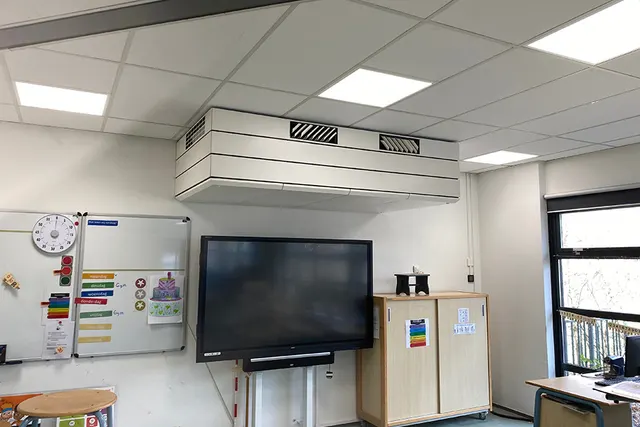
A decentralised system consists of a standalone air-handling unit serving a single room or zone. For example, the unit can be installed in the classroom or on the roof directly above it, making an extensive duct system unnecessary.
“A decentralised system is much more flexible, making it an ideal solution for school renovations. A fan supplies fresh outdoor air directly to the classroom, while a separate fan extracts stale air,” says Titulaer. “Decentralised units also feature heat recovery and deliver significant energy savings. Both types of system can be controlled in various ways, including by CO2 sensors, at a constant airflow rate or via a building management system.”
Whichever option is preferred, Auerhaan is one of the few companies with a suitable system for every situation. “We also have many years’ experience of improving indoor air quality in schools. Over the years, Auerhaan has installed school ventilation in many classrooms across the Netherlands. This sets us apart.”
Looking to the future with confidence
Auerhaan is keen to share its knowledge and experience with installers and school boards to help them find a good solution that meets all the requirements and is tailored precisely to their specific needs. A safe, healthy indoor environment will help pupils and teachers return to school with confidence, while also improving concentration.
Een zakelijke vraag aan Auerhaan Klimaattechniek? Get in touch
Companies in this story
Keep following this
Get an email when a new story is published. No account needed.
- SubjectFrisse Scholen
- CompanyAuerhaan Klimaattechniek