Fresh air in the classroom
Text Lieke BousemaImage Ned Air
A unique combination of centralised and decentralised ventilation guarantees fresh air with minimal disruption and cost
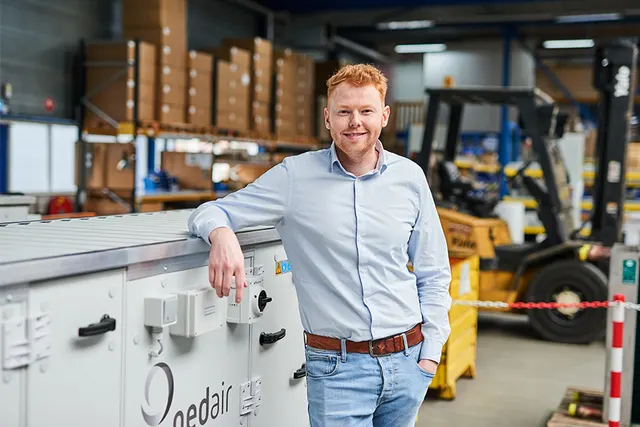
Fresh air for everyone, at home, at work and in the classroom. That is Ned Air’s ambition. The innovative manufacturer produces air handling systems, heat recovery units and roof fans. “As a result of the coronavirus pandemic, good indoor air quality has become a priority in places such as schools,” says Jeroen Stoel, key account manager at Ned Air. “That is a positive development, and one we are keen to contribute to. By combining centralised and decentralised ventilation intelligently, for example, schools can benefit from a single supplier, maintenance provider and warranty provider for the entire system. They can also minimise disruption and costs, since the existing ductwork can often be retained.”
Ventilation in primary and secondary education has been a focus since 2015. That year saw the introduction of the Programme of Requirements for Fresh Schools, with specific performance requirements for energy efficiency, air quality, and thermal, acoustic and visual comfort. Ned Air develops, manufactures and supplies centralised and decentralised ventilation units that meet these requirements. In recent years, the market leader has sold more than 2,000 school ventilation units. “The combination of centralised and decentralised ventilation units makes us unique in the market,” says Stoel. “It also makes us the ideal partner for renovation projects, as only minimal building work is required.”
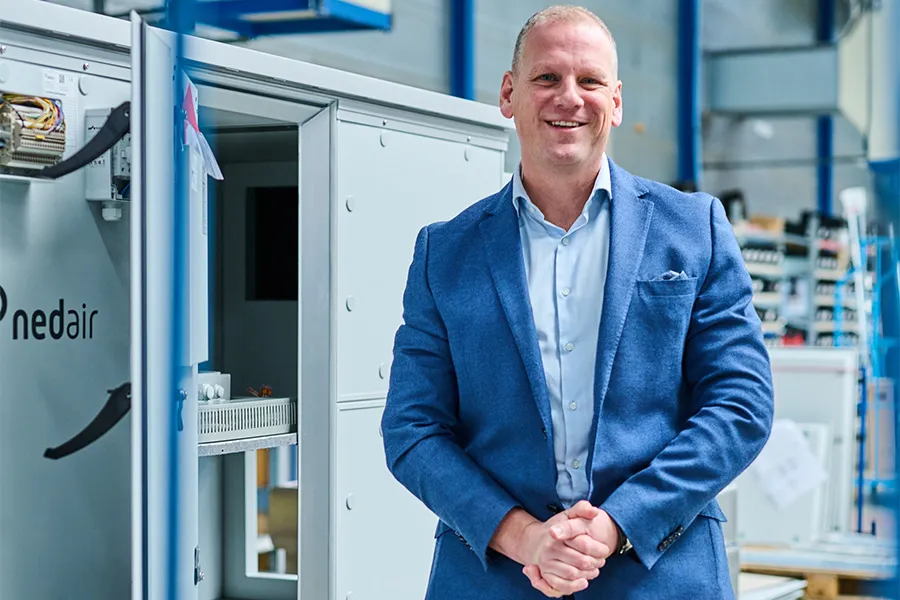
Ventilation system split
Stoel is walking through a school building in the Waterland region, which illustrates the challenges faced by many school buildings. “There are a great many older, multi-storey school buildings in the Netherlands that have an air handling system, but no longer meet today’s standards. Simply replacing the rooftop air handling unit with a unit with a higher air volume can lead to problems,” he explains. “The ductwork on the lower floors is often too small to carry these higher air volumes within the limits for factors such as noise and vibration. Since the air ducts on the upper floors are often oversized, we recommend splitting the building’s ventilation system instead.”
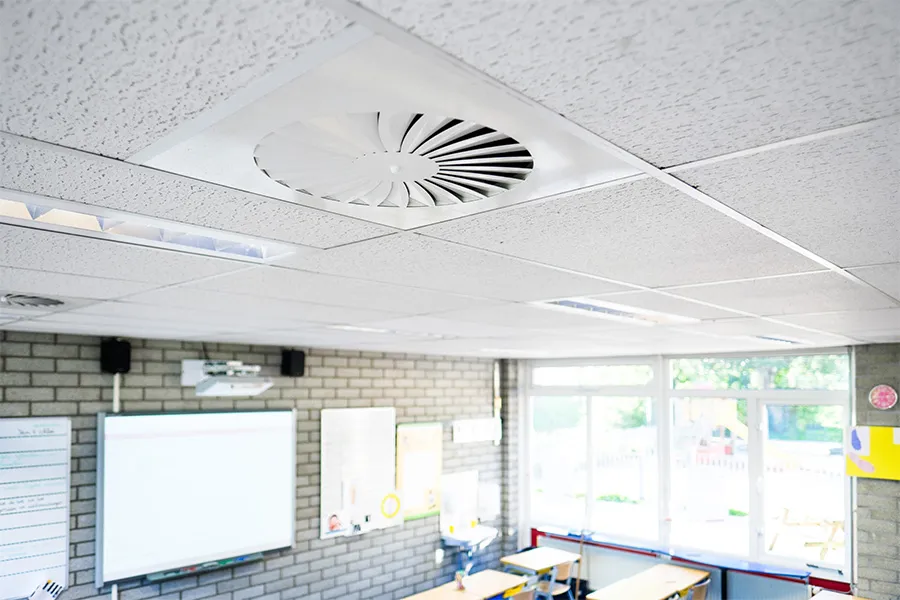
Central air handling on the upper floors
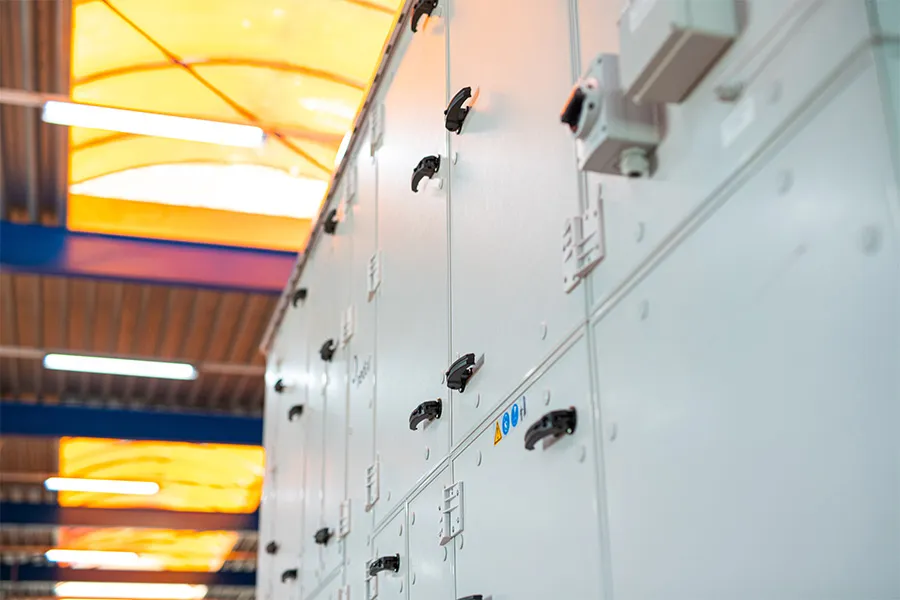
“The ductwork on the upper floors can easily be retained,” Stoel emphasises. “Only the existing air handling unit needs to be replaced with one that meets the latest standards.” With EveryLine and RotorLine, Ned Air offers a suitable solution for every situation and capacity requirement. “NKD Customisation also allows us to meet environmental requirements perfectly.” Air handling units are often 1.5 to 2 metres high, Stoel says. “On large projects, they can even reach 3 or 4 metres, while planning authorities increasingly specify a maximum height of 1 metre. Our NKD Customisation air handling units are designed to meet this need, and can be less than 1 metre high. This is possible even with large air volumes of up to 7,000 m3/h. The units can be powder-coated in a colour of choice, making them barely visible from street level.” Solar panels can be mounted on top of the air handling units if required, bringing fresh air and on-site energy generation together.
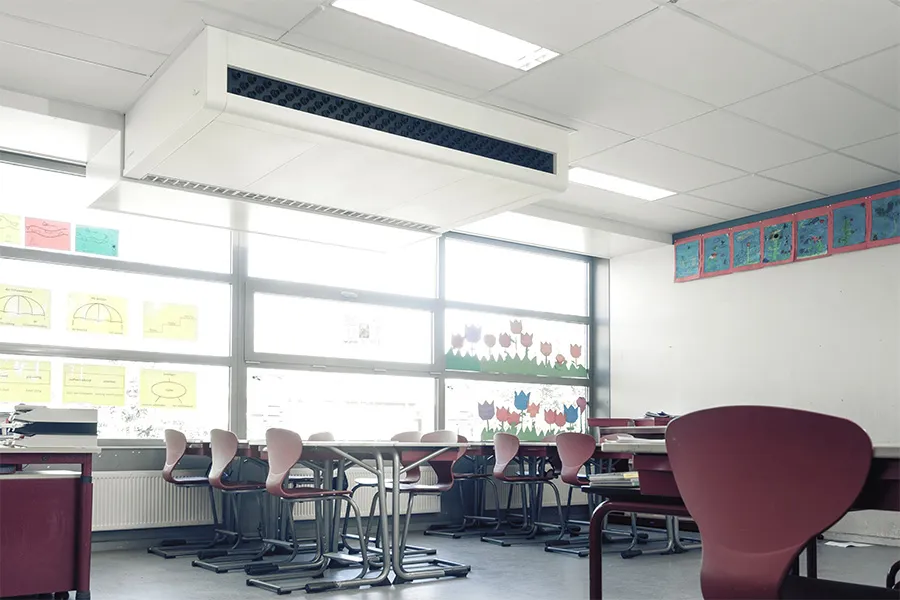
Decentralised ventilation on the lower floors
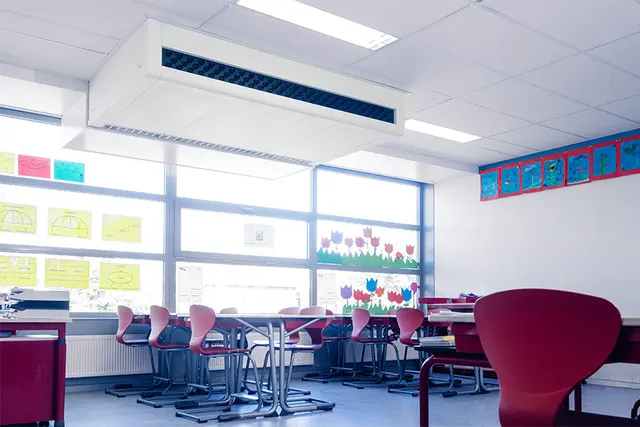
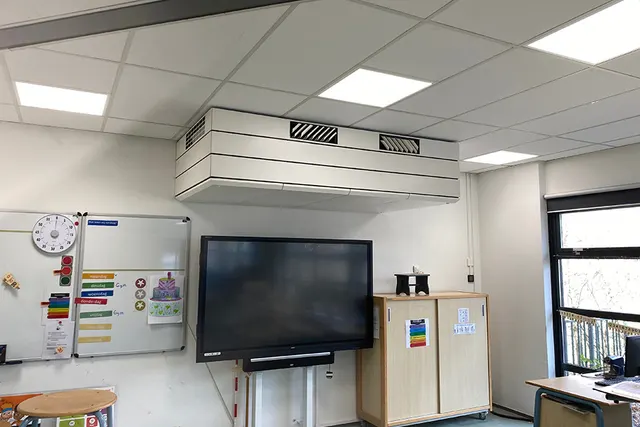
For the lower floors of existing school buildings, where the ductwork is often inadequate, Stoel recommends switching to decentralised ventilation units. “This creates a hybrid solution tailored to each building.” Ned Air offers a choice of decentralised ventilation units, including the EduComfort 1000, EduComfort CM 1100 LN (Low Noise) and EduComfort 675, all of which excel in terms of noise, sustainability, weight and ease of installation. “The decentralised units can easily be suspended in the classroom, with only two air connections needing to be made to the outside.”
Recyclable and hypoallergenic
The EduComfort units are among the quietest on the market and can be fitted with cooling and heating if required. They are also unique in being built for a fully circular economy. “Recycled compressed paper is used for thermal insulation instead of mineral wool, while polyester wool is used for acoustic insulation instead of glass wool. Polyester wool is recyclable and hypoallergenic, and poses no health risks.” In addition, most of the sendzimir galvanised steel has been replaced with aluminium, making the units even lighter. “All EduComfort units are fitted with jet nozzles, which deliver fresh air without draughts. Installers can adjust the nozzles to ensure optimal air distribution throughout the classroom.”
One monitoring and management platform
Ned Air’s centralised and decentralised ventilation units use the same control module and can be easily monitored and managed remotely via the EduConnect platform. “All parameters are actively measured, including air flow rates and filter contamination. We can also provide trend analyses based on these measurements, in line with the SUVIS subsidy scheme. Predictive maintenance is also possible, helping to ensure an adequate supply of fresh air into the future.”
A business enquiry for Ned Air? Get in touch
Companies in this story

Keep following this
Get an email when a new story is published. No account needed.
- ThemeHealthy indoor air
- SubjectFrisse Scholen
- CompanyNed Air
- CompanySolar