Healthy and comfortable at school, even in winter
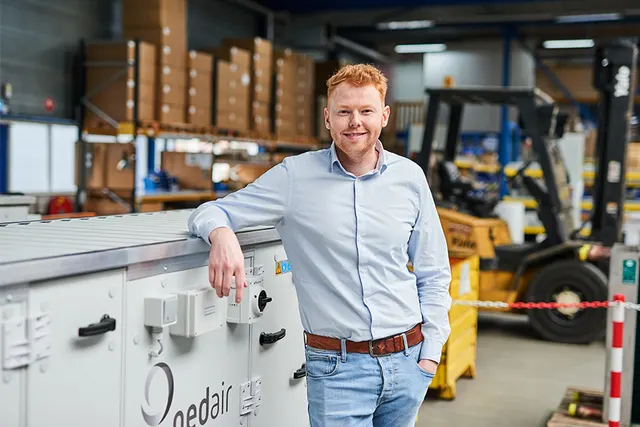
There has been an incredible amount of attention over the past two years on indoor air quality in schools. Various studies show that poor air quality has a negative impact on children’s academic performance. Poor ventilation also encourages the spread of viruses such as COVID-19. It was no coincidence that last winter, school windows were left wide open and the heating turned up. Whether this will still be an option this coming winter remains to be seen. It would, after all, result in an excessively high energy bill. With winter approaching, many school boards are at a crossroads. Which way should they turn? Sjoerd Gersonius, Sales Director at Euromate, has the answer.
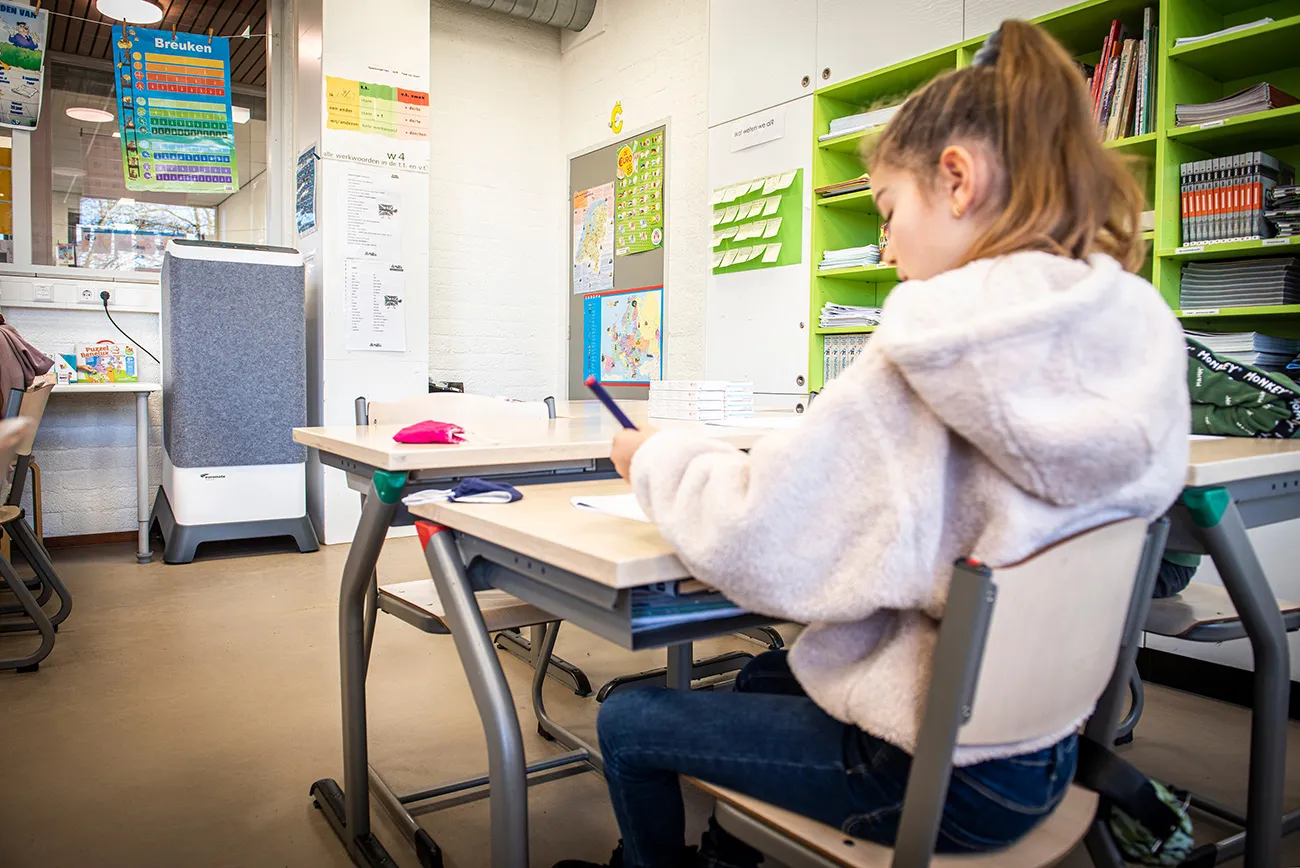
“Clean air is essential to ensure that pupils can learn in comfort and safety,” says Gersonius. “It has now been clearly demonstrated worldwide that COVID-19 is transmitted through aerosols to a much greater extent than previously thought, and that this is even the main cause of all infections. Shared spaces such as offices, meeting rooms, restaurants, theatres, cinemas and schools, where several people spend long periods of time and breathe the same air, pose a particular risk. A healthy person need only inhale a minimal number of virus particles for just fifteen minutes (!) to become infected. Apply this to a classroom where around thirty pupils sit together from 8.30 to 15.00, and COVID-19 hotspots will be inevitable again this winter. Unless appropriate action is taken.”
Ventilation is not enough
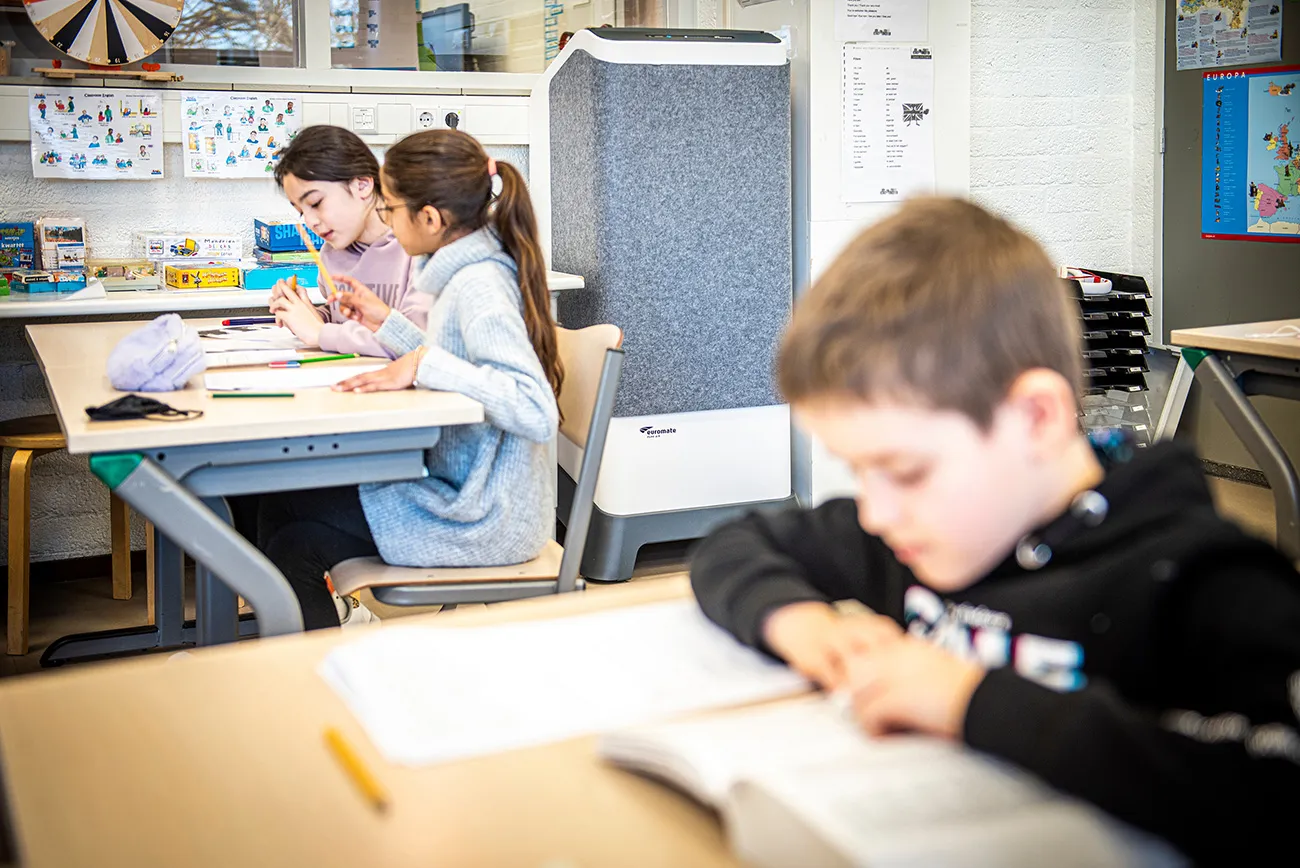
Over the past two years, much attention has been paid to the importance of ventilation in schools. The government has also introduced the SUVIS scheme to fund technical upgrades in this area. Yet the problems are far from solved, says Gersonius. “When a school meets the current Building Decree requirements for ventilation, the air is replaced only once to one and a half times per hour. To learn and work safely and comfortably, however, the air needs to be replaced five to six times per hour. This helps to reduce airborne pathogens, biological agents that cause disease, such as bacteria, viruses and fungi. Although ventilation in the newest school buildings is sufficient to keep CO2 and oxygen levels balanced, it does not protect children and teaching staff from pathogens.”
Costs are spiralling
Many schools open the windows to replace the air every ten minutes. This uses a great deal of energy, says Gersonius. “We asked an engineering consultancy to calculate how much heat is lost outdoors on an average winter’s day. It calculated a loss of no less than 6 to 6.6 m3 of gas per classroom per day. Gas prices were still manageable last winter. At the time, schools used around €3 worth of extra gas per day to keep classroom temperatures acceptable. At today’s prices, however, these costs rise to around €22 per day. We have schools with around 12 classrooms in our records that spent an extra €50,000 on gas last year. If they followed the same strategy this year, the figure would rise to around €300,000. That is no longer affordable.”
An air purifier in every classroom
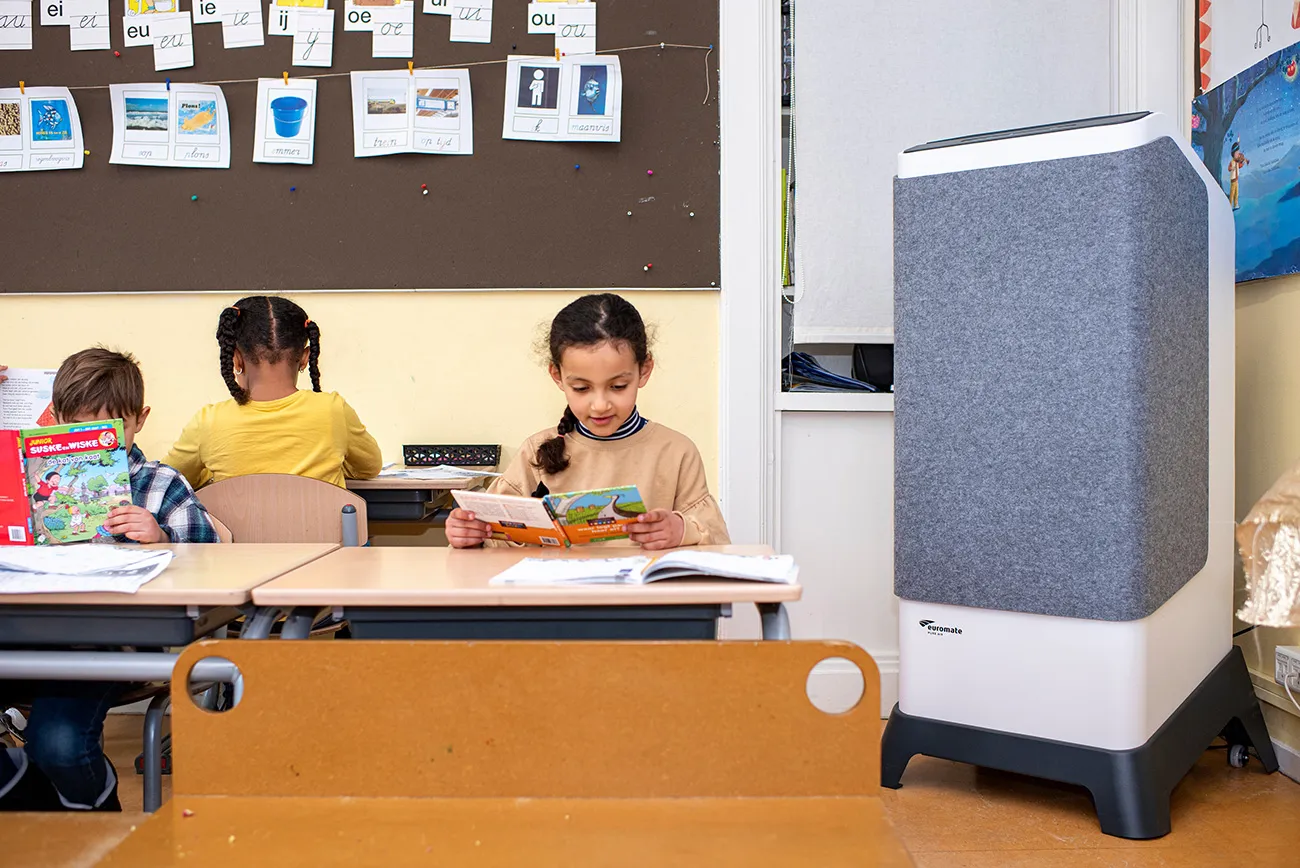
One solution for these schools could be to invest in a ventilation system that is five times more powerful than their current system, says Gersonius. “However, the installation industry has calculated that it will take until at least 2050 to upgrade all schools. The shortage of technicians, scarcity of materials and building work required are causing huge delays. Instead, we recommend installing an air purifier. Our air purifiers use just €1 of energy per classroom per day. Schools can therefore save €21 per classroom per day, while raising comfort to the highest possible level.” Combined with the purchase price, air purifiers are an excellent choice for schools, he stresses. “The government has made €360 million available to improve the indoor climate in schools. If this money were invested in air purifiers, the vast majority of the 125,000 classrooms in our country could have a professional air purifier within a year. A study conducted in collaboration with the UvA in our Tweede Kamer shows that professional air purifiers reduce the risk of COVID-19 infection by no less than 90%. What more motivation do you need?”
No heat loss
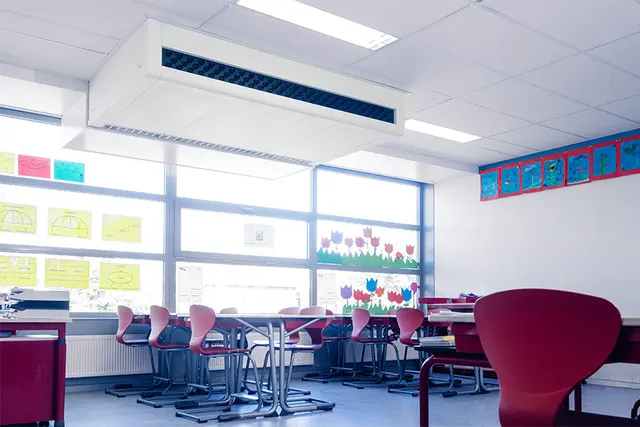
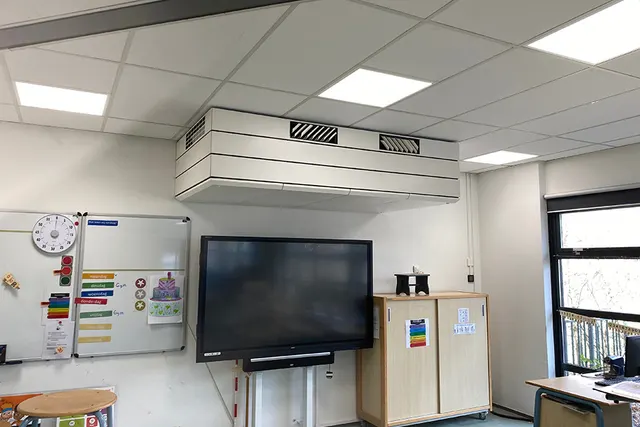
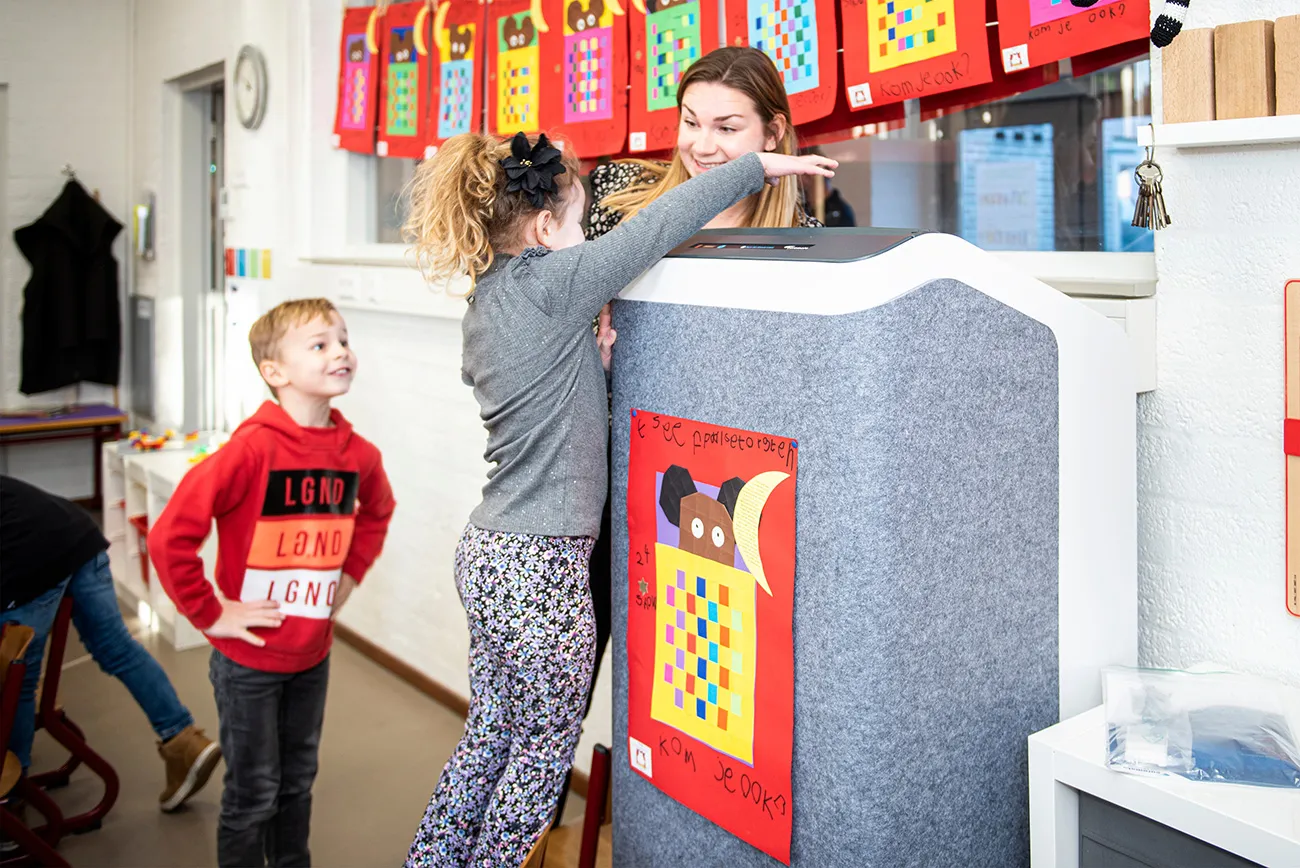
A popular air purifier in schools is Euromate’s Pure Air Shield (PAS) 3300. “This plug-and-play air purifier, equipped with a HEPA 14 filter, is powerful enough to clean an entire classroom and keep it clean,” says Gersonius. “For schools with suspended ceilings, we also offer VisionAir air purifiers, which can capture pollutants in several areas of the room.” All Euromate air purifiers are certified by reputable independent bodies and continuously filter viruses, bacteria, particulate matter, pollen and odours from the air. “Because warm indoor air is drawn in instead of cold outdoor air, no heat is lost. In fact, the heat is distributed around the room more effectively. Our air purifiers also operate in near silence. As the units are available in different versions, we can offer a suitable solution for every classroom.”
Een zakelijke vraag aan Euromate? Get in touch
Companies in this story
Keep following this
Get an email when a new story is published. No account needed.
- ThemeHealthy indoor air
- SubjectFrisse Scholen
- CompanyEuromate