Keep coronavirus out of the classroom: Mobile air purifier removes it from the air
Almost no one doubts the link between clean air and good (academic) performance. That is why the need for adequate ventilation in classrooms has been emphasised for some time. Sjoerd Willemsen says, however, that this is not enough. “Ventilation does not automatically mean clean air. You also have to filter the air.”
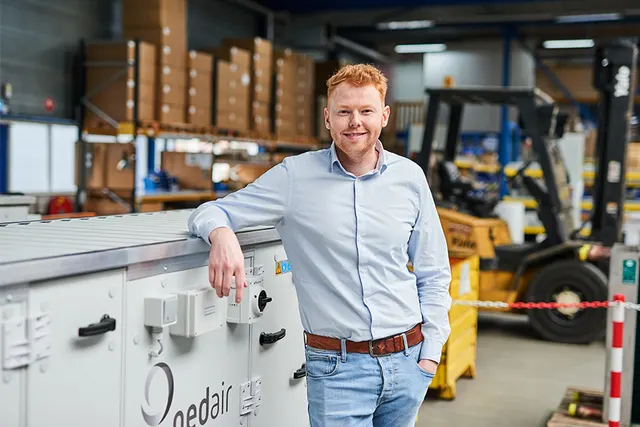
Willemsen is managing director of Camfil Nederland, a Swedish supplier of air filtration products and services. “Maurice de Hond said as much after the presentation by the National Coordination Team for Ventilation in Schools: with winter approaching and coronavirus circulating, ventilation alone will not do the job. You have to filter the air. The problem, though, is that current air handling systems often do not adequately tackle the main source of infection, transmission from person to person, at source.”
Experts in filtration
Camfil has extensive expertise in filtering all types of particles across a wide range of applications. Willemsen: “It all started in the nuclear industry. Camfil is a market leader in many sectors where clean air is crucial. Examples include hospitals and biopharma, and Camfil also filters the cleanrooms at ASML. It has years of experience capturing viruses. For example, several pig farmers use Camfil Pandemic filters to remove PRRS, a virus that is deadly to livestock, from the supply air. This minimises the risk of infection, reducing the need for medication and resulting in better-quality, more sustainable meat.”
Recirculation
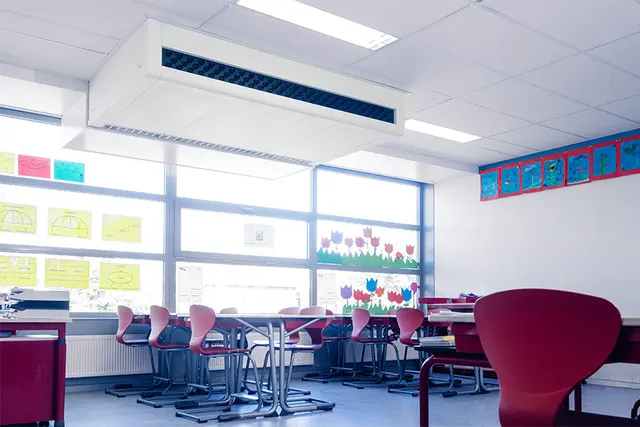
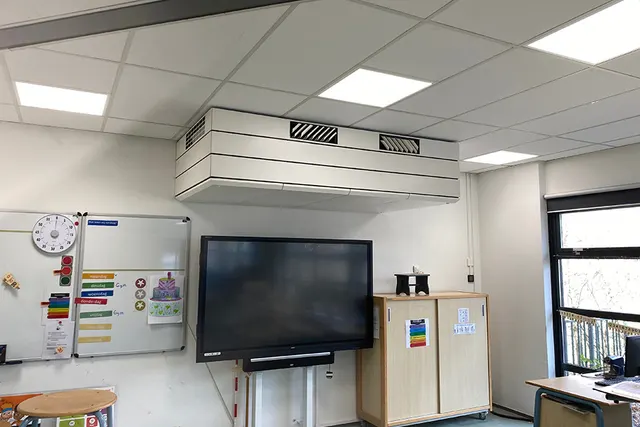
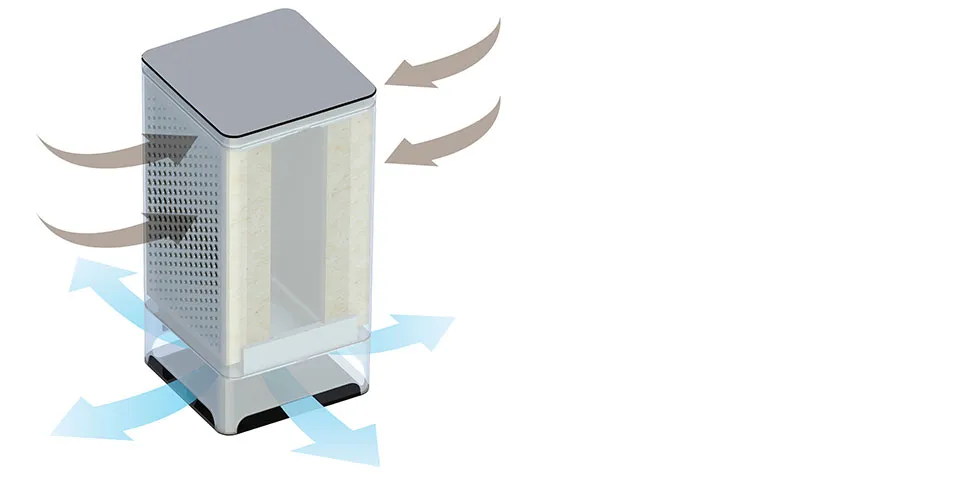
Back to schools. “This is an indoor air quality problem,” says Willemsen. “There has been debate about air quality for almost fifteen years, with a strong focus on excessive CO2 concentrations. Adequate ventilation will solve that. But if you ventilate without effective filtration, you will not remove enough particulate matter and aerosols, which can carry the COVID-19 virus. Recirculating air through a poor filter will actually cause these particles to build up. The best way to significantly improve air quality is to install a good air purifier in the classroom. We have developed a mobile unit for this purpose, with a two-stage filtration system: a molecular filter and an H-14 HEPA filter as the final filter. These filters remove more than 99.9% of most allergens, viruses, bacteria, odours and dirt particles from the air. A major advantage is that the existing system usually does not need to be replaced or modified.”
By way of example: for € 3,000,-, the air in a room measuring, for instance, 8 x 6 x 2.5 metres can be cleaned more than five times an hour by recirculating it through two Camfil City M air purifiers. The quality of the discharged air is comparable to that in an operating theatre.
Abattoirs
In these times of coronavirus, this is a useful addition. “And an effective one,” Willemsen assures us. “Larger Camfil units have been used in German abattoirs, which, as we know, made the headlines because of large numbers of infections. Purifying the air in the rooms with HEPA filters drastically reduced the risk of infection. A case study was produced on this.”
A solution for every room
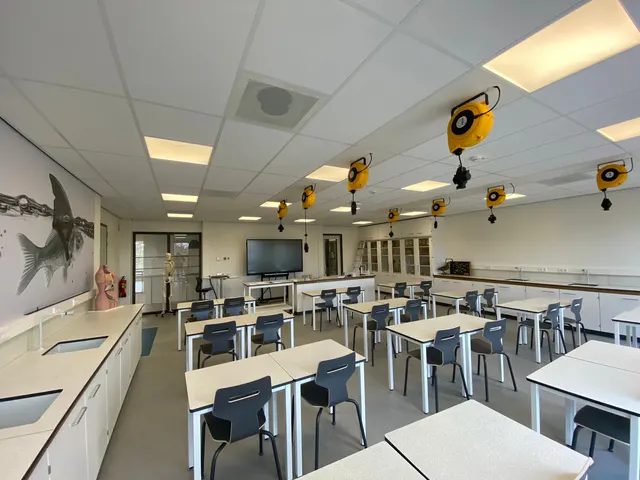
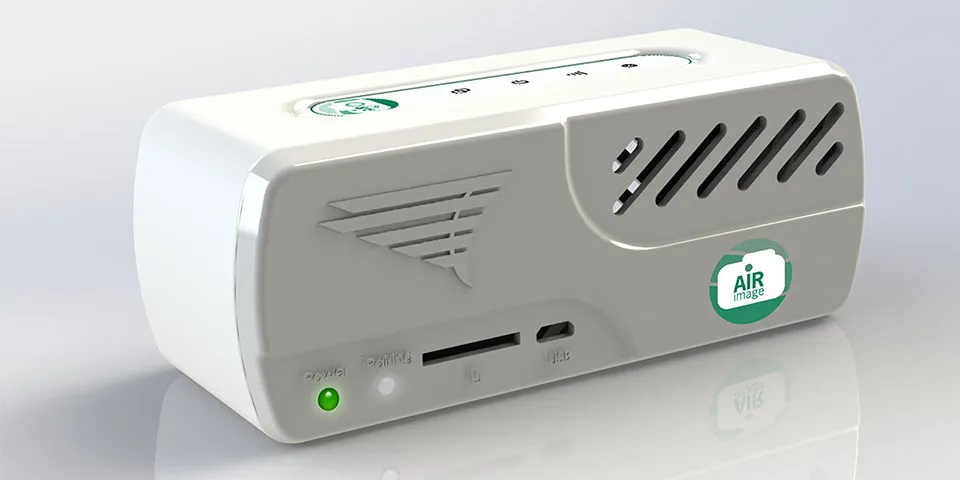
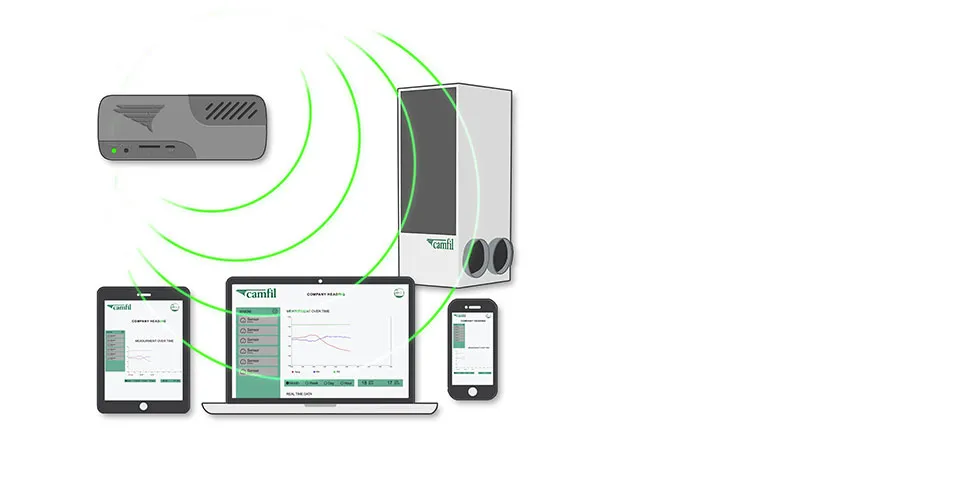
“The great thing is that Camfil has a tailored solution for every type of school room, whether it is a classroom, office, gym, chemistry laboratory or assembly hall. For a larger room, the unit can be equipped with an Air Image sensor, a particle counter that controls the air purifier. The units are mobile and easy to move from one room to another. They can be installed in no time, with plug & play operation and no structural alterations. The existing system can continue to be used as before, creating a much healthier indoor climate.”
Question about this story? Ask your question
Keep following this
Get an email when a new story is published. No account needed.
- SubjectFrisse Scholen