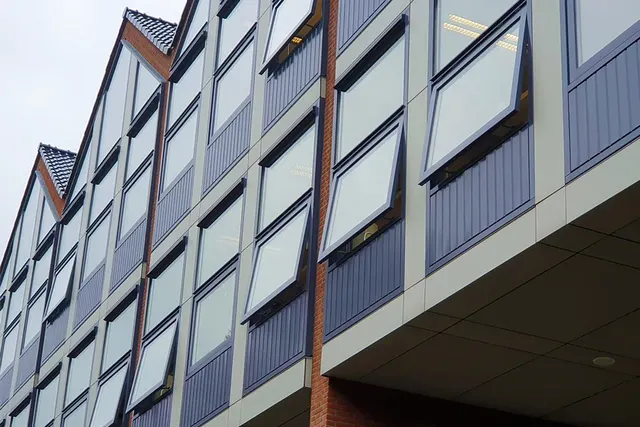
Manufacturer and installer develop decentralised unit for schools
Fläkt Nederland and Brandsen Installatietechniek have joined forces to provide climate control systems for schools that meet the Frisse Scholen guidelines. The manufacturer of complete climate control systems and the full-service installer specialising in schools have successfully completed many education projects together. They have now also developed a product together: the FläktGroup ATPICCO decentralised school ventilation unit.
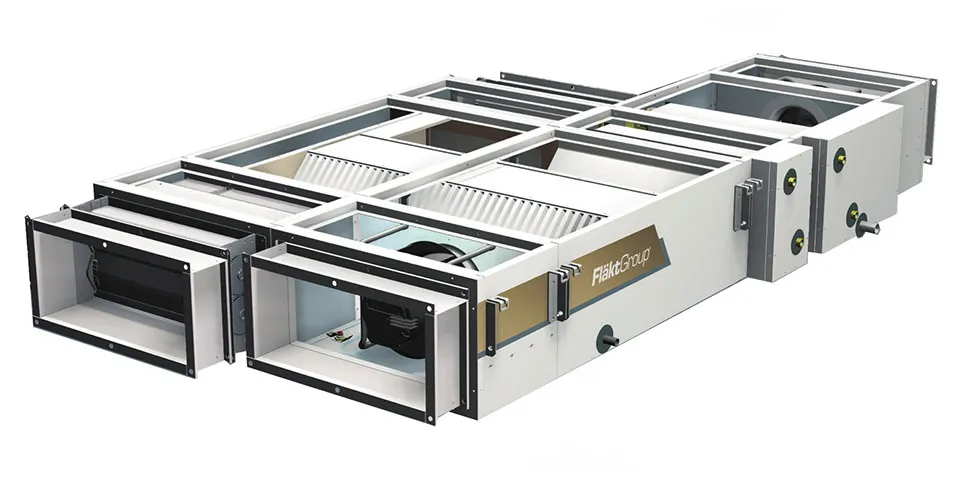
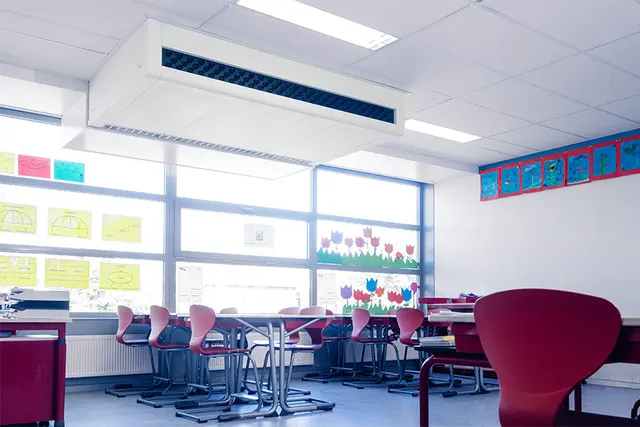
The unit operates quietly.
Maarten van Dalen, account manager at Fläkt Nederland, sees a major challenge ahead: “Children work in a demanding environment, and high expectations are placed on their performance. Good air quality and low noise levels are crucial to help them stay focused and alert. Dust and changing occupancy place additional technical demands on a ventilation system, as do tight operating budgets, optimised energy consumption and efficient operation.”

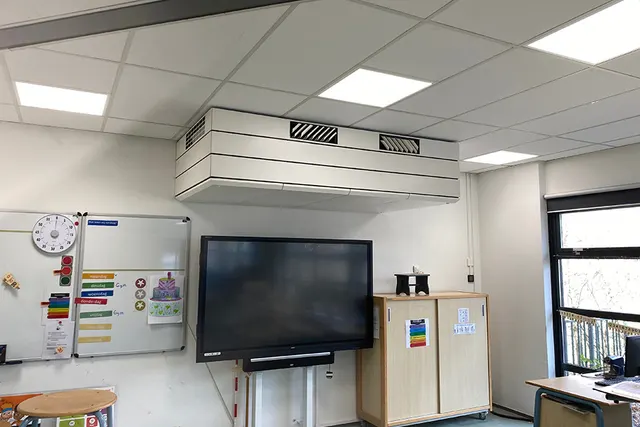
ATPICCO: compact unit installed beneath the ceiling.
Poor conditions
Unfortunately, most older school buildings are in a poor state in this respect. Berto van Vliet, director of Brandsen Installatietechniek in Barneveld: “It’s not just old, poorly insulated schools with nothing but window ventilation, large radiators and draughts. Ventilation in many newer or refurbished buildings is also poorly maintained, inconsistent or noisy. Ventilation systems are often used incorrectly or are not commissioned properly. Several appliances also give off heat, while natural ventilation is lacking. That’s why we started working with Fläkt to tackle the issue as a whole.”
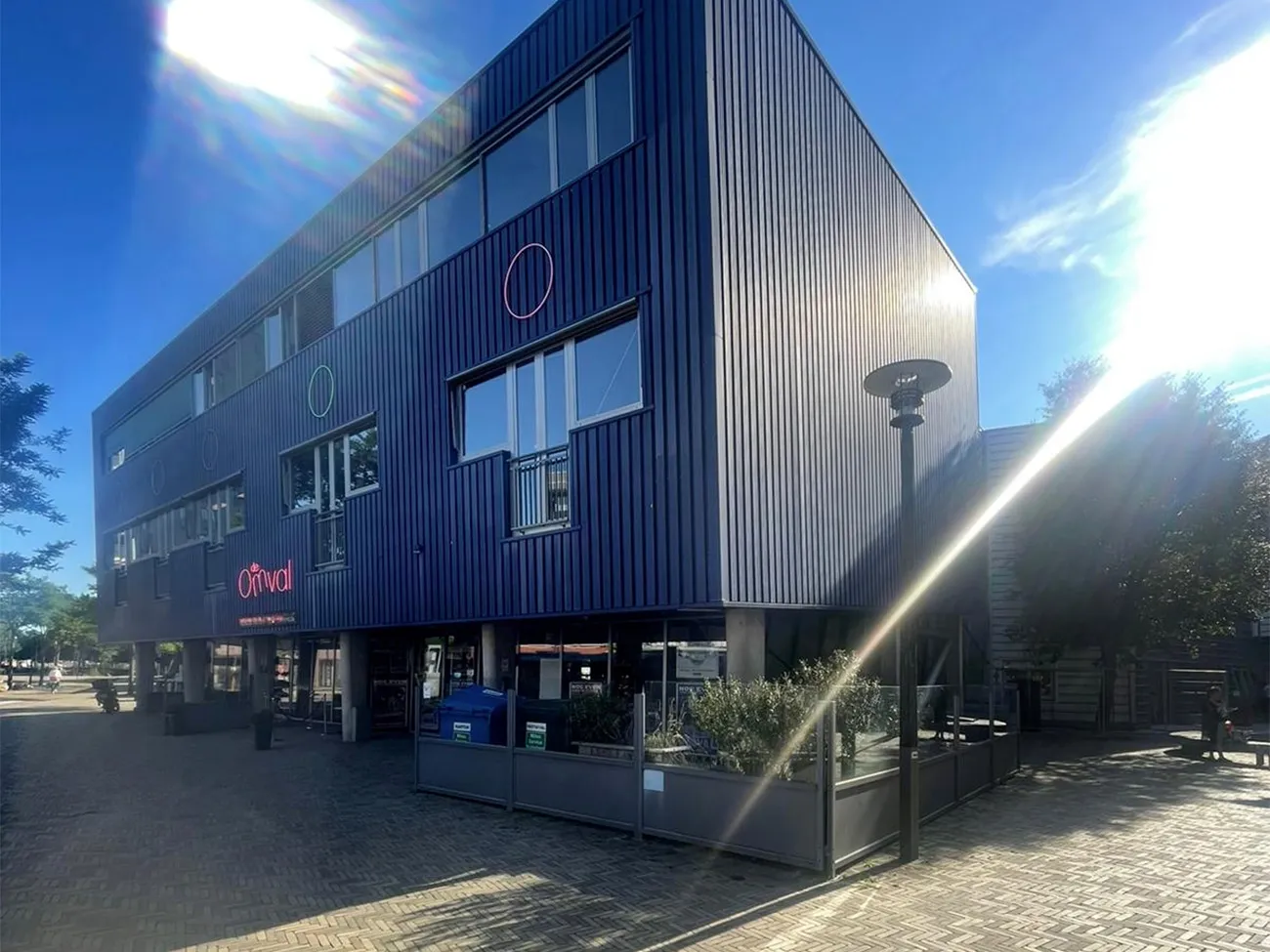
PV panels and heat pumps on the roof.
ATPICCO school ventilation unit
The solution from Fläkt and Brandsen is a decentralised ventilation system with low-temperature heating and high-temperature cooling. Van Dalen: “In normal operation, the school version of the ATPICCO has a capacity of 950 m³/h per classroom and is fitted with a cross-flow heat exchanger for heat and cold recovery, with an efficiency of 91%. There is therefore no mixing of supply and extract air, which is particularly relevant during the coronavirus pandemic. The noise level is no more than 33 db(A). Supply and extract air are filtered using ISO ePM10/70% filters.”
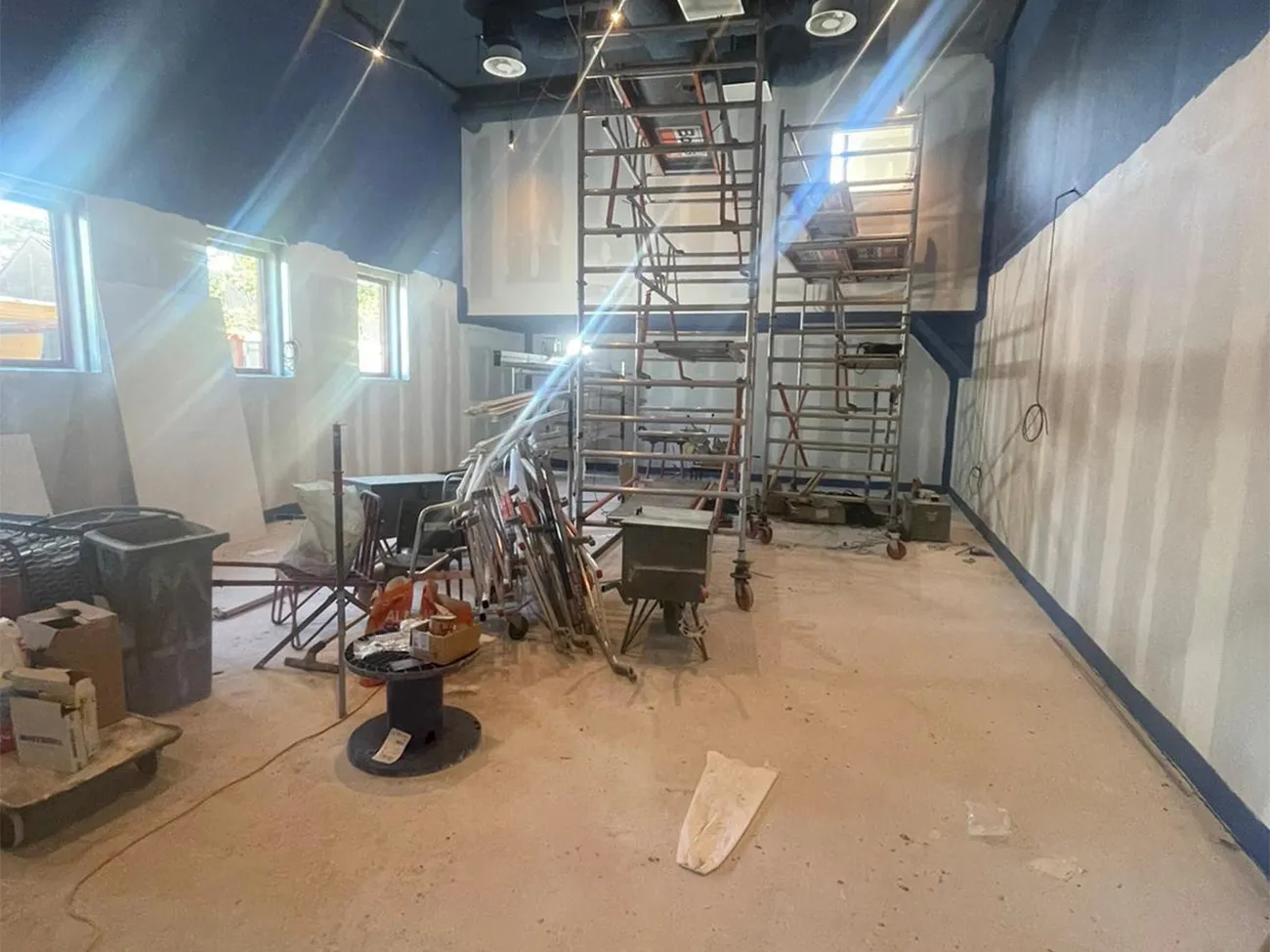
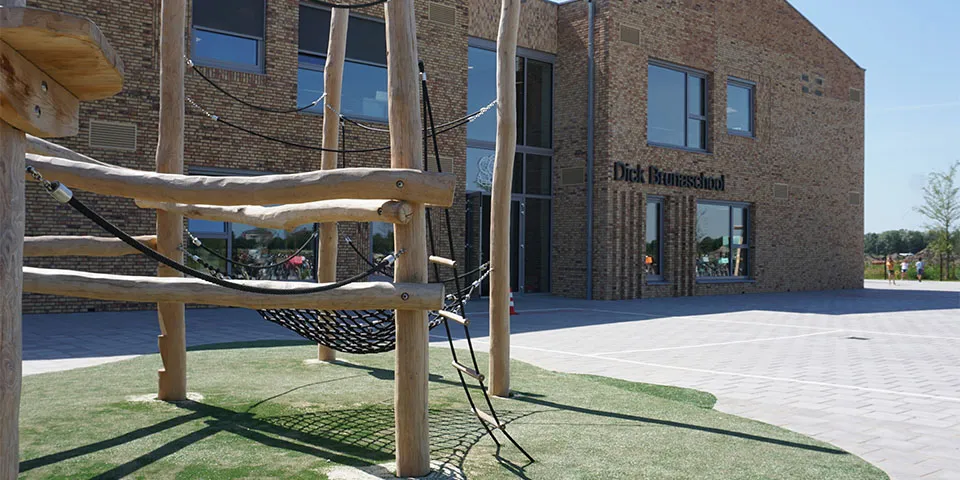
New (fresh) school in Waddinxveen.
Preheating and precooling
Air is distributed and extracted through large, well-positioned grilles. Van Dalen: “The ceiling can also serve as a plenum, but the grilles must be properly connected to it.
The system is demand-controlled based on CO2, temperature and/or occupancy. We have equipped the ATPICCO with a warm-up or night ventilation section. This allows you to cool classrooms during warm periods before they are occupied, and preheat them during cold periods when heat recovery is not yet possible. This in turn reduces the required cooling and heating capacity.”
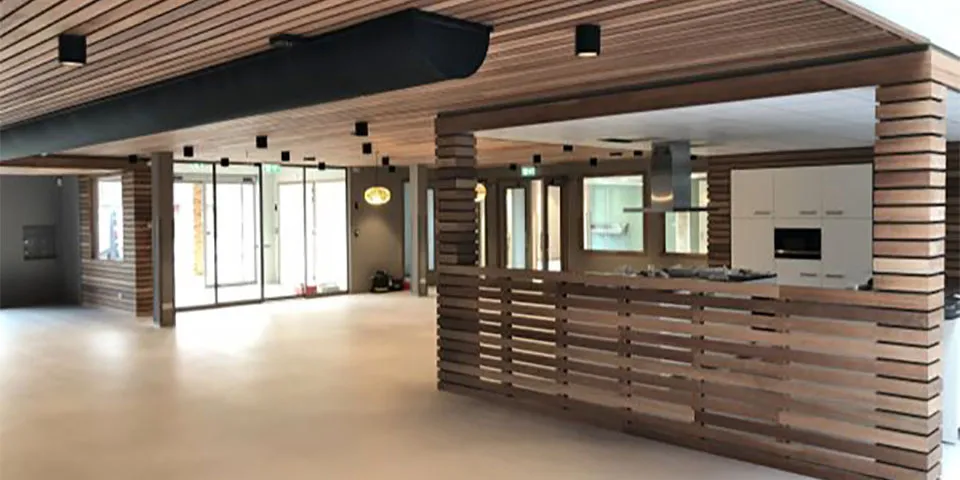
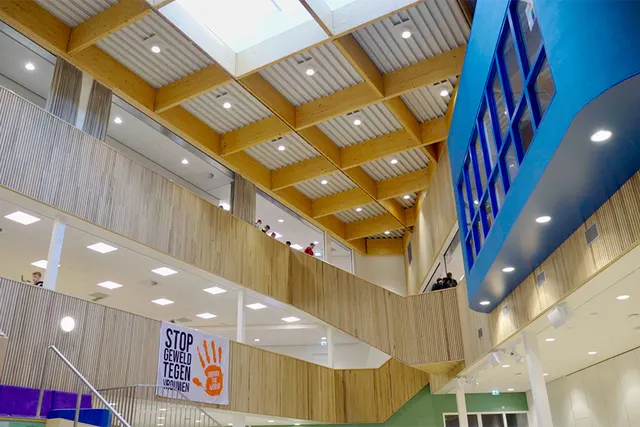
Central area with air supplied through a fabric air duct.
Low-noise operation
A great deal of effort went into noise reduction during the development of the joint product. Van Dalen: “The 25-millimetre-thick panels contain Hawaphon, a sound-absorbing material that works well against both high and low frequencies. We have also designed a flow grid for the already quiet, energy-efficient fans, which guides air through the unit more effectively. The air guide vanes are V-shaped, so the air is guided rather than hitting the sound attenuators. A special change-over coil minimises pressure loss, allowing the fans to run smoothly and quietly.”
Easy to use
Van Vliet raises another important point: ease of operation. “A lot goes wrong in this area. Systems are too complicated, settings get disrupted and, ultimately, comfort and expensive installations suffer. That’s why we developed a very simple control system with small displays, clear icons and plenty of preset scenes. Starting pre-ventilation two hours before opening is now child’s play.” The ventilation concept has now been supplied and tested hundreds of times by independent firms. Van Dalen: “Fläkt is a certified company. We develop and manufacture everything ourselves and closely monitor quality. Purchase price used to be the main consideration, but more and more attention is now being paid to TCO. School boards, or installers if they have contracts for this, are responsible for maintaining the systems, so it makes sense for them to invest in good equipment. Most schools, I would say 95%, choose Frisse Scholen Class B. Although we can also supply Class A, this remains an excellent solution for the vast majority of educational institutions.”
Commissioned by the municipality of Waddinxveen, a new home has been built in the Park Triangel district for Koningin Beatrixschool, Dick Brunaschool and Quadrant Kindercentra. Fläkt Nederland and Brandsen Installatietechniek have jointly created a good learning environment with the ATPICCO ventilation units.
Question about this story? Ask your question
Keep following this
Get an email when a new story is published. No account needed.
- SubjectFrisse Scholen