Mechanical ventilation is efficient, effective and comfortable
Even with the windows open, high concentrations of infectious aerosol particles can build up in classrooms during lessons. That is the main finding of a study by indoor climate experts at WOLF GmbH, recently carried out with support from the Hermann-Rietschel-Institut (TU Berlin). Martin Wendels, director of WOLF Energiesystemen in Kampen, discusses the findings, which once again highlight the advantages of mechanical ventilation over ventilation through open windows.
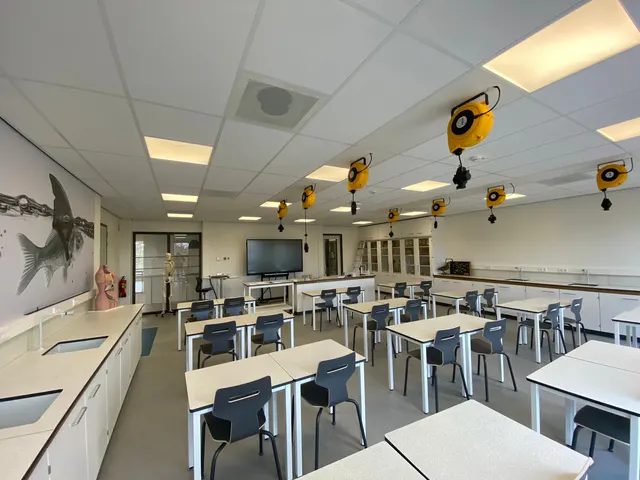
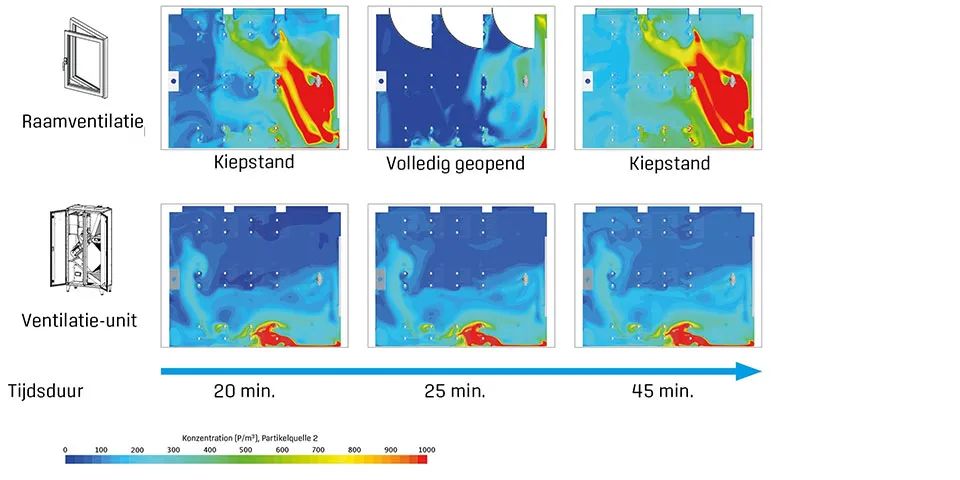
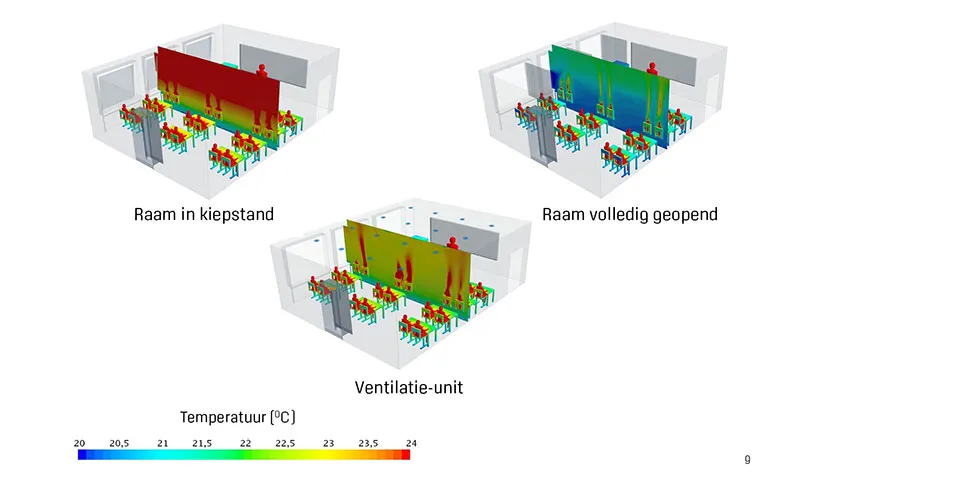
The study focused on the spread of aerosols in a classroom at an outdoor temperature of 20°C. The simulated room (60 m²) contained a teacher and 24 pupils, one of whom was infected with coronavirus. In line with scientific advice, the classroom windows were first left slightly open and then opened fully after 20 minutes. With an emission rate of 50 particles per second, it took just 5 minutes for aerosol particles from the infected person to spread throughout the room. As many as 900 infectious particles per m³ were measured in some parts of the classroom. Opening the windows fully for 5 minutes did provide sufficient air exchange and reduced the risk of infection to a minimum, but the particle concentration rose again when the windows were left tilted open. The conclusion: leaving the windows slightly open results in a relatively low air exchange rate. Opening them fully is more effective. But this causes considerable disruption to lessons due to draughts, noise from outside or a heavy rain shower. Wendels considers this undesirable. “The study clearly showed that following the guidelines for window ventilation does not provide enough ventilation to ensure a healthy indoor climate. This is particularly important at a time when hygiene standards matter so much.”
Solutions
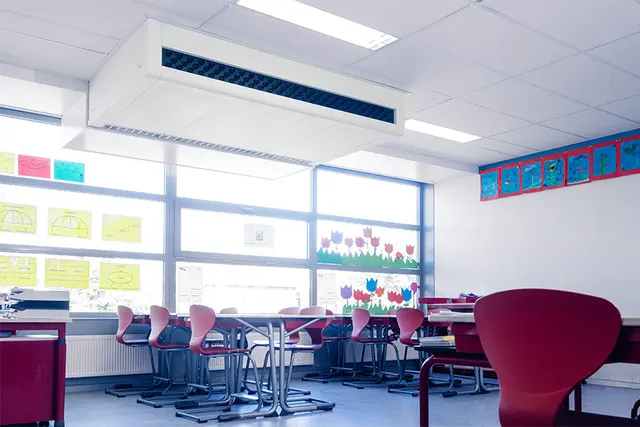
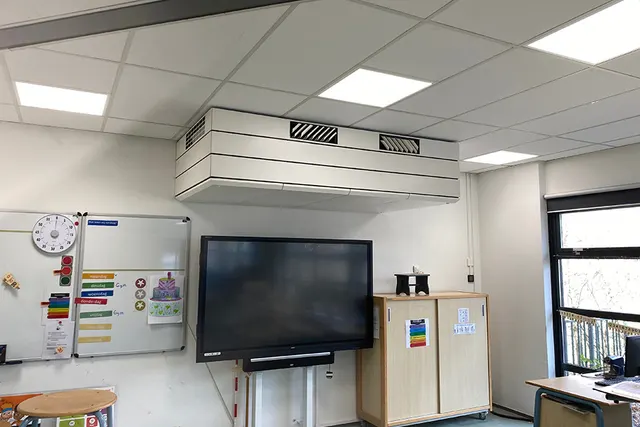
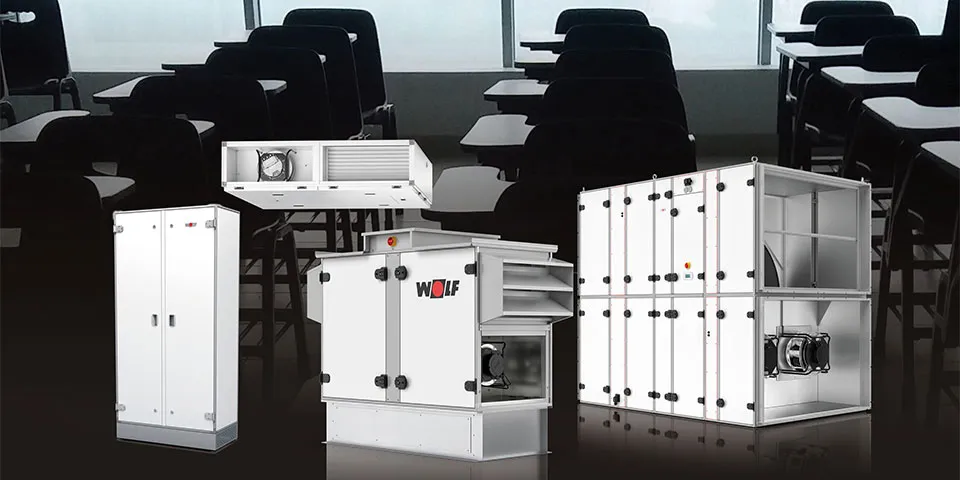
There are several solutions that can minimise all that extra work, disruption and discomfort. “Using a ventilation unit with heat recovery to provide adequate air exchange reduces both CO2 levels and aerosol concentrations to an acceptable level,” Wendels continues. “At the same time, comfort is maintained.” The study confirmed these findings. The Hermann-Rietschel-Institut also examined aerosol dispersion levels in a classroom with the windows permanently closed and fitted with this type of system. In this scenario, 800 m³ of fresh air per hour was supplied to the room, while stale air was continuously extracted. Larger classrooms required a higher capacity. The result: the air in the classroom was completely replaced more than 4 times per hour.
Central systems
In addition to ventilation units for individual classrooms, WOLF Energiesystemen also offers central ventilation systems with heat recovery for multiple classrooms. These energy-efficient solutions have capacities of up to 10,000 m³ of air per hour. “Our systems provide a consistent supply of fresh air and significantly reduce high concentrations of infectious particles,” Wendels explains. “The filters also protect indoor air from particulate matter and pollen, and the units mean that classroom windows do not need to be opened regularly. This prevents high energy costs, draughts and temperature fluctuations. Classrooms are always comfortable. These are welcome benefits, especially with winter approaching.”
A business enquiry for WOLF Energiesystemen? Get in touch
Companies in this story

Keep following this
Get an email when a new story is published. No account needed.
- ThemeHealthy indoor air
- SubjectFrisse Scholen
- CompanyWOLF Energiesystemen