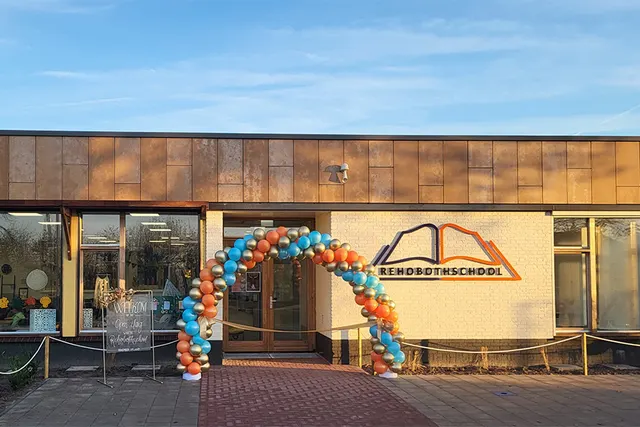
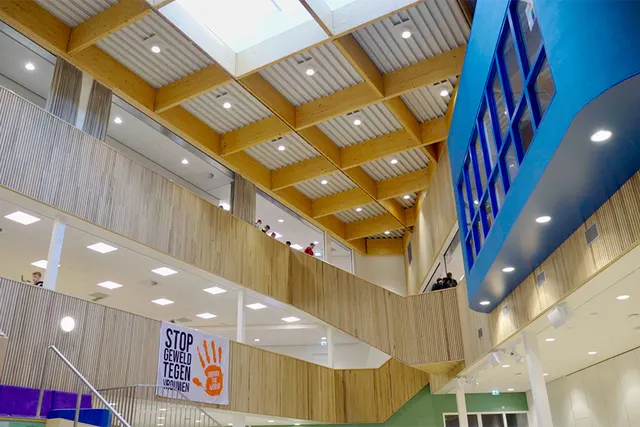
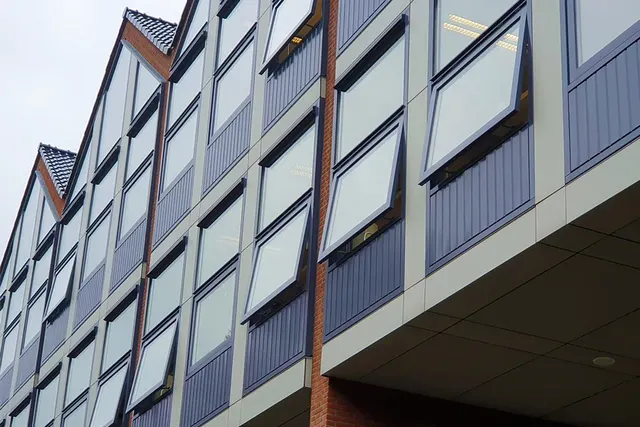
Poor indoor air quality is the order of the day in ageing school buildings
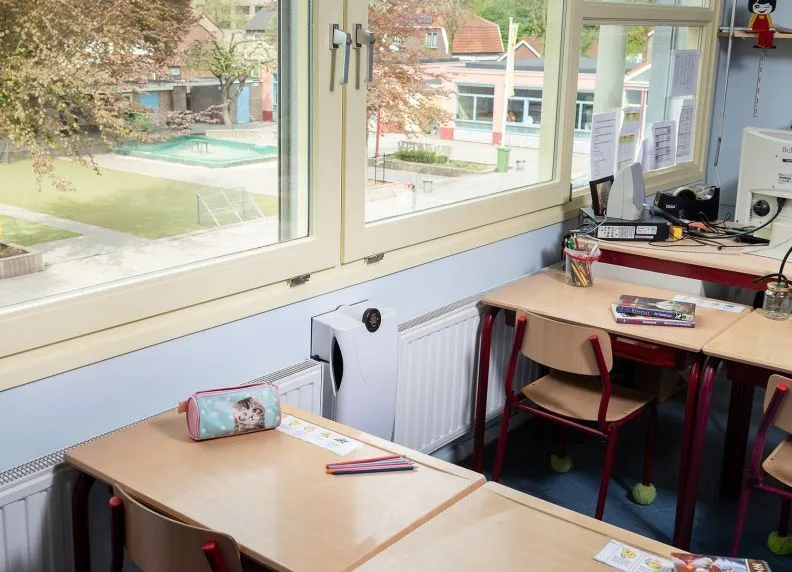
Good ventilation is always an important consideration in buildings. However, the COVID-19 measures have exposed just how poor indoor air quality is in school buildings. Many older schools are currently unable to meet the standards in force. The result? Pupils and teachers struggle to concentrate, feel drowsy and suffer from red, irritated eyes.
SIEGENIA makes it easy to improve
Today, the vast majority of school buildings have mechanical extract ventilation and natural air supply. In other words, fresh air enters through window vents, while stale air is extracted by a mechanical fan. In theory, this seems to work, but in practice it is a different story. For example, the window vents often do not let in enough fresh air. As a result, teachers are advised to ‘simply’ open the window. That sounds harmless enough, but when the temperature outside drops, the indoor temperature eventually falls too. Opening the windows can also cause noise nuisance. Many teachers therefore decide to keep the windows closed, which means the ventilation does not work and CO2 levels eventually rise due to a lack of fresh air.
Creating a better indoor climate
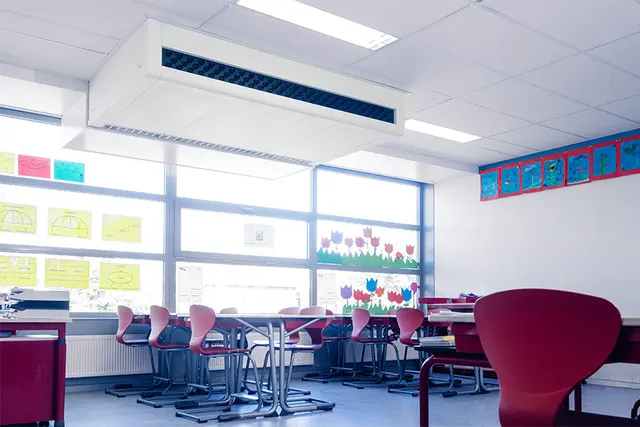
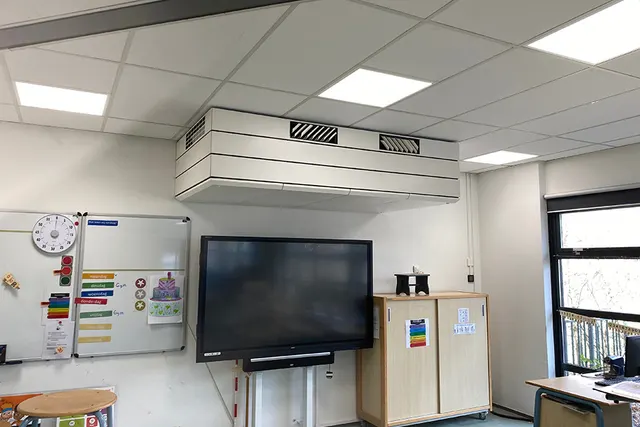
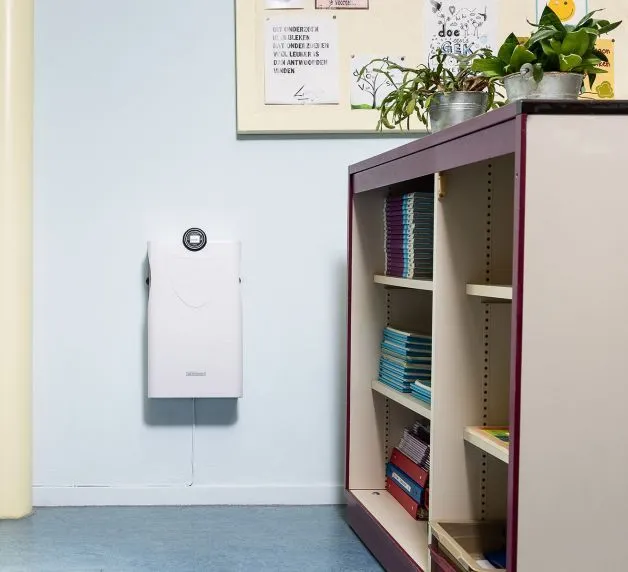
The COVID-19 measures have helped expose just how poor indoor air quality is in school buildings. However, resolving the ventilation problem need not be difficult. There are several ways to create a better indoor climate in the classrooms of older school buildings. One good example is SIEGENIA’s AEROPAC. This whisper-quiet wall-mounted ventilation unit supplies clean, oxygen-rich air to the room. With the AEROPAC, windows can stay closed, eliminating noise nuisance. For an optimal indoor climate, the AEROPAC can be combined with a SENSOAIR. This sensor measures the air quality in the room, monitoring CO2 and volatile organic compounds (VOCs), such as those from adhesives. Finally, optional filters allow the AEROPAC to keep external pollutants out of the classrooms.
Easy to add to the existing ventilation system
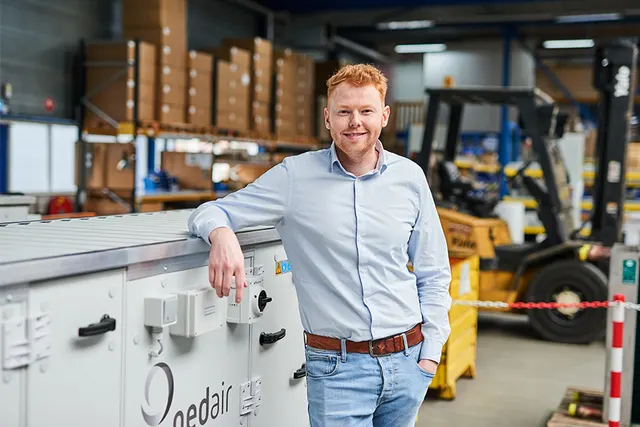
According to Jeroen Wolters of SIEGENIA, the AEROPAC is a solution for both small and large spaces. Thanks to its straightforward installation, the AEROPAC is an easy way to supplement the existing ventilation system in older school buildings. “Installation takes no more than 45 minutes. Then you plug it in and voilà,” says Wolters. Indoor air quality will improve significantly as a result.
What can the AEROPAC offer schools and other settings?
● Ventilation without opening windows, helping to prevent noise nuisance.
● A ventilation system that filters harmful and/or nuisance pollutants (particulate matter, pollen, NOx, odours and similar substances)
● Ventilation that flows sideways through the wall, rather than creating a direct draught into the room.
● A supplement to the existing ventilation system, helping to ensure that the required standard is met.
Want to know more about the above? Simply complete this form.
A business enquiry for SIEGENIA-GROEP? Get in touch
Companies in this story
Keep following this
Get an email when a new story is published. No account needed.
- ThemeHealthy indoor air
- SubjectFrisse Scholen
- CompanySIEGENIA-GROEP