Smart CO2 monitors linked to powerful air purifiers can monitor and improve indoor air quality
Research has shown that indoor environmental quality in schools is often below standard. This is not only bad for health, but also affects pupils’ learning outcomes.
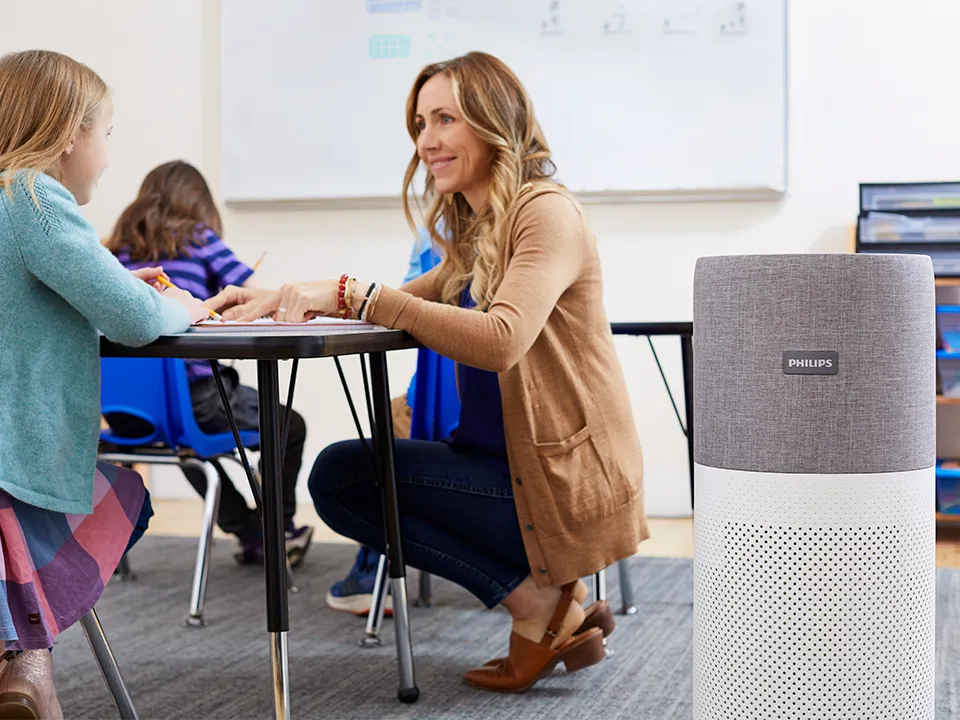
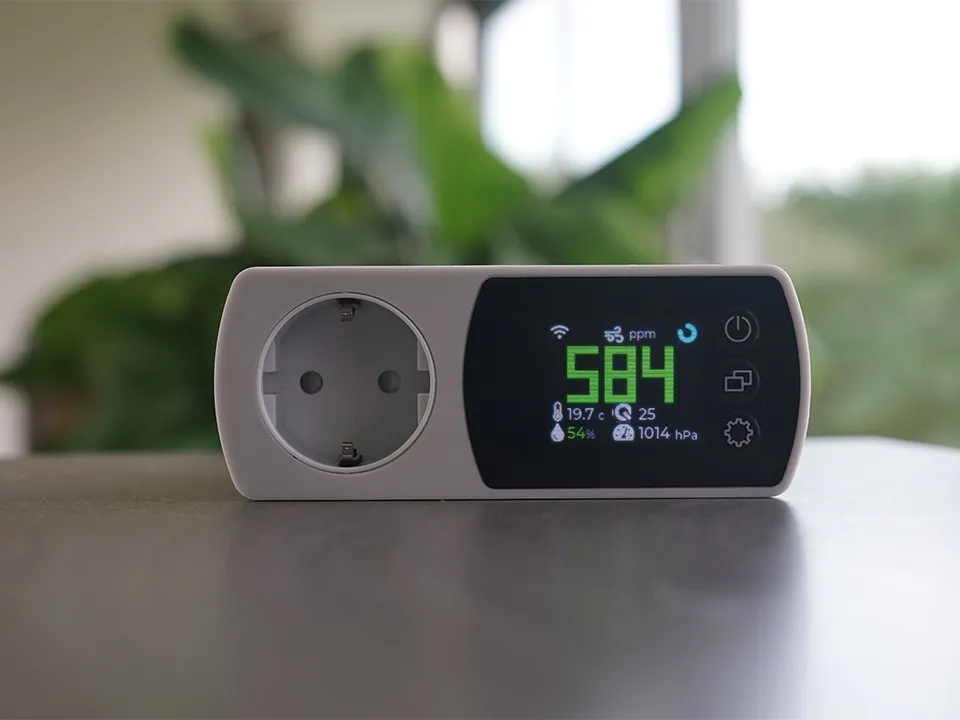
CO2 is an important indicator of air quality and ventilation effectiveness. AurAir sensors monitor CO2 levels in the classroom. As soon as they exceed the limit, the Philips air purifier is activated automatically via Wi-Fi. Thanks to its built-in HEPA filter, it removes 99.97% of particles as small as 0.3 μm, including common allergens, dust, dirt, bacteria and viruses. In this way, AurAir CO2 monitors and Philips air purifiers complement each other well.
The key advantage is that the system does not need to be installed as a built-in solution. This makes the sensors and air purifiers highly suitable as an additional measure, alongside mechanical and natural ventilation, to improve air quality in existing buildings.
Tested in Dutch schools
The Philips and AurAir combination is currently being tested in practice at several schools. It has been in use for several months at two primary schools and two secondary schools. As the primary schools are fully open, the most extensive tests could be carried out there.
With almost 300 staff across 12 schools, Katholieke Scholenstichting Fectio provides primary education to 2,900 pupils in the municipalities of Houten (8 schools) and Bunnik (4 schools). The health of its pupils and staff is a priority for Stichting Fectio, which was therefore keen to take part in the trials. The practical tests were carried out at two sites, De Delteyk basisschool in Werkhoven (municipality of Bunnik) and basisschool De Stek in Houten. At both sites, the monitors were placed where teachers could see them and connected via Wi-Fi to the most powerful air purifier in the Philips range (AC4236/10). Teachers valued the CO2 monitor because its large, easy-to-read display figures and clear colour coding (green is good, yellow is less good, red is bad) allowed them to regulate natural ventilation effectively. Previously, they relied on judgement, which sometimes meant opening windows and doors by hand too early or too late, or ventilating too much or too little.
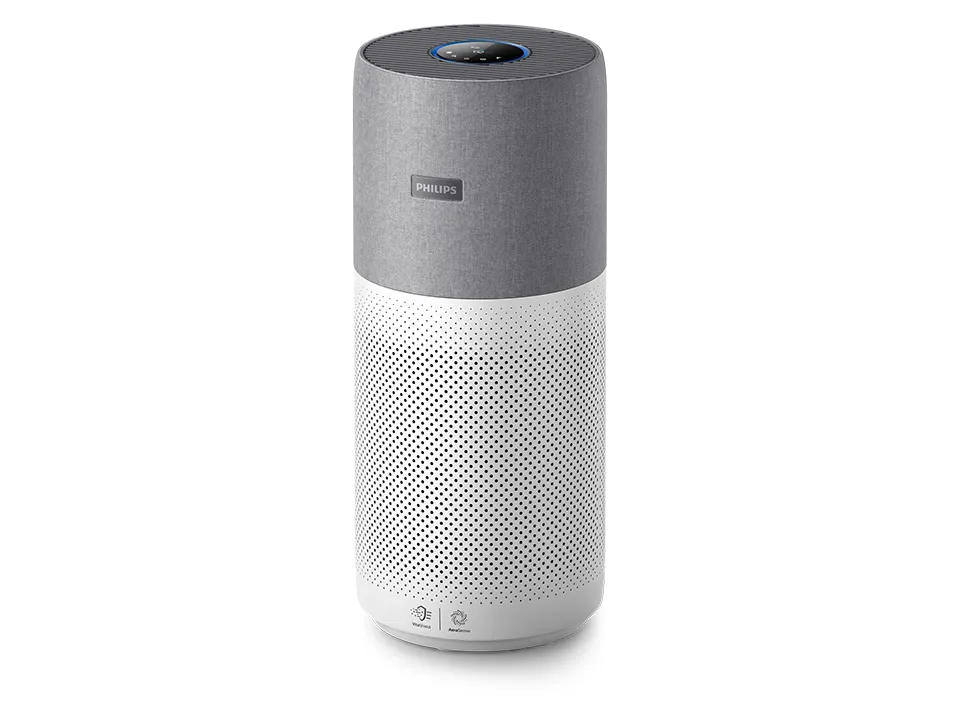
Teachers’ initial experiences in practice have been very positive. The sensors give teachers a clear indication of when to take action on ventilation. Teachers have also noticed that the air purifiers respond quickly to the children’s activities in the classroom. In particular, the HEPA filters give them confidence that the smallest particles are being filtered from the air. The noise was not found to be disruptive in practice, and teachers also think the air purifiers are well designed.
Alongside these subjective experiences, the combination is currently being tested in practice to see whether measurable benefits can be recorded. Classrooms with and without the system are being compared. Initial indications are positive, but further research is needed.
Clean schools during the coronavirus pandemic
More than ever, schools are prioritising the health of pupils and staff. Measures have been put in place at every school to reduce the risk of COVID-19 infection as much as possible. Alongside familiar measures such as face masks, one-way systems, handwashing and keeping a distance, serious attention is also being paid to keeping the indoor air in classrooms as clean and healthy as possible. The optimal approach consists of three layers:
1. The first layer consists of the built-in mechanical ventilation systems.
2. The second layer is natural ventilation, with teachers using readings from AurAir CO2 monitors to open windows and doors in a controlled way.
3. The third layer consists of Philips air purifiers, which remove allergens (pollen), fine particles, dust, dirt, bacteria and viruses not only from polluted indoor air but also from outdoor air entering through open windows. This layer is quick to install and highly cost-effective.
This three-layer approach makes it possible to improve air quality noticeably and pragmatically in existing school buildings. It makes optimal use of the mechanical and natural ventilation already in place, supplemented by an additional layer of protection for pupils and teaching staff that is quick to install and highly cost-effective.
Question about this story? Ask your question
Keep following this
Get an email when a new story is published. No account needed.
- ThemeHealthy indoor air
- SubjectFrisse Scholen