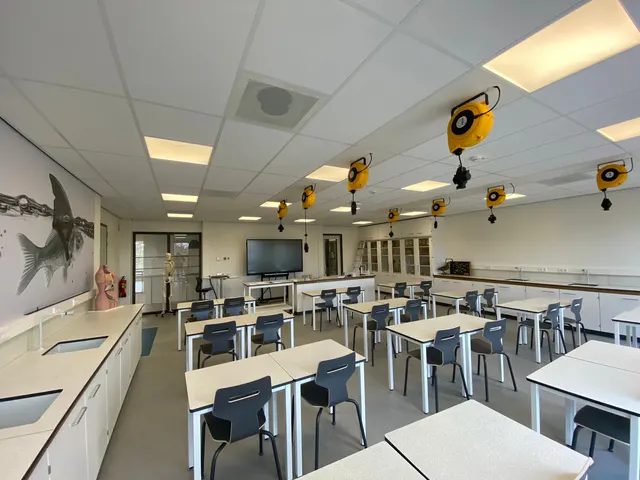
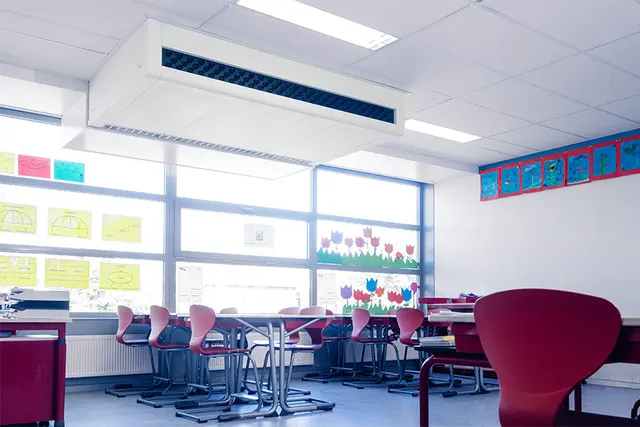
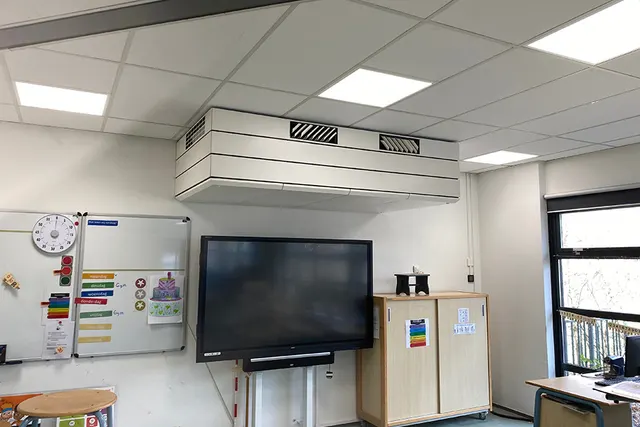
Sound-absorbing solutions for walls and ceilings
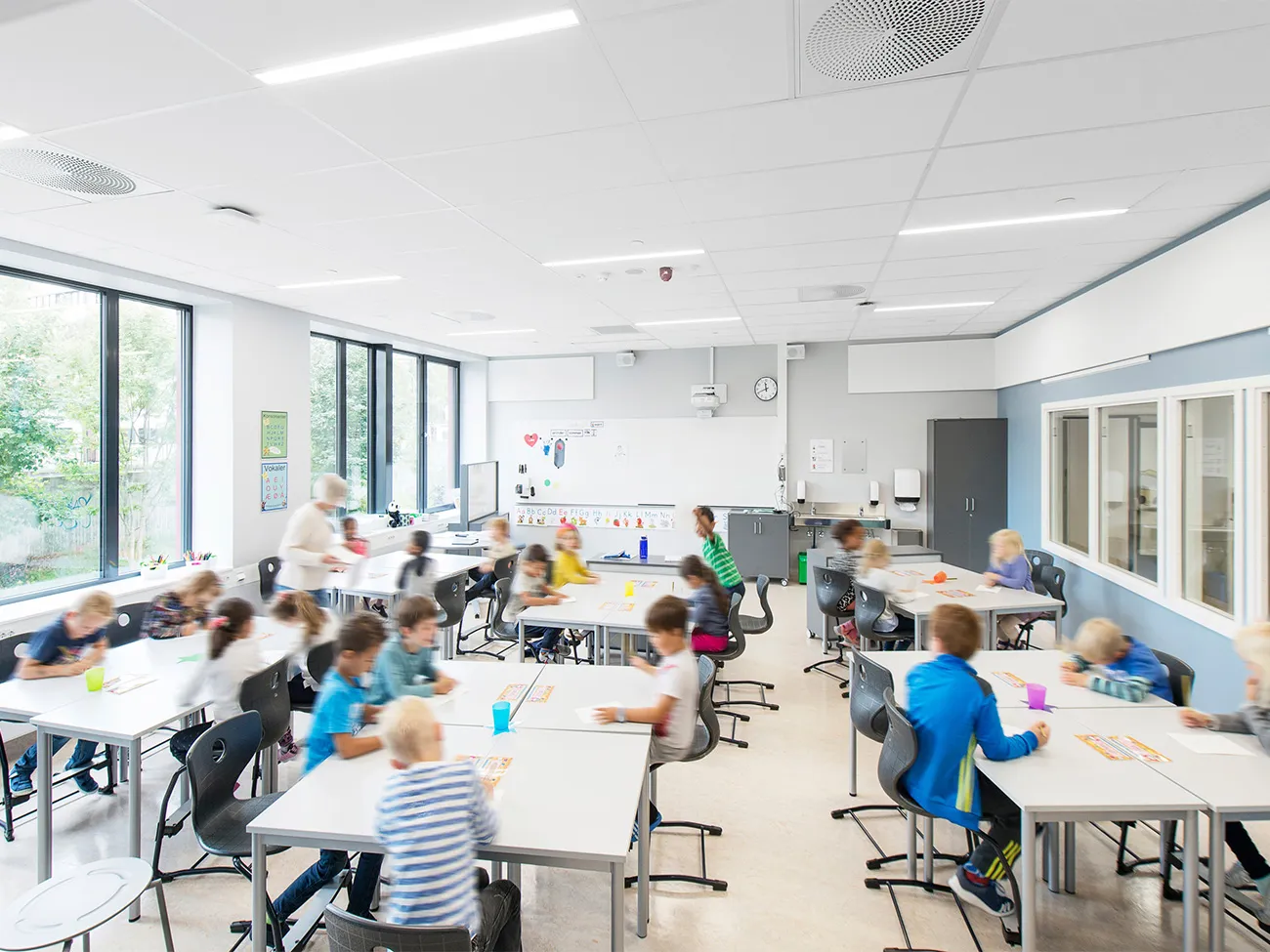
Now that the pandemic has highlighted the importance of good ventilation in school buildings more clearly than ever, the Netherlands Enterprise Agency has revised the Frisse Scholen Programme of Requirements on behalf of the Ministry of the Interior and Kingdom Relations. Pascal van Dort is astonished that only the guidelines on air quality, temperature and lighting have been revised, while those on acoustics have not.
Pascal van Dort has been working at Rockfon for over twenty years. He started in sales and progressed through the role of Sales Manager to become Global Acoustics Ambassador. In this role, he advises architects, contractors and building owners on sound, noise and acoustics, particularly in school buildings, and explains the problems that can arise if these factors are not properly addressed. “In a classroom with excessive background noise, reverberation and a teacher who is difficult to understand, both learning outcomes and wellbeing suffer.”
No acoustic standards
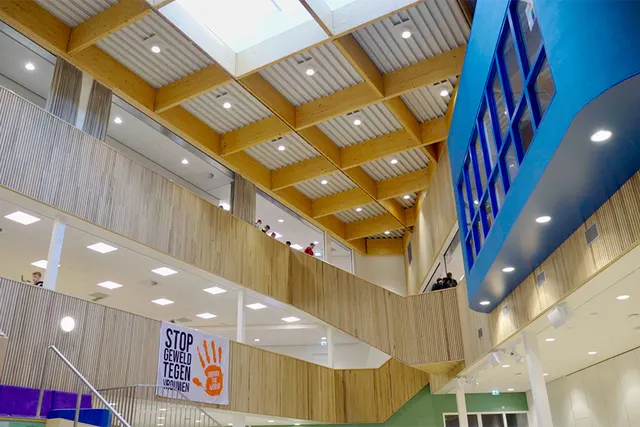
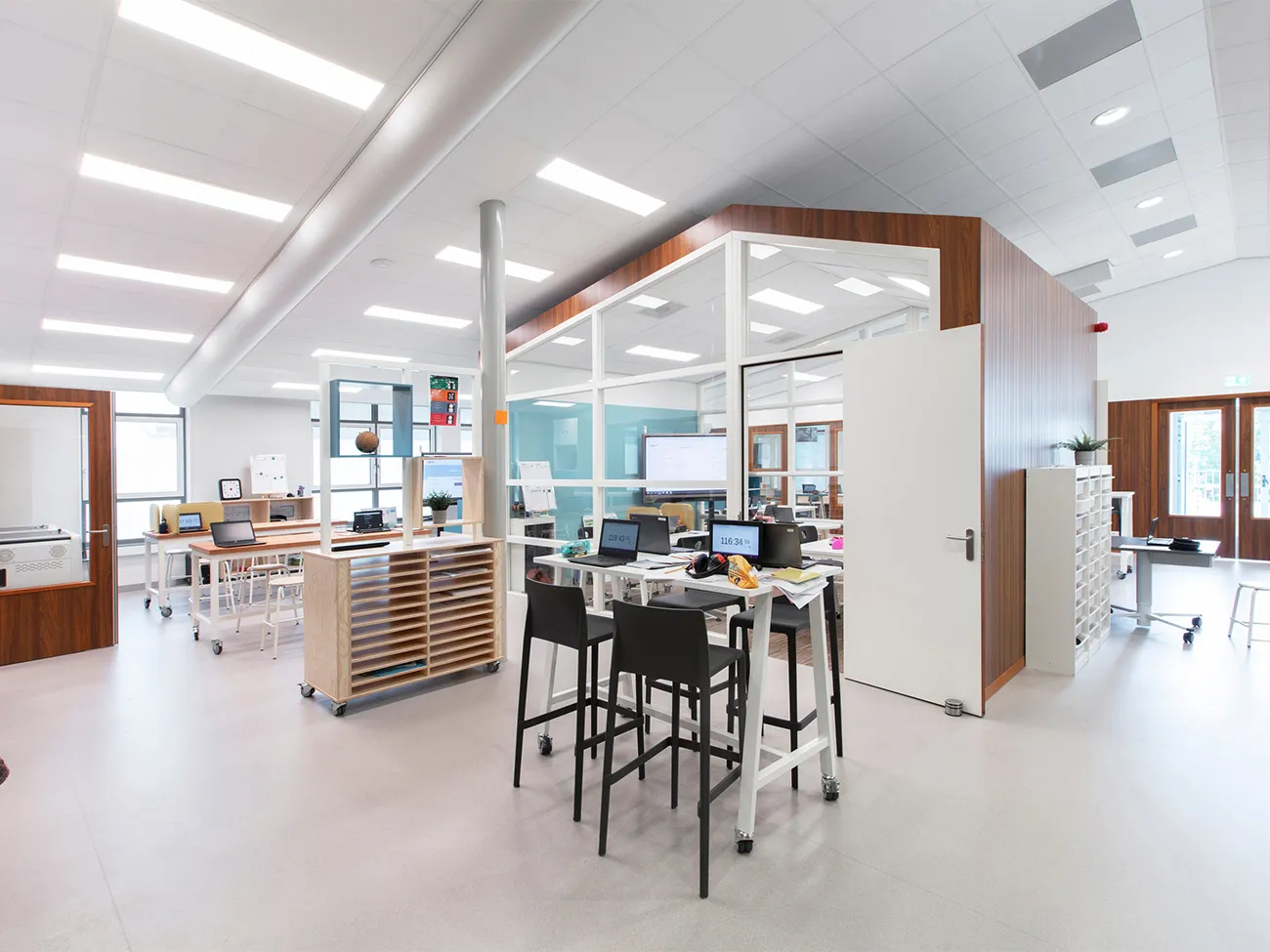
The Netherlands has no statutory requirements for acoustics in schools. The Frisse Scholen Programme of Requirements (PvE) is a good alternative. “It sets out a sound classification for classrooms,” says Van Dort, “but not for sports halls, learning commons and corridors, even though these spaces are increasingly being used for learning. In this context, I am becoming increasingly uncomfortable with the term ‘Frisse Scholen’. It gives the impression that the focus is mainly on fresh air, when the ambition behind the concept of a ‘Frisse School’ is to create an indoor environment that supports happiness, health and wellbeing. Acoustics are an essential part of this. Perhaps it is time to use the term ‘Super Schools’ instead of ‘Frisse Scholen’.
Developments
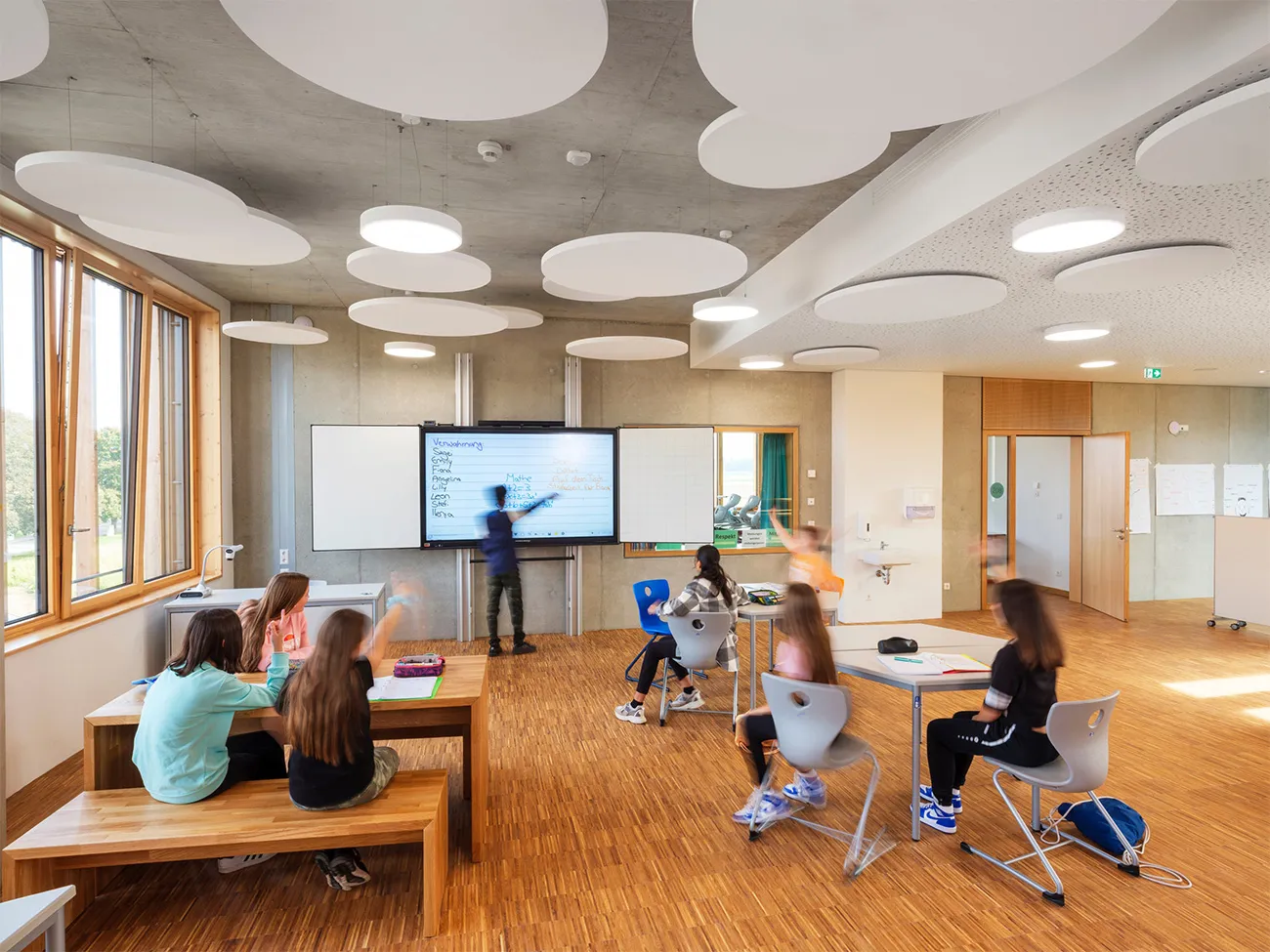
Rockfon has been an expert in acoustic ceilings in particular for many years, and keeps a close eye on developments. “For hygiene reasons, more and more hard materials are being used in school buildings. These increase reverberation and reverberation time, and we know what the maximum levels should be. Another parameter is background noise. To support learning, the World Health Organisation recommends a maximum level of 35 dB. When I measure the background noise in my quiet home office, it is 33 dB. That means a classroom would have to be completely silent. Research shows, however, that levels of 65-70 dB are quite normal.”
Direct advice
Teachers, facilities staff and headteachers can contact Rockfon directly for information about acoustic problems. In many cases, sound advice can be provided straight away online or by telephone. In other cases, Rockfon assesses the acoustic conditions on site. “We manufacture and supply acoustic ceiling and wall solutions that resolve these problems immediately. Good room acoustics improve speech intelligibility, raise pupil performance, boost wellbeing and improve behaviour.”
Sources:
• Klatte M et al, Effects of noise and reverberation on speech perception and listening comprehension of children and adults in a classroom-like setting, 2010.
• Shield B, Dockrell J, The effects of environmental and classroom noise on the academic attainments of primary school children, 2008.
• Sala E, Rantala L, Acoustics and activity noise in school classrooms in Finland, 2016.
• Mealings K, Children struggle to hear and teachers struggle to teach in new open-plan learning environments, 2017.
Question about this story? Ask your question
Keep following this
Get an email when a new story is published. No account needed.
- ThemeHealthy indoor air
- SubjectFrisse Scholen