Tackling inadequate ventilation in schools
A healthy environment and fresh air support brain development and concentration levels in schoolchildren. Unfortunately, many schools have inadequate ventilation. In response to the coronavirus pandemic, the government is now making 360 million euros available to schools to help them address the problem more quickly. The ATPICCO decentralised school ventilation unit, developed by Fläktgroup and Brandsen Installatietechniek, could not have come at a better time. Kindercluster MFA Voorn is already benefiting from it, with the work being phased in.
Inadequate ventilation
The spread of coronavirus is a serious problem in schools. According to the National Institute for Public Health and the Environment (RIVM), good ventilation helps prevent the spread of coronavirus. However, there are doubts about whether all schools can meet the ventilation requirements. “That is why the government is tackling inadequate ventilation in schools,” says Maarten van Dalen, account manager at Fläkt Nederland. “A preliminary survey, for which schools had to measure and report on ventilation by 1 October, found that 11% of schools do not meet the standard or the 2012 Building Decree. That amounts to 2,000 schools. The figure is likely to rise, as only 50% of schools met the 1 October deadline.”
Grant funding
The government is making 360 million euros available to help schools bring their ventilation up to standard. Van Dalen says: “30% of this funding will go towards the existing Frisse Scholen grant scheme, amounting to more than 100 million euros. This means that 30% of the total investment in the ventilation system will be subsidised. For many schools, this is just the extra push they needed, because far too little has been invested in ventilation for years. It is often not a top priority, but that is now changing. Schools have little choice. Opening windows during the winter months, effectively a must during the coronavirus pandemic when ventilation is inadequate, is not really an option. Instead, schools can now seize the opportunity, with government support, to tackle and solve the problem for the long term. In short, ‘never waste a good crisis’.”
ATPICCO school ventilation unit
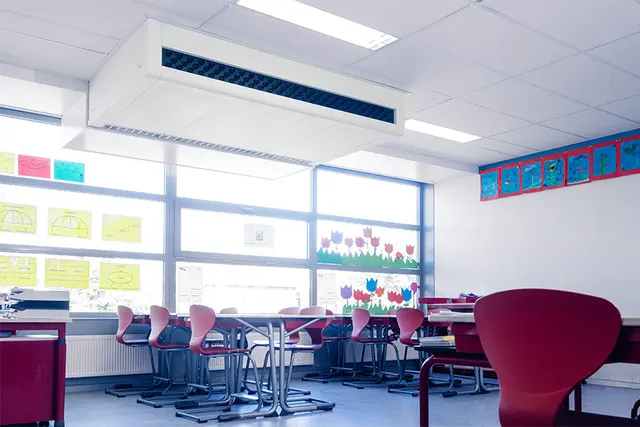
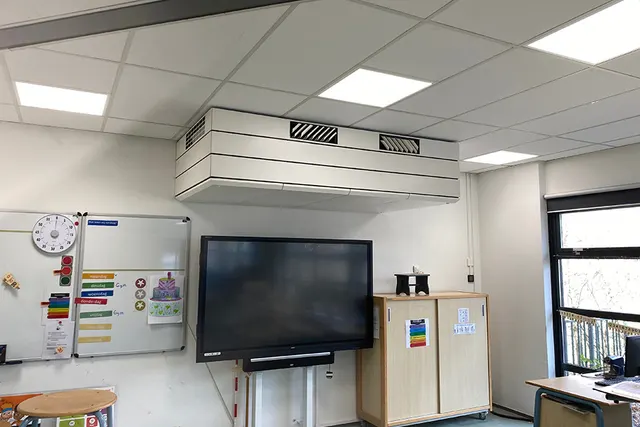
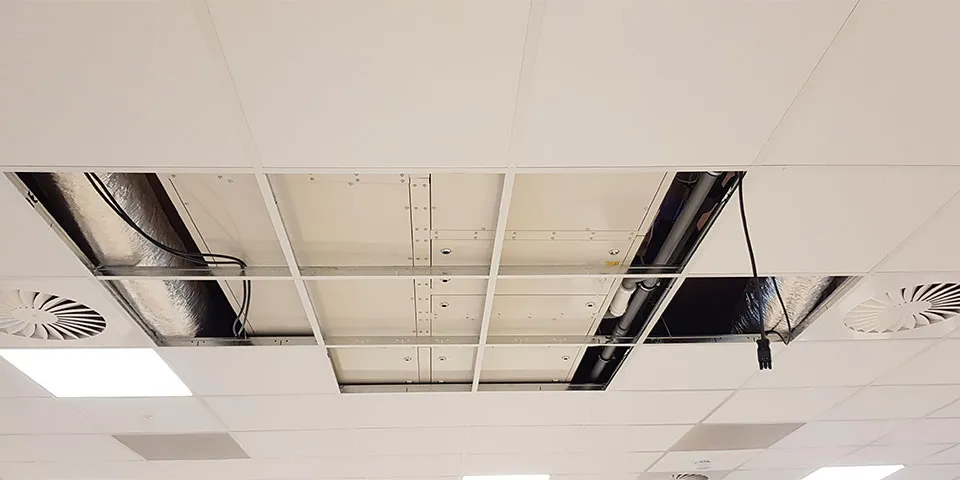
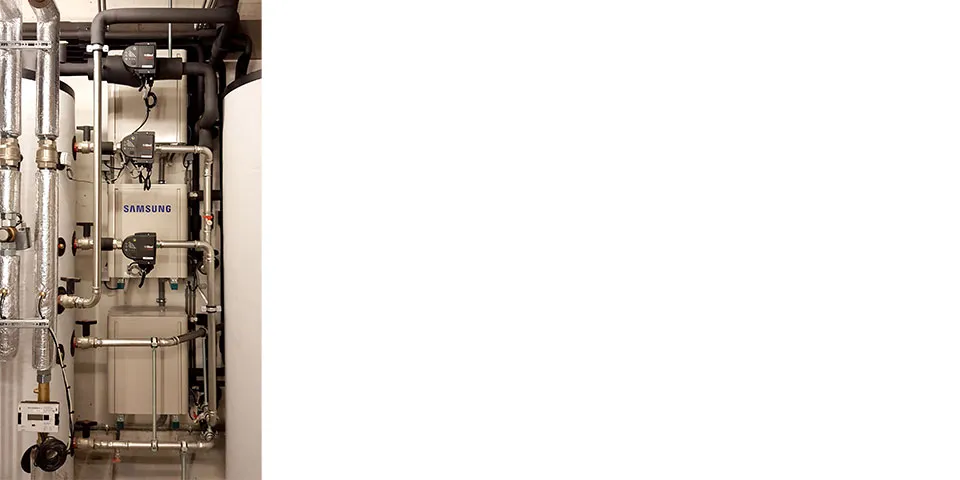
Fläktgroup and Brandsen Installatietechniek recognised the problem of inadequate ventilation in schools years ago. The two companies joined forces to develop the ATPICCO school ventilation unit, a decentralised ventilation system with low-temperature heating and high-temperature cooling. “As well as inadequate ventilation, schools often struggle with overheating in summer,” says Berto van Vliet, director of Brandsen Installatietechniek. “Our single system solves all these problems. In normal operation, the unit has a capacity of 950 m³/hour, runs very quietly and features a cross-flow heat exchanger for heat and cooling recovery, with an efficiency of 91%. Only the remaining 9% needs to be added through heating or cooling. This greatly reduces the investment required for the outdoor units. Supply air and return air are not mixed, which is particularly relevant during the coronavirus pandemic.”
MFA Voorn
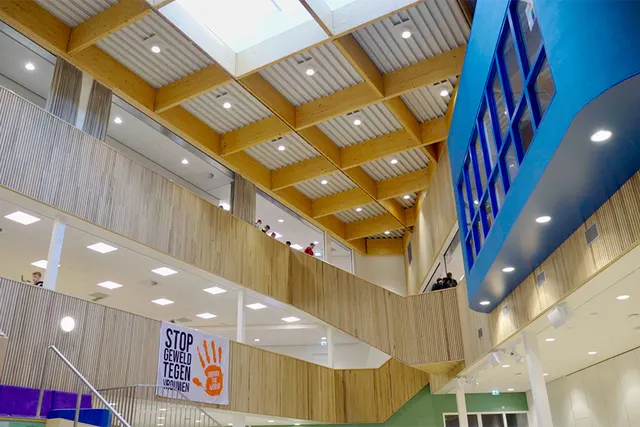
The ATPICCO school ventilation unit is now being installed in phases as part of the renovation and partial new-build project at kindercluster MFA Voorn in Utrecht, which comprises two primary schools and a childcare centre. “In the existing situation, pupils and teachers suffered from draughts and cold downdraughts from the window vents and mechanical extract ventilation,” says Van Vliet. “As a result, the vents were closed, leaving virtually no ventilation. The school ventilation unit solves that problem. Each classroom is ventilated and heated or cooled on demand, based on CO2 levels, temperature and/or occupancy. MFA Voorn is already benefiting from the advantages of our decentralised system. We can install it flexibly, classroom by classroom and in phases, in an existing building, allowing the school to remain open.”
Van Vliet says the ATPICCO school ventilation unit is very easy to install. “The system is suitable for both renovation and new-build projects and requires a lower investment than a central system. Maintenance costs are also considerably lower, as are energy costs. The result is a fresh indoor climate that improves the wellbeing and performance of pupils and teachers.”
Question about this story? Ask your question
Keep following this
Get an email when a new story is published. No account needed.
- ThemeHealthy indoor air
- SubjectFrisse Scholen