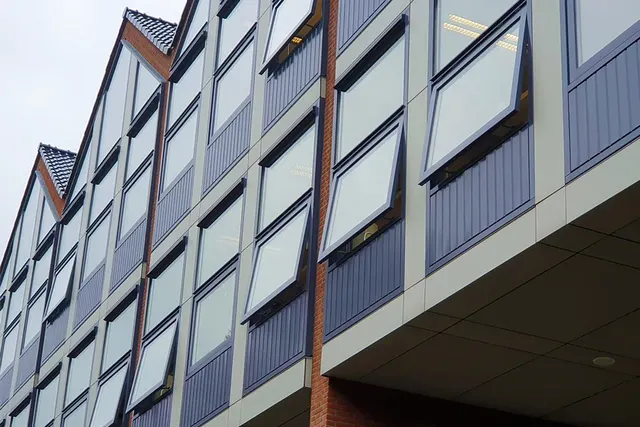
Textile air distribution ducts gain ground in school construction
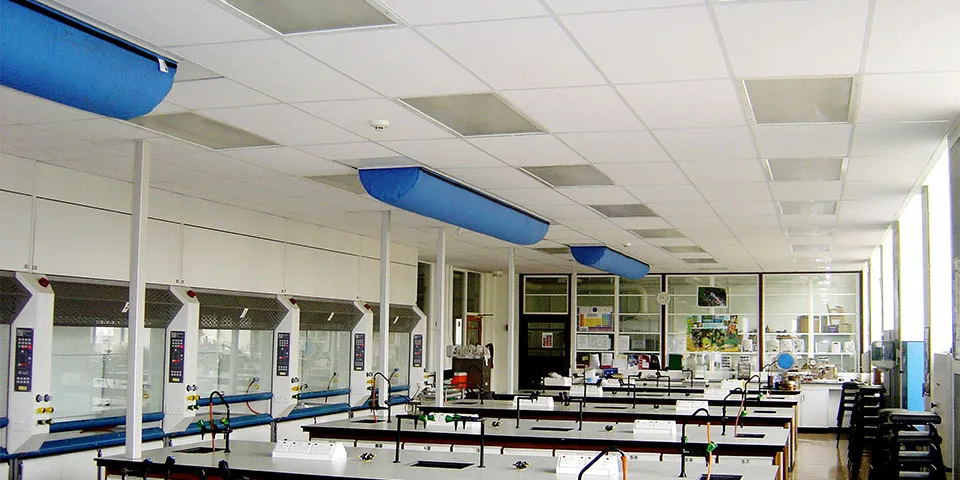
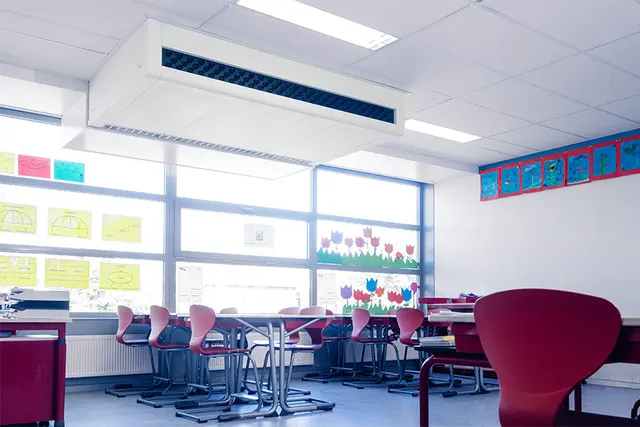
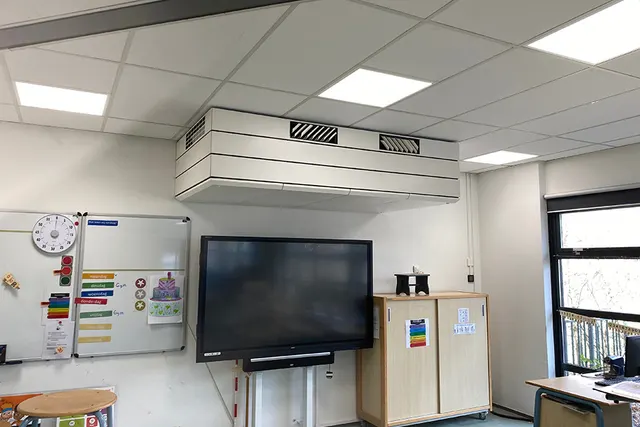
Air distribution ducts as the terminal point of a ventilation system are becoming increasingly common in schools. This flexible solution using textile ducts is particularly attractive for renovation projects, especially given the wide range of duct shapes, suspension systems and air discharge options.
FabricAir is a supplier of air supply and distribution systems, headquartered in Denmark. “The actual textile manufacturing takes place in Lithuania, where people are still being trained in traditional sewing techniques,” says Ruud Meijer, FabricAir’s Country Manager for the Netherlands. “We are primarily a textile company, but one serving the building services sector.”
A solution for every situation
Meijer is not surprised that installers are discovering airsocks for school construction: “Renovation projects often involve a puzzle: how to fit new ducts into an existing building without making major alterations to the structure. Our highly flexible system of air distribution ducts and suspension systems can almost always provide a solution. Even if the ventilation standard for classrooms is raised from 30 to 60 cubic metres per person per hour, as may happen, our products can handle that relatively easily.”
Advice
A specific solution starts with tailored advice. Meijer: “That is one of the ways we add value. FabricAir provides fully customised aerodynamic calculations to achieve optimum air distribution and the highest level of comfort. This is somewhat simpler in new-build projects, and more complex in renovations. But with the options available for fabric, air discharge, duct shape and suspension, we can certainly find a solution.”
Fabric and shape
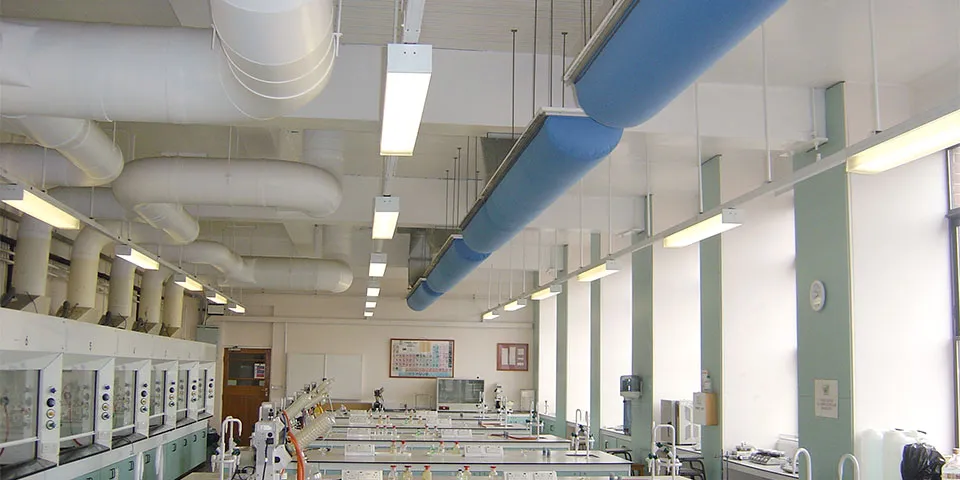
First, the fabric, which is available in any colour. Meijer: “Architects appreciate having control over the colour choice. The fabric can also be made flame-retardant or anti-static.” FabricAir uses this fabric to make
ducts in a range of shapes: round, semicircular, quarter-round (for corners), square, rectangular and semi-oval. The choice depends on the room dimensions, the required air volume and the design. Where necessary or desired, aluminium profiles or hoops keep the ducts in the required shape.
Air discharge
These ducts also offer a range of air discharge options. Air can be discharged through air-permeable fabric, through micro-perforations in the fabric or through nozzles, which can also be positioned to direct the air throw. Finally, there are a dozen ways to suspend the ducts from cables or rails, making it possible to tackle even the most challenging installation. “The result is draught-free, quiet air delivery without condensation, which is easy to maintain and brings fresh air to every part of the classroom,” says Meijer. “All we need is a connection below the ceiling. From there, we can build out the system. Of course, you do need to ensure sufficient transfer airflow, for example with grilles in the doors.”
Een zakelijke vraag aan FabricAir® B.V.? Get in touch
Companies in this story

Keep following this
Get an email when a new story is published. No account needed.
- ThemeHealthy indoor air
- SubjectFrisse Scholen
- CompanyFabricAir® B.V.