











4 success factors for perfect drinking water hygiene
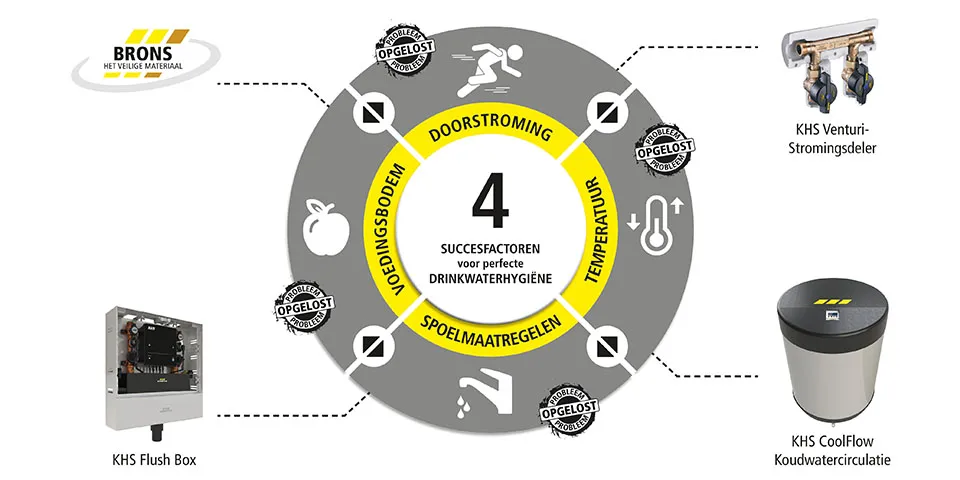
Like other food products, drinking water has a limited shelf life. “If water stays in the pipe for too long (stagnates), it can deteriorate. In that case, the drinking water absorbs particles from the installation materials used and heat from its surroundings, potentially compromising water quality and harming our health,” says Bernard Becking, Account Manager at Kemper Nederland. “There is a good reason why those responsible for public buildings have a duty of care to ensure safe, clean drinking water throughout the entire pipework system at all times. Four success factors are key to maintaining drinking water hygiene when designing, managing and installing drinking water and hot water systems.”
Flow
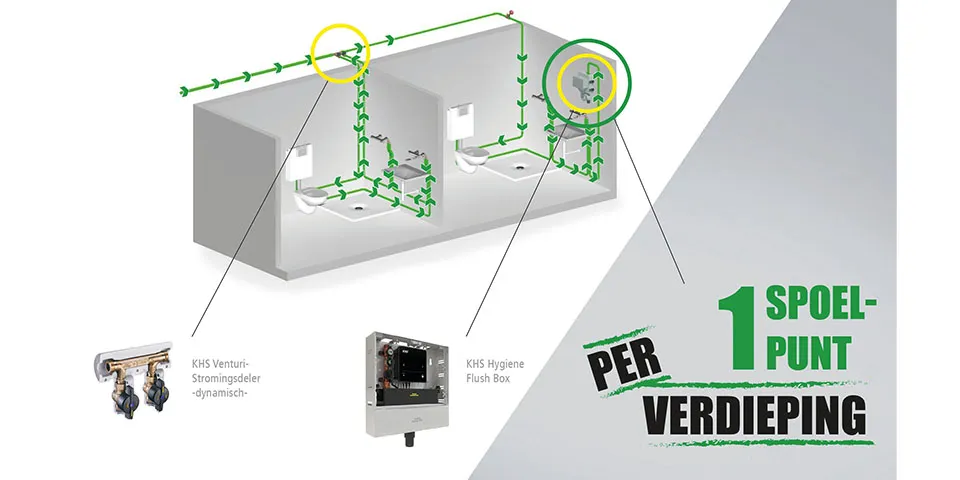
“Drinking water and hot water systems must be designed so that, under normal use, flow velocities are high enough several times a day to create significant turbulence along the pipe walls,” says Becking. “To prevent stagnation or low flow velocities in the sub-loops, pipes leading to outlets should be kept as short as possible. This creates a greater pressure differential, making it possible to use smaller pipe diameters. With the same frequency of use at the outlets, a smaller pipe volume also means less stagnation of drinking water in the pipework system. This increases water turnover and lowers the average temperature. The Kemper KHS Stromingsdeler ensures complete circulation in the loop, preventing stagnation and keeping clean water available at every outlet in the drinking water and hot water system.”
Temperature
Temperature is the second success factor. “In communal systems, the temperature in hot water circulation pipes must remain above 60°C at all times,” Becking stresses. “Cold water must be kept below 25°C, and ideally below 20°C, because above this critical temperature bacteria such as legionella pneumophila can multiply rapidly.” Internal heat sources, such as pipes belonging to sanitary and heating systems (internal heat load), and high ambient air temperatures (external heat load) can raise the temperature of stagnant drinking water above the critical threshold of 25°C within 2 hours. “Higher inlet temperatures (> 20°C) are also recorded in summer when drinking water is abstracted close to the water surface. This significantly reduces the maximum permissible stagnation time for drinking water in the system. The Kemper KHS CoolFlow cold water chiller offers a solution by actively cooling the drinking water in the loop and returning it to the system at a temperature of 15-20°C.”
Flushing measures
Experts identify stagnation of drinking water as one of the main causes of bacterial growth and changes in drinking water quality. This can be caused by pipe sections that are temporarily not used as intended or are dead legs. Under the regulations (NEN 1006), dead legs must be removed from the system. NEN 1006 also requires drinking water to be refreshed at least weekly, Becking says. “To ensure automatic water refreshment, we recommend installing the Kemper KHS Hygiënespoeler at the final point of the drinking water system. The Kemper KHS Hygiënespoeler can be set by volume, time and/or temperature, removing the need for manual flushing.”
Nutrient source
Finally, sufficient flow prevents sediment or biofilm from forming. Good flow also helps prevent bacterial growth, both on material surfaces and in the drinking water. “Prolonged contact between drinking water and, for example, pipe materials and fittings can increase the concentration of nutrients as material components are released into the water,” says Becking. “Choosing the right materials and preventing stagnation help to prevent biofilm formation. All Kemper fittings are made from bronze, a corrosion-resistant alloy that helps maintain drinking water hygiene.”
The Kemper Hygiëne Systeem makes it possible to meet the 4 success factors for perfect drinking water hygiene. This makes it easier for building managers to fulfil their duty of care. The system ensures, in a cost-effective and sustainable way, that clean, hygienic drinking water is always available at every outlet. This provides maximum safety for all parties involved in the chain.
Question about this story? Ask your question
Keep following this
Get an email when a new story is published. No account needed.
- ThemeFuture-proof water and sanitary systems
- SubjectGeneral







