











A roadmap to digital transformation in construction
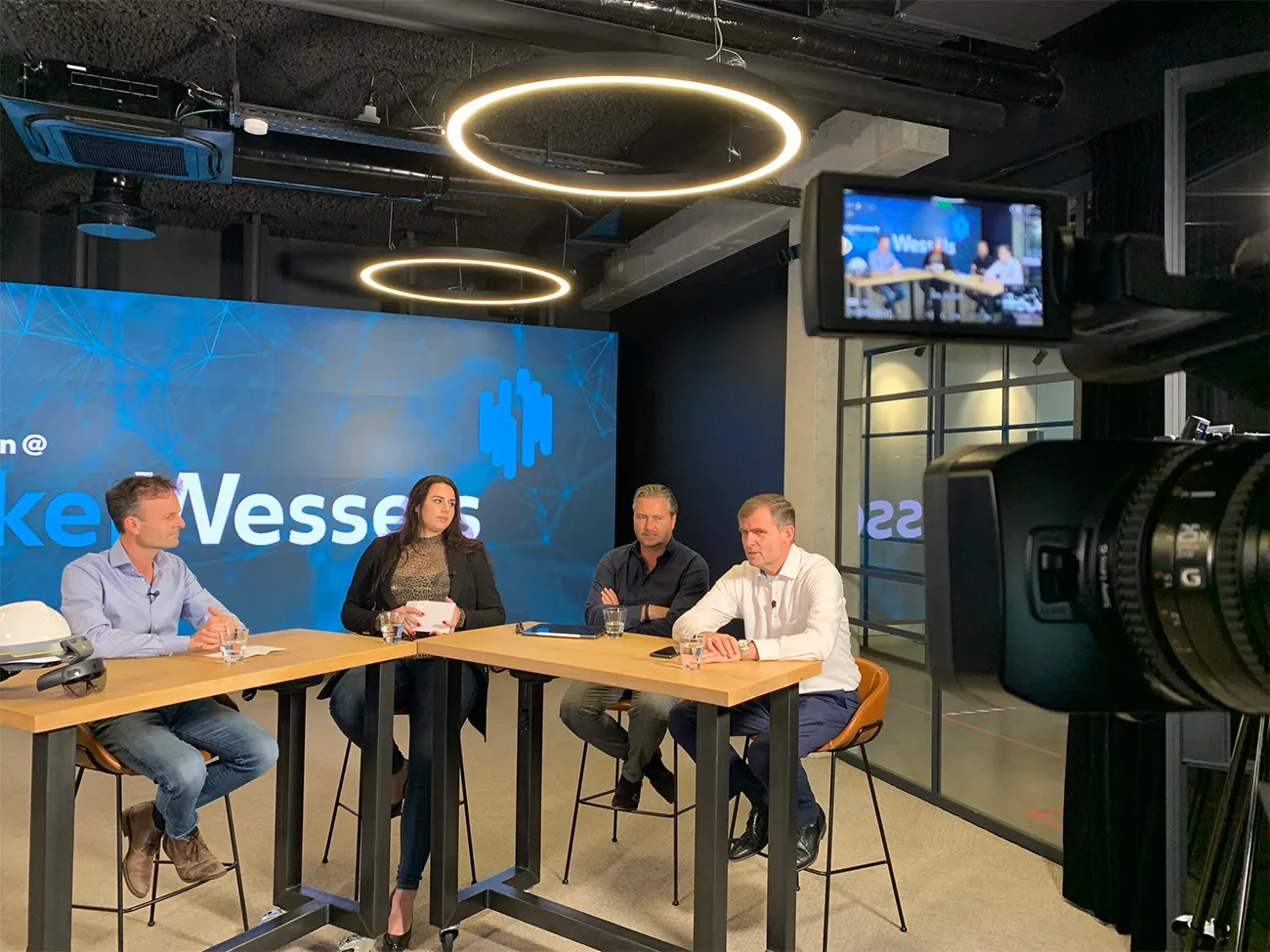
For digital transformation in construction to succeed, it is essential to connect people, processes and technologies. Greater emphasis must also be placed on collaboration. That was the conclusion of Trimble’s Connected Construction roundtable on 16 November. The session was hosted by Celina van den Bank, Business Developer at the Royal Netherlands Society of Engineers (KIVI). At DigiBase, a digital construction centre and a VolkerWessels company, René de Groot (Director of DigiBase), Ruud Kats (Director Construction Benelux at Trimble) and Maurice van Sante (Senior Construction Economist at ING Research) discussed digital transformation in construction in depth. The discussion was prompted in part by the report ‘Digitalisering in de bouw’, written by Van Sante, which concludes that the pace of digitalisation has slowed significantly. It also argues that strategic choices need to be made before taking any further steps.
In his report, Van Sante identifies three reasons for the slowdown in the rapid growth of digitalisation in construction: “Mobile internet took off in the Netherlands around 2010, and the construction sector benefited enormously from it until 2015. From 2016 onwards, however, the value of the software and databases in use has grown more slowly. Growth in ICT investment has also declined. This is not only because the low-hanging fruit has been picked, but above all because many companies no longer seem to have an immediate need. Around 2015, the construction sector began to emerge from the crisis. Order books filled up, price pressure eased and construction companies were desperately looking for enough people, shifting their focus elsewhere.”
Thanks to the rapid growth of recent years, construction has made up considerable ground digitally compared with other sectors. The Belgian and Dutch construction sectors also score very highly compared with those in other countries. Nevertheless, there is still plenty of progress to be made, says Van Sante, who distinguishes between three phases: digitisation, digitalisation and digital transformation. “We have now moved from paper to computers. Software has been purchased for every department to make processes faster, simpler and/or cheaper. The next step is to get this software to ‘talk’ to each other. This is a difficult step, because it requires awareness and the right mindset from all parties involved. But once you have taken this step, you can really start to reap the benefits of digitalisation.”
What is stopping companies from taking this step?
“As well as a lack of urgency, it also comes down to people. Digitalisation requires different skills, which sometimes means hiring different staff,” says Van Sante. “With a chronic shortage of ICT staff, finding the right people is not easy. We also see that older employees in particular often find it difficult to take the digital step.” De Groot says it is important to invest in people. “Digital transformation is only 25% about technology and tools. The other 75% is about the approach, processes and the people who have to work with the products. The innovations and investments we make at VolkerWessels are therefore focused particularly on making working methods more user-friendly. Our main aim is for employees to see the tools as equipment, rather than something intimidating, expensive or time-consuming.” He says this can sometimes seem contradictory. “Nobody ever gave me a course on how to use Google Search or Google Maps, yet I use them every day. To accelerate transformation and the adoption of digitalisation in construction, we need to take a more user-focused approach.”
VolkerWessels has now taken its first steps in digitalisation. What created a sense of urgency, ensuring that processes and applications are also widely supported?
“Our sense of urgency has developed over time,” says De Groot. “Over the years, we have continually looked at how to make digital construction, development and management of buildings commonplace. What benefits can digitalisation offer in terms of efficiency, shorter lead times and/or tackling social issues such as the housing shortage, scarcity of raw materials and labour shortages? These are all ways of giving the need for change a clear focus. And we firmly believe in this. Innovations and digitalisation initiatives are only worthwhile if you can scale them up, both within your own organisation and across the supply chain. After all, construction is a team effort. At every stage of the design and construction process, different parties come to the table, each with different interests, objectives and needs. Yet all these parties, with their own knowledge and expertise, provide important input and data that must at some point be brought together into one complete building. That is precisely what makes this process so large-scale and complex.”
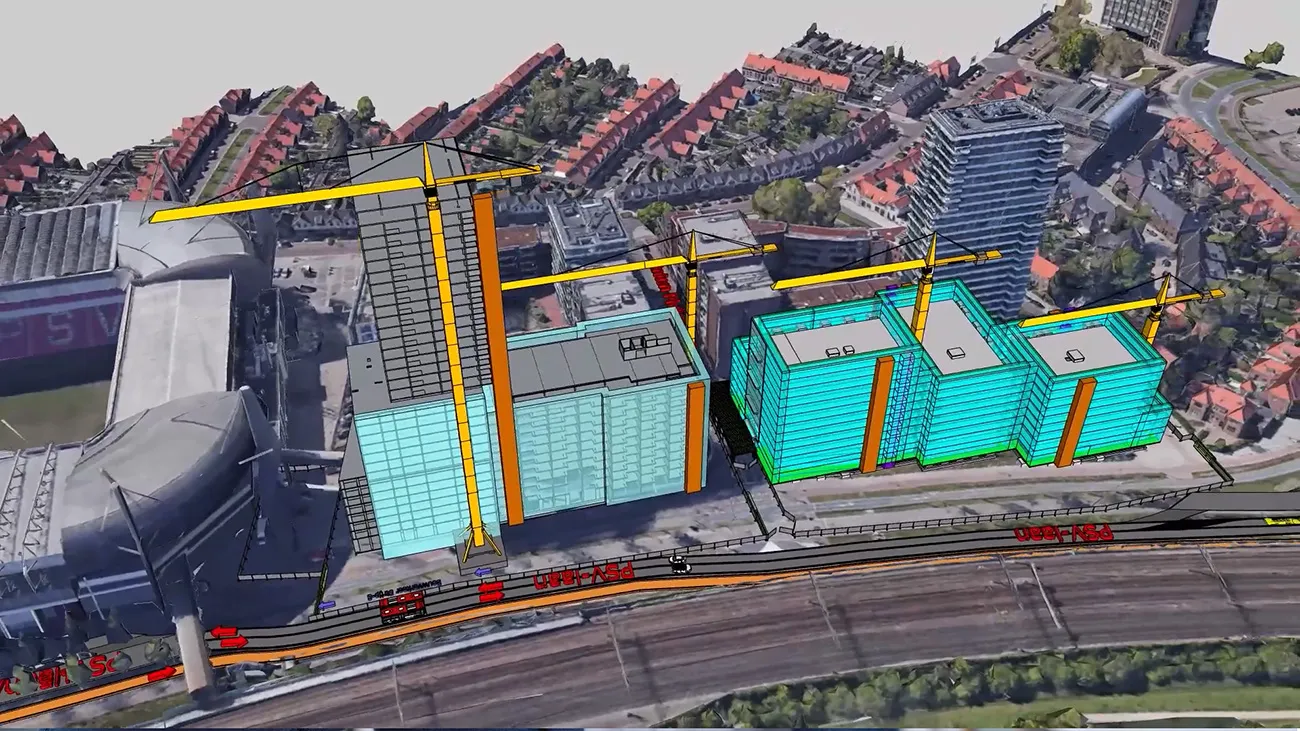
That is why De Groot advises looking at the process one step at a time. Or, as he puts it: “You eat an elephant one bite at a time. When it comes to BIM, enormous progress has already been made in digitalisation, particularly during the design and engineering phases. There are still major opportunities in development, (pre)fabrication, construction and the actual use of buildings, as well as in controlling machinery and managing logistics processes.” He and Van Sante focus in particular on industrialisation. “Every building is unique, but 70% of it is still the same. This is certainly true of component products such as floors, doors and other elements. Digitalisation can add significant value here. By storing the digital project file centrally in the cloud, we already have several projects that we can describe as paperless construction. By giving site managers and fitters on site a tablet, they can view drawings, models and other project information anytime, anywhere.” Van Sante adds: “It is very important that the tablet also gives them access to this data in real time. When all parties are looking at the same truth (‘Single Source of Truth’), processes become more efficient.” De Groot says: “The tools and data models for this are already available. Now people need to discover what they can do and learn how to use them.”
What benefits does this bring to construction companies?
“By working with data models as standard, rather than paper or AutoCAD drawings, we can save time, money and resources,” says De Groot. “Bottlenecks also become visible sooner. We build digitally before we actually build. The solution for the future is above all to work together more intelligently. It is important for senior management and company directors to embrace this development. The director, too, needs to understand what the future of their construction company looks like.”
To support this, VolkerWessels has set up its own Academy, with an extensive programme of webinars, seminars and training courses. “Since 2017, DigiBase has also offered a ‘clubhouse’ where employees who want to change can do so and discover the latest tools and working methods.”
People are wary of what they do not know, and digitalisation is no exception. Whose job is it to explain the new tools and working methods to employees?
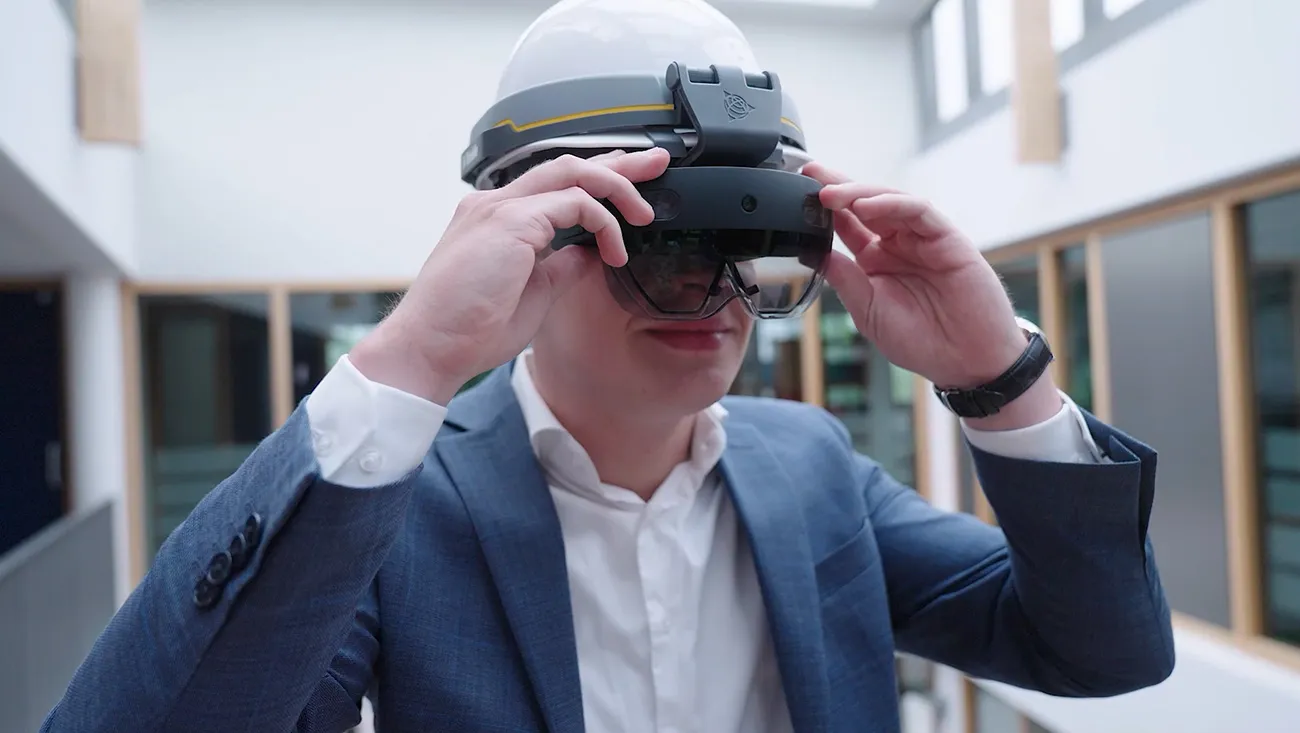
“We have asked ourselves the same question,” says De Groot. “In the past, we simply bought the software and the suppliers gave us a course on which buttons to press. Now we focus more on the process and the work to be done, and on the equipment, both hardware and software, needed for that. To make sure this equipment fits into day-to-day practice as well as possible and is user-friendly, we have also chosen not just to buy software licences, but to work more closely with software suppliers. The software industry offers tremendous opportunities, but successful implementation depends on making sure it meets the needs of everyday practice.” Kats agrees. “As an organisation, we believe in Connected Construction. At Trimble, we are working in many ways to connect the supply chain. Instead of separate data silos, we are aiming for a future in which data from all disciplines is brought together efficiently, reused and combined, providing the basis for the best decisions. Collaboration with and input from large companies such as VolkerWessels are essential to this ‘common data environment’. It is no coincidence that we recently joined forces. As a software developer, we can come up with all kinds of great products, such as our XR10 for HoloLens 2 and our autonomous scanning solution based on the Spot robot, but it is people who have to work with them. Through our e-learning initiatives and the open data platform Trimble Connect, we are trying to make digital transformation accessible to everyone. The evolution of IT is no longer a story about the future: it is within everyone’s reach. Together, we can move forward from 3D to 4D and even 5D. The construction sector stands to benefit.”
Een zakelijke vraag aan Trimble? Get in touch
Companies in this story

Keep following this
Get an email when a new story is published. No account needed.
- ThemeIntegrated construction and building services
- SubjectGeneral
- CompanyTrimble







