











Are ventilation and humidity levels in your building(s) under control?
Check your indoor climate!
A comfortable and healthy indoor climate is essential for employees’ health, productivity and concentration. It is no surprise that this is a priority for many businesses. But what constitutes good, healthy indoor air quality? Which parameters play a role? And perhaps more importantly, how can you achieve this in your (existing) office environment? We asked Lennox Benelux BV, a manufacturer and supplier of cooling and HVAC products.
The importance of fresh air
Unfortunately, indoor air quality in many office buildings is still below par, says Robert Jan Sluiter, Service Manager Benelux at Lennox. “Complaints such as headaches, dry eyes, sore throats, fatigue and difficulty concentrating are common, due to overdue maintenance and/or inadequate ventilation systems.” For example, blocked filters or contaminated air ducts can significantly reduce ventilation capacity, he says. “We also still regularly see closed systems that do not supply enough fresh air. As a result, dust, particulate matter, volatile organic compounds, mould, bacteria, viruses and allergens can build up, with all the associated adverse effects. Our first recommendation, then, is to ensure an adequate supply of fresh air. Open windows and keep ventilation systems running at a low setting at night and at weekends. Also make sure that toilet areas have a separate air supply.”
Within the right ranges
“Indoor air quality is good and healthy when temperature (19-21°C), humidity (40-60%) and CO2 levels (800 PPM) are within the right ranges,” says Sluiter. “To achieve this, a thorough assessment of both the building and the ventilation system is essential: how is the building used? What type of system is installed? What type of filters are fitted? What condition are they in? What do the air ducts and indoor filters look like?” Lennox regularly recommends using higher-grade filters (F7/ePM1), which can also efficiently capture smaller particles. Adding humidifiers is another relatively simple way to improve indoor air quality. “Additional humidification is often desirable, particularly in the winter months.”
UV-C or ionisation
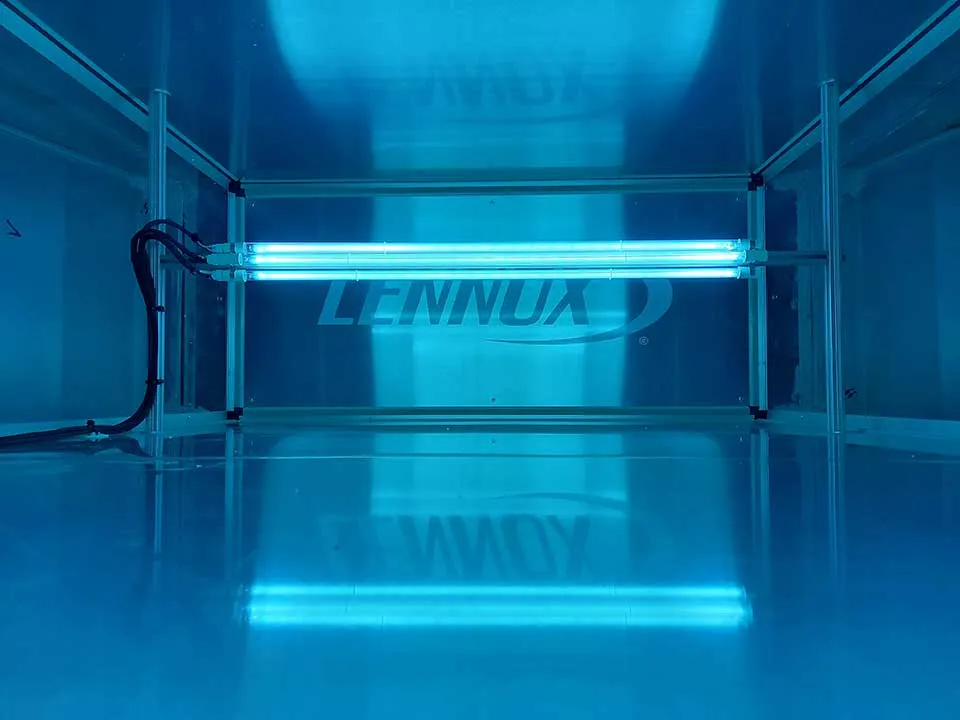
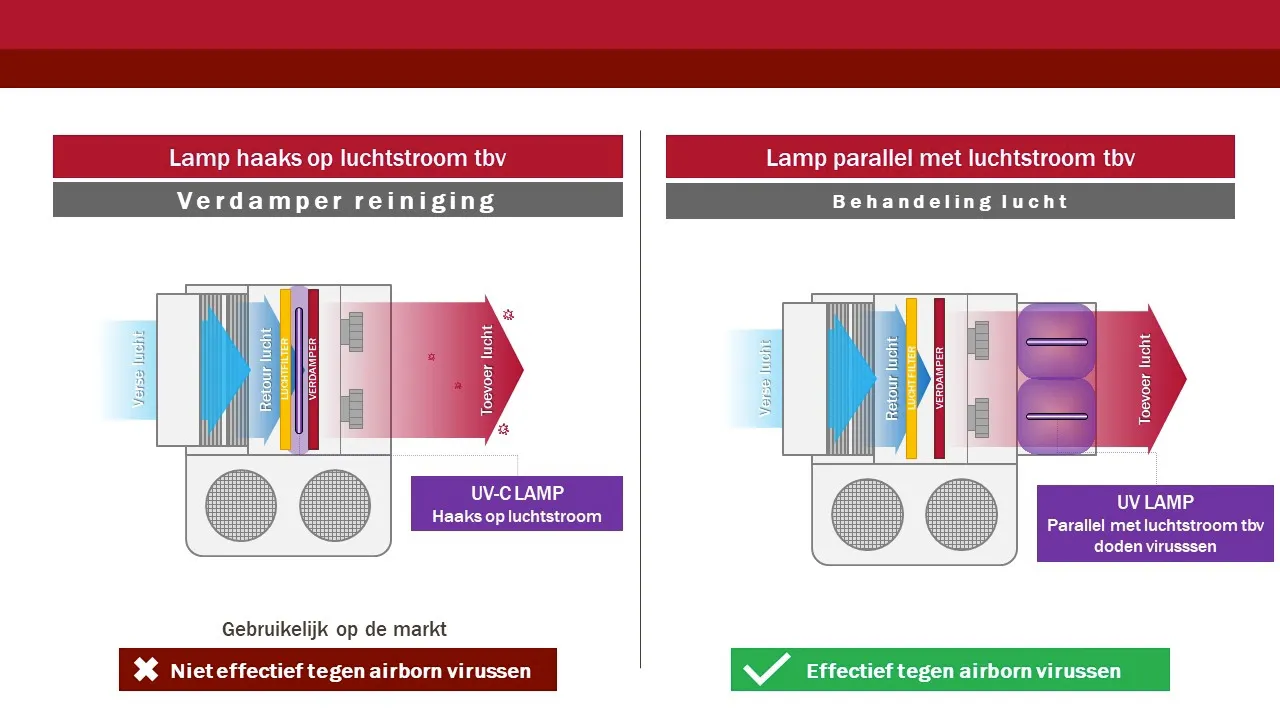
A further step is to integrate UV-C light into rooftop units and air handling units, for which Lennox offers various solutions. “Our UV-C technologies damage the DNA of micro-organisms and viruses, preventing them from reproducing or even destroying them completely,” says Sluiter. “Another solution is ionisation, which causes micro-organisms to cluster together so they can be efficiently captured by the filters.”
Control over indoor air quality
To ensure indoor air quality remains under control in the long term, Lennox recommends using sensors. These include CO2 sensors, which can be built into the air ducts of rooftop units, as well as humidity sensors. “If required, all readings and energy consumption can be monitored and managed remotely by our experts.”
Een zakelijke vraag aan Lennox Benelux B.V.? Get in touch
Companies in this story

Keep following this
Get an email when a new story is published. No account needed.
- ThemeHealthy indoor air
- SubjectGeneral
- CompanyLennox Benelux B.V.







