Automation is changing business
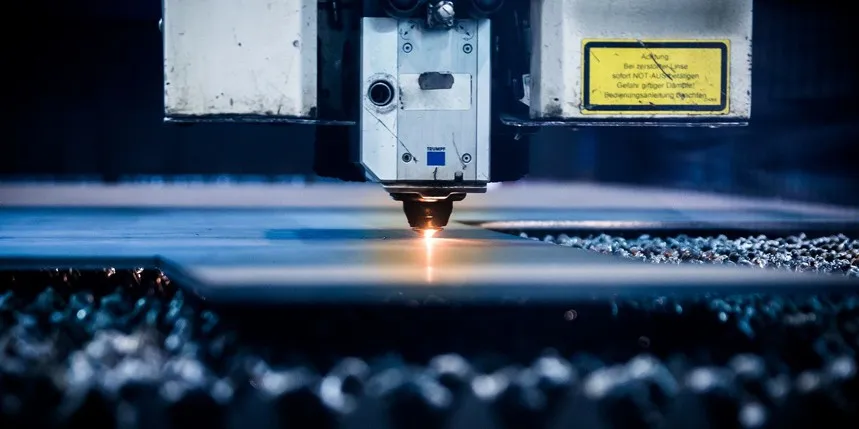
A high level of industrial automation is crucial to keeping an economy globally competitive. In this article…
Industrial revolution
Automation has fundamentally changed business. Much of the heavy work that used to be done painstakingly by hand is now carried out by machines. The introduction of automation was also the cornerstone of the Industrial Revolution. Intelligent process optimisation makes companies’ production chains significantly more efficient and ultimately saves money.
A high degree of automation also significantly improves product quality: a robot, for example, can make a weld seam much faster than a person. What’s more, the quality remains absolutely consistent, even after the hundredth seam. Machines can work around the clock without difficulty and maintain the same quality. As a result, people’s role has changed from worker to controller, overseeing the correct execution of processes.
Automation is used in almost every industrial sector, from drive technology and measurement and control technology to conveyor technology and pneumatics. As the industry moves towards Smart Industry, the focus in future will be on even closer integration of automation systems and IT, further boosting efficiency and undoubtedly leading to new innovations.
Conveyor technology in motion
What would airports, major mail-order companies or parcel delivery services be without conveyor belts? In process automation , conveyor technology is key. Without it, industry would literally grind to a halt. The term conveyor technology refers to equipment designed to transport piece goods or bulk materials. It ranges from a simple chain hoist to highly complex conveyor belts used in logistics. Appropriate technical equipment is essential for ensuring an uninterrupted flow of materials in a production environment. Conveyor technology, for example, transports extracted bulk materials from the mine site and enables automated production lines to operate. In addition to conveyor belts and roller conveyors, material-handling equipment such as pallet trucks and fork-lift trucks is also part of conveyor technology.
Benefits and potential applications of pneumatics
The term pneumatics refers to the use of compressed air to perform mechanical work. This technology is used in many fields, including construction machinery and robotics. Pneumatics can be used almost anywhere because the air required can easily be drawn from the surrounding environment. It is also very clean: since only compressed air is used, even damage to pneumatic pipes or cylinders is harmless to the environment. After use, the air can simply escape from the system, and no cleaning is needed. Because air is used as the medium, pneumatic components can also be used without difficulty in particularly sensitive environments such as the food industry. Contamination from escaping liquids is not possible. In general, pneumatic technologies are considered robust, durable and inexpensive. Pneumatic systems are particularly resistant to environmental influences such as temperature fluctuations. In addition, force can be adjusted continuously. Last but not least, a pneumatically operated machine is lighter than a comparable device with an electric motor.
How do pneumatic systems work?
For a pneumatic system to work, compressed air must first be generated. This is done by a compressor, which draws in and compresses ambient air. Pneumatics uses pressures of between 6 and 40 bar. In modern systems, the large amounts of heat generated during compressed-air production can be used, for example, for heating or producing hot water. The compressed air from the compressor must then be treated. Various filters remove any solid particles from the air. It may also be necessary to remove moisture from the air to prevent the pneumatic components from corroding as water vapour condenses when the temperature falls.
If the compressed air is not fed directly to a consumer via a hose, such as an impact wrench, it must be distributed through a pipe system. It is important for the pipe diameter to be large enough to prevent increased flow resistance. It is also important that the compressed air flowing through the system is not contaminated by rust or other substances. To compensate for pressure fluctuations, it is advisable to install a compressed-air reservoir in the system. This is a storage tank installed downstream of the compressor that holds a certain volume of compressed air to absorb fluctuations in the pipe system. A further benefit of this type of reservoir is that the compressor does not have to run continuously to maintain pressure in the pipes. As the air in the tank cools, condensation forms and must be drained regularly.
Question about this story? Ask your question
Keep following this
Get an email when a new story is published. No account needed.
- SubjectGeneral