











Burglar-resistant external air louvres, compliant with WK-2 and RC-2
Text Lieke BousemaImage Smitsair
Under the Building Decree for the Built Environment (Bbl), accessible façade elements in new-build homes and residential buildings with a building permit issued on or after 1 January 1999 must meet burglary resistance class WK-2. External air louvres are also covered by these regulations, says Etienne Beerling, managing director of Smitsair. “But there is also growing demand for external air louvres with enhanced burglary resistance in non-residential buildings, for example to protect property and building services.”
To meet this demand, Smitsair carried out internal burglary resistance tests as early as 2011, in accordance with NEN 5096:2007+C2:2011 (Burglary resistance: roof or façade elements with doors, windows, shutters and fixed infills: requirements, classification and test methods). “At the time, all our external air louvres met WK-2 classification, and some even met WK-3,” says Beerling. “However, burglars are constantly evolving, becoming more resourceful and gaining access to increasingly heavy-duty, advanced tools. To address this, the NEN 5096 standard was revised, and from 1 July 2025 the Bbl will refer to NEN 5096:2022. To meet this new, more demanding standard, we had to develop a new type of louvre based on our existing BV-70 steel louvre. The new BV-70/WK2 model, for example, has an additional burglary-resistant layer. We also changed the design and spacing of the support bars, as well as certain fixings. The louvre was then tested externally by SKG-IKOB in accordance with NEN 5096:2022 and EN 1627:2021.”
Static, dynamic and manual tests
The test consisted of three parts:
- Static test, in which pressure is applied to the louvre from the rear at various points using a specified force.
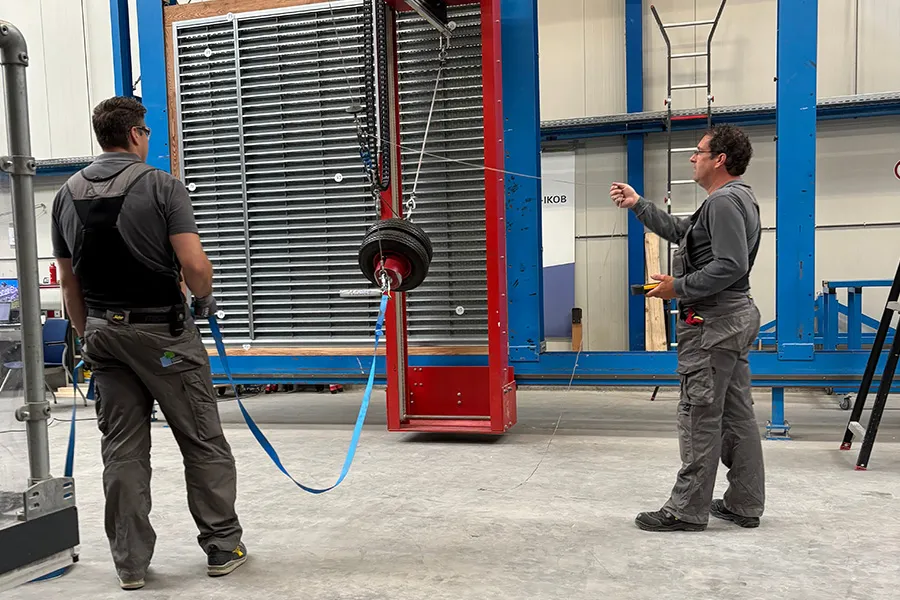
- Dynamic test, in which a weight is swung against different points on the louvre from a specified drop height.
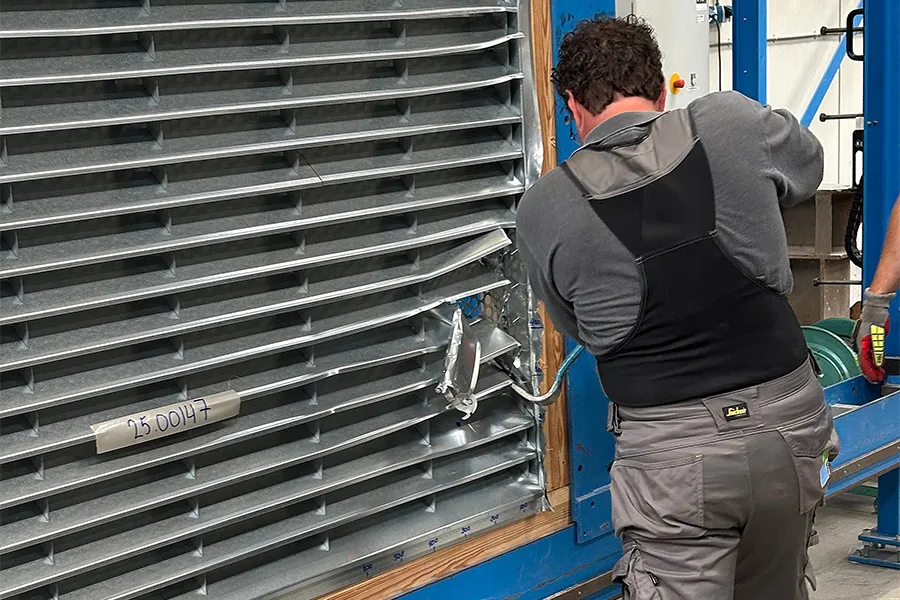
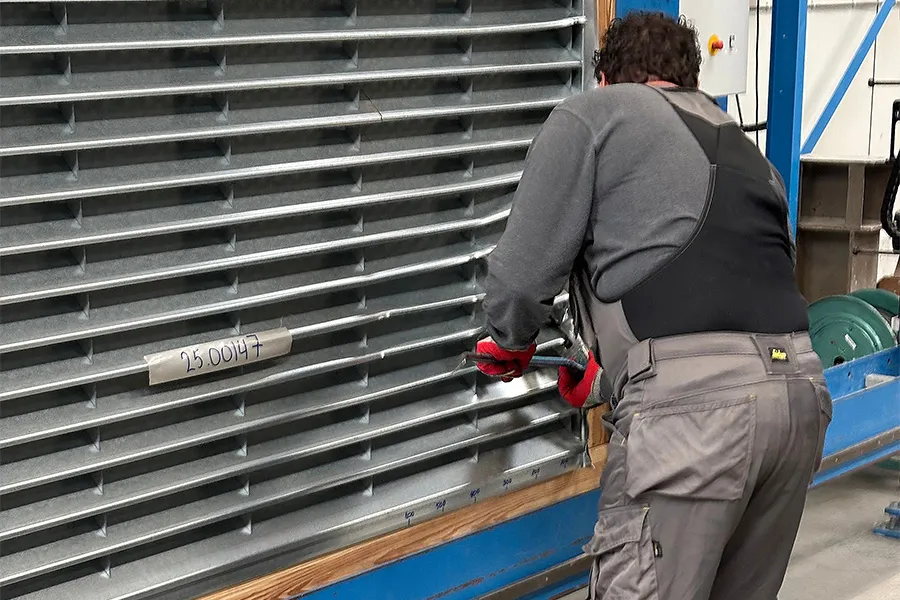
- Manual test, in which ‘burglars’ use a prescribed set of tools to try to create an opening of a specified size in the louvre within a prescribed time.
With flying colours
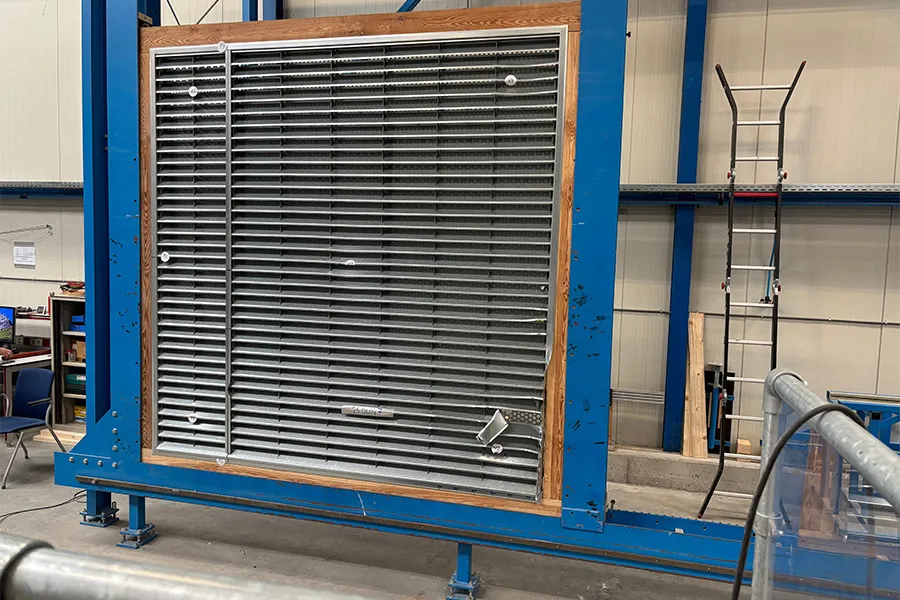
“Our new louvre passed all three tests with flying colours, earning WK-2 and RC-2 classification,” says Beerling. “Additional tests were also carried out at Peutz in August to determine the resistance and inherent sound production of this louvre. As a result, our BV-70/WK2 louvre is now included in our product range in various sizes, up to 2,800 x 2,800 mm.”
Smitsair is also currently developing an external air louvre to WK-3/RC-3 classification for situations where an even higher level of security is required.
A business enquiry for Smitsair? Get in touch
Companies in this story
Keep following this
Get an email when a new story is published. No account needed.
- SubjectGeneral
- CompanySmitsair







