











Cat phones launches essential guidance on hygienic smartphone use in the maintenance and installation sector
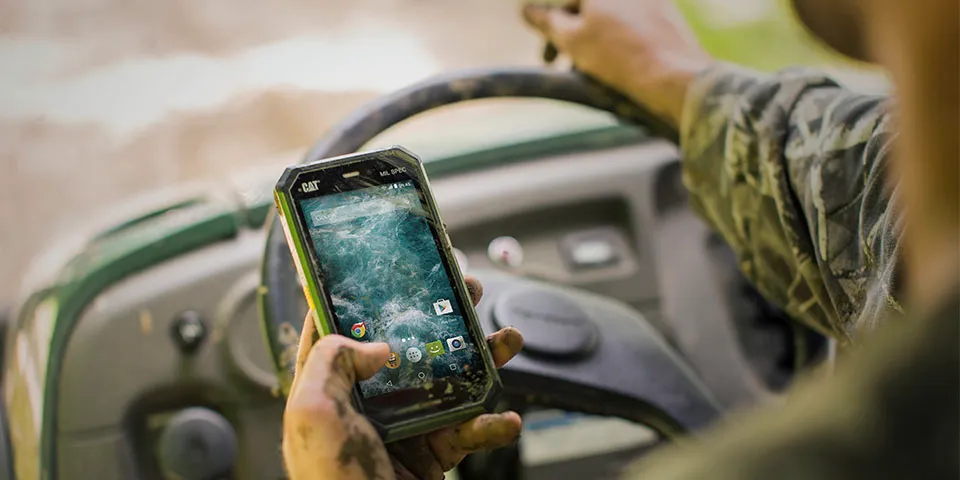
While staying at home was the norm during the recent period, this was not always an option in the maintenance and installation sector, where workers often visit people in their homes as part of their job. That is why Cat phones, the manufacturer of ultra-rugged smartphones widely used in this sector, is highlighting the importance of hygiene for mobile (work) phones.
Cat phones’ mission is to provide people working in demanding environments with a smartphone they can rely on in the toughest conditions. For those who continued working during the coronavirus crisis, good hygiene for (shared) work phones and other devices is more important than ever. Without the right measures, these can become potential sources of COVID-19 and other pathogens.
Guidance
Cat phones has therefore drawn up guidance in collaboration with Dr Simon Clarke, Professor of Cellular Microbiology at the University of Reading, England. The guidance is intended to help employers draw up protocols to keep their staff healthy in all circumstances. It applies to shared devices used in the workplace as well as to personal smartphones.
“In general, contact with other people and shared work surfaces are the main risk factors,” says Dr Clarke. “Preventing contamination of a smartphone with coronavirus or other pathogens requires a complete change in behaviour in the way employees use their phones and other shared devices. Adopting a few simple routines can prevent infection, potentially avert major problems for a business and even save lives.”
During the commute:
Do not use your smartphone when sharing a commute, such as carpooling or travelling on public transport. It is an ingrained habit, but one of the main sources of infection.
• Do not put your smartphone on tables or other surfaces in public spaces.
• Minimise how often you take out your smartphone. Get into the habit of doing so only when essential.
• Think of your smartphone as an extension of yourself: if your hands are not clean, neither is your smartphone.
• Clean your smartphone and then wash your hands every time you arrive at or leave your destination.
• Do not hold your smartphone to your face unless it has been cleaned. If you need to make a call, use speakerphone.
At work locations:
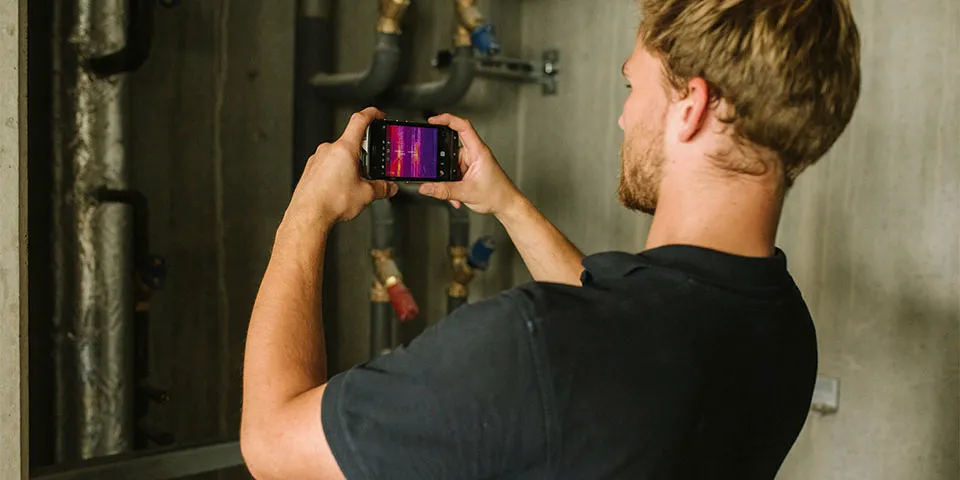
The risks of working in a customer’s or client’s home depend greatly on the type of work and the amount of direct or indirect contact with other people. Plumbers are particularly exposed to risks, for example when working with blocked drains and similar problems.
Several studies have now shown that coronavirus spreads less easily outdoors. Even so, this can create a false sense of security: contact between your smartphone and surfaces can still lead to infection.
• Keep your smartphone in your pocket, overalls or bag as much as possible, and never put it down.
• Avoid using it altogether if possible. If you need to make a call, use speakerphone so you do not hold a potentially contaminated smartphone to your face.
• Be aware of the surfaces you touch, especially those touched by many different people, such as doorbells.
• Wash and sanitise your hands before using your smartphone.
• Work outdoors should essentially be treated in the same way as being in a public space.
Using shared phones:
Shared phones and other devices such as tablets are particularly likely to become sources of infection and require a complete change in behaviour. Rugged smartphones can be thoroughly cleaned with soap and water, hand sanitiser, cleaning wipes or even bleach, making them ideal for situations where devices need to be shared.
• Shared devices must be thoroughly cleaned during and after every working day and stored in a sterile environment.
• Clean a work phone between each user.
• Avoid protective cases by using work phones that do not need one. Protective cases can be a source of infection just like phones, but are often difficult to clean thoroughly.
• Where possible, the use of work phones should be monitored and logged so that infections can be traced back to users.
Cleaning tips
Always clean your smartphone in accordance with the manufacturer’s guidelines to avoid causing damage. Rugged smartphones, such as the recently launched Cat S42, can be thoroughly cleaned with soap and water, hand sanitiser, cleaning wipes or even bleach, and can therefore play a vital role in preventing the spread of coronavirus and other pathogens. These phones have been tested to a military standard to withstand industrial cleaning products and methods.
For jobs where smartphones are exposed to dust, sand and other loose particles that can be a source of infection, full immersion in water with cleaning solution is the most effective cleaning method. Full immersion is only possible if the smartphone has an IP68 rating. Many manufacturers claim their phones have this rating, but in practice only rugged smartphones can be cleaned this way. It is worth checking in advance whether water damage is actually covered by the phone’s warranty. For many manufacturers, it is not.
For more cleaning instructions, visit the Cat phones YouTube channel.
Question about this story? Ask your question
Keep following this
Get an email when a new story is published. No account needed.
- SubjectGeneral







