











Clean, safe drinking water throughout the building
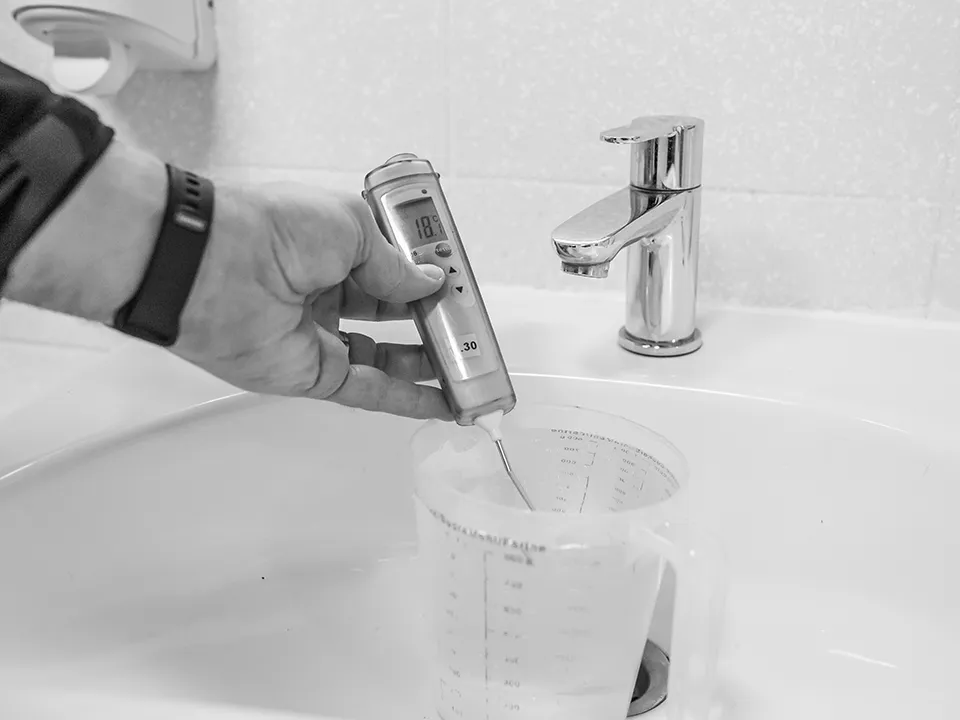
The requirements for biological and chemical safety in Dutch drinking water are very stringent. Water companies are also required to monitor water quality through regular analyses. This does not, however, guarantee that the water coming out of our taps is clean and safe. “Water companies are responsible for water quality up to the water meter,” says Mohaned Sousi of Normec AquaServa. “After that, responsibility lies with the building manager, who must ensure (1) a properly designed installation and (2) careful monitoring and management.”
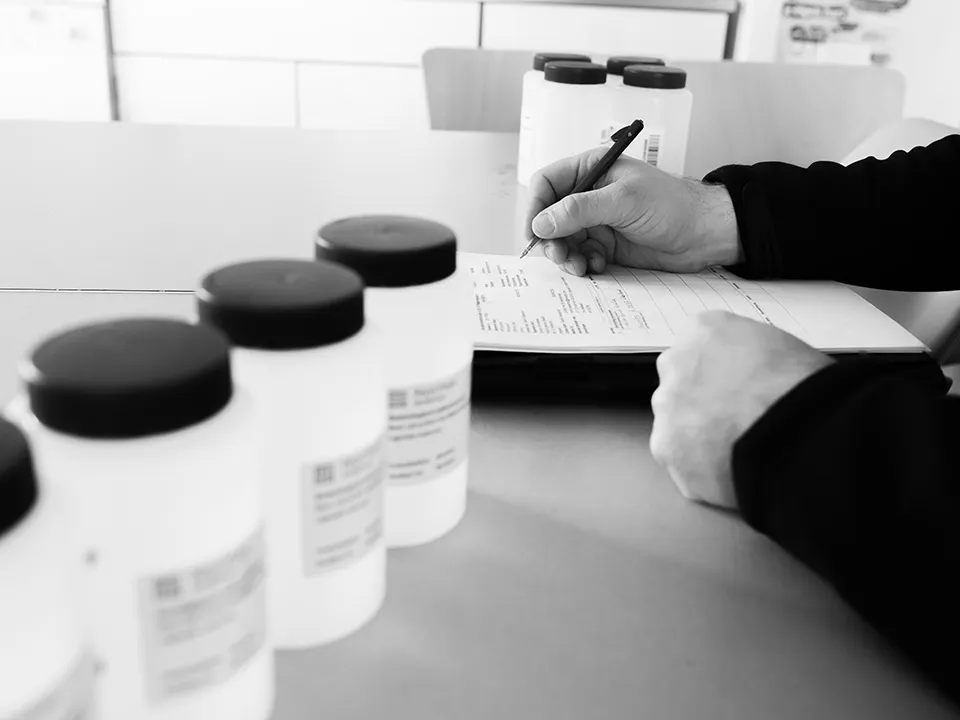
Sousi has a bachelor’s degree in Civil/Water Engineering, a master’s degree in Water Supply Engineering and a PhD in Microbiology of Drinking Water. Since 2019, he has worked at Normec AquaServa as a legionella consultant, project coordinator and technical specialist. “Drinking water in our buildings must be safe and clean to consume,” he says. “It is also important that we can safely use this water for showering, washing and spraying, without (legionella) bacteria entering our airways through water droplets.”
In accordance with NEN 1006
To achieve this, the entire building water installation must comply with NEN 1006, says Zakaria Alla, account manager/project consultant at Normec AquaServa and the first point of contact for clients. “This standard applies directly to installers and consultants, and is intended primarily to minimise the growth of (legionella) bacteria.” Normec AquaServa’s specialists can assess the entire building water installation against the standards in both new and existing buildings. “For example, on new-build, renovation, conversion and extension projects, we are happy to take care of design reviews and construction supervision, giving building managers and end users confidence in a (legionella)-safe installation, with all outlets preferably connected to ensure regular water flow. We can also carry out preventive inspections, water analyses, and odour and taste tests.”
NEN 1006 states, among other things, that shortly after a building water installation is (re)commissioned, it must be flushed with clean drinking water to remove loose contaminants. A month after the installation is handed over, a file containing all the relevant information for its use, management and maintenance must also be available. Outlets that are used infrequently must be flushed at least once a week to minimise the risk of microorganism growth. “The building water installation must also be designed to ensure that all pipes are flushed sufficiently,” says Sousi. “Dead legs and dead ends must therefore be removed. The temperature of cold water must not exceed 25°C, except for brief periods, such as during a heatwave.” Alla adds: “To limit or prevent the growth of legionella bacteria, NEN 1006 requires hot tap water to be at 55 or 60°C, depending on the type of premises and hot water system. To check whether this temperature is reached, we can, for example, install sensors at strategic points in the system. These sensors take continuous readings and store the data in real time in our management system. This means we can take appropriate action immediately if any readings fall outside the required range.”
Safe drinking water
In the Netherlands, everyone responsible for managing a collective drinking water installation, whether a building owner, consultant or installer, has a duty of care under the Drinking Water Act and the Drinking Water Decree to ensure safe drinking water at every outlet. So-called priority premises, such as hospitals, care centres, hotels and swimming pools, are also subject to strict legionella legislation. These premises, which are frequented by large numbers of people and/or people with weakened immune systems, are required, for example, to (1) carry out a risk assessment, (2) draw up a management plan, (3) keep a log of all control measures and analyses, (4) take water samples periodically and (5) report any exceedance of the legionella limit (>1,000 CFU/L).
Taking immediate action
“If the limit is exceeded, we immediately start by analysing temperatures. We also review the flushing logs and check whether there is a history of recorded exceedances at the premises or outlet,” says Alla. “We then advise the client on the basis of our findings. If the data we have collected do not allow us to identify the possible cause with certainty, we carry out an on-site investigation into the source of the problem. Water samples are taken at strategic points in the building water installation and then tested, at the very least for legionella, in our own modern laboratory. We also carry out a colony count, as this provides a good indication of the extent of bacterial growth in the installation. This is followed by advice on immediate actions to make the building water installation clean and safe again as quickly as possible. In most cases, thermal disinfection is sufficient, but chemical disinfection may also be necessary. We are fully certified to carry out these disinfection procedures.”
Sousi adds: “Our recommendations also include an action plan to restore water quality in the building on a lasting basis. This often requires technical modifications to the installation, but management may also need to be stepped up or improved. We are happy to provide support in either case. This takes a significant burden off building owners, installers, consultants and end users.”
Een zakelijke vraag aan Normec AquaServa? Get in touch
Companies in this story
Keep following this
Get an email when a new story is published. No account needed.
- ThemeFuture-proof water and sanitary systems
- SubjectGeneral
- CompanyNormec AquaServa







