











Connecting high-rise buildings to district heating: new partnership speeds up installation and construction
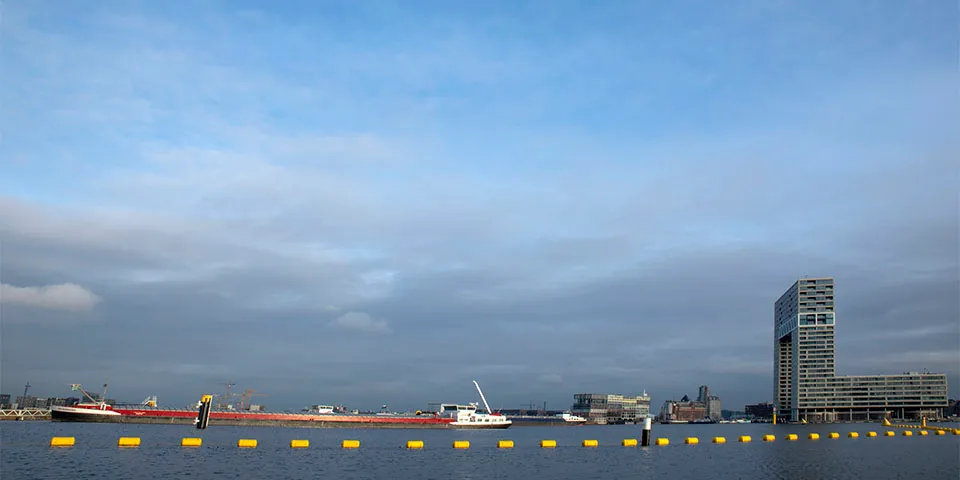
In the coming years, tens of thousands of homes are expected to be connected to a heat network. A large proportion will be new-build apartment blocks. In Amsterdam, a new way of working together has been adopted by developers, heat suppliers and contractors. The aim is to increase flexibility and make installation work faster and cheaper.
As the built environment transitions away from natural gas, new-build properties are increasingly being connected to heat networks. Since 2018, new homes and commercial buildings have no longer been connected to the natural gas network. District heating is attracting increasing interest as an alternative to natural gas.
To meet growing demand for heat connections, supply chain partners are looking for new ways to work efficiently. Henrie Visserman, programme manager at Vattenfall Warmte: ‘This could involve smart collaboration on underground infrastructure in public spaces and buildings, as well as technical solutions for new high-rise buildings. Each party has its own expertise, and we can make better use of it. As an energy company, we are closely involved in installing infrastructure underground, while installers specialise in designing and installing systems inside buildings.’
Connecting high-rise buildings
New-build projects often have individual connections. ‘With individual connections, Vattenfall manages the connection and the building’s internal pipework. This makes things easier for the building owner, as it takes the burden off them,’ Visserman explains.
With a communal connection for a high-rise building, heat is supplied from a shared heat interface unit, often located at the bottom of the building. In this case, the building owner pays for the installation of the internal pipework, from the substation with its heat exchanger to the homes, and is responsible for managing it.
A new approach across the supply chain
The new Samen in Hoogbouw approach has been developed for projects with individual connections. It is a way for different supply chain partners to work together, with the design and installation of connections in the residential complex carried out largely by, and/or under the responsibility of, the property developer or building owner. The aim is to speed up delivery in new-build projects and keep costs as low as possible.
Under the new approach, a property developer, housing association or owners’ association commissions its own contractor and installer to design and install the internal pipework. Vattenfall installs a substation at the bottom of the building, provides the technical specifications for the design, installation and materials for the internal pipework, reviews the design and checks the installation. Once the work has been completed, Vattenfall installs a heat interface unit in the meter cupboard of each home. The energy company then supplies the heat and manages the internal pipework. Initial experience suggests that customers value the benefits of this coordinated approach. For example, the contractor has greater control over the schedule because there is less reliance on external parties. This brings greater flexibility and saves time, and therefore money.
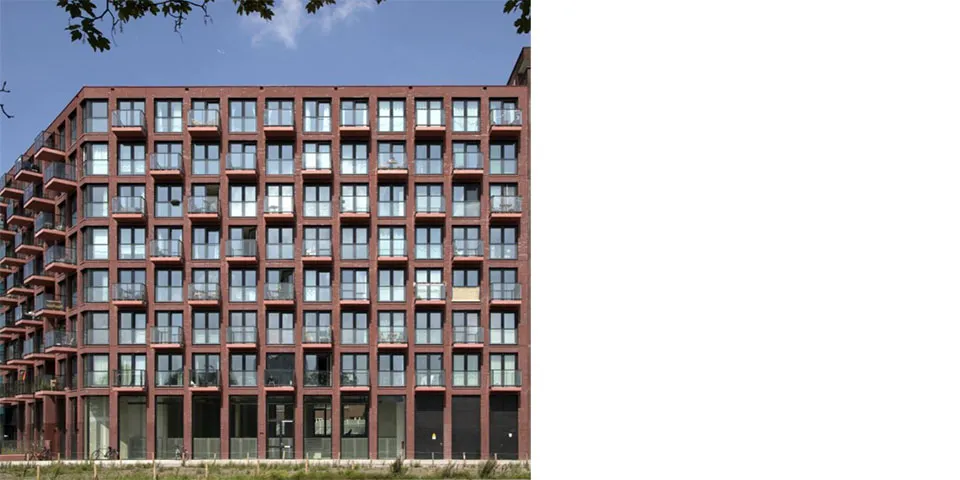
Pilot project on the Amstel
In 2019, property developer Boelens de Gruyter and investor CBRE Global Investors completed 70 private-sector rental apartments as part of the Amstelkwartier 4H new-build project in Amsterdam. Hans Spruit was involved as project manager for BAM Wonen. ‘District heating was a given for this project, and the municipality had set an EPC requirement of 0.15, which was stricter than the Building Decree. We were already working on the construction when we switched to Vattenfall’s new approach.’
Spruit points to several benefits of the approach. ‘First, installing the internal pipework ourselves had a positive effect on the EPC. We also found that it works well when our installer designs and installs the secondary heat network, from the substation to the homes. Coordination and delivery are much easier when the work is carried out by one and the same party, rather than bringing in a third party via Vattenfall.’
Taking the burden off during construction
Based on his experience at BAM Wonen, Spruit believes district heating is the most promising option for delivering gas-free high-rise buildings, compared with heat pumps. ‘District heating performs well, and it is a proven, completely silent technology. Noise from air-to-water heat pumps, for example, remains a concern, especially when many homes are relatively close together. Heat pumps also have higher capital costs and involve maintenance costs.’
Vattenfall is now exploring whether Samen in Hoogbouw can also be applied to existing buildings. Visserman expects housing associations and owners’ associations to increasingly seek support with construction work. Samen in Hoogbouw could, for example, enable them to receive an offer to switch to district heating, including a concrete proposal for the parties that would carry out all the work inside the building. ‘If you develop this kind of approach with capable partners, the energy transition can really take off.’
Question about this story? Ask your question
Keep following this
Get an email when a new story is published. No account needed.
- ThemeGas-free heating and cooling
- SubjectGeneral







