











COVID-19 and ventilation
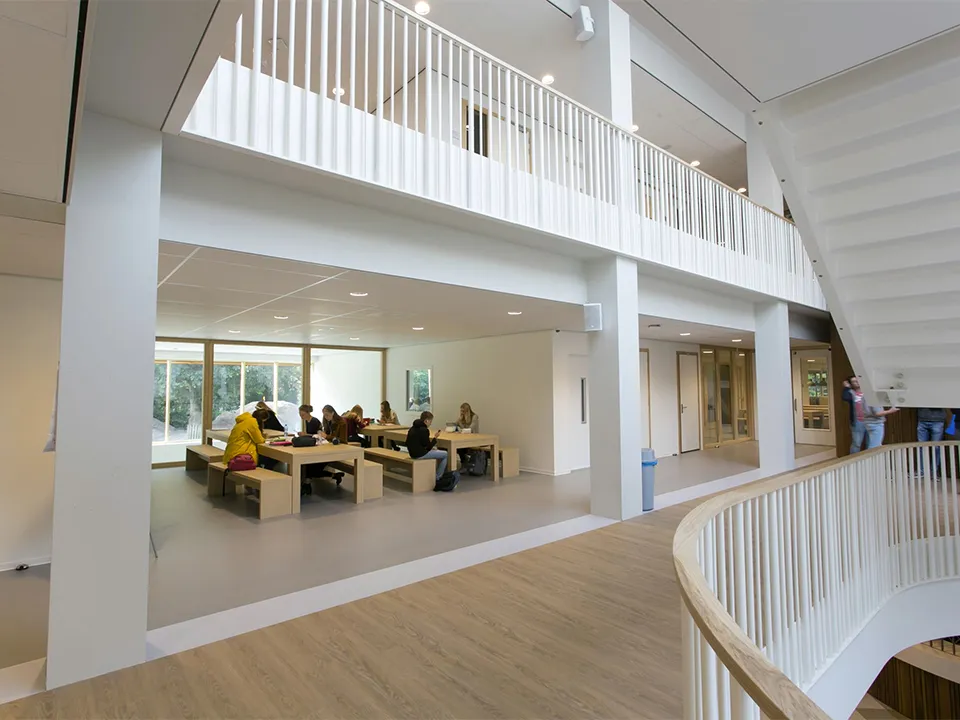
Since the COVID-19 outbreak, much has been written about coronavirus and ventilation. But what are ventilation, recirculation and infiltration? And should ventilation be centralised or decentralised?
Ventilation is not the same as air circulation, and internal leakage is not the same as recirculation. Opening a window to ventilate is a last resort. It is better to opt for the right balanced ventilation system, which can also be controlled locally, room by room, so that air quality can be improved in existing buildings too. This article explains the different terms used in the news and what we mean when we talk about ventilation.
What is ventilation?
People in a room breathe in oxygen (O2) and breathe out carbon dioxide (CO2). The CO2 concentration is an indicator of indoor air quality. If too much CO2 remains in the indoor air, people breathe in too little oxygen. They may find it harder to concentrate, feel tired sooner and get headaches more quickly. Ventilation is the deliberate replacement of used indoor air with fresh outdoor air.
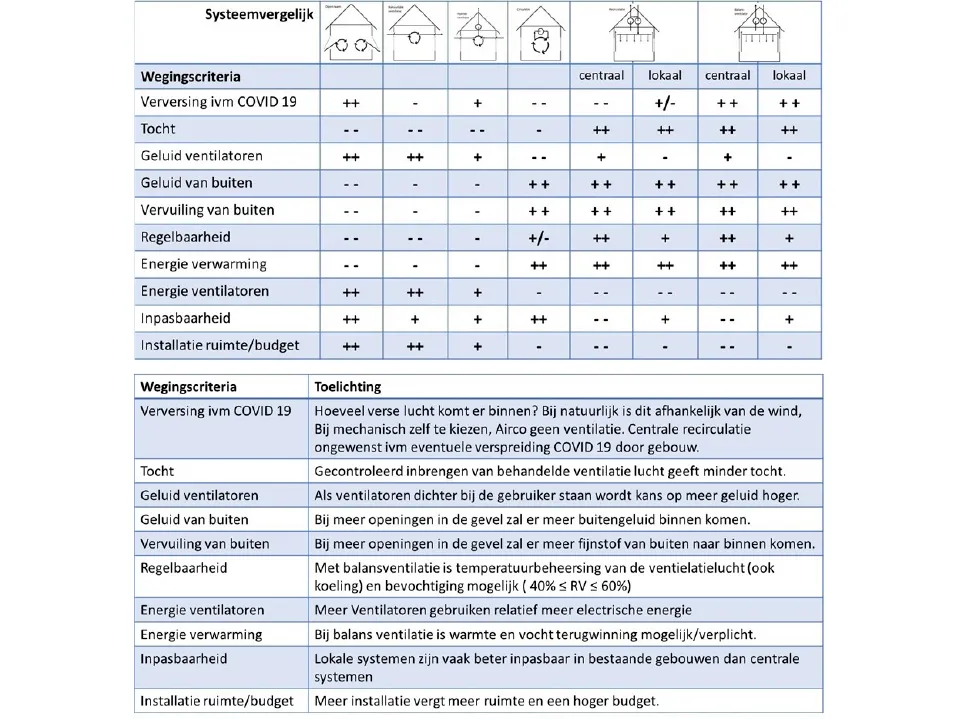
• Opening a window is the simplest way to ventilate. The disadvantages include draughts, noise, outdoor pollution and high heating costs.
• Natural ventilation uses air vents. This reduces some of the disadvantages of an open window, but when there is no wind there is no ventilation either, and draughts are often felt in winter.
• Hybrid ventilation reduces some of the disadvantages of natural ventilation, but does not prevent draughts in winter. It also uses more energy than natural ventilation.
• Balanced ventilation is the best way to ventilate and can be installed either centrally or locally, room by room. However, this type of ventilation is more expensive and takes up more space.
Relative humidity
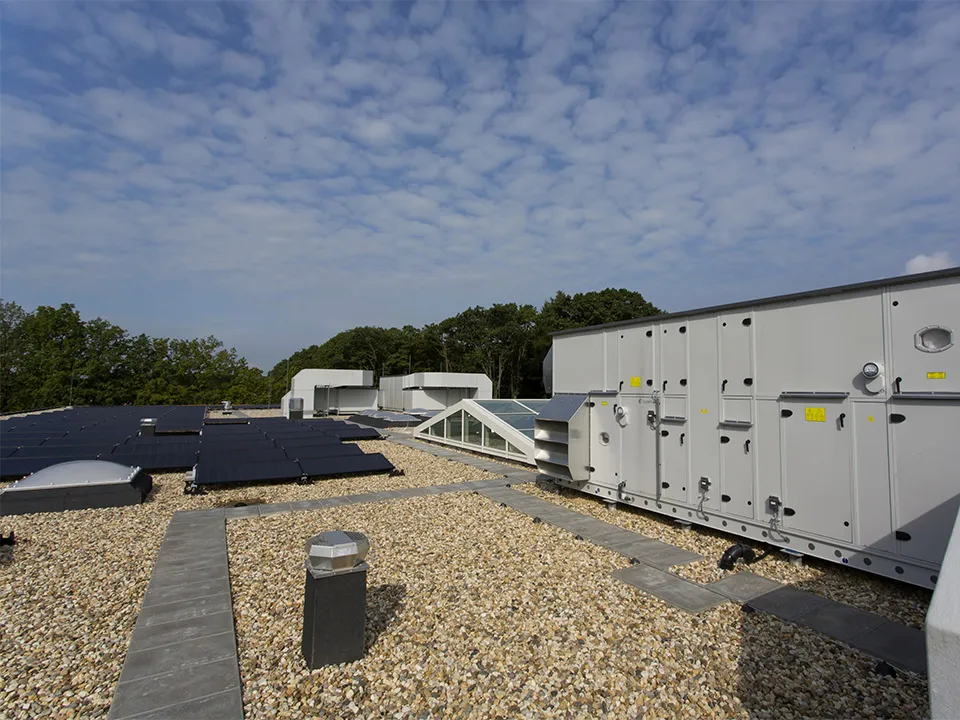
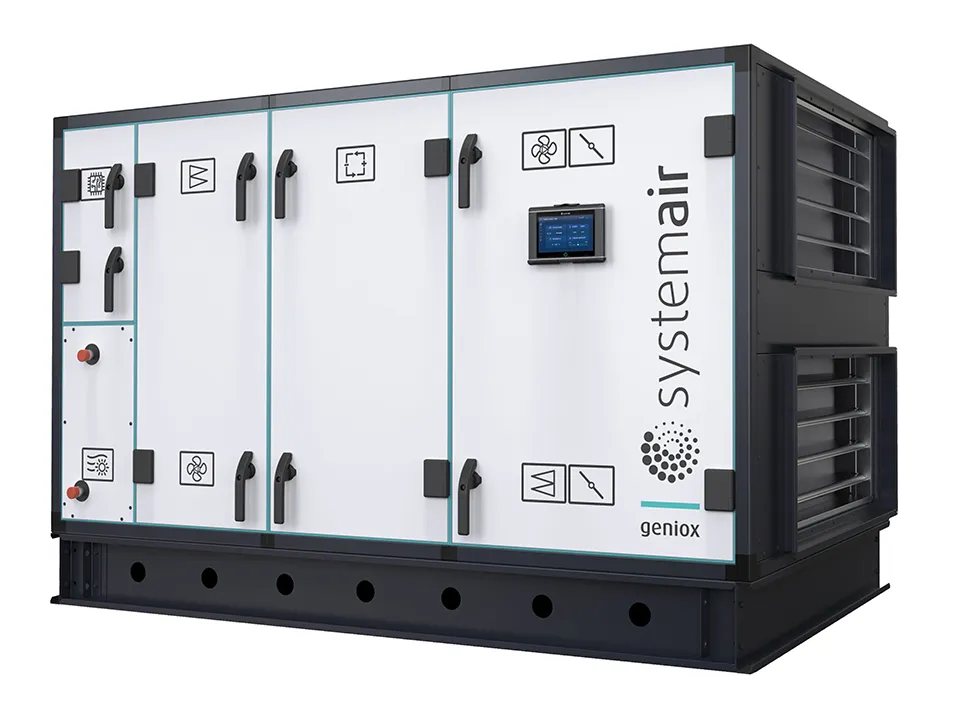
A ventilation system, in the form of fans or air handling, is a means of bringing fresh outdoor air indoors. Such a system costs more, but ventilation and airflow indoors are easier to control. In terms of reducing sickness absence and improving productivity, it is not difficult to demonstrate that a healthy ventilation system quickly pays for itself. Air handling literally means ‘treating air’ before it enters a room. An air handling system ensures that the supply air is filtered and at the right temperature, and ideally the right humidity too. It also keeps CO2 levels sufficiently low without producing too much noise. Finally, in a balanced ventilation system, the air handling system also extracts ‘used’ air from the room.
The healthiest relative humidity in a building is between 40 and 60%. If we do not want to keep windows open and infiltration is insufficient to supply fresh air, we need a ventilation system to prevent the indoor CO2 concentration from becoming too high. In addition to heat and moisture recovery, an air handling unit often contains fine particulate filters, a heater and cooler, and fans. In some cases, silencers are also used, as well as a section for humidifying the air in winter to prevent indoor air from becoming too dry. In short, air handling is intended to provide a good, healthy indoor climate.
Health versus energy saving
Minimum requirements for ventilation systems in the Netherlands are laid down by law in the Building Decree, drawn up by the government agency RVO. To date, the national government has held back from setting higher requirements for healthier ventilation airflow rates. This is probably linked to the drive to save energy. The national government is also the Netherlands’ largest building owner and user, so construction and operating costs have a direct impact on the public purse. Commercial parties building for end users are also often inclined to prioritise construction costs over scientifically substantiated health standards.
It has been scientifically proven for 25 years that people need at least 75 m³/h of fresh ventilation air in a building to avoid building-related complaints. The Dutch Building Decree specifies between 25 and 35 m³/h per person. As infiltration decreases due to tighter building envelopes, while ventilation barely increases, indoor air quality is not improving. The fact is that, since 2016, European Ecodesign regulations for ventilation products have significantly improved their energy efficiency, making it possible to provide proportionally more ventilation without consuming much more energy.
Systemair recently published the Whitepaper ‘COVID-19 and Ventilation’, which explains the different terms used in the media. This Whitepaper is available free of charge by emailing [email protected].
A business enquiry for Systemair? Get in touch
Companies in this story
Keep following this
Get an email when a new story is published. No account needed.
- ThemeHealthy indoor air
- SubjectGeneral
- CompanySystemair







