De Nederlandse Vereniging Warmtepompen (DHPA)

De Nederlandse Vereniging Warmtepompen (DHPA) brings together the 25 leading suppliers, manufacturers and importers, of heat pumps in the Netherlands. Together, we meet virtually the entire demand in the Netherlands, from small heat pumps for homes to large systems for, for example, shopping centres and apartment blocks.
Strong growth
Contrary to what some people think, heat pumps are far from new. The first heat pumps were installed in the Netherlands as early as the late 1980s; the technology itself is much older and is therefore mature. What is new is the recent strong growth of the Dutch market, driven by climate policy and financial incentives such as the ISDE schemes. The market share now stands at around 10% and is seeing sustained double-digit growth!
Sustainable
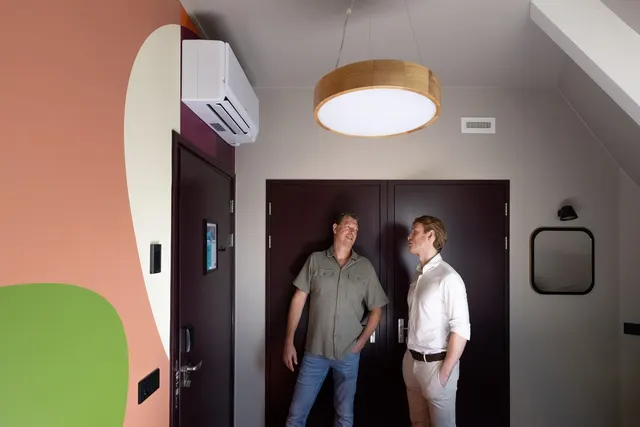
Heat pumps can provide heating by ‘pumping’ heat from outside into a building. ‘Outside’ can mean the outdoor air, the ground, groundwater or surface water, or a district heating network. Heat pumps are also the only technology that can provide cooling, by ‘pumping’ heat from inside to outside. As we experienced this summer, cooling is no longer a luxury. Extracting heat from, or rejecting it to, the surroundings is sustainable: after all, the most sustainable thermal energy is the energy you do not have to generate!
Scaling up requires sound policy
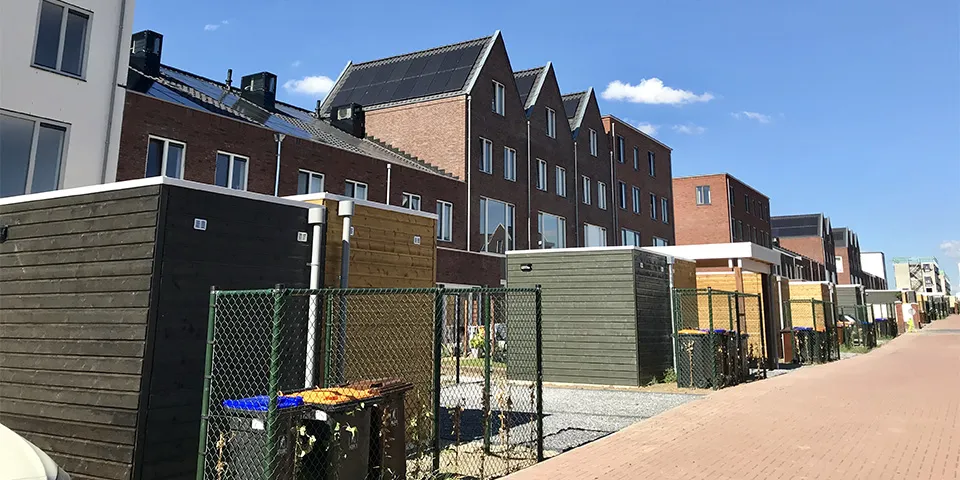
To achieve the intended large-scale roll-out, environmental and building policies, as well as climate policy, must also play their part. (Under the Paris Agreement, we must already be saving half of our CO2 emissions by 2030, which means making a corresponding contribution when heating and cooling buildings.) Naturally, these policies are based on existing technologies and infrastructure. This is why there is debate, for example, about the impact of ground-source heat pumps (geothermal energy) on the soil and groundwater, and about noise from outdoor units on air-source heat pumps. A proposal has been made for noise limits, which are warranted. The industry has expressed criticism of the proposed limits, which we consider unnecessarily stringent, and of the proposed measurement requirements, which are impractical. Like the noise limits, the EPG (Energy Performance of Buildings) is part of a major revision of the Building Decree, which will come into force in mid-2020. New BENG requirements for the thermal properties of the building envelope and for heating and cooling buildings will come into force during 2020. The revised NTA8800 calculation method also gives heat pumps due credit for their added value. The climate agreement presented by the government in May is also aimed at further scaling up, particularly in existing buildings. Practical implementation will also require significant work on further standardisation and integration, both within buildings and into the electricity infrastructure.
Supply chain partners are important
These examples show that the supply chain needs to do its work here. Supply chain partners, including Installatie & Bouw as a client and customer of the heat pump sector, must fulfil their bridging role with the property sector and in area development! Do you have any ideas on this? Get in touch. We would be pleased to discuss them with you!
De Nederlandse Vereniging Warmtepompen (DHPA) is the trade association for manufacturers and importers of heat pumps in the residential and non-residential sectors.
DHPA contributes to making the built environment more sustainable and aims to lead the process of energy saving, CO2 emission reduction and the use of renewable energy. DHPA can only achieve this in the supply chain, in partnership with the installation and construction sectors.
We achieve this in a number of ways:
• Promoting heat pump applications;
• Working closely with legislative and regulatory authorities;
• Setting standards and driving innovation in technologies and applications.
More information: www.dhpa-online.nl
Question about this story? Ask your question
Keep following this
Get an email when a new story is published. No account needed.
- ThemeGas-free heating and cooling
- SubjectGeneral