Wireless emergency lighting based on the three Vs: safety, value and progress
Text Lieke BousemaImage HBI Bisscheroux

The move to wireless management of emergency lighting offers businesses many benefits, including fewer inspections, better monitoring, real-time updates and demonstrable safety. “The technology is revolutionising the market,” says Patrick Mestriner, lighting consultant at HBI Bisscheroux. “Yet building owners and maintenance companies are still cautious about adopting it, because they are unfamiliar with the technology and do not know enough about it. We are trying to change that by raising awareness of safety, value and progress.”
HBI Bisscheroux is the only independent manufacturer of emergency lighting in the Netherlands. “Since our founding in 1978, we have placed a strong emphasis on technological innovation,” says Mestriner. “Wireless management of emergency lighting is a natural extension of this and, in our view, the answer to today’s challenges. These include staff shortages, the sustainable employability of employees, energy savings and CO2 reduction.” With projects in healthcare, commercial buildings, industry and residential buildings, the technology has already proved its worth. “The next step is for wireless management to be incorporated into the management strategy and day-to-day working practices of installers, maintenance companies and building owners alike. Raising awareness of safety, value and progress can help achieve this.”
Safety
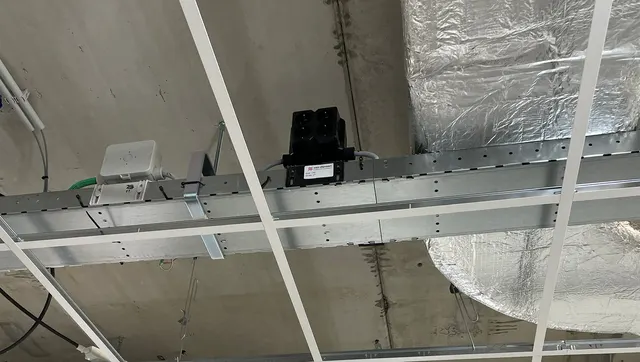
“Emergency lighting in buildings must be inspected and maintained periodically. This generally takes a great deal of labour, energy and money,” says Mestriner. “It also often disrupts the comfort and peace of mind of building users and residents, particularly in healthcare buildings.” What is more, reliable operation of the emergency lighting during a power failure cannot be fully guaranteed. “What is working today may fail tomorrow.” HBI Bisscheroux’s emergency lighting solution changes this. “With these issues in mind, we began looking in 2019 at how we could use existing technologies to take the pressure off building managers and installers. We focused on IoT solutions, digitalisation and automation, and built our first emergency lighting management platform on that basis.”
Benefits
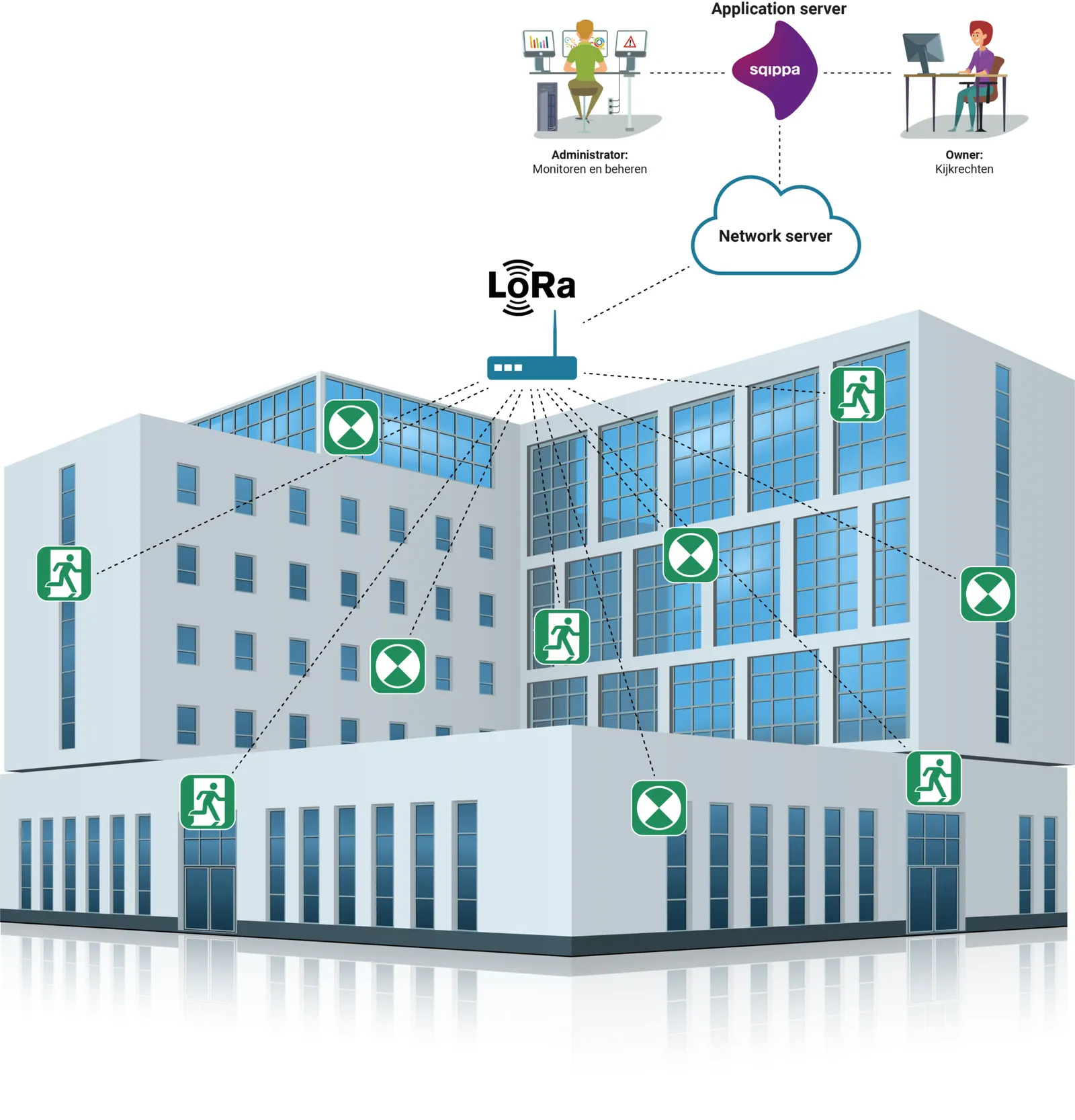
Over the past few years, the platform has been continuously optimised with safety, future-proofing and scalability in mind. “As a result, we now have a highly accessible platform for installers, based on international standards such as LoRaWAN (Long Range Wide Area Network),” says Mestriner. To monitor installations, HBI developed the multifunctional Sqippa Online IoT platform, which automatically provides building owners and managers with highly detailed, useful information. The system sends an update on luminaire status three times a day, measuring 18 relevant data points. These range from the emergency lighting’s battery status to information on the most recent function and duration tests. “This gives building owners and managers great peace of mind.”

As LoRaWAN CO2 sensors, smoke detectors, kWh meters and water meters can also be integrated, Sqippa offers a comprehensive, impactful solution for every type of building. “Sqippa automatically sends alerts in the event of a power failure, irregularities or faults, making it possible to predict maintenance visits accurately and prevent incidents. On-site inspections are kept to a minimum, saving considerable time and reducing disruption, travel mileage and the associated CO2 emissions. At the same
time, the safety of residents and patients is better safeguarded. After all, emergency lighting management is no longer just a snapshot.” The savings in maintenance hours also mean that the investment in wireless monitoring quickly pays for itself.
Progress
“Wireless management of emergency lighting gives you greater control over the installation, more targeted maintenance and lower management costs,” says Mestriner in summary. “It is a major step forward from the ‘old economy’, where periodic inspection rounds and Excel spreadsheets are the norm. Our built environment is digitalising rapidly. It makes sense to bring emergency lighting management along with it. After all, emergency lighting has an average service life of 10 to 15 years. Those who opt for wireless management now will be prepared for a future in which staff shortages, the sustainable employability of employees, energy savings and CO2 reduction are increasingly pressing issues.”
A business enquiry for HBI Bisscheroux? Get in touch
Companies in this story

Keep following this
Get an email when a new story is published. No account needed.
- ThemeSmart buildings and controls
- SubjectElectrical engineering
- CompanyHBI Bisscheroux