











Emergency power specialist continuously develops its products, with an eye on the market and the environment
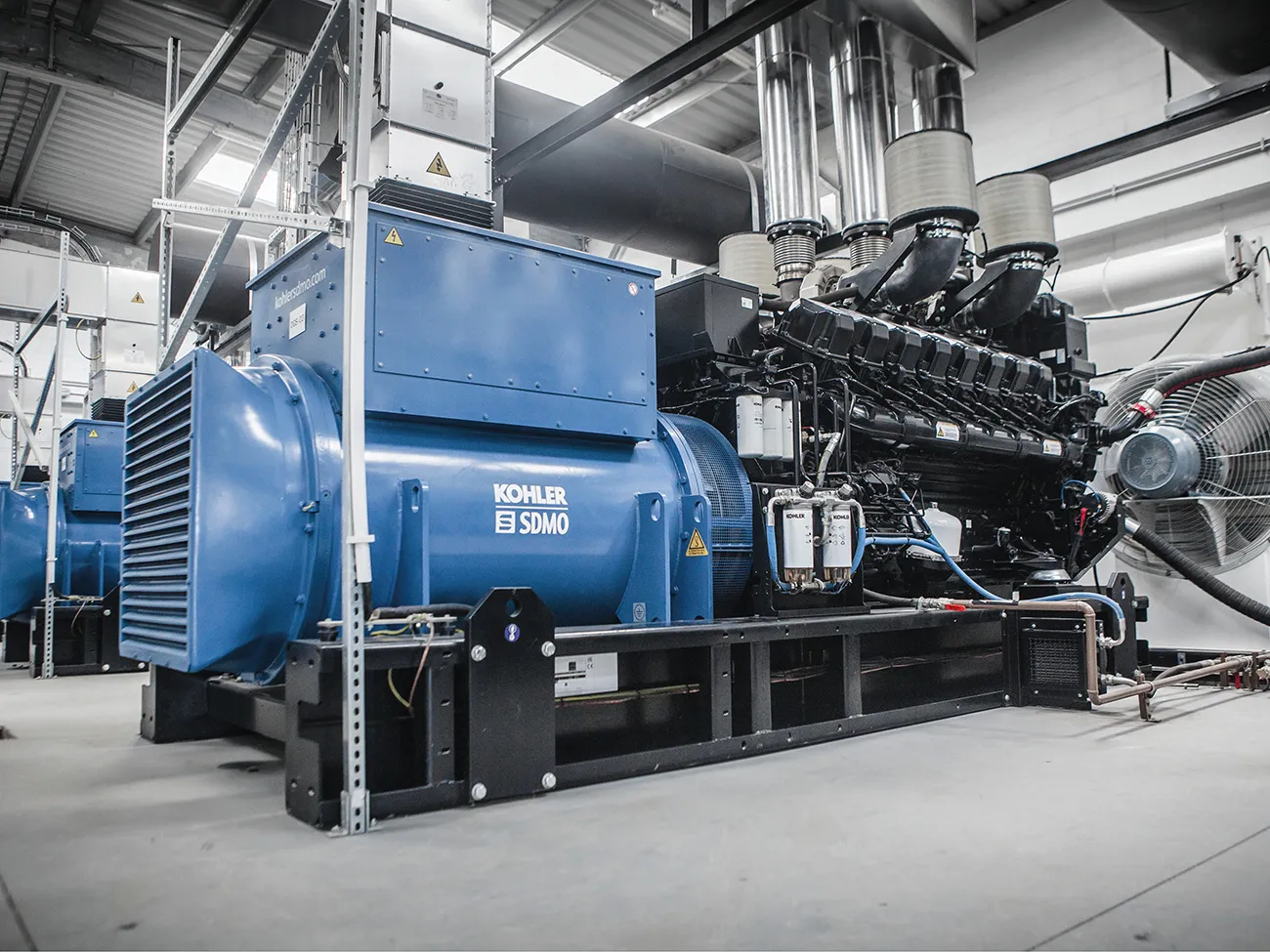
The electrification of society is accelerating. Systems and processes are being automated at a rapid pace. In data centres, hospitals, petrochemical facilities and industry, among other sectors, reliable power is now crucial for both safety and continuity. “Whereas a 2 MW installation used to be exceptional, it is now the standard,” says Mark Scheurwater, sales manager at Koninklijke van Twist. “And higher capacities are becoming the rule rather than the exception.” At the same time, the emergency power specialist is seeing the electricity grid in the Netherlands become less stable and reliable. “As a result of the energy transition, more and more renewable but intermittent power sources are being installed, such as solar panels and wind turbines. This puts the grid under pressure,” says general manager Jeroen Eeuwijk. “The risk of outages is growing, making our emergency power solutions more essential than ever.”
‘Change is our only constant’
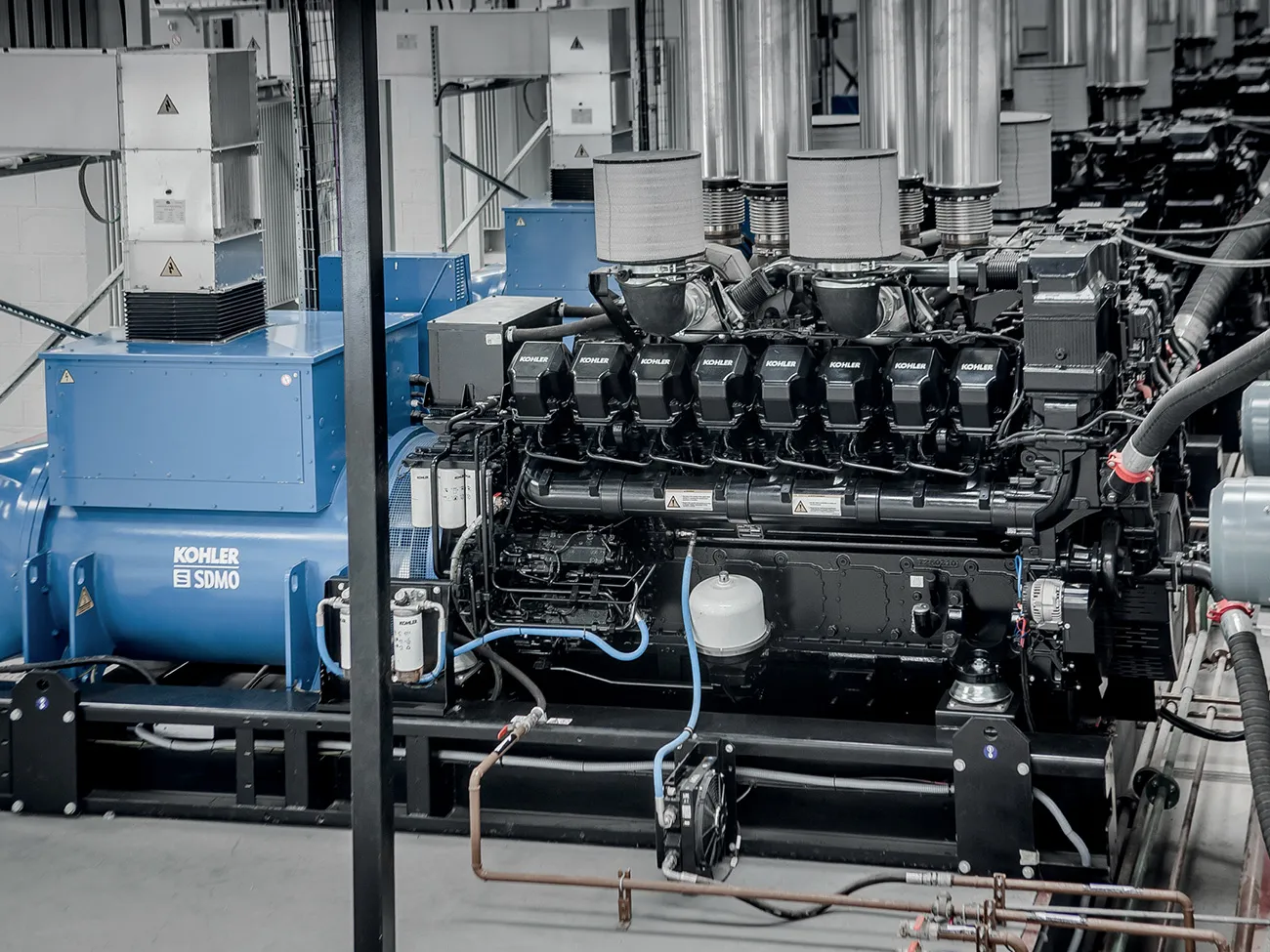
Koninklijke van Twist is the innovative, full-service specialist in emergency power solutions. The family-owned company designs, supplies, installs, manages and maintains complete energy systems and emergency power installations, and is the exclusive distributor of Kohler generator sets, formerly known as Kohler-SDMO. “Kohler is synonymous with reliable, compact generator sets with low fuel consumption,” says Scheurwater. “Generator sets up to 4.5 MW (4,500 kVA) are supplied complete and ready for use, enabling us to meet any capacity requirement quickly and effectively.”
One-stop shop for emergency power solutions
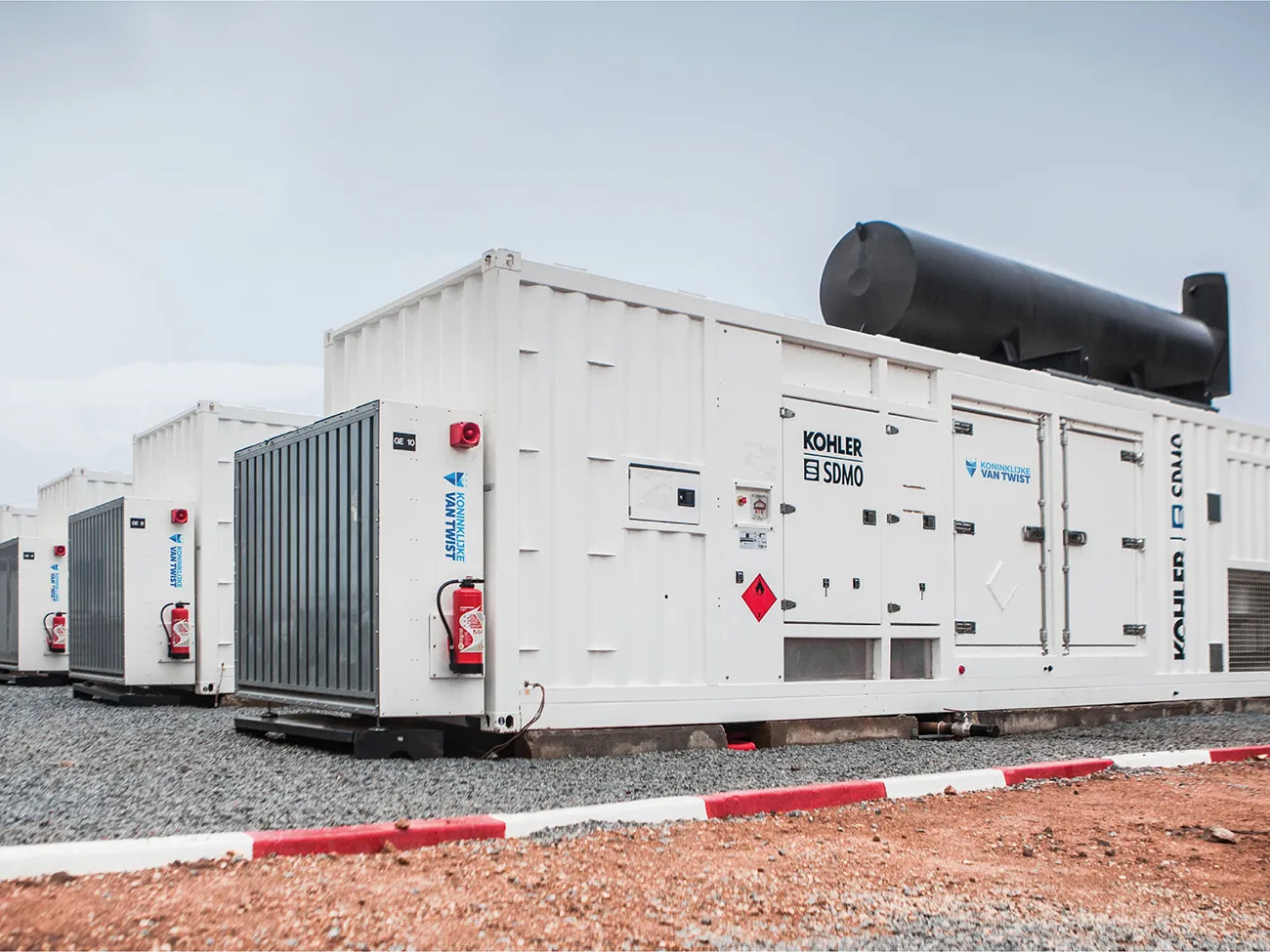
Delivering the right emergency power solution for every project requires technical expertise, reliable products and a tailored approach, particularly when higher capacities are involved, Scheurwater stresses. “An emergency generator rated at 4.5 MW in a 40ft container can easily weigh more than 30,000 kilos. This needs to be taken into account in the building design, as does access for maintenance and inspection. Early coordination with the mechanical and electrical contractors is also essential to ensure the correct connection.” It is no coincidence that Koninklijke van Twist has dedicated project teams, bringing together project managers, mechanical engineers and electricians. Eeuwijk says: “We work with the customer to find the best solution. We consider not only the required capacity, but also the future, to keep the Total Cost of Ownership as low as possible. We do more than design, supply and install the diesel generator set: we also provide the associated fuel tank, air and exhaust systems, and controls. In short, all the systems needed for a reliable emergency power installation. We also manage and maintain the installation, ensuring that it really does take over the power supply in the event of a grid failure.”
The importance of maintenance and inspection
“Our emergency power solutions are thoroughly tested in a purpose-built test facility,” says Eeuwijk. “After installation, customers can also call on us 24/7 for maintenance and in the event of an emergency. We have an extensive service operation with nationwide coverage. Our highly trained service engineers carry out a wide range of maintenance work throughout the Netherlands, regardless of brand. This ranges from annual preventive maintenance to monthly tests, replacements and overhauls, as well as the legally required (SCIOS scopes 4 and 7C) inspections. We follow our own maintenance programme, with cost-effective, practical maintenance at its heart, without compromising the safety and reliability of the installation.”
Ready for sustainable diesel fuels
An emergency power system is essentially always on standby, with very limited operating hours. “The required autonomy time is generally at least 8 hours,” says Scheurwater. “That is why nearly all emergency power systems still run on diesel engines. We expect diesel to be replaced increasingly by sustainable alternatives, even though emergency generators are exempt from emissions requirements. As an organisation, we are leading the way in this area. We have extensive experience with synthetic diesel fuels, or Hydrotreated Vegetable Oils (HVOs). What is more, all Kohler generator sets can now run on HVO.”
Opportunities for hydrogen
“We also started the ‘hydrogen genset’ project back in 2019, conducting our own research into how our gas engines could run successfully on hydrogen,” says Eeuwijk. “We believe hydrogen is the most viable alternative to diesel. After all, hydrogen is clean, emission-free and does not degrade over time. Following extensive preliminary research, we began developing and carrying out comprehensive field tests on our first hydrogen engine in 2020. We now have a zero-emission hydrogen generator with a continuous output of 120 kVA. This technology will continue to develop over the coming years.” The hydrogen engine can be built into machinery, for example equipment used on construction sites. It can also be used as a generator set to supply power to an entire construction site. “In future, we see opportunities to integrate the hydrogen generator into our other solutions, such as our Hybrid Energy and container solutions. Our emergency power systems will also be able to switch to hydrogen in due course.”
Hybrid technologies
Alongside large-scale automation, the many new-build and expansion projects across the country are driving a rapid rise in electricity demand, which grid operators are often unable to meet. “The solution is often found in solar panels combined with biogas engines that fully comply with exhaust emissions requirements,” says Scheurwater. “Koninklijke van Twist is also the ideal partner for these hybrid technologies.”
Question about this story? Ask your question
Keep following this
Get an email when a new story is published. No account needed.
- ThemeBuilding electrical systems
- SubjectGeneral







