











Floor insulation is essential for a healthy indoor climate
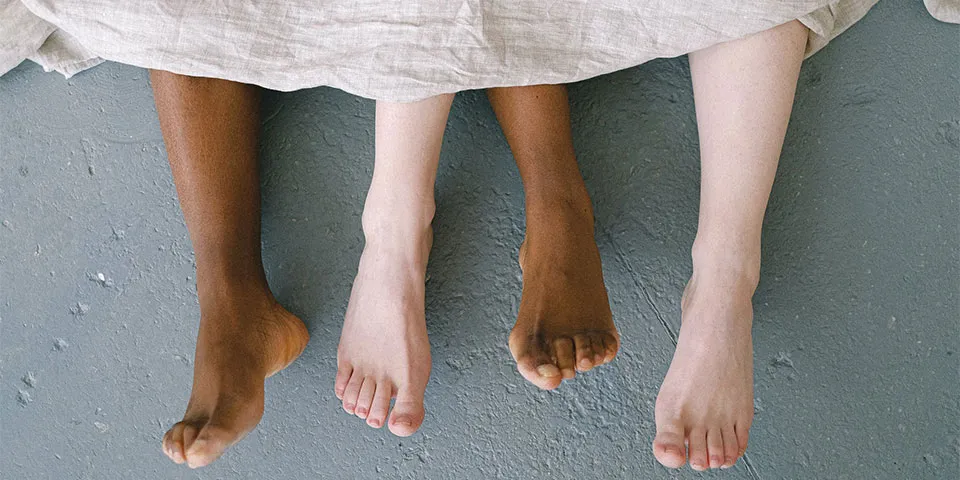
A comfortable home depends on a number of essential conditions. One of them is the floor. If the floor is uninsulated, cold from the ground and the crawl space will seep into your home. Even if your walls are very well insulated, you will not achieve a comfortable feeling or a healthy indoor climate.
If your floor is poorly insulated or uninsulated, you will suffer from cold feet. Unfortunately, that is not the only problem. It will also make the home feel generally cold and lead to poor humidity levels, not to mention money going down the drain. Without floor insulation, a home can lose as much as 15% of its heat through the floor.
Older homes
Older homes are very likely to have no floor insulation. As a result, draughts are often felt at floor level or close to the floor, and the rising cold is usually very noticeable. Floor insulation will not only distribute heat more evenly, it will also reduce humidity levels, helping to prevent mould. But floor insulation is also important in a (reasonably) new home.
Types of floor insulation
There are several types of floor insulation available, and floors can be insulated in several ways. The first, and generally most cost-effective, option is to install floor insulation from the crawl space. This requires the crawl space to be accessible and at least 50 cm high. Insulating the underside of the floor immediately reduces the amount of air and draughts entering the home.
If insulating the underside of the floor is not an option, you can also install ground insulation in the crawl space. This method is ideal for damp, low crawl spaces, as it also helps to limit and insulate against moisture from the crawl space.
The final option is to insulate the floor from above. This is generally only done if there is no crawl space or it is not fully accessible. Insulating from above usually involves installing a floating screed, on top of which a new floor can be laid. This option is less popular, partly because of the cost.
Costs and savings
The total cost of floor insulation depends on several factors, including the insulation material, the floor area and the desired level of insulation. Insulating from the crawl space is therefore much cheaper than insulating from above, particularly because the latter also requires a new floor to be laid.
Savings
As with the cost, your annual savings depend on several factors. A mid-terrace home will deliver less in savings than a semi-detached or detached home. This is also because energy costs are much higher in a detached home than in a mid-terrace home. On average, floor insulation in a mid-terrace home can save around € 200 a year. The average saving is € 250 for a semi-detached home and as much as € 320 a year for a detached home.
Tip: If you have floor insulation installed this year, you can still benefit from the reduced VAT rate on a specialist’s labour costs, cut from 21% to 6%.
Question about this story? Ask your question
Keep following this
Get an email when a new story is published. No account needed.
- ThemeHealthy indoor air
- SubjectGeneral







