











Heating sector calls for a long-term vision for the energy transition, with a clear timetable

ATTB, the Belgian association of heating equipment suppliers, notes that the replacement of ageing boilers is still progressing particularly slowly, meaning our homes continue to emit far too much CO2. This is happening at a time when climate change is more prominent than ever, with the European Commission’s EU 2050 climate strategy, the Climate March in Brussels, the COP24 climate conference in Katowice… The government must take urgent action to ensure that all old boilers in our country are replaced as soon as possible. A clear energy policy is also needed for new technologies that offer attractive opportunities. And a definitive timetable. The repeated postponement of important decisions, such as the phase-out of nuclear power, discourages investment.
2018: slight growth, but no real transition to energy-efficient appliances
Sales of heating systems in our country have followed the same trends for several years: overall, there has been slight growth, sales of oil-fired boilers have fallen and sales of gas-fired wall-hung boilers have risen. Heat pumps and heat pump water heaters are seeing healthy growth, but still account for only a small share of the market.
Solar thermal collectors (solar water heaters) are performing less well. This is because most of the focus, including from the government, is on photovoltaic applications. In addition, solar water heaters are still not assessed correctly in EPC calculations, meaning this solution is often overlooked. The sector intends to make greater efforts itself to convince people of the many benefits of solar thermal applications.
ATTB is not dissatisfied, but once again has to point out that there is still no real transition to more energy-efficient appliances and greater use of renewable energy. Around 60% of our fellow citizens still heat their homes with an ageing oil or gas boiler! The government must urgently do something about this. The grant for heat pump water heaters, available since 1 January, is a step in the right direction. Various grants are still available for heat pumps and solar water heaters, too.
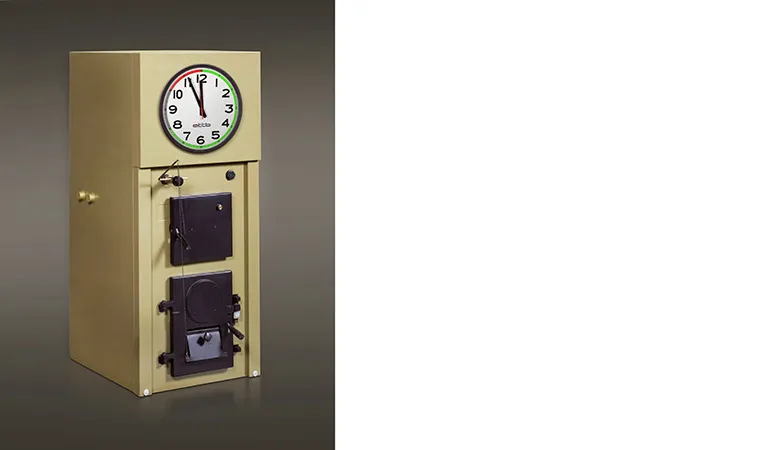
Polluting cars are already being banned from cities. When will polluting heating systems be next?
If Belgium is to meet its 2020, 2030 and 2050 climate targets, the country still has a huge step to take. Rapid, large-scale replacement of the nearly two million (2,000,000) ageing boilers with condensing boilers or heat pumps would cut CO2 emissions enough to meet European requirements in this area. The government must act quickly to introduce new measures to encourage and incentivise this change.
On the one hand, subsidies may need to be reintroduced for replacing old boilers (apparently this is possible for wood-burning stoves), while on the other, homeowners and businesses could also be encouraged to replace their old heating systems through other, more stringent measures.
For several years, a number of major cities in our country have introduced low-emission zones to improve air quality, restricting or banning access for polluting vehicles. Why not introduce a similar system to keep polluting heating systems out? Obviously, this would not happen overnight, but one could start by labelling the boiler stock, as is already the case in Germany. This is not difficult and would be a very suitable way to raise awareness among owners and residents. Later, replacement of boilers that are 15 or 20 years old could be made compulsory. This would allow all low-efficiency boilers to be phased out in the short to medium term.
ATTB calls for a long-term vision, a clear timetable and a definitive decision on the phase-out of nuclear power
As long as policymakers continue to question the deadline for closing the nuclear power stations, businesses and consumers will hesitate to invest in sustainable alternatives. ATTB is therefore calling for a definitive decision on the phase-out of nuclear power to be made soon.
The heating sector is also calling for a long-term vision for the energy transition, looking ahead to 2030 and 2050, and consistent communication about it that does not distort the market.
ATTB is also calling for greater attention to and investment in decentralised energy generation, such as combined heat and power (CHP) and fuel cell technology.As part of the energy transition and with energy prices rising, decentralised electricity generation is becoming increasingly important. CHP already accounts for 20% of electricity production in our country, but there is considerable potential for further installations, both in the residential market and in larger buildings.
ATTB also wants clarity on the government’s position on biomass. Is it still considered renewable energy, or are biomass systems now viewed as polluting? Should a distinction perhaps be made between large industrial systems and small systems such as wood-burning stoves?
In 2017, our government proposed a green tax shift: by levying higher taxes on fossil fuels and lower taxes on electricity, it aimed to make electricity more attractive to use. But what did we see in 2018? Electricity cost 5.7 times as much as gas! This made us the most expensive country in Europe for electricity. ATTB is therefore urging the government to make a serious effort to deliver a genuine green tax shift.
Finally, after the elections in May 2019, the phase-out of nuclear power by 2025 and climate change will undoubtedly be important topics in coalition negotiations. ATTB would be pleased to put its expertise at the government’s disposal and contribute to the debate on these important challenges.
Question about this story? Ask your question
Companies in this story

Keep following this
Get an email when a new story is published. No account needed.
- SubjectGeneral
- CompanySolar







