











Highly sustainable home with surprising innovations
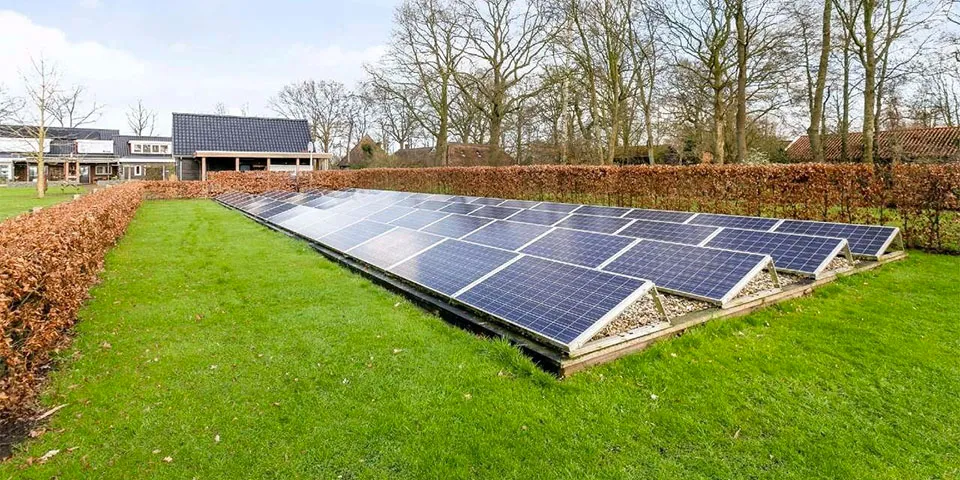
You can give sustainability a major boost with bold gestures, plenty of debate and countless meetings, but what could be better than experimenting in your own home? Gertjan Brand filled his detached house with familiar and less familiar solutions.

The energy transition has been on Gertjan Brand’s agenda for years. Whether as a project manager, director or strategic adviser, Brand has worked on making our living environment more sustainable in countless roles.
Projects, groundbreaking ideas, policies and innovative technologies: the list goes on. His motivation, guided by the motto ‘realistically ambitious, consciously sustainable’, has naturally extended to his own home. And, on that subject, his belief in ‘God as Creator of the earth’ provides him with direction and inspiration. Brand says: “The planet deserves all our care. Working towards sustainability and striving to be good stewards are therefore only natural.”
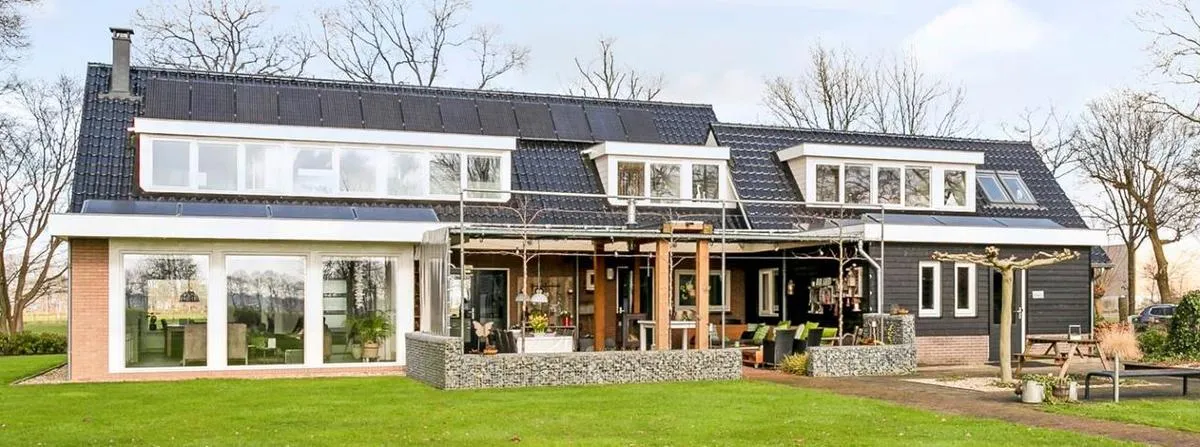
That home is a spacious detached house in Nieuwleusen, near Zwolle, built in 1977 and now more than 40 years old. It is exposed to the wind from all sides, had an energy rating of G and, after the family bought it in 2004, the first energy bill left them raising their eyebrows. The Brand family had had enough of a bill that required almost €1,000 in additional payment, so there was work to be done.
Insulation
The first, logical step was to add insulation. In the first year, the family installed insulating glazing and topped up the insulation in the loft roof. This was followed shortly afterwards by additional insulation to the timber ground-floor structure and the cavity walls. In the meantime, the Brand family grew to seven, and the house was extended by five metres. An outbuilding with a stylish office and mezzanine was also added.
That was also the time to turn their attention to the building services and the heating system. The ‘old-fashioned’ radiators downstairs were replaced with underfloor heating and convectors. The gas-fired condensing boiler was replaced as the heat source by an advanced ground-source heat pump. It was generously sized, although there was still some uncertainty about whether it could heat the upper floor, which had conventional radiators, sufficiently. The condensing boiler was therefore initially kept on standby.
The boiler, located on the first floor, ultimately proved unnecessary as a backup and was used mainly to provide supplementary heating for the bathroom’s domestic hot water. With the addition of 30 solar panels on the roof and 64 in a solar garden, 94 panels in total with an output of 22,850 kWp and annual generation of around 20,000 kWh, the house produced more than enough electricity for the heat pump to provide comfortable heating and hot water throughout.
Brand notes that when carrying out building work, you should consider straight away whether you can make further sustainable improvements at the same time. “It saves a lot of disruption. Take the roof, for example, where new solar panels were installed. The roof tiles were in such poor condition that they had to be replaced anyway. And because the insulation could do with an upgrade too, we combined the work with additional insulated roof panels. Natural opportunities such as moving house, building work or renovation are ideal times to make a home more sustainable,” says Brand.
Wood-burning stove with a ‘water jacket’
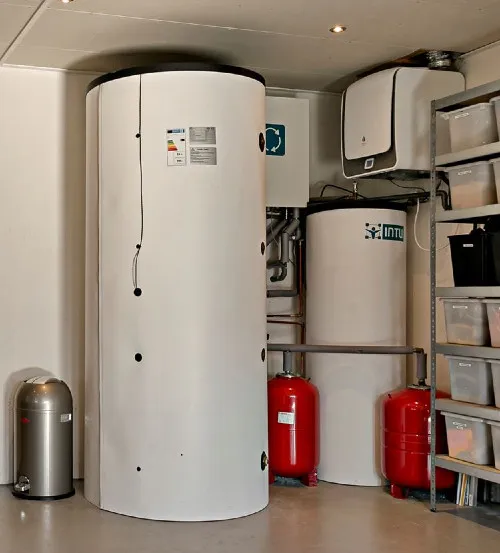
Last year, the already highly energy-efficient home was made even more sustainable. Brand says: “You can’t help following your instincts. When you’re involved in the Energieneutraal Verbouwen project for Pioneering and six municipalities in the Zwolle region, you come across a lot of technologies. Through Rudi Reinders at INTU in Gramsbergen, I came across a solution that uses a wood-burning stove as well as a heat pump to heat a buffer tank.”
“The existing wood-burning stove had excess capacity, so the living room became too hot in no time. INTU supplies wood-burning stoves with a water jacket, which uses the heat from the burning wood to supply hot water to the buffer tank. That cuts the heat pump’s electricity consumption considerably.”
“Normally,” Brand continues, “many tens of per cent of the heat disappear up the flue, and only a small proportion of the fire’s heat is used to warm the room. Now that energy is put to good use: the stove effectively heats the whole house via the buffer tank and also provides domestic hot water. Many wood-burning stoves are known for their high particulate emissions, but INTU shows that it is possible to burn the wood at a much higher temperature. This not only reduces particulate emissions, but also increases the stove’s efficiency. Two birds with one stone.”
Cooling
After the office outbuilding was completed, the need for additional cooling also arose. Brand again found a practical solution with INTU. The heat pump system already provides cooling to the house and office from the ground, via the underfloor heating pipes. With Reinders’ help, a further, unique solution was added.
“The house now also had two MVHR systems,” Brand continues. “They extract ventilation air and use the heat in it to warm the incoming air. For the office and the master bedroom, we added a ventilation-air heat pump, a spaarpomp. In summer, it extracts excess heat and uses a high-efficiency heat pump to heat the buffer tank. It also produces cool air, which is blown back into the room. It’s an inexpensive, sustainable source of heat for the buffer tank, hot water and shower water, while also providing cooling. How good is that?”
Battery energy storage
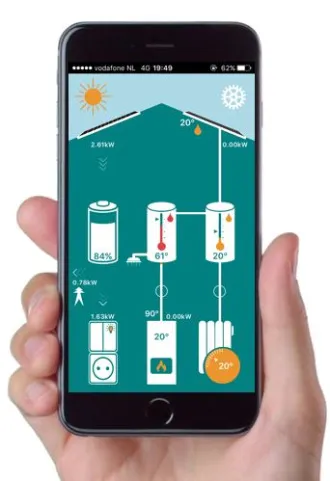
To complete the system, an energy storage system is also being installed in the house: two battery packs with a total capacity of 3 kWh. This energy can be used for peak shaving and to bridge the day-night cycle, allowing the most important systems in the house to run on backup power. The Brand family is supported by an INTU app, which shows the solar panels’ daily output and can also control the temperature in each room individually.
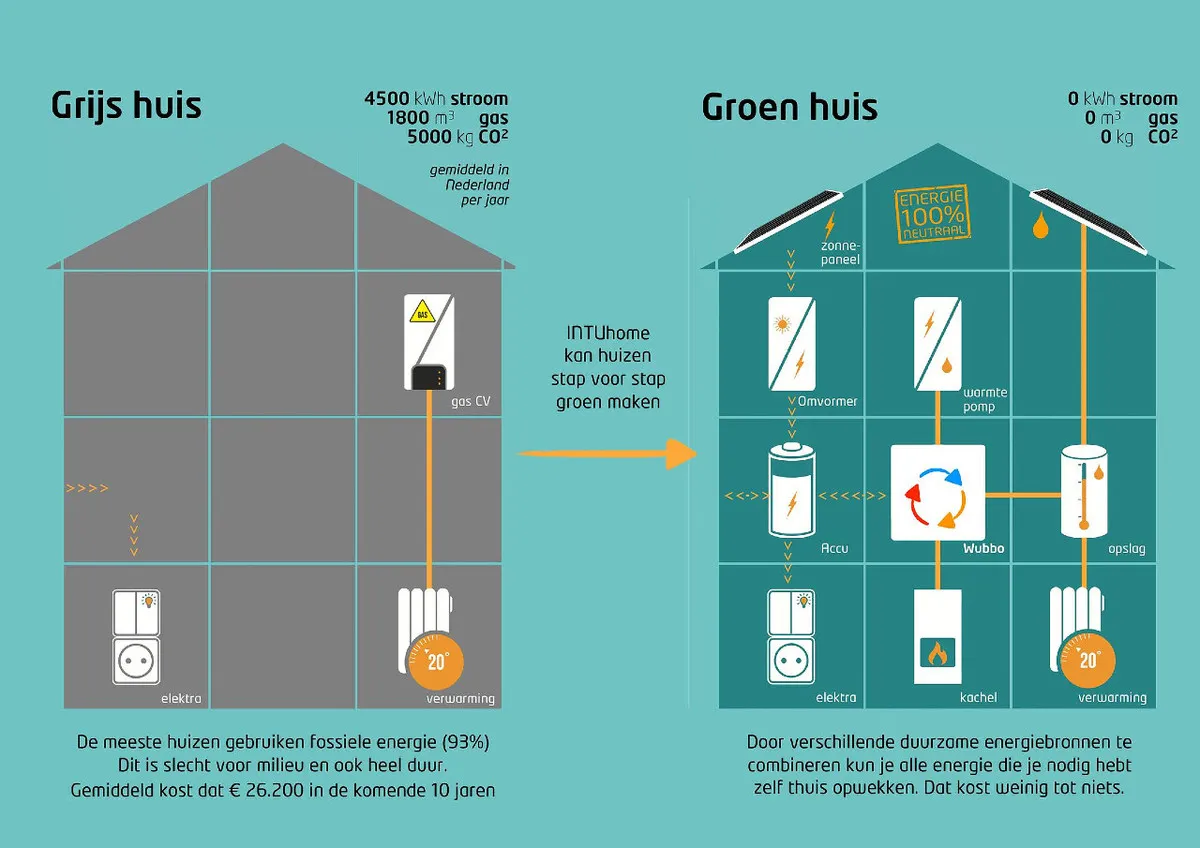
WUBBO is used to coordinate the different systems. It is a smart control system that ensures the home’s own electricity and heat are used as efficiently as possible (smart grid). When solar generation is high, the system first charges the home’s batteries and powers the two charging points for electric cars. If Brand starts cooking on the induction hob, the charging rate for a car is temporarily reduced.
A surprising outcome
“It must have cost a lot,” readers may say, and they would be right. It is impossible to calculate the exact total, but the investment certainly runs to many tens of thousands of euros. What drove Brand, above all, was passion, ambition and innovation. Brand says: “And the long-term return, not just the investment. The heat pump and solar panels have already paid for themselves. I can also write off costs thanks to the home office and specific investment subsidies.”
The result is a gas-free home, since 2014, that generates more energy than it uses and incorporates a host of solutions. It has already inspired many visitors on tours of the house, including during sustainable open-house events organised by the municipality and the Nationale Duurzame Huizenroute.
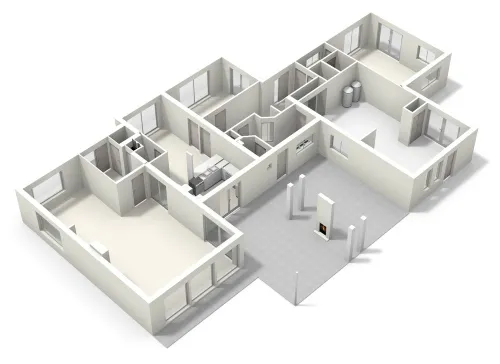
The gradual renovation of the house in Nieuwleusen makes for a fine sustainability story, with a surprising ending: the house has recently gone on the market. A beautiful plot became available in the countryside, giving Brand the unexpected opportunity to fulfil his wish to build his own home. And so the house appeared on Funda, after we had requested an interview, while Brand was working with INTU on the final sustainable upgrade: the energy storage system mentioned earlier.
The green thread running through the story, according to Gertjan Brand:
- A belief in stewardship and the burden of a high energy bill.
- Good insulation as the foundation, with solar panels & a heat pump for a sustainable energy supply.
- Winter: MVHR, a higher combustion temperature & the stove’s water jacket send more heat to the rest of the house, deliver higher efficiency and avoid unnecessary particulate emissions.
- Summer: additional cooling for the office & bedroom also provides extra hot water.
- Local smart grid: using electricity intelligently avoids putting a heavy load on the grid. This also substantially reduces the fixed charges for the electricity connection and means less electricity is exported for net metering.
Question about this story? Ask your question
Keep following this
Get an email when a new story is published. No account needed.
- ThemeSustainable refurbishment of existing buildings
- SubjectGeneral







