











Humidity: everything you need to know

Humidity: when it is right, you hardly give it a thought. But when it is not, it can have some very unpleasant consequences, such as dry eyes, breathing difficulties and other health problems. The right humidity is essential for a healthy and comfortable indoor climate, both in offices and in homes, for example. What exactly is humidity? What is the ideal level, and how can you achieve it? Find out here.
What is humidity?
Humidity can be expressed in two ways: as absolute humidity and relative humidity (RH). Absolute humidity indicates the amount of water in a given volume of air. Relative humidity, expressed as a percentage, indicates how much water vapour is in the air compared with the maximum amount of moisture the air can hold at a given temperature. Warm air can hold more water vapour than cold air. The same amount of moisture therefore results in a lower RH at a higher temperature.
What is the right or ideal humidity in an office, home or other space?
The ideal relative humidity (RH) in a room is between 40-60%. This is also the range in which people feel most comfortable.
Which is better: high or low humidity?
Neither is desirable. High humidity, or too much moisture in a space, can lead to condensation and mould growth. This is likely to cause damage to the space. The effects of excess moisture in a space include:
- Mould patches
- Wood rot
- Wallpaper or plaster coming away from the wall
Excessively high humidity can also make people feel uncomfortable, causing stuffiness, headaches or breathing difficulties. Mould can also cause respiratory problems. It is therefore important to keep humidity at the right level.
What happens to the body when humidity is too low?
If humidity at home or in the office is too low, it quickly becomes uncomfortable. The human body is made up of about 60% water, and dry air draws moisture from the skin and hair cells. Low humidity causes the body to lose moisture because sweat on the skin evaporates more quickly. The lungs may also absorb less oxygen from the air we breathe. This can all lead to:
- Breathing difficulties or shortness of breath
- Dry skin
- Chapped lips
- Dry eyes
- Headaches
Fatigue and reduced concentration are common consequences of these symptoms. There are also effects on the space itself. For example, a tightly laid wooden floor can shrink considerably if humidity is too low. Dry air can also cause static electricity. This is undesirable, especially when working with electronic equipment.
Measuring humidity
You can easily measure humidity in an office, home or other space with a hygrometer. This type of moisture meter indicates relative humidity (RH) and is inexpensive to buy. Hygrometers are often included as a standard feature on weather stations.
What can you do if humidity is too high or too low?
1: Ventilation
One additional benefit of a ventilation system is that it helps maintain the ideal humidity in a space. Indoor humidity is generally higher when people are present, as they breathe, perspire and so on. A ventilation system extracts the humid air and brings in cleaner, drier air from outside. In winter, when outdoor temperatures and moisture levels are low, dry air can cause problems and humidification may be necessary. Low-humidity complaints are therefore most common during this period.
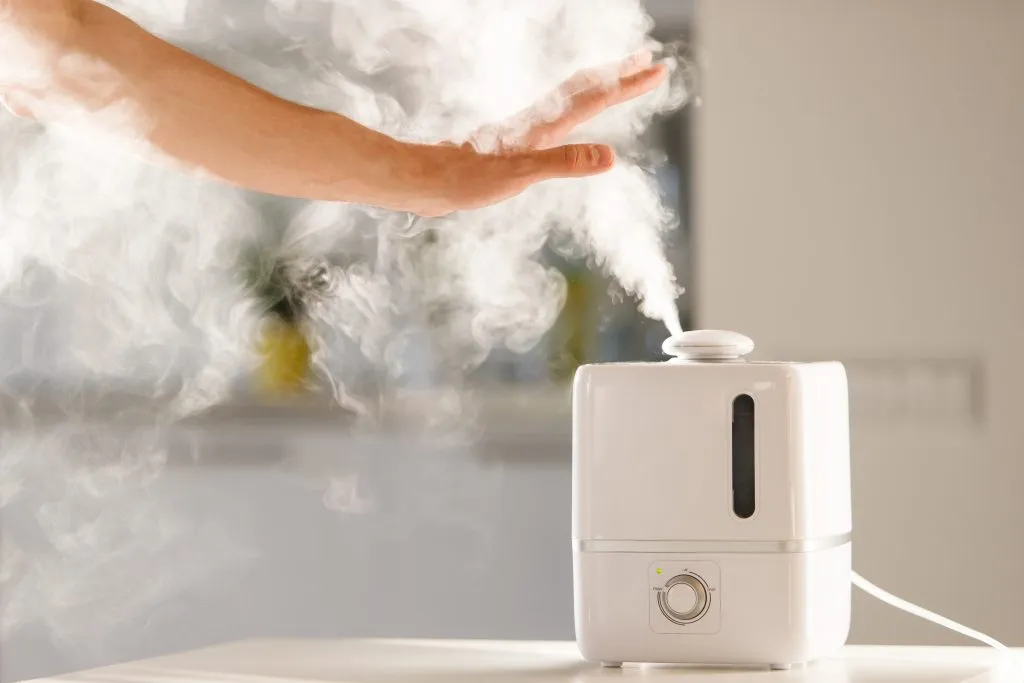
2: Humidifier/dehumidifier
If humidity is too low in a particular room, you can use a humidifier. It releases steam or mist into the room, adding moisture to the air. If humidity is too high, you can use a dehumidifier to remove excess moisture from the air. An air-conditioning system in cooling mode can also help. Most models have a dedicated dehumidification function.
3: Address the underlying problem
In some cases, high humidity is not caused by inadequate ventilation but by an underlying moisture problem, such as rising or penetrating damp or a water leak. If so, you need to address the moisture problem itself. Treating the symptoms with a ventilation system or dehumidifier will not be enough.
Conclusion: how does humidity contribute to a comfortable or uncomfortable indoor climate?
When humidity is low, the air feels very dry. Breathing it in can feel harsh and unpleasant, and it can cause health problems with all the consequences that entails. Conversely, when humidity is high, the space feels very damp and mould may develop, for example. A humidity level of around 50% is therefore essential for people to feel comfortable in a space.
‘Humidity’ is the first instalment in a series exploring the question: ‘What makes for a comfortable indoor climate?’. The next instalments, ‘temperature’ and ‘air quality’, will be published soon, followed by an overarching article on comfortable indoor climates. Keep an eye on our website for the latest articles!
Would you like to know how to create a comfortable indoor climate? Contact our specialists for more information.
Question about this story? Ask your question
Keep following this
Get an email when a new story is published. No account needed.
- ThemeHealthy indoor air
- SubjectGeneral







