











HV solutions take on an overloaded electricity grid
Text Lieke BousemaImage Top HV Systems
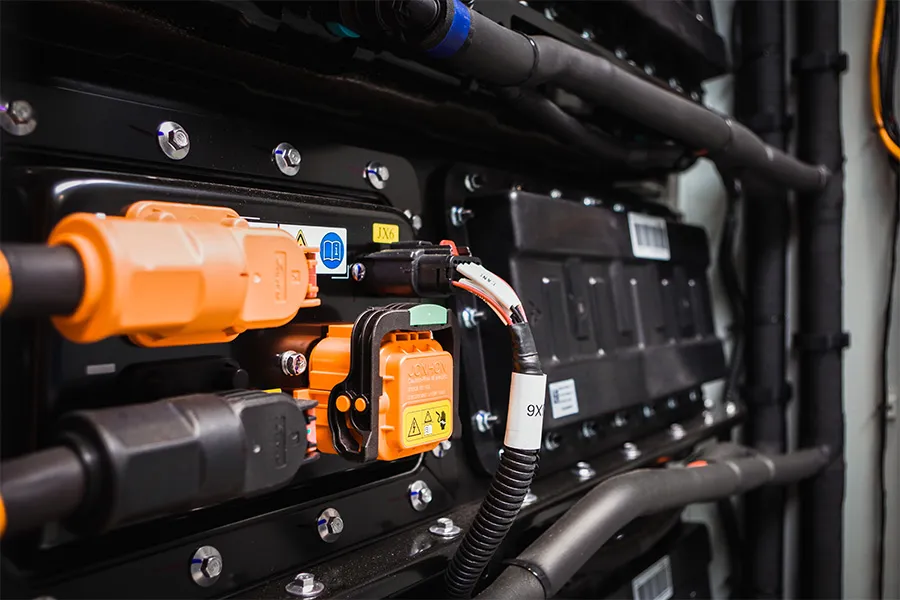
Complete solutions and comprehensive services for energy storage
You will no doubt have seen the problems: many companies want to expand their production capacity but cannot get a higher-capacity grid connection. New housing developments have to wait years for a new connection because the grid is overloaded. And companies in construction and infrastructure are urgently seeking solutions to power their clean, low-emission or zero-emission construction equipment. Top Systems offers a solution with Top HV Systems, a new limited company offering complete solutions and comprehensive services for off-grid and hybrid systems (OHS), energy storage systems (ESS) and home energy storage systems (HES). “Our battery systems give businesses and private customers a smart, effective buffer that charges when electricity demand is lower and discharges at peak times,” says David van Manen, Commercial Technical Engineer HV at Top HV Systems. “This helps prevent the grid from becoming overloaded.”
Top HV Systems focuses on industrial, commercial and residential construction projects with undersized or no grid connections. It also serves commercial and private building owners who want to store the energy they generate for their own use and/or trade it. “With power outputs of up to 4000 kW and storage capacity of up to 8.1 MWh, we can meet any energy requirement quickly and efficiently,” says Jondal Simons, Senior Technical Engineer HV at Top HV Systems. “Customers can rely not only on a fully assembled system, including lithium-ion batteries, inverters, solar charge controllers, cabling, energy meters and associated software, but also on comprehensive project support. All our HV systems fully comply with the new PGS 37-1 guideline for the safe storage of electricity in energy storage systems.”
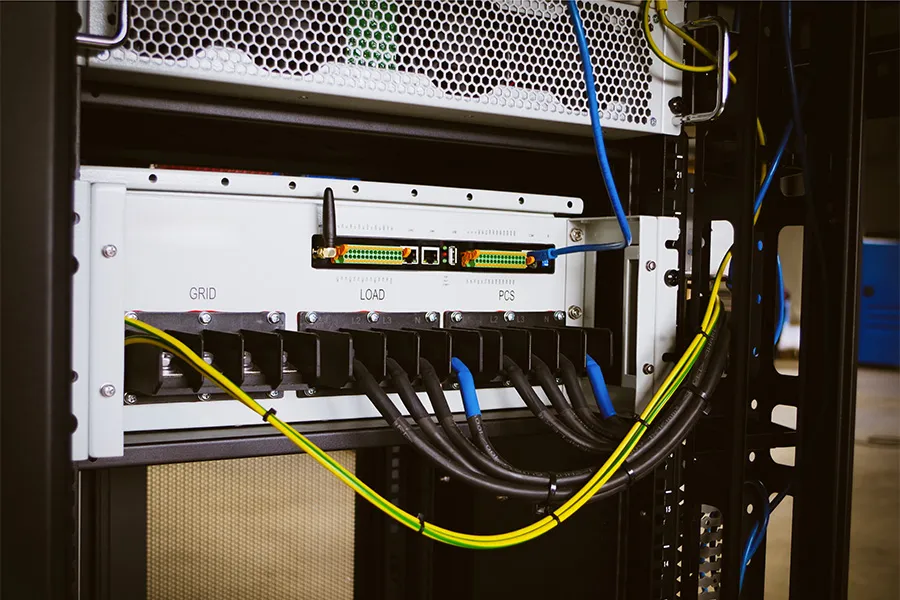
Comprehensive project support
“We are happy to work with the customer to find the right location for the HV system, taking into account the requirements set out in the PGS guideline,” says Van Manen. “We also provide the information required for the environmental permit, as well as approval from the fire service and safety region. This gives customers the assurance of a system that operates optimally and meets all requirements and guidelines, whether they choose an OHS, ESS or HES.”
Off-grid and hybrid systems
OHS covers off-grid and hybrid systems, which often serve different purposes but have a similar configuration. “Off-grid systems are mainly used by homeowners who want to live as self-sufficiently as possible and no longer depend on an energy supplier,” says Van Manen. “In most cases, they are combined with solar panels for power generation. On cloudy days, when the sun does not provide enough energy, a generator can help by fully recharging the battery system in a short time.”
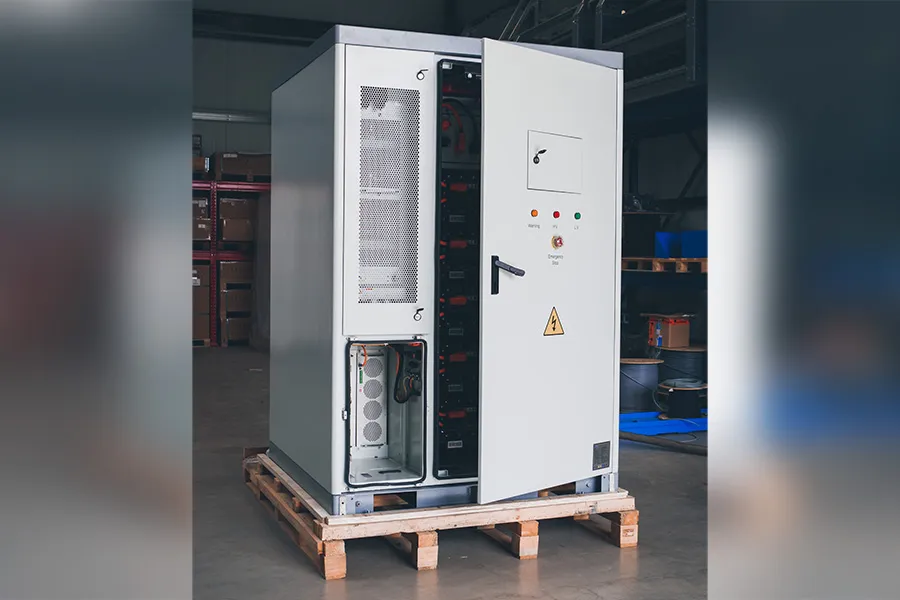
Zero-emission construction sites and infrastructure projects
Hybrid systems are particularly suitable for construction and infrastructure projects with no or limited grid connections and/or where conventional generators are no longer desirable. Since May last year, companies in construction and infrastructure have been able to apply for a subsidy to purchase new zero-emission construction machinery and vehicles. These range from electric loaders, excavators and piling rigs to concrete mixers and tipper trucks. Energy systems with a battery capacity of >50 kWh are also eligible for the subsidy scheme. Top HV Systems is responding to this demand, for example with a plug-and-play energy module that can be installed in any site container. The module then serves as a standalone 3-phase construction site power supply (90 kW to 4000 kW), with a generator handling peak demand. Simons says: “Construction and infrastructure companies can cut generator running time by up to 90% in this way, resulting in 90% lower emissions of nitrogen, CO2, sulphur, soot particles and other particulate matter from exhaust gases. Noise pollution for the surrounding area is also kept to a minimum, and maintenance costs can be significantly reduced.”
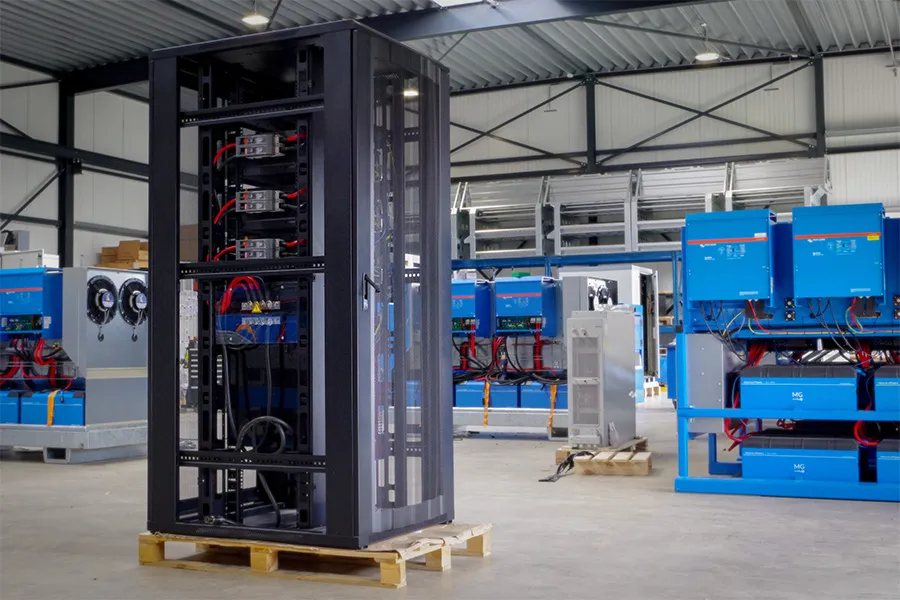
Peak shaving systems
As well as off-grid and hybrid systems, Top HV Systems also offers peak shaving systems. These are becoming increasingly popular in new housing developments, where securing a suitable grid connection is taking longer and longer. “In these cases, we are happy to work with the customer to determine how their energy needs can be met in the coming years,” says Van Manen. “We also look at the impact and costs for the project as a whole. How can we ensure residents can live comfortably until their grid connection is upgraded?” In many cases, the interim period can last from 3 to as long as 10 years, he says. “After that, the peak shaving systems can be retained and used as an energy storage system (ESS).”
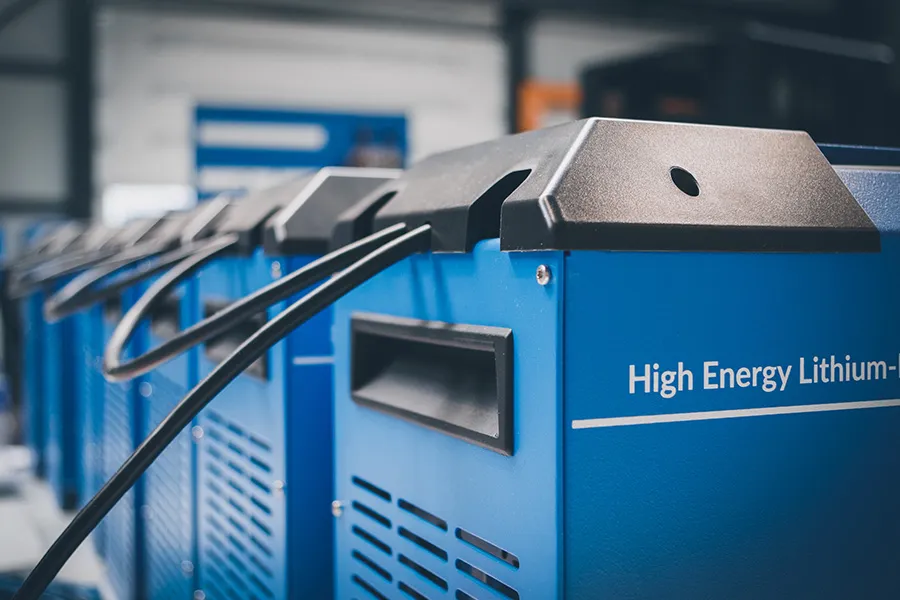
Energy storage systems (ESS)
For manufacturing companies, an increasingly congested electricity grid and the associated constraints are often reason enough to choose Energy Storage Systems (ESS). “More and more companies are unable to obtain a grid connection or increase their existing capacity,” says Simons. “Those looking to become more sustainable, automate or grow therefore need to seek alternatives.” ESS can provide relief for these companies, says Van Manen. “In this case, the ESS supports the grid by absorbing peaks in energy demand.” ESS can also help companies and homeowners avoid the high costs or long lead times involved in adding capacity to a large-consumption grid connection. “They benefit from additional power temporarily, without having to upgrade their connection. If the system is properly sized and monitored, sufficient power will always be available at critical times.”
In most cases, the ESS is powered by large numbers of solar panels. On sunny days, the batteries can therefore become fully charged, meaning that electricity still has to be fed back into the grid. At business premises, Van Manen and Simons expect charging hubs to be connected to ESS more and more often, making even better use of surplus solar energy.
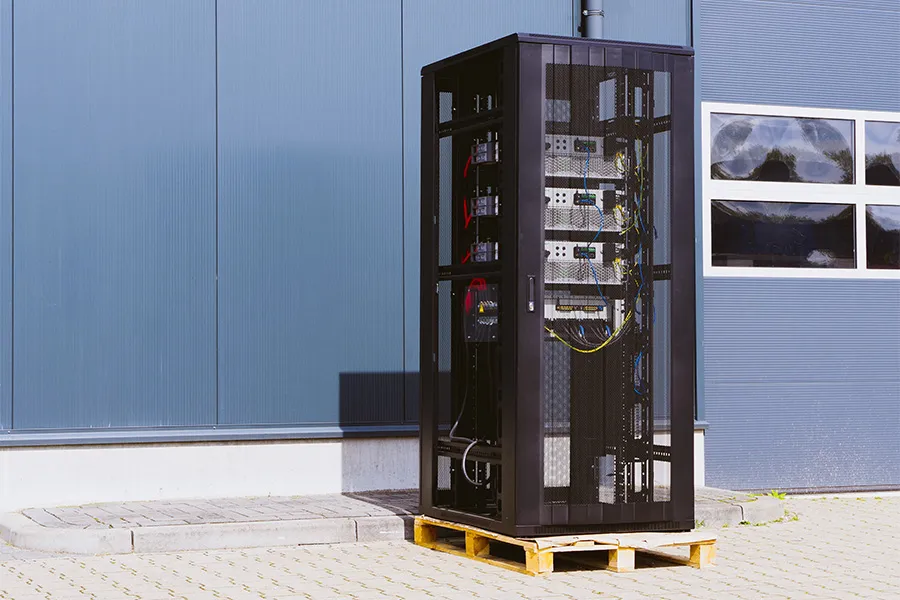
Home batteries
With household costs on the rise, net-zero energy homes are becoming increasingly popular. Following investment in floor, roof and cavity wall insulation, more and more residents are installing solar panels, which are also generating ever more energy, says Simons. “During the day, a large proportion of the energy generated is fed back into the grid, while in the evening electricity is drawn from it. Electricity supplied to and consumed by the home is still charged at the same rate on the annual bill, so residents come out ahead overall. However, the so-called net metering scheme will gradually be phased out in the coming years. You will receive less and less for the energy you generate, making it more attractive to store it yourself. For this market, we supply plug-and-play HV home batteries with a storage capacity of <20 kWh, guaranteeing high charging and discharging efficiency of more than 97%. These systems are also highly cost-effective because they do not fall under the PGS 37-1 guideline.”
Own energy storage as a revenue stream
For both businesses and residents, storing their own energy can make an attractive business case, Van Manen and Simons stress. “They can make money by charging their batteries when electricity prices are favourable or negative, and feeding power back into the grid when rates are high. As the ‘expensive periods’ are often also when electricity demand is highest, they also help balance supply and demand.”
Our future is all-electric
“Our energy supply is unquestionably going all-electric,” both men expect. “Driven by climate targets, we will increasingly switch from fossil fuels to electricity. This means more and more peak demand and an even greater dependence on the grid. We expect the limits of the grid to force a change, making on-site generation and energy storage the norm. Top HV Systems is already preparing for this with a comprehensive range of products and services for HV systems, ensuring customers will not be caught out.”
A business enquiry for Top Systems B.V.? Get in touch
Companies in this story
Keep following this
Get an email when a new story is published. No account needed.
- ThemeEnergy generation and distribution
- SubjectGeneral
- CompanyTop Systems B.V.







