











Independent energy generation for medium-rise and high-rise buildings
Electricity is seen as the simplest and most obvious solution for the major energy transition. Yet it also presents significant challenges. “All-electric seems to be the answer to our energy problem,” says Alexander Suma. “But how do we plan to achieve this with an electricity grid that is already overloaded? How do we deal with grid congestion?” He has devised a decentralised solution for medium-rise and high-rise buildings: PowerNEST.
PowerNEST was developed by IBIS Power, an organisation that has been involved in the country’s energy supply for many years. This has also made IBIS Power one of the first companies to foresee problems with the energy transition as it is currently under way. “We cannot simply replace the existing power stations and then carry on as before. We also need to come up with solutions to ease the burden on the grid.” With the development of PowerNEST, IBIS Power offers a decentralised energy-generation solution for medium-rise and high-rise buildings that operates independently of the existing grid.
Independent and sustainable
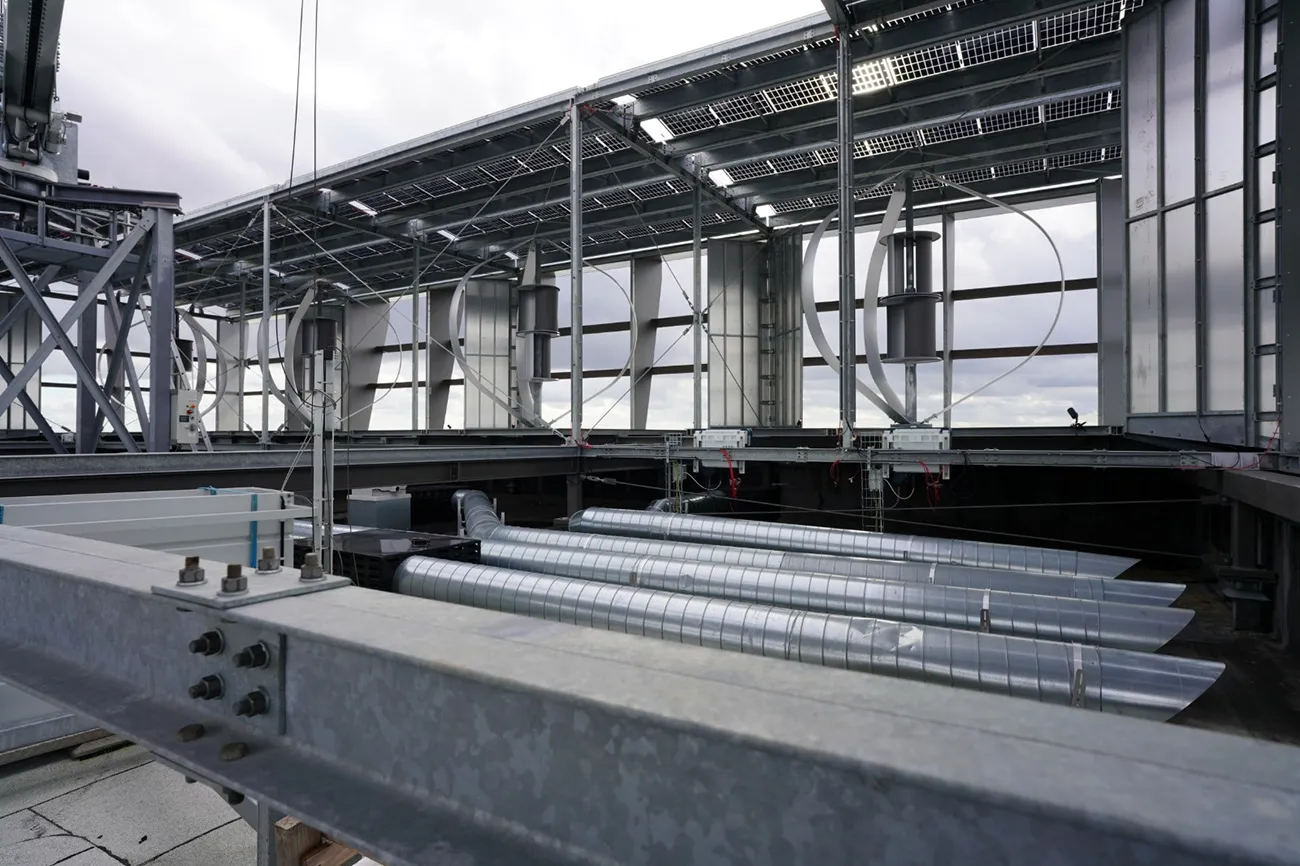
PowerNEST looks like a kinetic, slightly cantilevered sculpture perched on the roof of a high-rise building. It is also an independent, sustainable energy system that fully powers the building below. “PowerNEST’s exceptional strength lies in combining wind and solar energy over the smallest possible area,” reveals Alexander Suma, CEO and founder of IBIS Power. “That area is the roof of a medium-rise or high-rise building.”
Making smart use of aerodynamics
In PowerNEST, aerodynamic forms amplify wind flows by 40 to 60%. This means that wind energy is generated even in a light breeze. The wind flow is also channelled beneath the solar panels below, cooling them with the airflow. This boosts the panels’ energy output by around 10 to 15%, with increases of up to 30%.
Reflection and increased surface area
This figure is boosted further by lining as much of the inside of PowerNEST as possible in white, maximising internal light reflection. Each reflected ray of light generates an additional 30% of energy on the underside of the bifacial panels. Finally, PowerNEST extends beyond the roof area of the building, with the structure projecting one metre beyond the roof on all sides. Suma says: “This measure delivers a further 20% increase in energy generation. That brings the total output to 10 times that of the conventional rooftop solar-panel installations on high-rise buildings.”
Self-sufficient
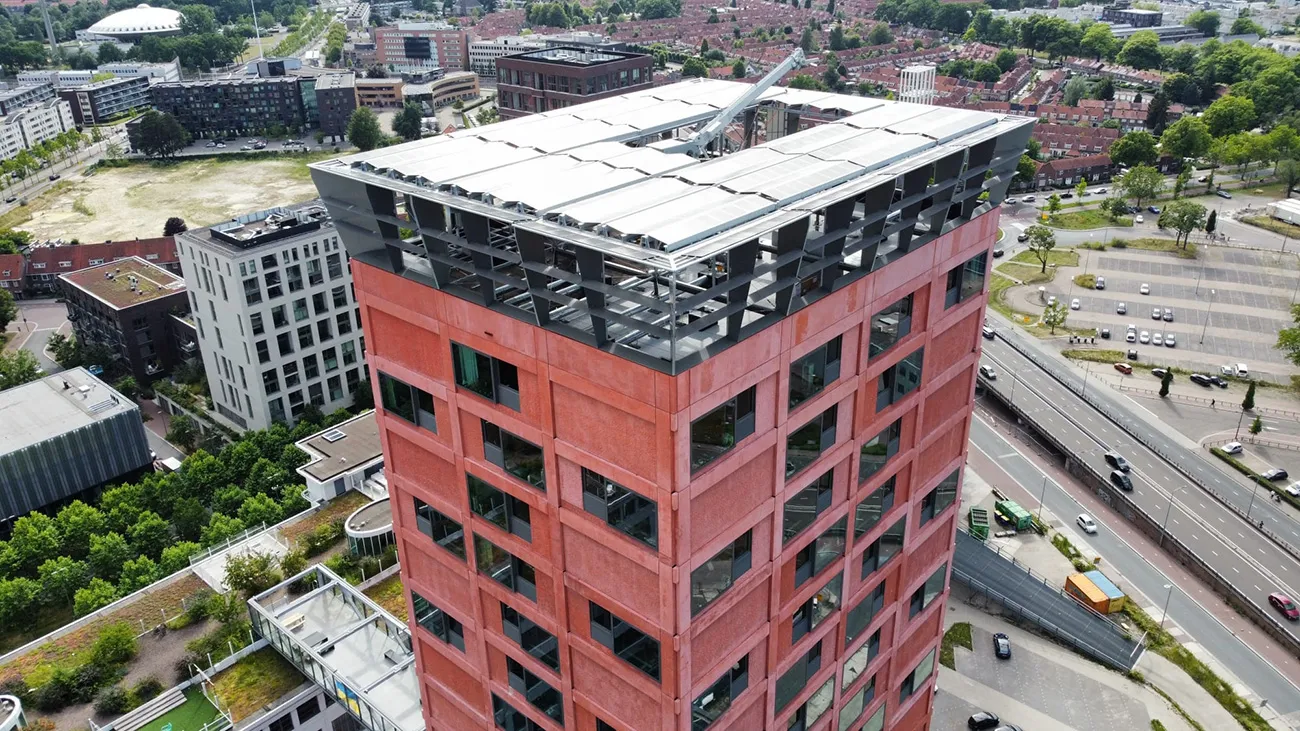
The first PowerNEST systems have now been installed. The largest is on the 70-metre-high roof of Haasje Over in Eindhoven. With four wind turbines and 296 solar panels, this PowerNEST generates around 140 MWh per year. Suma says: “At Haasje Over, we raised the building by 4.8 metres, meaning all the existing facilities, such as window-cleaning equipment, smoke extraction and ventilation, could remain in place. The building is now largely self-sufficient, and the electricity grid is under less strain. This latter result in particular is an important step towards the energy transition.”
Question about this story? Ask your question
Keep following this
Get an email when a new story is published. No account needed.
- SubjectGeneral







