











Innovative off-grid energy storage system based on saltwater batteries: more sustainable, efficient and cleaner working on site
From homes and commercial buildings to construction sites, a saltwater battery is ideally suited to any situation where sustainable energy storage is required. Top Systems is responding to this need with Natrium-Ion AIB saltwater batteries, which are completely maintenance-free and optimised for deep daily discharges. Frequent partial charging and discharging has no effect whatsoever on battery life, says sales engineer Norman Heins. “The saltwater batteries stand out for their high efficiency of 88.5% and wide operating temperature range of -5°C to +50°C. They are also completely safe to touch, non-flammable and non-explosive. Using saltwater as the electrolyte makes these batteries the most environmentally friendly form of energy storage. What’s more, they are fully recyclable at the end of their service life. When Infra Licht approached us in 2020 to develop a sustainable energy storage system for construction sites together, recommending our saltwater batteries was the obvious choice.”
Infra Licht designs, installs and maintains public lighting solutions and responds to faults. “We also hire out and install temporary solar-powered lighting for use alongside roads throughout the country,” says Gertjan Eek, owner of Infra Licht. “Our 12-metre-high LED lighting towers illuminate an area spanning 3 lanes. This means far fewer light poles are needed. There is also no need to lay cables or maintain (diesel) generators. Using 100% solar energy means 0% CO2 emissions.”
Off-grid and plug-and-play
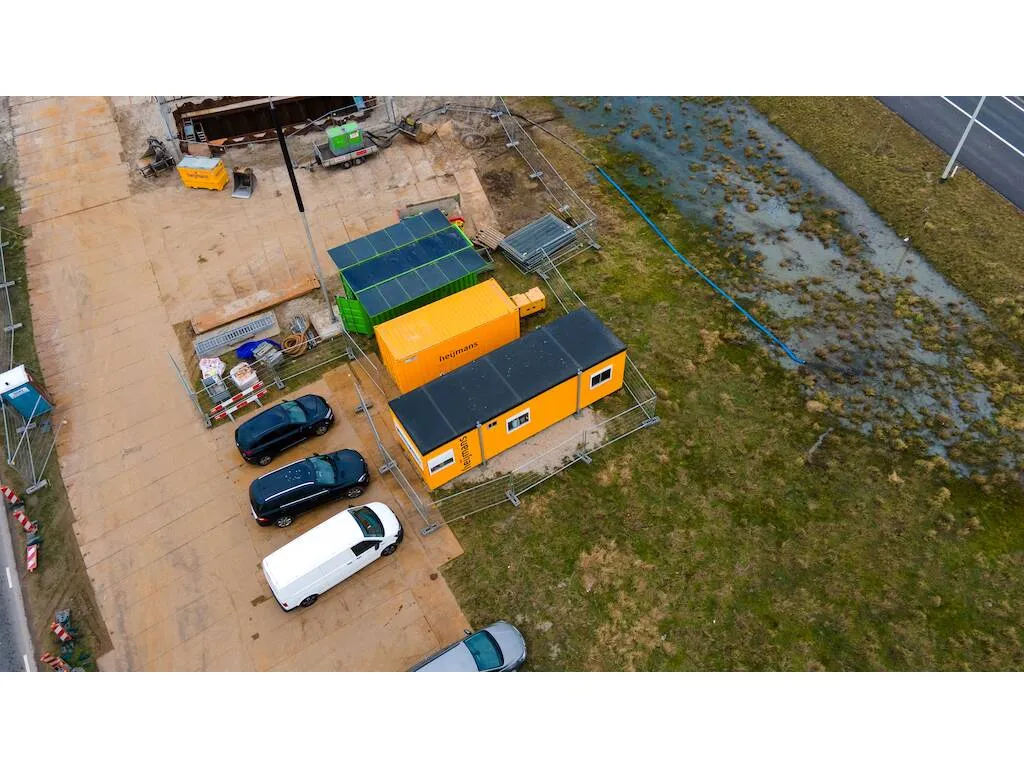
Infra Licht’s temporary lighting solutions make an important contribution to a more sustainable Netherlands. “I wanted to extend this approach to construction sites, where sustainability and CO2 reduction are also hot topics today,” says Eek. “I put my ideas to Top Systems, which has supplied the battery systems and inverters for our lighting towers for many years, and with which I have a long-standing, strong relationship. This led to the development of our first off-grid, plug-and-play saltwater/biogas container (230 volts). With an installation featuring 18 solar panels, 6 saltwater batteries and a biogas generator, we can deliver no less than 6,000 watts of power! The container helps construction and infrastructure professionals carry out their work more sustainably, efficiently and cleanly.”
From AC to DC
Alongside the focus on sustainable construction sites, Eek is seeing more and more locations switch from AC (alternating current) to DC (direct current). “I’m currently building the first machine designed to meet this need,” he says. “Combining an environmentally friendly biodiesel generator, solar panels, a DC converter and a battery pack will allow us to power camera systems and smaller temporary lighting systems with DC, for example. We also took this trend into account when developing the saltwater/biogas container. This means it can be used not only for temporary lighting alongside roads, where it can power up to 30 street lights, but also as an off-grid power supply for site cabins. This eliminates the need for a diesel generator and reduces CO2 emissions from 100% to 15% (biogas generator) or even 0% (100% solar energy).”
High efficiency, excellent sustainability
Infra Licht was looking for an energy storage system with the highest possible efficiency, excellent sustainability and as few components as possible. “Product quality and service life were also important factors,” says Eek. “Top Systems offers a 10-year warranty on the saltwater batteries. They can also be charged and discharged up to 5,000 times, compared with 700 cycles for a standard AGM battery. These cycle figures, together with their fire safety and recyclability, convinced us.” He was very pleased with the collaboration on this project, as well as the clear communication and direct lines of contact. “We had an extensive consultation and defined the parameters for the energy system, on the basis of which Top Systems produced a bespoke design.”
How the energy storage system is configured
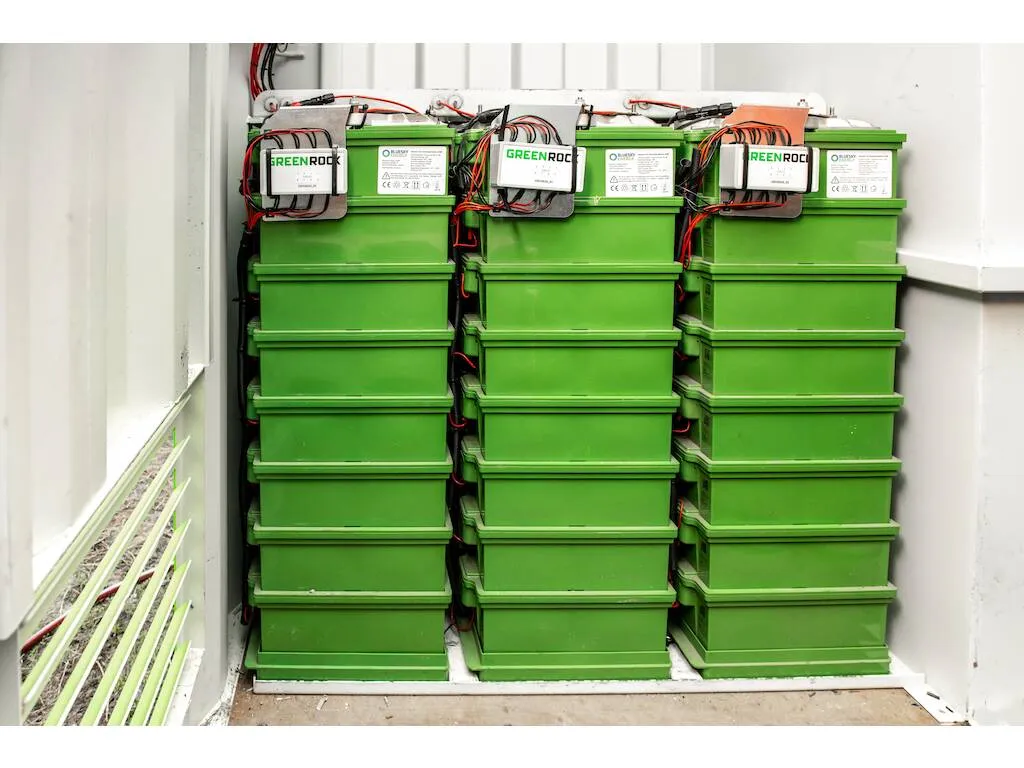
The roof of the saltwater/biogas container is fitted with 18 solar panels that can be hydraulically raised and lowered in 3 minutes. This combines optimum solar generation with safe road transport. “The solar energy generated by the panels is stored in 6 Natrium-Ion BlueSky Energy saltwater batteries, each rated at 48V/56Ah (16.2 kW/h in total),” says Heins. “The system can also be expanded modularly to accommodate twelve batteries, allowing even more street lights and site cabins to run on 100% solar energy. On cloudy and rainy days, when solar generation is insufficient to charge the saltwater batteries, a reliable, environmentally friendly biogas generator provides additional power.”
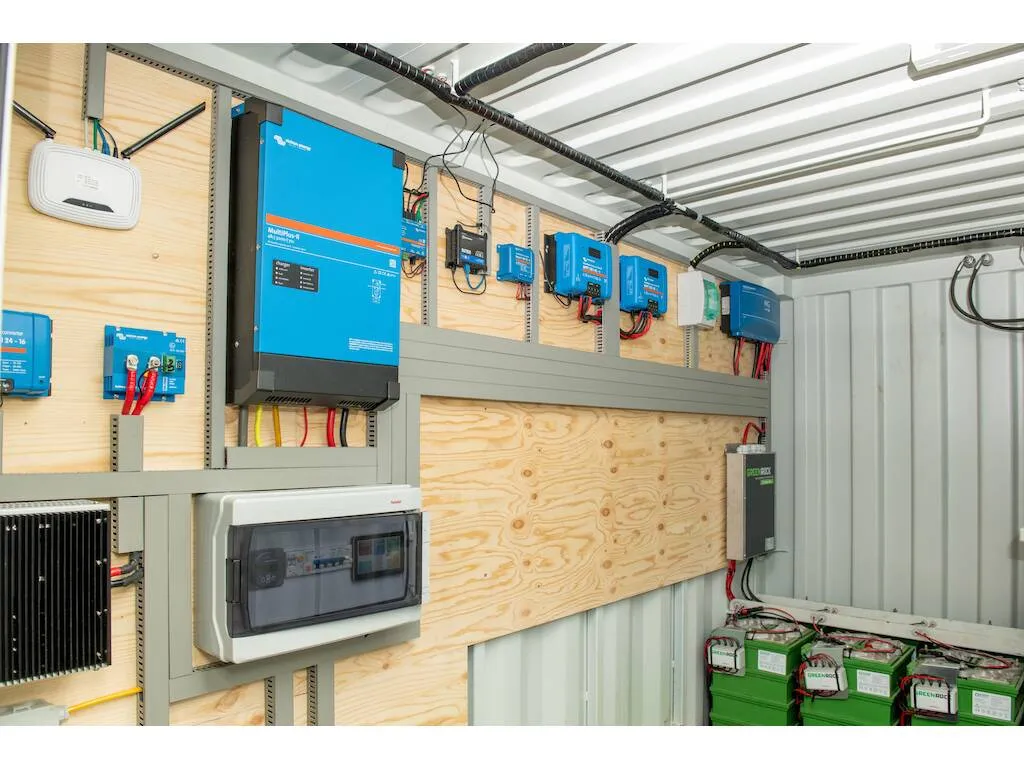
The saltwater batteries are connected to an AIB Combiner Box 48/1 2 (control system), which measures battery currents, voltages and temperatures, among other things. All readings are transmitted via a CAN bus to a Victron inverter/charger, making the container versatile. “We chose a MultiPlus-II 48/5000/70-50 230V, with a continuous output of 5,000 VA (4,000 watts) and an integrated 48V/70A battery charger. It was specifically developed for off-grid PV systems and alternative power supplies,” says Heins. “A Victron Cerbo GX communication centre is integrated to monitor the energy system. It communicates both with the Combiner Box and with 2 Victron BlueSolar MPPT 150/45-MC4 solar charge controllers, which collect the energy generated by the solar panels and store it in the batteries. The system also monitors the inverter/charger. All the information is relayed to a Cerbo, which is connected to a Victron GX GSM 4G modem. This module also provides the Victron system with mobile internet, enabling remote monitoring and access via the VRM portal.”
Top Systems supplied the systems above on a just-in-time basis. Infra Licht handled the assembly and installation. In February, the container was transported to Rotterdam for a pilot project in collaboration with Heijmans Infra regio Zuidwest.
Pilot project at Distripark Maasvlakte West
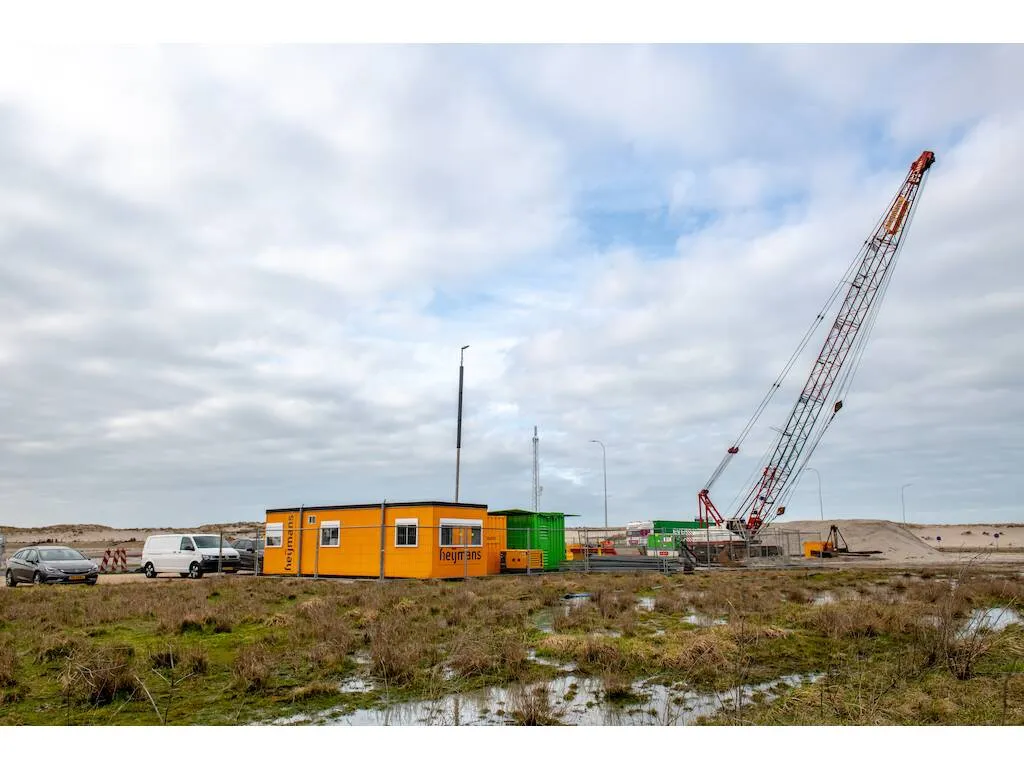
At Distripark Maasvlakte West in Rotterdam, Heijmans Infra regio Zuidwest constructed a double culvert connection between the northern watercourse and Amaliahaven, commissioned by Havenbedrijf Rotterdam. “The culvert connection acts as a buffer zone, preventing rainwater from remaining on the road during heavy rainfall,” says team leader Maarten Broos. “Together with Havenbedrijf Rotterdam, we wanted to make this project sustainable, healthy and safe, contributing to our strategy and ambition, ‘Verbeteren, Verslimmen, Verduurzamen’. That is why we designated the project as a pilot. Heating and lighting in the site cabins used by the workforce were sustainably powered by the saltwater/biogas container. This is an impressive innovation, unique in the Dutch construction industry, where hybrid gas oil systems are generally used. We had to overcome a few obstacles and optimise some facilities at the start of the project, and Infra Licht provided excellent support.”
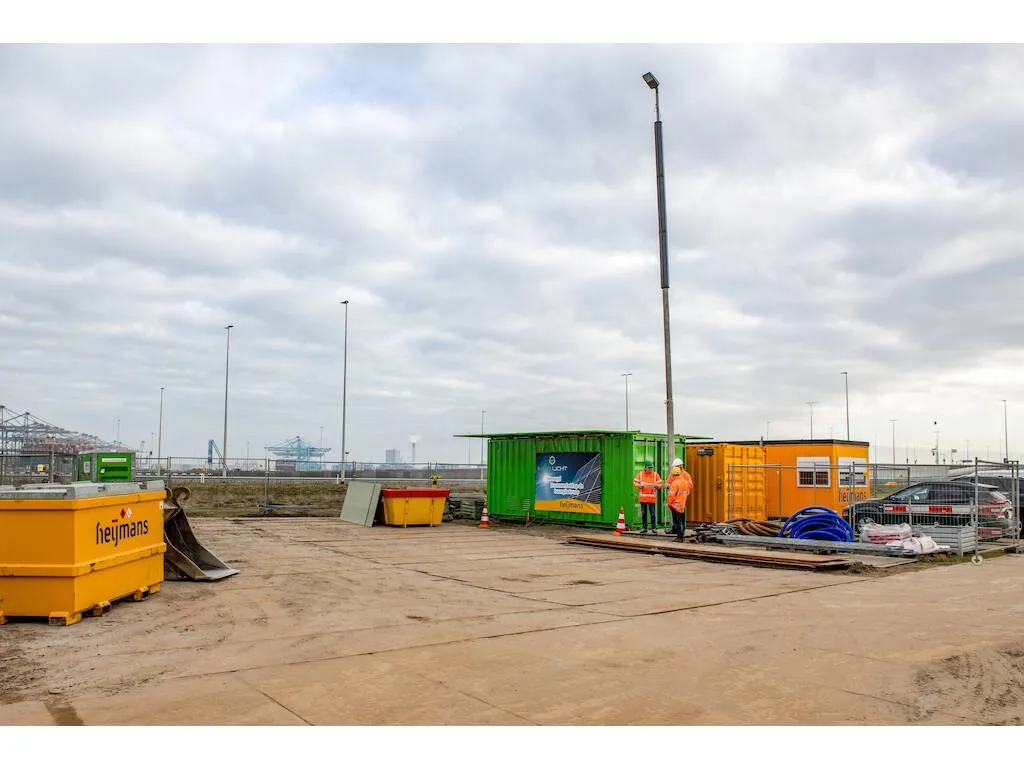
Heijmans launched the pilot during the coldest period of the year. “It was -5°C and the sun was not yet strong enough to fully charge the saltwater batteries,” says Broos. “As a result, the battery systems ran out (too) quickly. One reason was that we initially used uninsulated site cabins with radiators. The heating also often stayed on overnight because our workers did not want to start the day in a cold, damp cabin. As the batteries did not charge during the evening and night, the system ran entirely on the biogas generator. This was an undesirable situation, which Infra Licht resolved by installing a timer. The cabins were disconnected from the power supply between 17.00 and 06.00, substantially reducing the generator’s running time. Shortly after the project began, we also replaced our site cabins with insulated ones, keeping the heat in and greatly reducing the amount of heating needed. An app allowed us to monitor exactly when and how much energy was generated, stored and supplied to the site cabins.”
The first step has been taken…
The pilot lasted around 5 weeks. Heijmans Infra regio Zuidwest and Infra Licht are currently evaluating whether, and how, the sustainable and innovative saltwater/biogas container could also be used on other projects. “In any case, I’m glad we ran the pilot, because we now have a better understanding of what is available on the market,” says Broos. “And what changes are needed to make it work. This means the first step towards a sustainable construction site has been taken.”
A business enquiry for Top Systems B.V.? Get in touch
Companies in this story
Keep following this
Get an email when a new story is published. No account needed.
- ThemeEnergy generation and distribution
- SubjectGeneral
- CompanyTop Systems B.V.







