Less talk, more action
The construction sector is facing a severe shortage of technically skilled workers, as well as a lack of sufficient knowledge. “New technologies, construction methods and regulations are following one another at a rapid pace,” says Richard Daamen, Managing Director of Belimo Servomotoren BV. “Further training is essential, but there is often no time for it. As a result, pressure on the sector is mounting. To reverse this trend, we need to stop talking and start doing. Manufacturers have an important role to play in this.”
In a survey of 3,000 installation companies conducted by the Installatie Academie, more than 40% of respondents said that technicians and office-based staff were falling behind in their knowledge of trends and developments. Reasons include heavy workloads, staff shortages and the pandemic. Although they are keen to learn, they do not have enough time or opportunity to deepen and broaden their knowledge. All available training time is spent on ‘mandatory’ courses rather than new technologies. How can this widening gap be closed?
Belimo Customized Products
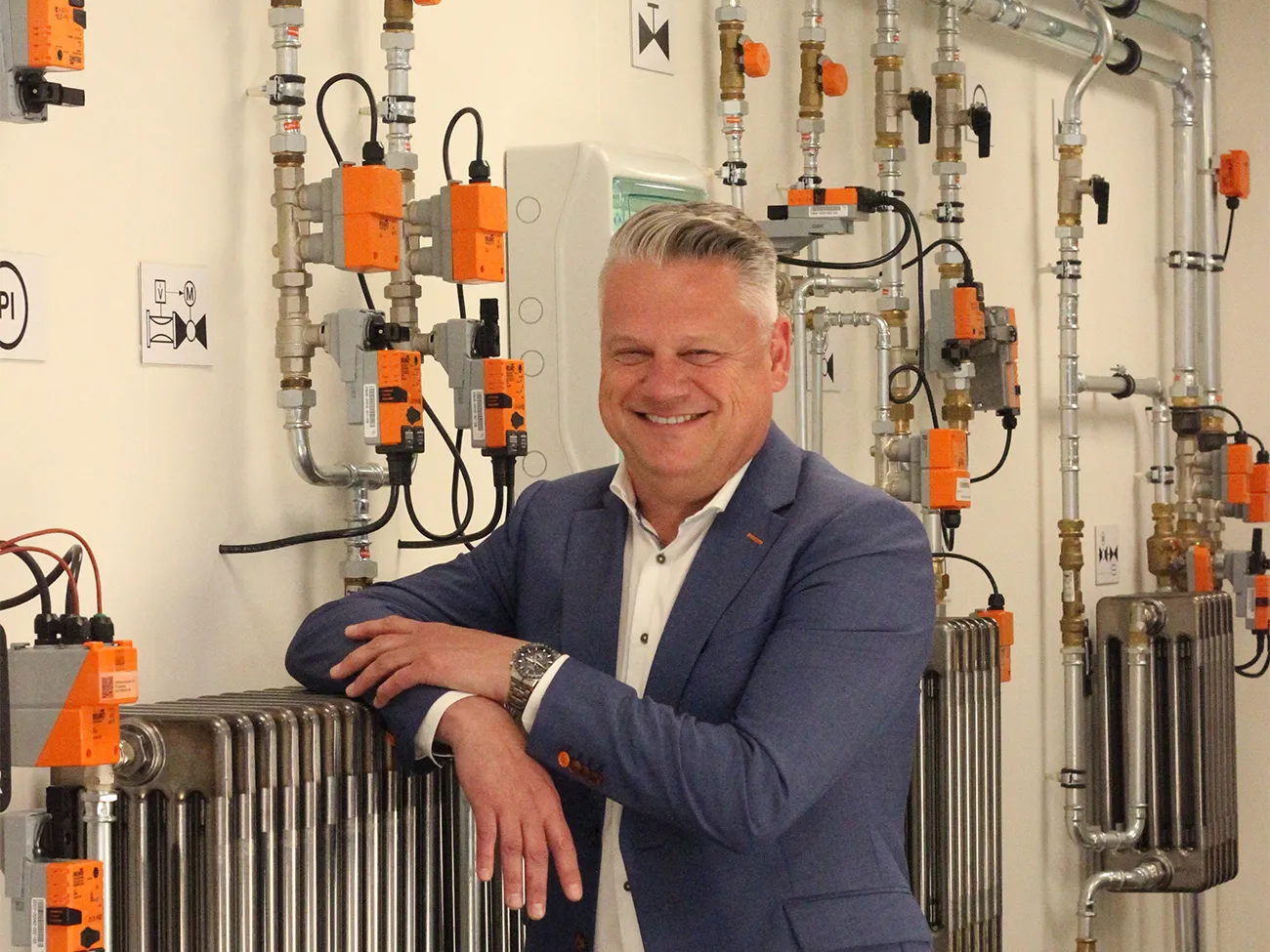
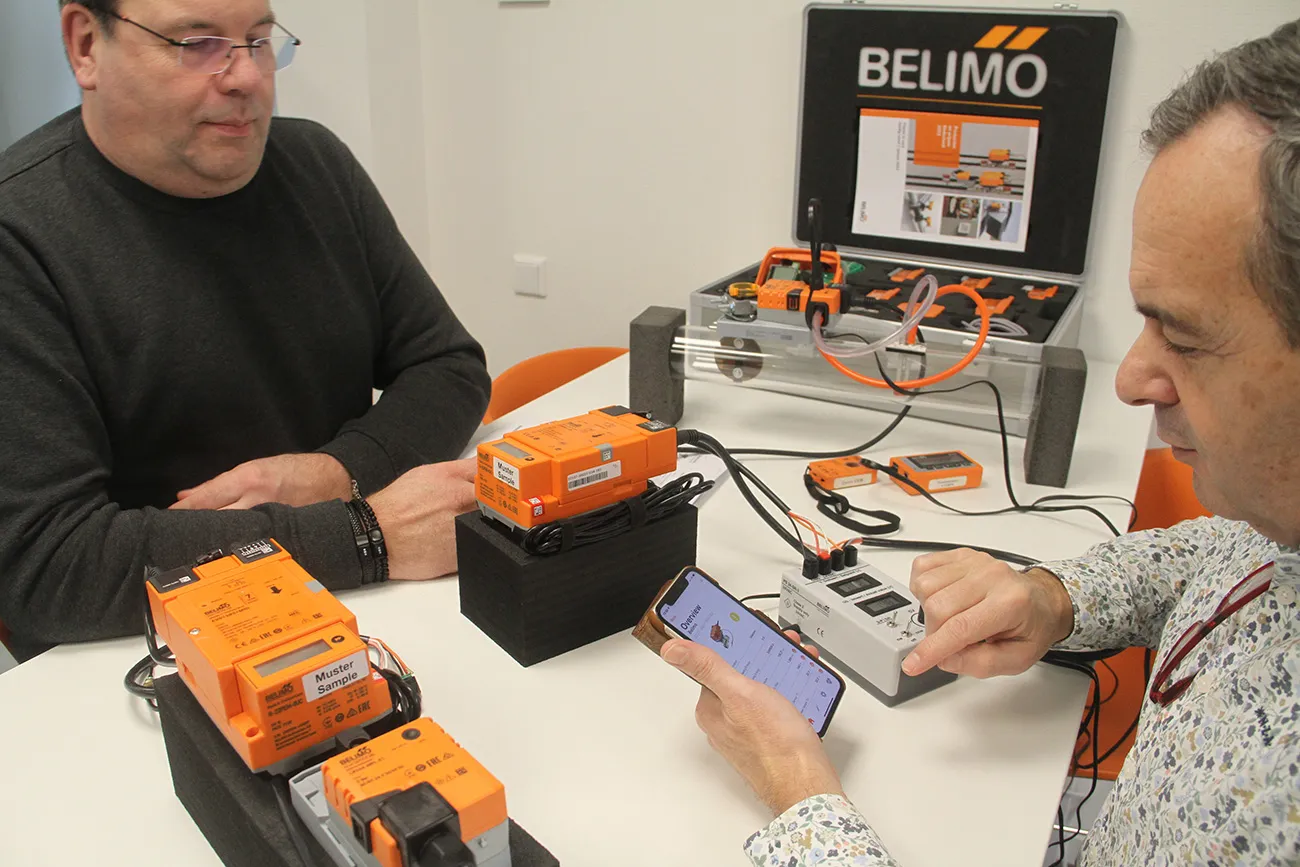
“As a manufacturer and partner to HVAC installers, system integrators, service technicians and building owners, we have a responsibility to help,” says Daamen. “Back in 2015, we introduced Belimo Customized Products, through which air- and water-side actuators are supplied pre-assembled as prefabricated modules and/or labelled. Customer-specific settings can also be activated in advance, after which the products are delivered to site just in time and just in place, customised to requirements.” Customer-specific cables and connectors are pre-assembled. “We also add value on the hydraulic side by pre-assembling pipework, mounting brackets, bends, couplings and other fittings to our control valves and ball valves. This means the assembled unit can be connected seamlessly to the pipework on a plug-and-play basis. Even vapour-tight insulation of the unit is no problem! Our Customized Products assure customers of high electrical and hydraulic quality, while reducing labour time and costs, construction waste, transport movements and our overall CO2 footprint.”
Train the trainer
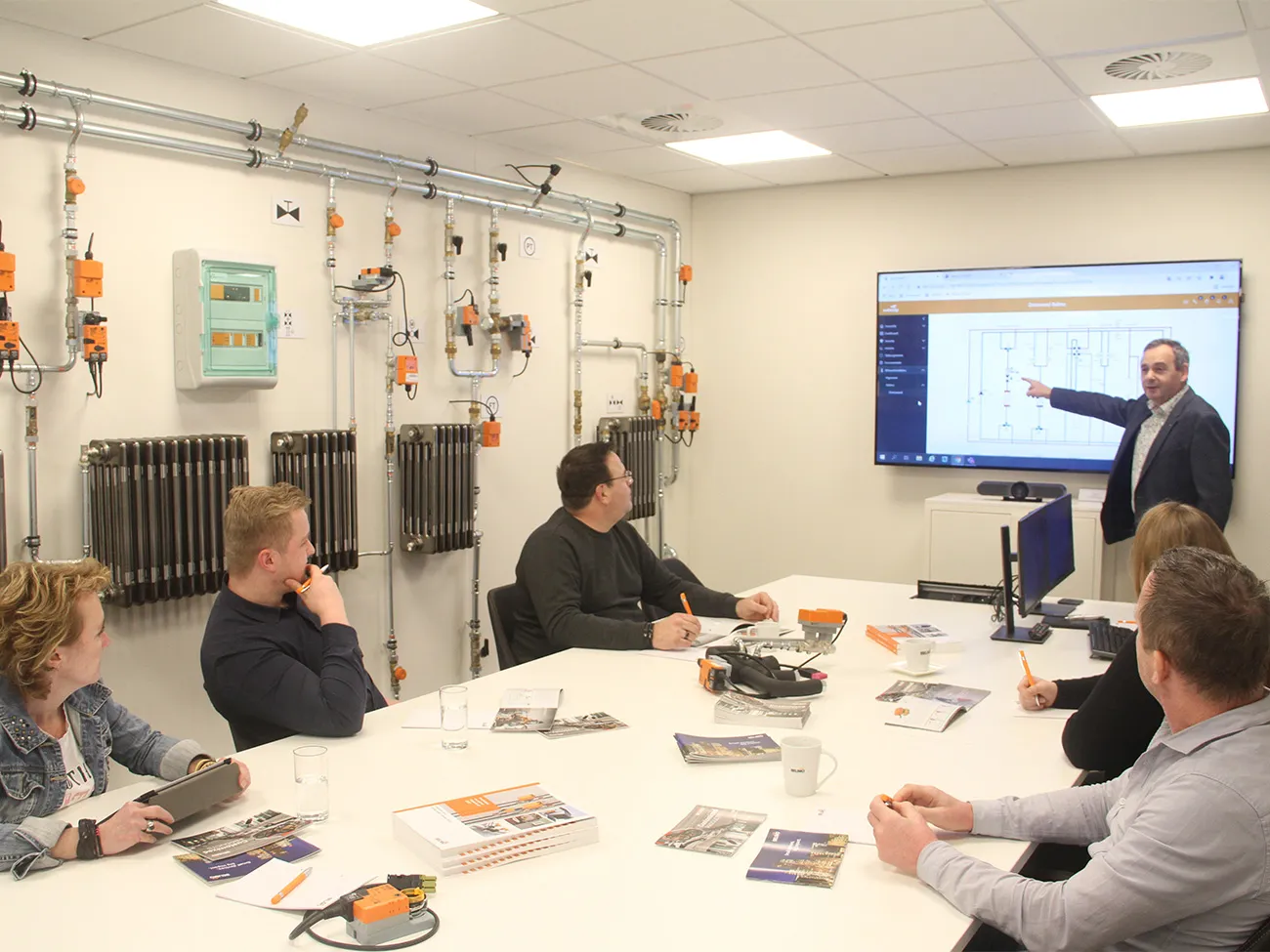
To address the shortage of new, well-trained professionals coming through vocational education, Belimo has also started training ROC colleges. This helps make a career as an installer more attractive, while also boosting teachers’ knowledge and skills through a train-the-trainer approach. “We saw that market innovations were outpacing students’ knowledge and skills, so we started ‘sandwiching’ the market,” says Daamen. “For example, we also make the products we launch as innovations available to schools.” To keep HVAC installers, system integrators and service technicians up to date with developments, Belimo has also developed nine types of training. Courses are available online and at the Belimo Kenniscentrum in Vaassen, both for groups and individuals. “Our business partners can also sign up on our website for various webinars on calculating and selecting pressure-independent and pressure-dependent control valves, using the intelligent Energy Valve, and the history and meaning of VAV and CAV. This helps them make (even) better product selections and carry out more precise commissioning, resulting once again in minimal failure costs, shorter lead times and a perfectly functioning installation.”
Education, technology and commerce
Belimo’s latest initiative brings education, technology and commerce together. “How can you convince an installer or system integrator to choose the right applications? To support students in this too, we have developed Belimo City,” says Daamen. “Students are invited to join us at trade fairs as Belimo students. There, Belimo City is set up as a collection of commercial buildings where technology, commerce and training come together in harmony. This completes the circle. The approach proved very successful, for example, at the VSK trade fair in Utrecht.”
Seven prerequisites for a healthy indoor climate
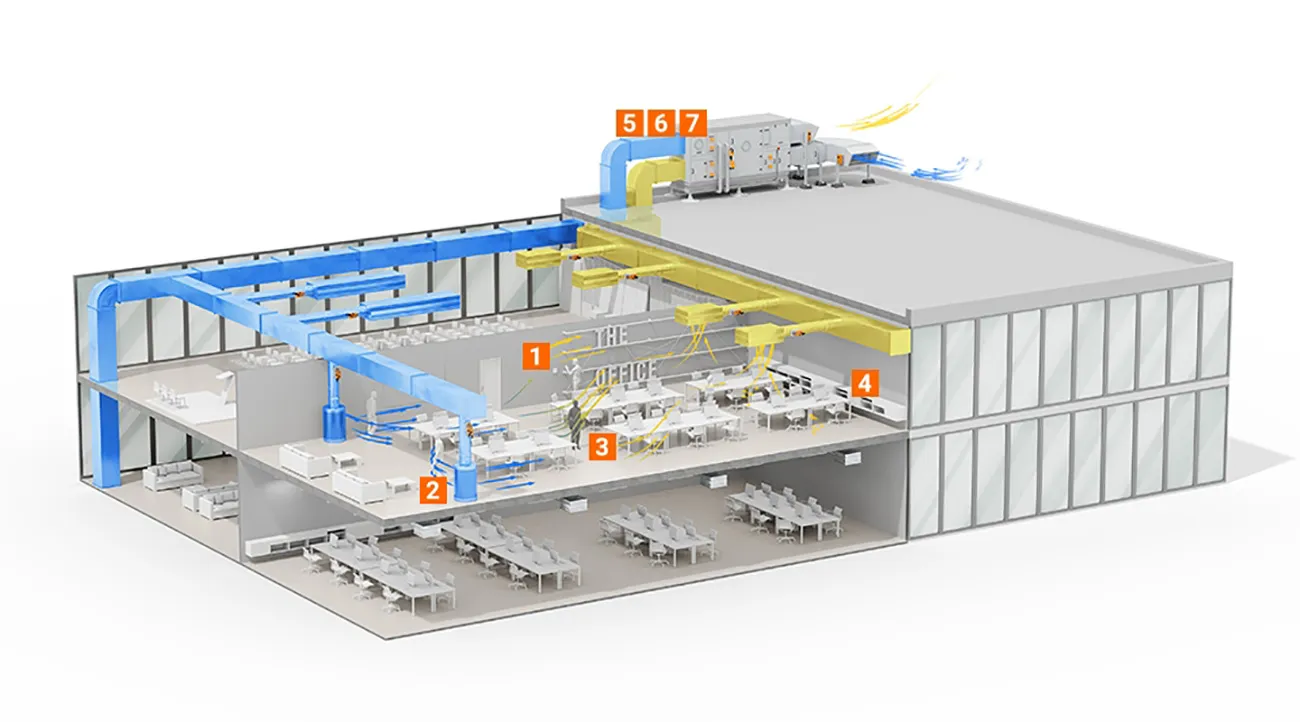
To highlight the importance of a healthy indoor climate in buildings, Belimo conducted a global survey of consultants and ventilation experts. One aim was to find out what they consider the priorities for achieving healthy indoor air. The survey identified seven essential factors for non-residential buildings:
1. Continuous and reliable measurement, display and monitoring of indoor air quality.
2. A precise volume of air supplied to the zone and controlled removal of contaminated air.
3. Well-designed air mixing and airflow patterns.
4. Active pressurisation of the building envelope and rooms.
5. Correct control of temperature, CO2 and humidity.
6. Effective filtration.
7. The right amount of outdoor air.
“To ensure a healthy indoor climate, it’s important to know where your ‘fresh outdoor air’ is coming from,” Daamen stresses. “Are you in a green setting or an industrial area? What filters are needed to remove pollen, nitrogen, particulate matter and other pollutants from the outdoor air? How do you ensure good air distribution? And how can sensors be used to adjust air quality to the right level in response to demand?” To raise awareness of these issues in the sector, Daamen joined the Binnenklimaat Nederland association last July. More to come, no doubt…
A business enquiry for BELIMO? Get in touch
Companies in this story
Keep following this
Get an email when a new story is published. No account needed.
- SubjectGeneral
- CompanyBELIMO
- CompanyVSK