











Oirschot to get the Netherlands’ first bio-based water main
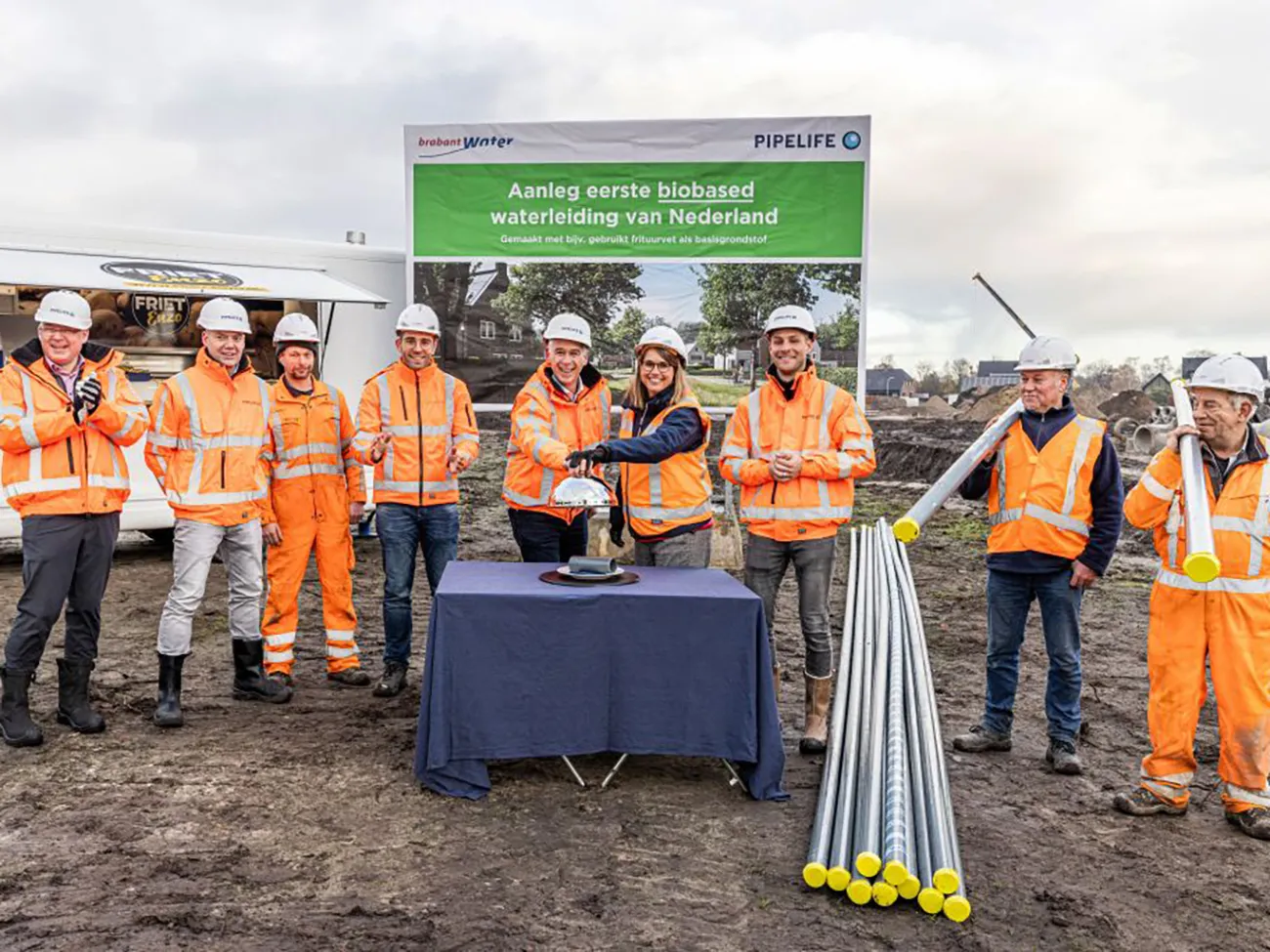
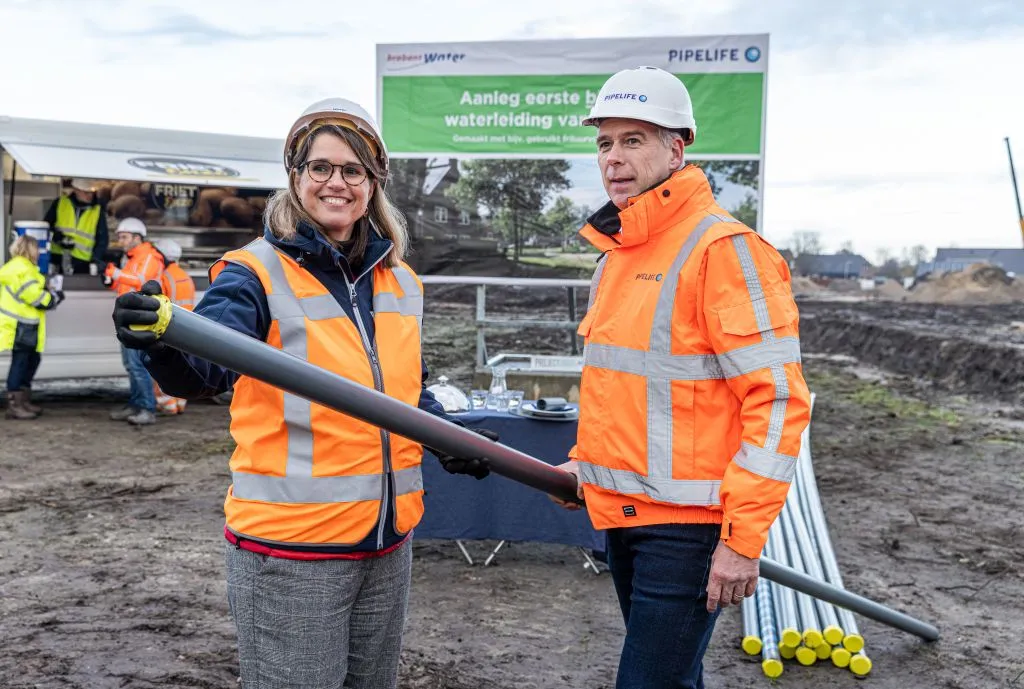
A PVC water main made using used cooking oil, wood pulp or sugar cane residues as its feedstock. For the first time in the Netherlands, a bio-based water main is being installed underground. More specifically, in Oirschot, in the province of North Brabant. And no, the water won’t taste of frying oil. “In terms of composition, the pipe is exactly the same as a standard PVC pipe, but all the feedstocks are bio-based,” says Hanneke van de Ven, director of distribution at Brabant Water. “With this project, we want to pave the way for more sustainable and bio-based materials in the water sector.”
Sustainable options
Both Brabant Water and supplier Pipelife place great importance on sustainability. Brabant Water is also looking for sustainable options for its drinking water network. The potential of recycled PVC was investigated, but it did not meet the stringent requirements for water pipes. The next step in experimenting with more sustainable pipes was to explore the possibilities offered by bio-based materials. This led Brabant Water and supplier Pipelife to the bio-based pipe being used in a new-build project in Oirschot.
Making the product portfolio more sustainable
For Pipelife Nederland, the project in Oirschot is the first application of bio-based pipes. Pipelife has set itself the goal not only of structurally reducing its energy consumption and improving the energy efficiency of its processes, but also of making its product portfolio more sustainable. New technologies make pipes lighter, reduce waste and increase output, lowering the energy consumption per kilogram produced. Pipelife is also using increasing quantities of recycled feedstocks to create circular products. Its aim is to use 30% recycled material by 2030.
Making PVC pipes more sustainable
Making PVC pipes more sustainable is an important development for Pipelife. The feedstocks used to produce the PVC in bio-based pipes do not come from fossil sources such as crude oil, but from renewable sources such as sugar cane or wood pulp, as well as used cooking oil. Sugar cane and trees absorb CO2 as they grow, and this CO2 is released again when they are processed into plastic. Net CO2 savings can reach as much as 90%. Aart Jan van der Meijden, managing director of Pipelife Nederland, says: “If the water sector joins forces and commits to going all in on bio-based materials, we can make a real impact by helping to accelerate this development. Bio-based materials are currently more expensive than ‘conventional’ materials, but we expect the market to develop rapidly and prices to fall as demand increases.” For more information about bio-based PVC, visit https://www.pipelife.nl/bio-based.html.
Question about this story? Ask your question
Keep following this
Get an email when a new story is published. No account needed.
- SubjectGeneral







