











PALMKI biometric access control: the perfect key
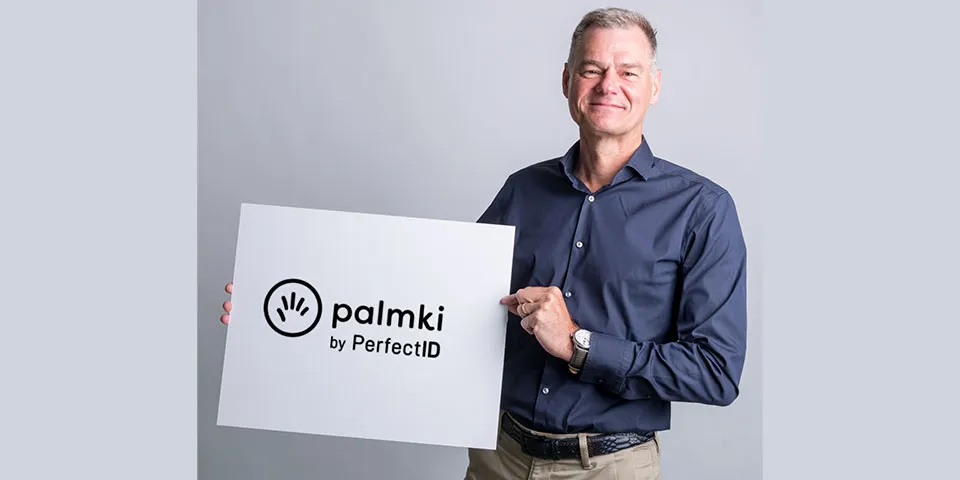
Biometric access control uses specific physical characteristics that are unique to each person. These physical characteristics are read automatically and a decision is then made as to whether someone is granted access to a building, company, specific departments, data or a system.
Different biometric security solutions
Biometric access control can use a scan of your fingerprint or palm print, the veins in your palm, your iris, face, ear or even your voice.
The principle is largely based on scanning one of a person's body parts. The scan is converted into a hashed code and stored in a database or on a badge. To gain access to a specific location or system, the same body part is scanned again each time, and the computer compares the new code with the stored code to check for a match.
The advantage of biometric characteristics is that they are unique and personal, and you always have them with you. Biometric data cannot be transferred to another person, unlike badges, keys and passwords. They therefore cannot be forgotten or stolen either.
Biometric palm scanning
To find out more about the principles and potential of biometric access control, we spoke to Perfect ID, which specialises in PALMKI palm scanning.
Founded in 2019, this start-up brings together the expertise of two companies: Alfa-Zet Systems, which specialises in automation software (www.alfa-zet.be), and DNCS, a specialist in security systems, access control and smart networks (www.dncs.be).
“Together, we started working with an infrared sensor developed by Fujitsu, and that is how PALMKI came about. The sensor detects the unique vein pattern in your palm at five million different points. Even your left and right hands have different vein patterns. Blood flow must also be present. So it could hardly be any safer.
That data is then converted into a secure binary code and stored in the biometric access system. The next time, that code is matched against a new scan of your palm. If there is a match, you are granted access,” says Wim Van De Putte. “I want to emphasise that no digital image or photograph of the physical characteristics is stored, only a secure code. This makes Palmki a very secure and convenient solution.”
Is biometric access control foolproof?
The likelihood of errors in biometric access control systems is virtually negligible.
“Biometric palm scanning is an innovative technology that is not yet widely known and offers enormous potential for authentication. It is secure, fast, hygienic because it is contactless, and convenient. You can forget or lose a badge, key or access code. They can also be stolen or lent to someone else, risking mistaken identity. Palm scanning is also a more environmentally friendly solution than any alternative that requires an accessory. A badge can easily contain six grams of plastic…”, emphasises Wim Van De Putte, General Manager of Perfect ID.
“PALMKI is also suitable for access control for payments, logging in to data and documents, and access to devices and machines such as vending machines, photocopiers, etc. It can also be combined with existing authentication systems, such as a badge or PIN, to increase the sense of security. In addition, Palmki can be used fully in accordance with GDPR regulations,” adds Wim Van De Putte.
You can already see PALMKI in action at Living Tomorrow, the house of the future in Vilvoorde, and at A-STAY Hotel in Antwerp, the hotel of the future.
In light of the impact of the coronavirus
Interest in biometric palm scanning could well grow exponentially following our recent experience with the coronavirus. Palm scanning is quick and secure. There are no health risks because you do not even touch the infrared sensor.
“We are now implementing PALMKI in various sectors to find out where this technology offers the greatest added value. Healthcare is certainly a major market. In hospitality, trials are being carried out using palm registration to check staff start, finish and break times against the planned schedule. Schools recognise its social potential. Children and young people can learn how to use innovative, environmentally friendly technology while following a secure privacy policy.
Question about this story? Ask your question
Keep following this
Get an email when a new story is published. No account needed.
- ThemeSafe building services and buildings
- SubjectGeneral







